For daily wit & wisdom, get the Almanac newsletter.

Growing Dead Nettle: A Little Shade Goes a Long Way

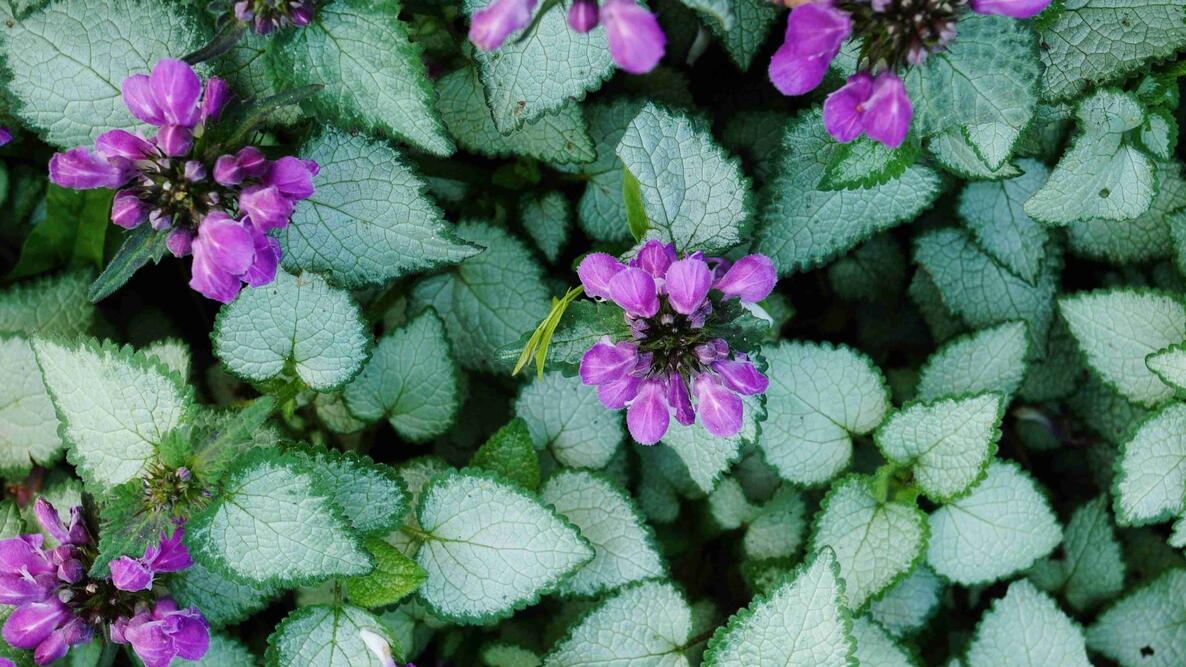
Spotted dead nettle with purple flowers and silvery leaves edged in green.
Image Credit:
EQRoy
Written By: Lauren Landers Master Gardener and Contributing Writer

Don’t let the name fool you—spotted dead nettle (Lamium maculatum) is a lively perennial ground cover that grows best in partial to full shade. Give it well-drained soil and keep an eye on its creeping stems: They take root as they spread, so a little trimming helps keep this enthusiastic grower in bounds.

Planting

When to Plant Dead Nettle

Spring is a good time to plant spotted dead nettle. In mild climates, you can plant in early fall too. Just get your plants in the ground at least a month before your first fall frost is expected.

Where to Plant

Choose a spot in partial to full shade with moist, well-drained soil. Avoid places where water collects after rain; dead nettle tolerates some dryness once established but struggles in soggy soil.

Give it room to spread without crowding smaller plants. For a small space, try a container with drainage holes, positioned so trailing stems cannot take root in nearby soil.

Spreading clump of spotted dead nettle with silver-striped green leaves and pink-purple flowers in a garden bed.
Spotted dead nettle forms a low, spreading patch; leaf markings vary by variety. Credit: APugach

How to Plant Dead Nettle

Follow the spacing on your plant label. Small starter plants can be spaced 6 to 10 inches apart for quick ground coverage; wider spacing gives them more room to fill in gradually.

  • Prepare the soil. Remove weeds and loosen the planting area. If the soil is poor, work in some compost across the bed.
  • Dig a hole. Make it slightly wider than the root ball and just deep enough for the plant to sit at the same level it grew in its nursery pot.
  • Set the plant in place. Gently slide it out of the pot and loosen any tightly circling roots. Set it in the hole, fill around the roots with soil, and firm the soil gently.
  • Space plants properly. Follow the spacing recommendations on the plant label, as some dead nettles grow larger than others. In general, space plants 6 to 10 inches apart for fast ground coverage or up to 18 inches apart if you’re happy to let them fill in more gradually.
  • Water thoroughly. Soak the root area to settle the soil. If you add a light layer of mulch, keep it away from the base of the stems.

Growing

Watering

Keep the soil moist but not soggy while new plants establish. Check it regularly and water the soil when the surface begins to dry. Container plants may need watering more often than those in the ground.

Established dead nettle tolerates some drought, but it looks its best with moisture during dry spells. Check the soil before watering—wet roots can rot, and extra water won’t fix heat stress.

Fertilizing

Dead nettle usually needs little or no fertilizer in average garden soil. A light layer of compost around the plants in spring can help improve poor soil. Keep it away from the stems.

Pruning and Maintenance

Trim back long, straggly stems after the main flush of flowers to encourage fuller growth. If plants become thin or untidy in summer, a light shearing can encourage fresh foliage.

To keep dead nettle in bounds, trim stems that stray beyond the planting area and lift out any that have already rooted. Remember, creeping stems can take root wherever they touch soil!

Seasonal Care

In early spring, snip off dead or winter-damaged growth, leaving healthy foliage in place. Dead nettle may stay green through mild winters or die back in colder areas and return in spring.

Avoid piling mulch over the plants in fall; trapped moisture can encourage rot.

Growing in Different Climates

In hot climates, protect plants from strong afternoon sun. Hot, humid summers can leave dead nettle looking patchy, even when the soil is moist; avoid extra watering if the ground is already damp. Plants often perk up as temperatures cool.

To make more plants, divide an established clump in spring or early fall. Lift it, separate it into smaller sections with healthy roots, and replant promptly. Water well while the divisions settle in.

If desired, you can limit the spread of dead nettles by deadheading spent flowers, pruning back overgrown plants regularly, and removing runners before they establish. Just remember: Dead nettles root anywhere their stems touch the soil, so you’ll need to be vigilant!

Pests and Problems

Common Problems

  • Bare patches in summer: Heat and humidity can leave dead nettle looking thin or patchy. Trim back straggly growth and check the soil before watering. Plants often fill out again when temperatures cool.
  • Brown, crispy leaves: Strong sun or dry soil can scorch foliage. Water if the soil is dry; provide more shade if plants receive hot afternoon sun.
  • Slowed growth: Hot weather and dry soil can slow plants down. Check soil moisture and water as needed, but don’t keep the ground soggy to encourage growth.
  • Fewer flowers: The heaviest flowering usually occurs in late spring to early summer, with scattered blooms afterward. A lighter display later in the season is normal. If plants also look stressed, check soil moisture and sun exposure before reaching for fertilizer.

Common Pests

  • Ragged holes in leaves: Slugs and snails may be visiting after dark. Look for slime trails and check plants after dusk so you can hand-pick the culprits. See our slug and snail control guide for more options.
  • Curled new leaves or sticky foliage: Look for clusters of aphids on tender shoots and leaf undersides. Dislodge them with a firm spray of water, supporting delicate stems as needed. Check again over the next few days and repeat if necessary.

Deer and rabbits tend to leave spotted dead nettle alone, although no plant is completely browse-proof.

Plant Diseases

  • Wilting despite wet soil, or soft, rotting stems: Persistently wet conditions can encourage rot. Reduce watering, remove badly affected plants, and improve drainage before replanting. Keep mulch away from the base of the stems.
  • Reddish or purplish leaf spots with gray fuzz underneath: These may indicate downy mildew, which develops in cool, wet conditions. Water at soil level and thin crowded growth so leaves dry more quickly.
  • White powdery coating on leaves: Powdery mildew may be the cause. Thin crowded growth to improve airflow. Water at soil level. If you’re unsure of the diagnosis, ask your local Cooperative Extension office before treating.

Wit and Wisdom

  • Dead nettle resembles stinging nettle, but it won’t prickle your fingers—the “dead” means it has no sting!
  • The botanical species name maculatum means “spotted,” a nod to its leaf markings.
  • Spotted dead nettle belongs to the mint family, and its flowers attract bumblebees.

Selected Sources:

About The Author

Lauren Landers

Lauren Landers

Master Gardener and Contributing Writer

Lauren is a gardener, writer, and public speaker with over a decade of experience helping others learn about gardening, homesteading, and sustainable living.She combines years of practical gardening a...

Read more from Lauren Landers