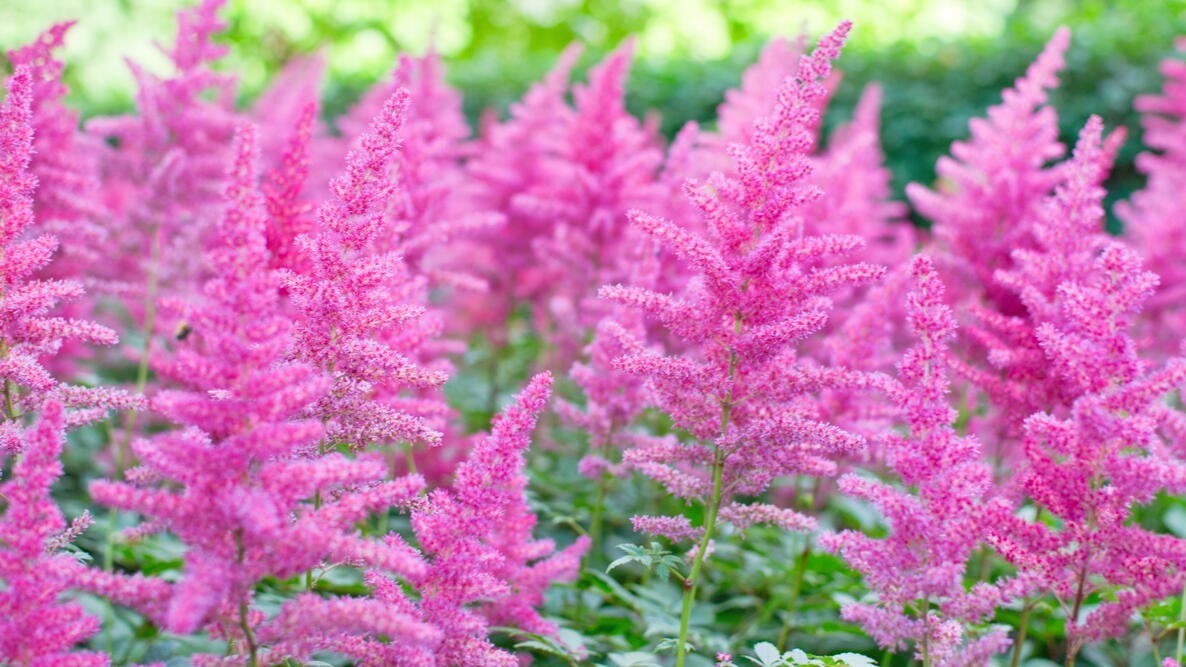
Caption
Astilbe plant with pink feathery plumes of flowers growing in the garden

Planting
When to Plant Astilbe
Most growers cultivate astilbe from nursery starts, which are best planted in spring or fall. Growing these plants from seed can be tricky, but you can also produce new astilbe from dividing established plants in early spring.

Photo: znmysteryPhoto
Where to Plant Astilbe
Astilbes prefer light to moderate shade, while deep shade can reduce flowering and full sun may burn the plant’s tender leaves. Although astilbes love moist, damp soil, they still need proper drainage and should not be grown in areas where water puddles for long periods of time. For optimal growth, amend the soil with compost or aged manure before planting astilbes to boost soil nutrient levels and improve drainage too.
If desired, you can also grow astilbles in well-draining pots that are at least 16-inches wide, or plant them in garden borders or use them as a flowering groundcover.
How to Plant Astilbe
Plant nursery starts about 1 to 3-feet apart, depending on the variety. To plant, loosen the soil to about 10 to 12-inches deep with your shovel, mix in a touch of compost, set the plant’s crown (where the roots and stems connect) just below the soil line, backfill the hole with soil, and water well.
If you’re growing bare-root plants instead, dig a hole that’s twice as wide as the plants’ roots and 4 to 6inches deep. Place the plant so the roots are fanned out slightly and pointing downwards with the crown located 1 to 2-inches below the soil line, then cover the roots with soil, press firmly, and water your new astilbes in.
Types
Popular astilbe hybrids include …
- ‘Fanal’ boasts dark green foliage, dark crimson flowers, and grows to about 1-1/2 feet tall.
- ‘Irrlicht’ enchants with dark green foliage, elegant white flowers, and a maximum height of up to 2-feet tall.
- ‘Visions’ is a particularly drought-tolerant option with strong stems, green leaves, and thick raspberry-hued flowers.

More Like This


If astilbe leaves are curling and turning brown, this is usually drought stress. Astilbe need very moist soils in shady spots. Water consistently to keep soil moist (not soggy); add organic mulch to keep the roots cool and moist. Water the plant regularly and only allow the top one inch of the soil to dry out between irrigations.
As soil warms in spring (such as around May, depending on your location), you should see sprouts appear within 1 to 3 weeks. Often, bare root plants may bloom the first year, but will be stronger, more established during the second year. If your plants are showing no signs of growth, it could be that they did not survive over winter--you might, however, wait a month or so just to be sure.
Here are a few problems that can happen during planting:
1) Cold/frost injury: It's usually recommended that you plant bare root astilbes in spring. In very warm zones, such as Texas or California, the vendor may recommend planting in January/February; middle zones, around March and April; and northern zones, around April or May. This is so that the roots will not be injured by winter cold/spring frosts before the plant becomes established. Fall planting can also be done, with care to protect the crown. Be sure to plant crowns about 1 or 2 inches below the surface.
2) Drying out: Astilbes do not like to dry out. That's why planting in summer is not recommended. When receiving bare root plants, try to plant them immediately or keep the roots moist. Ideally, a moist, well-drained spot in part to full shade is best. In especially warm climates, deeper shade is recommended, or you'll need to pay close attention to keeping the soil moist (but not waterlogged).
Hope this helps!
- « Previous
- 1
- 2
- …
- 10
- Next »

Comments