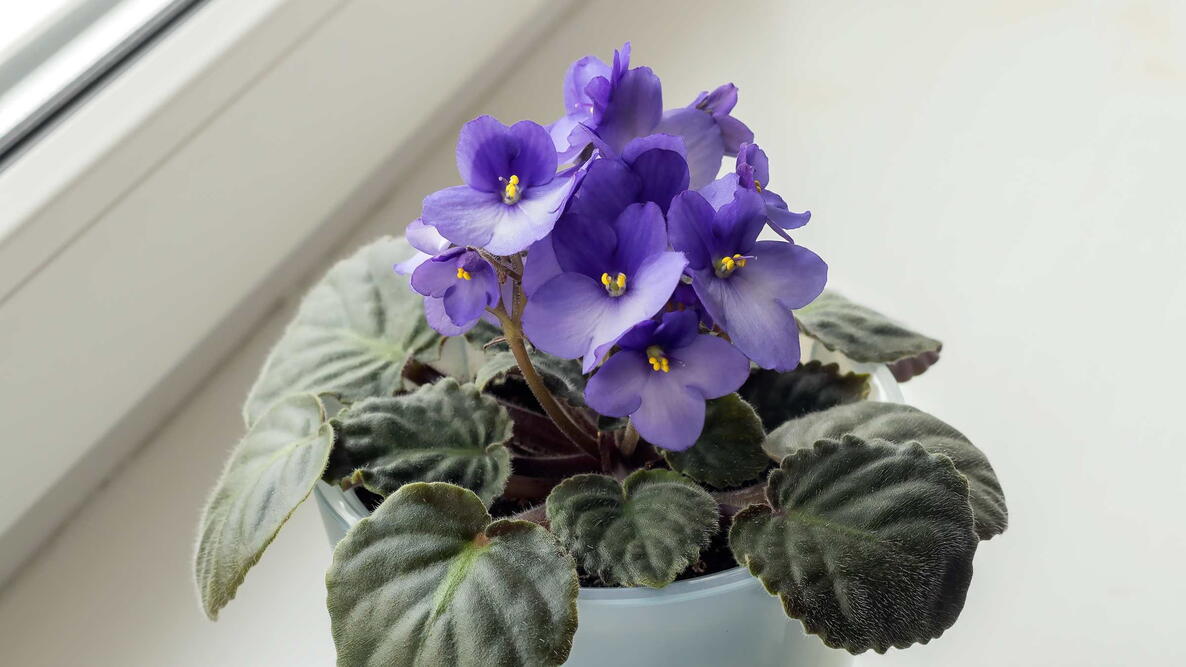
Caption
African Violets are delightful houseplants and will brighten up any room with their purple, pink, or white colors.

Planting
How to Plant African Violets
- You can use an African violet–specific potting mix or an all-purpose potting soil, as long as it is well-draining. Here’s how to create your own mix.
- Keep African violets planted in small pots and repot every few years to mix in fresh soil. Being a bit pot-bound encourages African violets to bloom more, so don’t be too quick to give them more space.
- The soil should be loose and well-draining; high organic matter content is a plus. Learn about organic soil amendments.
- When repotting African violets, don’t plant them any deeper than they were planted previously, and be careful not to bury the crown. African violets‘ stems can be susceptible to rot if kept too moist.
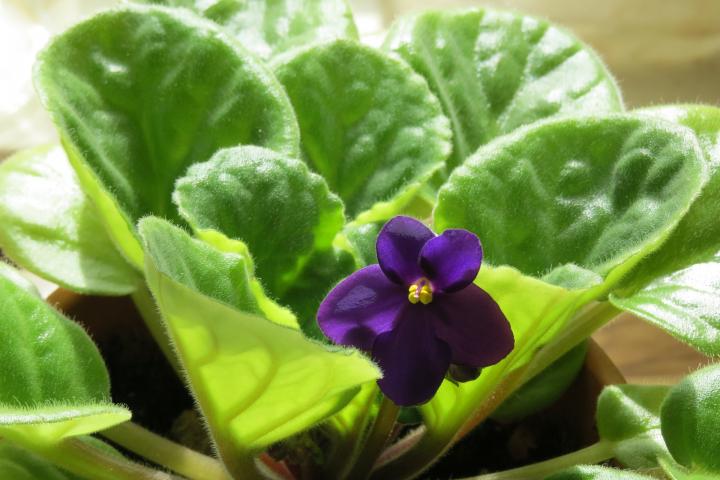
Growing
How to Care for African Violets
- According to Julie Weisenhorn, an Extension educator at the University of Minnesota, “If you are comfortable, your African violet is comfortable.” Optimal room temperature for growing African violets is between 60° and 80°F and ideally 70°F.” However, some are more tolerant of cooler conditions. In any case, keep them away from drafty windows in winter.
- Plants should be shifted to larger pots as they grow, but keeping African violets slightly root-bound can encourage them to bloom. One sign that your violet needs repotting is wilted leaves.
- The fuzzy leaves have a tendency to collect dust and dirt. Brush them off gently with a small, soft-bristled paintbrush.
For more information on African violets, visit the website of the African Violet Society of America.
African Violet Troubleshooting Chart
| Problem | Likely Cause | Solution |
|---|---|---|
| No flowers | Too little light; too much nitrogen; plant too cold | Move to bright, indirect light; switch to a bloom-boosting fertilizer; keep temps 65°–75°F |
| Leaves turning yellow | Overwatering; poor drainage; old leaves | Allow soil to dry slightly between waterings; use a pot with drainage; remove aging outer leaves |
| Wilting leaves | Root rot or underwatering | Check soil moisture; trim rotted roots and repot in fresh mix; water consistently |
| Mushy or collapsing crown | Crown rot from cold water or water sitting on leaves | Water from the bottom; avoid splashing leaves; keep water lukewarm |
| Brown leaf spots | Cold water; sun scorch | Use room-temperature water; keep out of direct sunlight |
| Pale or stretched leaves | Insufficient light | Move plant closer to a bright window or use grow lights |
| Curled or brittle leaves | Low humidity; cold drafts | Increase humidity with a tray or humidifier; move away from vents |
| White crust on soil | Salt buildup from fertilizer or hard water | Flush soil monthly with distilled water; fertilize lightly |
| Slow growth | Root-bound plant; nutrient deficiency | Repot every 6–12 months; fertilize regularly at low strength |
| Flowers fade quickly | Heat stress; dry air | Keep temperatures moderate; increase humidity |
Use room-temperature water, as chilled water can leave marks on the leaves.
Leaves are susceptible to rot and fungal spots if kept in high humidity, so water African violets from the bottom to avoid getting excess water on the foliage.
Artificial lighting works well, too. Use fluorescent or LED bulbs to supplement natural lighting.
Thin, dark green leaves and leggy stems tell you the plant is getting too little light; light green or bleached leaves indicate too much light.
Overfertilizing is a more common problem than underfertilizing since most soil mixes come infused with plenty of nutrients.
Types
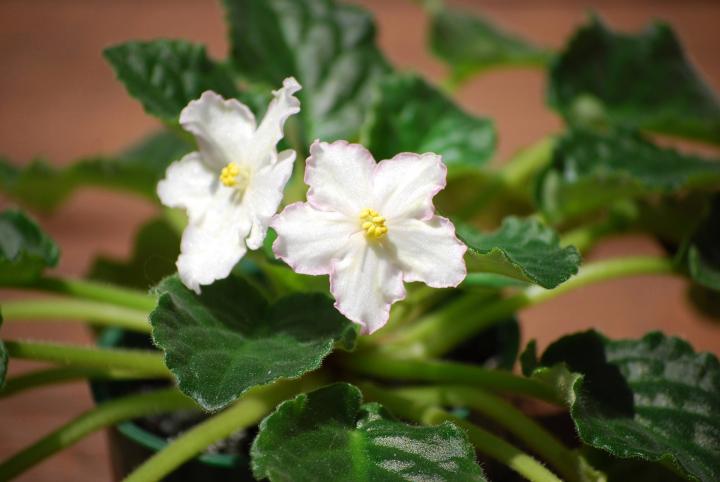
Hundreds of varieties and hybrids exist, from miniature violets to trailing varieties! They differ mainly in the colors of their flowers, which range from white to purple, though some varieties also have variegation in their foliage and flowers.
African violets are typically classified by size, based on how wide they grow:
- Miniature: less than 8 inches across
- Standard: 8–16 inches across
- Large: more than 16 inches across

More Like This


Hi Carol, and thanks for your question. A solitary African violet will flower just fine; a mate is not required.

Hi Linda,
Thanks for the question. You can put a liquid fertilizer in your water chamber, but there are a few things you will want to take into consideration. Since your African violet will be continuously pulling from the fertilizer/water mixture, you only want to use a very small amount to make sure it is well diluted so it does not burn your plant's roots. You want to add the fertilizer to fresh water.
During the growing season, you can add a small amount with each water change, but you just want to be careful at first because you do not want to overfertilize. It would be best to see how it responds by adding it every other change in the beginning.
Hope this helps!
Hi Velma,
It sounds like your African violet has produced an offset, which emerges from the base of the plant. If that is the case, you can certainly divide your plant and plant the offset in its own pot.
Spring or summer is the best time to divide an African violet because it is actively growing and gives the plant the best chance at recovering before it goes into the semi-dormant season.
Depending on when you last repotted your African violet, this would also be a good time to give your main plant a refresher. Just remember that African violets prefer to be slightly root bound so pick a container that matches the root size.
Here are a few references for dividing and repotting your African violet.
https://africanvioletsocietyofamerica.org/learn/violets-101/repotting-a-violet-with-a-neck/
Hope this helps!
- « Previous
- 1
- 2
- …
- 10
- Next »

Comments