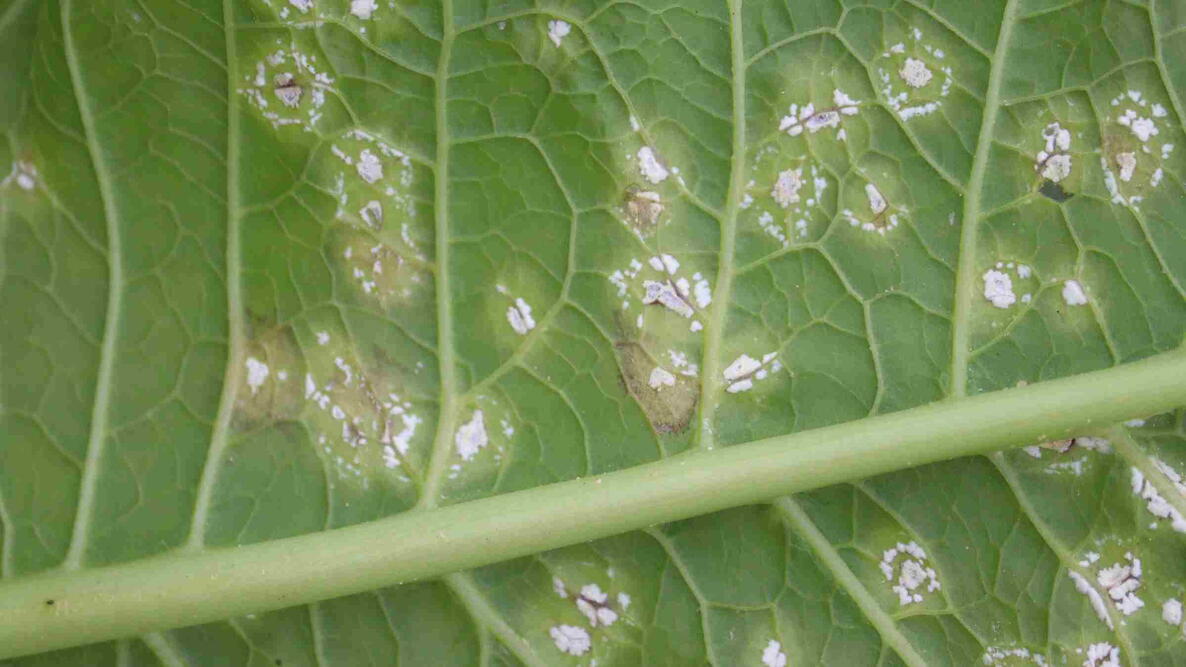
Like many fungal pathogens, control focuses on limiting the source of spores and making the environment less favorable for white rust. Regular garden walks to remove infected leaves, known as pest scouting, help slow the spread.
The spores of white rust require several hours of leaf wetness to germinate and get established, so minimizing the time leaves are wet is key. We can’t control the rain, but we can control how and when we provide supplemental irrigation. Overhead watering and splashing create ideal conditions for this fungus to get a foothold.
- Encourage airflow in the leaf canopy by utilizing proper spacing when planting.
- Water plants from below using a hose with a long wand, a drip tape, or soaker hoses.
- If watering from above with a sprinkler, do so in the morning so leaf surfaces have time to dry before the cooler temperatures of the evening.
- If you discover white rust in the garden, immediately remove the infected leaves to slow the spread and either bury or burn them. Burying infected tissues prevents new spores from dispersing in the wind to suitable hosts. Don’t compost them; it won’t kill all the spores.
- Sanitize garden tools with rubbing alcohol after using them on infected tissue.
Good garden sanitation and crop rotation, from brassicas to other flowers or vegetables, helps reduce the inoculum for next year. In the fall, remove all infected brassica vegetation and, like above, either bury or burn it. Don’t toss it in the compost pile. It can be hard to get all the foliage if you wait until it’s brown and crispy, so snag it when it starts to die back but is still intact.
If you’ve had white rust issues, remember that it overwinters in the soil. Crop rotation, such as picking a different raised bed or portion of the garden for brassicas, can help reduce the likelihood of infection next year. This is an obligate parasite, meaning it needs a living host, so denying it a host for several years provides you with a good chance of getting rid of the problem.
FAQ: White Rust in the Garden
Q1: How can I tell if my cabbage, broccoli, or kale has white rust?
A: Look for small yellow spots on the upper leaf surfaces and tiny creamy-white pustules on the undersides. These white pustules are the key white rust symptom and often appear “cheesy.” Early detection helps prevent the disease from spreading.
Q2: Which garden vegetables are most at risk from white rust?
A: White rust mainly affects cabbage, broccoli, kale, collards, cauliflower, bok choy, mustard greens, turnips, and radishes, plus ornamental brassicas like sweet alyssum, candytuft, and wallflower.
Q3: How does white rust spread in a home garden?
A: The disease spreads in cool, wet conditions. Spores need several hours of leaf wetness to infect new plants. Overhead watering, rain, and splashing water help move spores from plant to plant. It can also survive in soil or plant debris over winter.
Q4: What can I do to prevent white rust in my vegetable garden?
A: Focus on reducing leaf wetness and spore sources:
- Water at the base with drip or soaker hoses.
- Water in the morning to let leaves dry.
- Space plants for good airflow.
- Remove and safely dispose of infected leaves.
- Rotate crops, especially brassicas, to different beds each year.
Q5: Can I treat white rust once it appears?
A: Yes, but it’s easier to manage early. Remove infected leaves and bury or burn them (don’t compost). Sanitize garden tools after use. Organic fungicides can help if needed, following the instructions carefully.
Q6: Will white rust return next season?
A: Possibly. Spores can overwinter in soil and debris. Crop rotation and thorough garden cleanup in the fall can reduce the risk of recurrence.
Comments