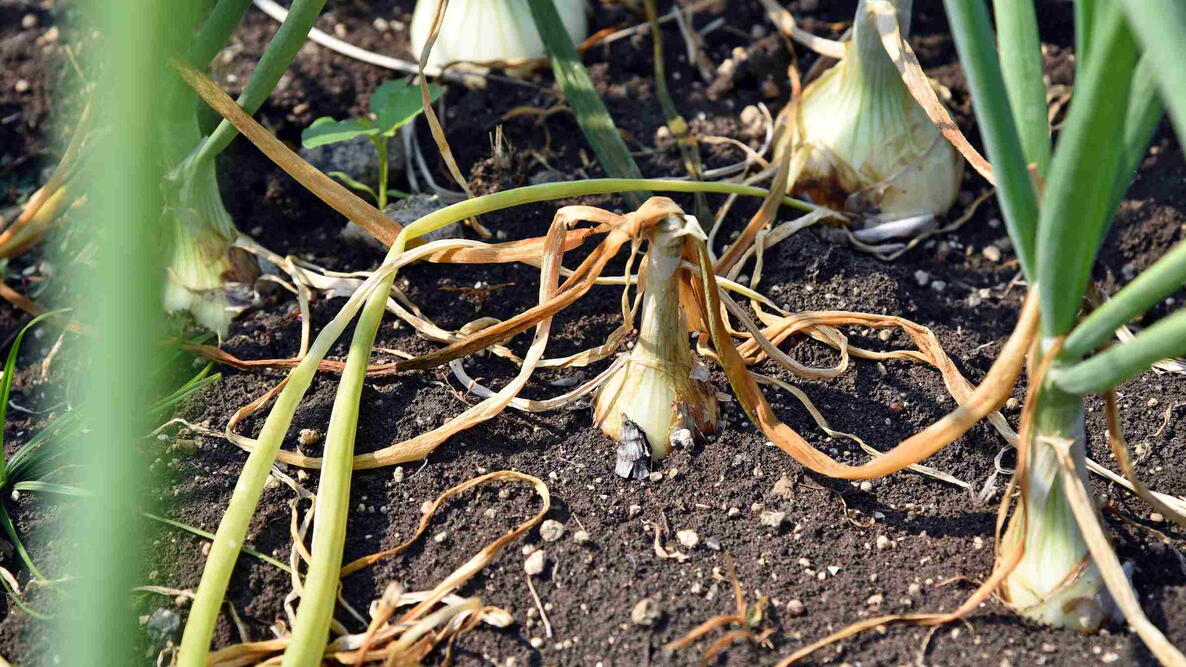
Caption
White rot (Sclerotium cepivorum) attacks onion roots and bulbs, a persistent threat in allium crops.

White rot is a fungal disease that affects alliums, a plant group that includes onions and garlic. It is caused by a soil-borne fungus that likes cool, moist conditions—the very same conditions onions and garlic prefer. First, your alliums begin to yellow earlier than they should, and the leaves start to die back. If you pull up a plant to check on it, you see white fungus. While many gardeners never encounter it, if you do, here are a few steps to follow.
What Is White Rot?
White rot is a fungal disease that affects alliums, a plant group including onions, garlic, and related species, and is a significant problem worldwide. It is caused by the fungus Sclerotium cepivorum (also referred to as Stromatinia cepivorum) and affects only alliums, not other plants. White mold found on tomatoes, peppers, and other hosts is usually Sclerotinia sclerotiorum, a different species altogether.
White rot is a soilborne fungus that likes cool, moist conditions, just like our onions do. In fact, the very same climatic conditions that our alliums like are also the best for white rot growth. Go figure, eh? Soil temperature is a controlling factor. White rot growth is fastest at soil temperatures around 60℉ and pretty much stops once the soil reaches about 75℉.
Like other fungi, white rot has mycelium, which can extend through the soil. But instead of producing airborne spores, it creates little black round bodies called sclerotia. They’re about pinhead or poppy seed-sized. For you flower growers, they look kind of like snapdragon seeds. The sclerotia are the problem. Like weed seeds, they can lie dormant in the soil for years. In the case of white rot, sclerotia can wait in the soil for 20 to 40 years for a suitable host to arrive, making crop rotation ineffective at controlling this problem.
Dormant white rot sclerotia are triggered to germinate by exudates from the roots of allium plants. Exudates are compounds released or secreted by the roots of plants. In the case of alliums, they contain sulfur compounds that trigger sclerotia to wake up. Once awake (germinated), mycelium grows and searches out the roots of our onions and garlic, attaching itself and beginning the attack.

Control and Prevention

White rot is spread by infected plant material or soil movement, but is not airborne. In that lies some hope for onion and garlic growers. The best control is quite literally to avoid introducing this pathogen into our gardens in the first place.
The key to avoiding white rot is to plant only clean, certified seed, cloves, or starts. As much as I love the farmer’s market, this is a case where buying seed garlic or onion seeds and starts from a professional, inspected source can be a good idea.
Many of us will never have a problem with white rot, but if you do, here are a few steps to follow:
- Always discard (do not compost) any visually diseased or unhealthy-looking seed, cloves, or starts.
- Don’t reuse allium crops from an infected bed as seed for the next year.
- Because of the extreme lifespan of the white rot sclerotia, crop rotation will not prevent a recurrence. If you found white rot in a garden bed, it’s safe to plant other crops there next year, but discontinue it for alliums.
- Clean and sanitize any tools used in an infested bed before moving to a new area of the garden, or you may transfer the fungus to a new spot. Even footwear can transport the disease. Pretend you are a surgeon and practice overkill when washing and sanitizing.
Two More Control Ideas
Solarization may be useful for gardeners with smaller garden beds. The idea is to use clear tarps (during a hot part of the year) to capture heat, raising the soil temperature high enough to kill weed seeds and some fungal pests. Laboratory testing indicated white rot sclerotia are killed by exposure for 8 days or longer at 95℉. In the garden, allow one to two months of solarization for the best results. Visit the University of California’s page for details on how solarization works and how to do it.
If you have a garden bed with a white rot issue and love to do a little problem-solving with household remedies, you may be in luck. White rot sclerotia are triggered to germinate by the sulfur compounds released from allium roots. If they germinate but can’t find a host plant, they’ll starve. Add smug snickering sounds here. Studies indicate that applying and working garlic powder into the top 6 inches of soil may reduce the population of viable sclerotia by 90% or more.
The suggested application rate is 125 to 135 pounds per acre, which (beware of doing math in public) converts to about 1.5 ounces for a 4’x8’ bed, or about five ounces per 100 square feet of garden space. If you go this route, garlic powder can be purchased in one-pound containers online, significantly cheaper than the little retail bottles in the spice aisle.

More Like This

Comments