White Rust in the Garden: How to Identify, Prevent, and Treat It

Symptoms of white rust in Mustard plant

Caption

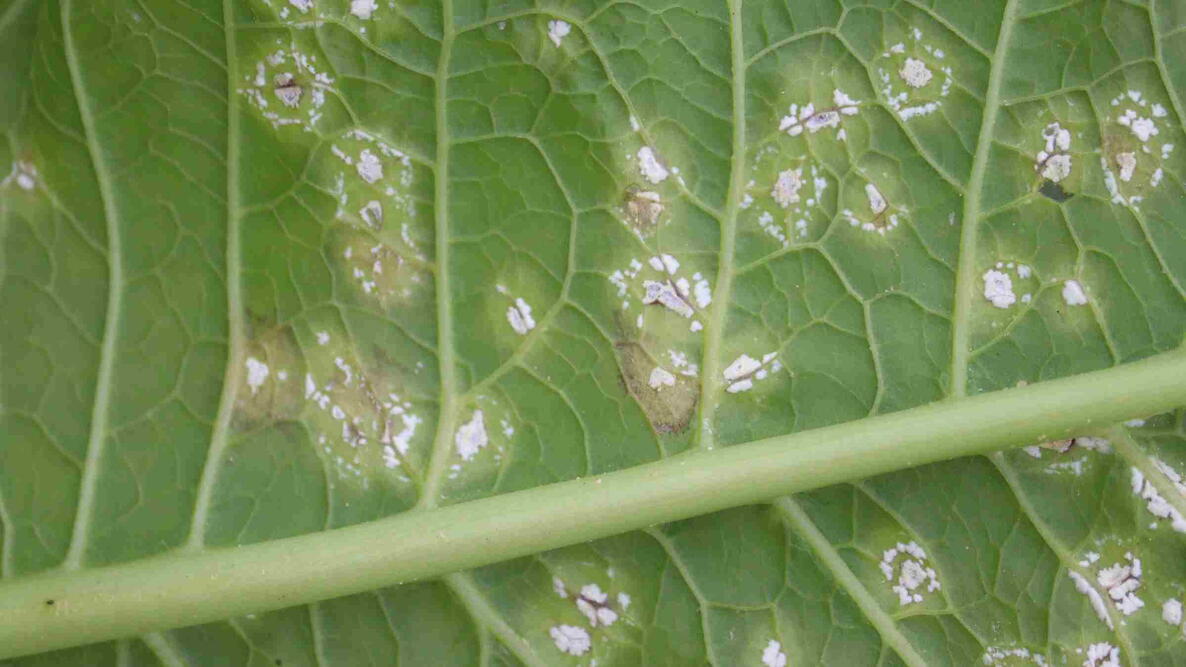
White blister rust (Albugo candida) on horseradish (Armoracia rusticana), showing characteristic white pustules on the green leaf surface.

Photo Credit
Kazakov Maksim
Subhead

See the Signs of White Rust on Cabbage, Broccoli, and Kale

Written By: Andy Wilcox Master Gardener and Gardening Contributor

This isn’t the annoying, reddish-orange substance spreading around the wheel wells of your pickup truck. But in the garden, white rust can be a problem, affecting many of our favorite crops, such as kale, collards, mustard greens, and other cole crops. If your leaves look a little off, you may be dealing with white rust disease.

What is White Rust?

Rusts are a broad category of damaging plant pathogens that can infect everything from white pines to radishes. White rust, also called white blister or white blister rust, is caused by the pathogen Albugo candida. It’s an oomycete, not a true fungus, but actually a water mold. This is why moisture control is so important in preventing white rust. For simplicity, we’ll refer to it as a fungal disease because it behaves similarly to common garden fungi like Pythium and Phytophthora, which cause damping off.

This disease primarily affects plants in the Brassicaceae family, including cabbage, broccoli, cauliflower, bok choy, kale, collards, turnips, radishes, and mustard greens, as well as ornamental brassicas like sweet alyssum, candytuft, and wallflower.

White rust disease needs a living host to complete its life cycle and thrives in cool, moist garden conditions. In late season, the pathogen produces overwintering sports called oospores, which survive in soil, plant debris, or alternative hosts like pigweed. In spring, these oospores germinate in wet soil, producing zoospores that infect new plants. Once established, white rust forms blisters or pustules on the undersides of leaves. When mature, the pustules rupture, releasing powdery spores that can spread to nearby plants via wind or splashing water.

White rust prefers cool, flannel-shirt or cozy-hooded-sweatshirt weather, about 50-65°F, and high humidity, which provides the free water and wet leaves it needs. Leaves that stay wet for longer than 6 hours in cool temperatures provide an optimal condition for spores to germinate. 

Identification

Rusts get their name from the appearance of the pustules that develop on the infected leaves and the powdery sporangia. It can resemble the fine dust you might imagine on a rusty surface, but it doesn’t cover the entire leaf like powdery mildew. With white rust, the dusty material is a creamy white, rather than orange or brown. 

white rust on mustard leaf
White rust symptoms on a mustard plant, showing white pustules on the underside. Credit: Rupinder Singh

Spotting White Rust on Cabbage, Broccoli, and Kale

White rust symptoms start as small, irregular yellow dots on the upper leaf surface. As the infection progresses, tiny white pustules appear on the underside of leaves, giving a speckled look. These creamy white pustules, often described as “cheesy,” are the key sign of white rust disease. If you notice raised white dots that aren’t insect eggs, your brassicas may be infected.

Unlike powdery mildew, the white rust spores don’t cover the entire leaf—they appear in distinct pustules that eventually release more spores to spread the infection.

white rust albugo parasite on the leave
White rust (Albugo candida), showing the parasite’s characteristic white pustules on the plant surface. Credit: Young Swee Ming

How White Rust Spreads

White rust disease spreads most easily in cool, wet conditions. The spores need several hours of leaf wetness to germinate, so prolonged moisture on leaves encourages infection. Overhead watering, rain, and splashing water all create ideal conditions for white rust to take hold.

Control and Prevention

Like many fungal pathogens, control focuses on limiting the source of spores and making the environment less favorable for white rust. Regular garden walks to remove infected leaves, known as pest scouting, help slow the spread.

The spores of white rust require several hours of leaf wetness to germinate and get established, so minimizing the time leaves are wet is key. We can’t control the rain, but we can control how and when we provide supplemental irrigation. Overhead watering and splashing create ideal conditions for this fungus to get a foothold.

  • Encourage airflow in the leaf canopy by utilizing proper spacing when planting.
  • Water plants from below using a hose with a long wand, a drip tape, or soaker hoses.
  • If watering from above with a sprinkler, do so in the morning so leaf surfaces have time to dry before the cooler temperatures of the evening.
  • If you discover white rust in the garden, immediately remove the infected leaves to slow the spread and either bury or burn them. Burying infected tissues prevents new spores from dispersing in the wind to suitable hosts. Don’t compost them; it won’t kill all the spores.
  • Sanitize garden tools with rubbing alcohol after using them on infected tissue.

Good garden sanitation and crop rotation, from brassicas to other flowers or vegetables, helps reduce the inoculum for next year. In the fall, remove all infected brassica vegetation and, like above, either bury or burn it. Don’t toss it in the compost pile. It can be hard to get all the foliage if you wait until it’s brown and crispy, so snag it when it starts to die back but is still intact. 

If you’ve had white rust issues, remember that it overwinters in the soil. Crop rotation, such as picking a different raised bed or portion of the garden for brassicas, can help reduce the likelihood of infection next year. This is an obligate parasite, meaning it needs a living host, so denying it a host for several years provides you with a good chance of getting rid of the problem. 

FAQ: White Rust in the Garden

Q1: How can I tell if my cabbage, broccoli, or kale has white rust?

A: Look for small yellow spots on the upper leaf surfaces and tiny creamy-white pustules on the undersides. These white pustules are the key white rust symptom and often appear “cheesy.” Early detection helps prevent the disease from spreading.

Q2: Which garden vegetables are most at risk from white rust?

A: White rust mainly affects cabbage, broccoli, kale, collards, cauliflower, bok choy, mustard greens, turnips, and radishes, plus ornamental brassicas like sweet alyssum, candytuft, and wallflower.

Q3: How does white rust spread in a home garden?

A: The disease spreads in cool, wet conditions. Spores need several hours of leaf wetness to infect new plants. Overhead watering, rain, and splashing water help move spores from plant to plant. It can also survive in soil or plant debris over winter.

Q4: What can I do to prevent white rust in my vegetable garden?

A: Focus on reducing leaf wetness and spore sources:

  • Water at the base with drip or soaker hoses.
  • Water in the morning to let leaves dry.
  • Space plants for good airflow.
  • Remove and safely dispose of infected leaves.
  • Rotate crops, especially brassicas, to different beds each year.

Q5: Can I treat white rust once it appears?

A: Yes, but it’s easier to manage early. Remove infected leaves and bury or burn them (don’t compost). Sanitize garden tools after use. Organic fungicides can help if needed, following the instructions carefully.

Q6: Will white rust return next season?

A: Possibly. Spores can overwinter in soil and debris. Crop rotation and thorough garden cleanup in the fall can reduce the risk of recurrence.

About The Author
Andy Wilcox

Andy Wilcox

Master Gardener and Gardening Contributor

Andy Wilcox is a freelance writer, flower farmer, and master gardener with over 25 years of experience in gardening, horticulture, and forestry. He is the co-owner of Stone’s Throw Flowers, a business...