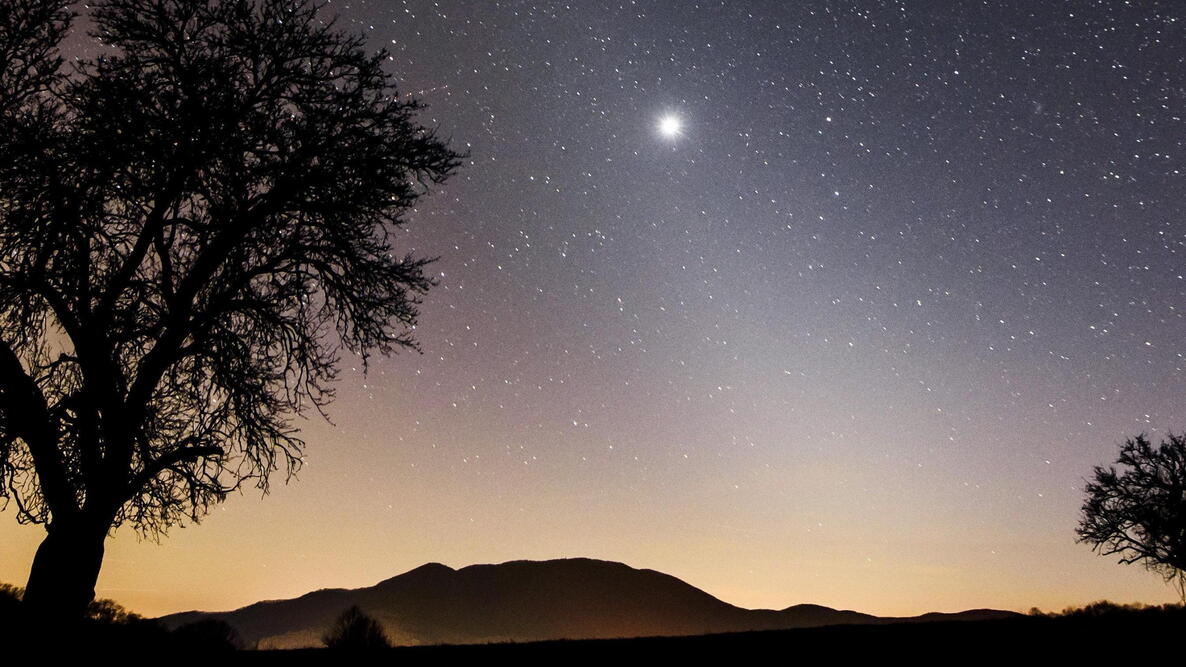

February 2026 offers some of the year’s most beautiful and accessible stargazing opportunities. From the glowing Full Snow Moon to rare planet alignments and the brilliance of Orion the Hunter, the winter sky delivers unforgettable sights—no telescope required. Whether you’re a casual skywatcher or a seasoned observer, this guide highlights the best night sky events in February 2026, including visible planets, moon phases, and must-see constellations.
| Date | Event | What to Look For |
|---|---|---|
| February 1, 2026 | 🌕 Full Snow Moon | The Moon reaches peak illumination at 5:09 P.M. EST, lighting up the winter sky. |
| Early–Late February | 🪐 Saturn Visible | Saturn appears low in the southwest after sunset—its final month of visibility. |
| February 8, 2026 | ☿ Mercury Appears | Mercury emerges as an evening star, climbing higher each night. |
| February 17, 2026 | 🌑 New Moon | Dark, moonless skies create perfect conditions for stargazing. |
| February 20, 2026 | ✨ Planet Alignment | Venus, Mercury, Saturn, and the Moon form a rare vertical line after sunset. |
| February 28, 2026 | 🌟 Mercury & Venus | Venus shines brightly as Mercury fades low in the western sky. |
February 2026 Night Sky
This month, Saturn is on display! The ringed planet appears as early as 6:00 P.M. as the only “bright star” in the southwest. As February progresses, you’ll see it getting lower and lower each evening, with this month being its last one of visibility.
February 1: The Full Snow Moon
Known as the Snow Moon, the full Moon will reach peak illumination at 5:09 P.M. EST on Sunday, February 1. It certainly makes for quite a sight in the clear winter sky.

February 8: Mercury in the Night Sky
Tonight, Mercury appears as as evening star. Starting out low on the horizon, it will move upward in the sky as the month progresses. Mid month, you will see the Mercury conspicuously float above our neighboring planet, Venus.
February 17: New Moon
When the dark skies lack moonlight, it’s the perfect time to observe the stars and constellations in the sky. Learn more about the magic of the New Moon.
February 20: Planets in Alignment
Be sure to look up tonight for one of the month’s more stunning sights. Head outside around 6:00 P.M. with your gaze to the west, where a rare vertical line will appear. The line-up includes (from bottom to top), Venus, Mercury, Saturn, and the Moon.

February 28: Mercury and Venus
On the final day of the month, Mercury will have dimmed and dropped lower in the western sky, while Venus now dazzles. Venus will now appear 7 degrees high as it begins it’s long 2026 apparition as an evening star.
February Stargazing Highlights
Opposite the sky from Venus, extraordinary celestial brightness fills the east at nightfall.
- Betelgeuse, Castor, Pollux, and Aldebaran shine at magnitude 1.
- Meanwhile, the stars Procyon, Rigel, and Capella—surrounding Orion—boast a magnitude 0.
Orion the Hunter
The brighter constellation in the night sky is Orion the Hunter, who reigns over the winter sky. Look first for that bright belt of three stars. The hunter’s shoulder is marked by its bright red star, Betelgeuse, and its knee is marked by a blue-white star, Rigel.
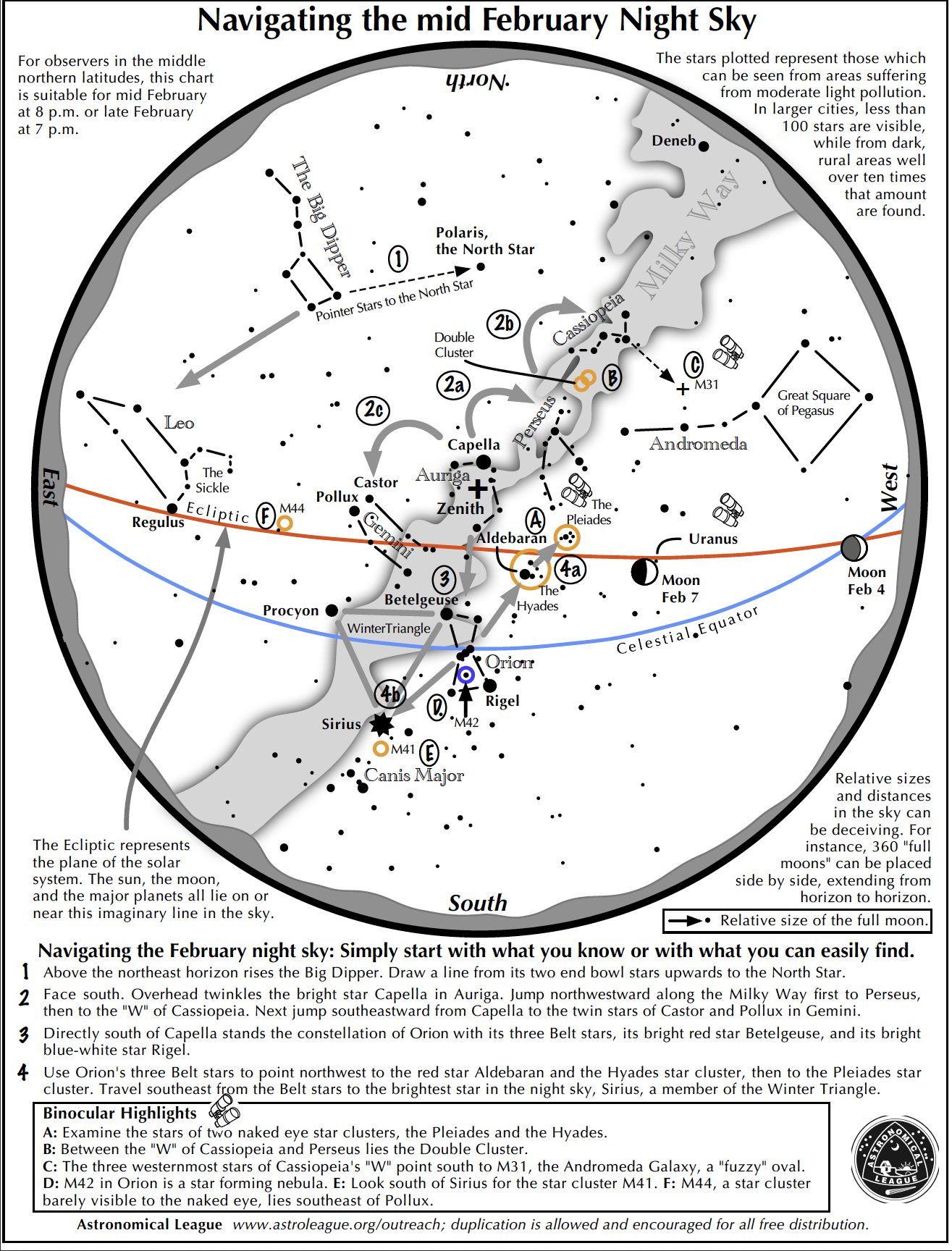
See our February Sky Map to navigate to the constellation Orion.
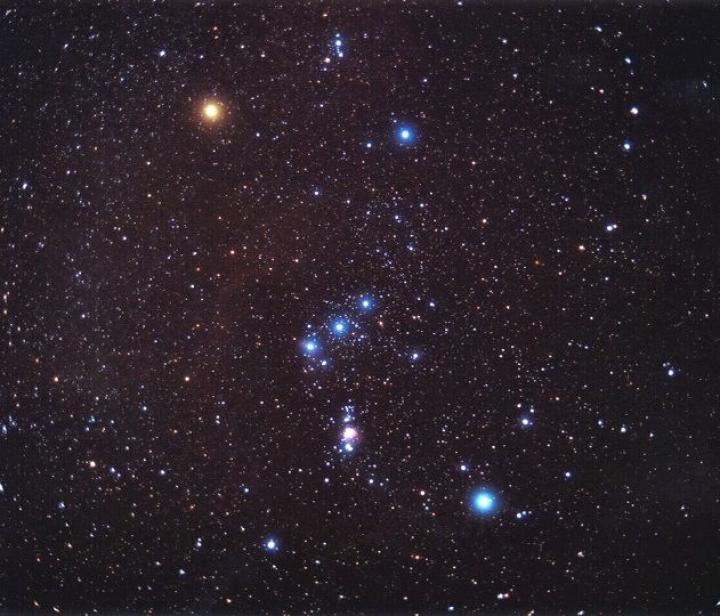
Follow the belt of Orion down and left to find blue-white Sirius, the brightest star in the night sky. Sirius lies in the constellation Canis Major, the Great Dog and companion to Orion. See tips on finding Sirius, the brightest star in the February sky.
Use Orion’s three Belt stars to point northwest to the red star Aldebaran and the Hyades star cluster, then to the Pleiades star cluster.
Then, travel southeast from the Belt stars to the brightest star in the night sky, Sirius. Above and left of Sirius is another bright star, a yellowish giant named Procyon. Procyon is part of the constellation Canis Minor, the smaller dog and Orion’s second companion. Procyon, Sirius, and Betelgeuse form a geometrical pattern called the Winter Triangle.
The Big Dipper
This is also a good time to view the Big Dipper far above the northeast horizon. It will climb upward during the evening hours to reach its high point for the night around midnight. Draw a line from its two end bowl stars upwards to the Polaris, the North Star. See tips on finding the Big Dipper and the North Star.
Frequently Asked Questions
What planets are visible in February 2026?
Saturn, Mercury, and Venus are all visible in the evening sky. Saturn appears early in the month, while Mercury and Venus become increasingly prominent later in February.
Is February a good month for stargazing?
Yes! February’s long winter nights and crisp air provide excellent viewing conditions, especially around the New Moon on February 17.
Can I see Orion in February without a telescope?
Absolutely. Orion the Hunter is the brightest constellation in the winter sky and can be easily seen with the naked eye throughout February.
What is the best time to view the February night sky?
The best viewing is shortly after sunset for planets and later in the evening for constellations like Orion, Sirius, and the Winter Triangle.
See more the Top 2026 Astronomy Sights!
What celestial event are you most excited to see this February 2026? Let us know in the comments!

More Like This

Yes! Polaris always stays in roughly the same place in the sky. It would appear directly overhead if you stood at the north pole, but farther south, it indicated the direction of north.

Comments