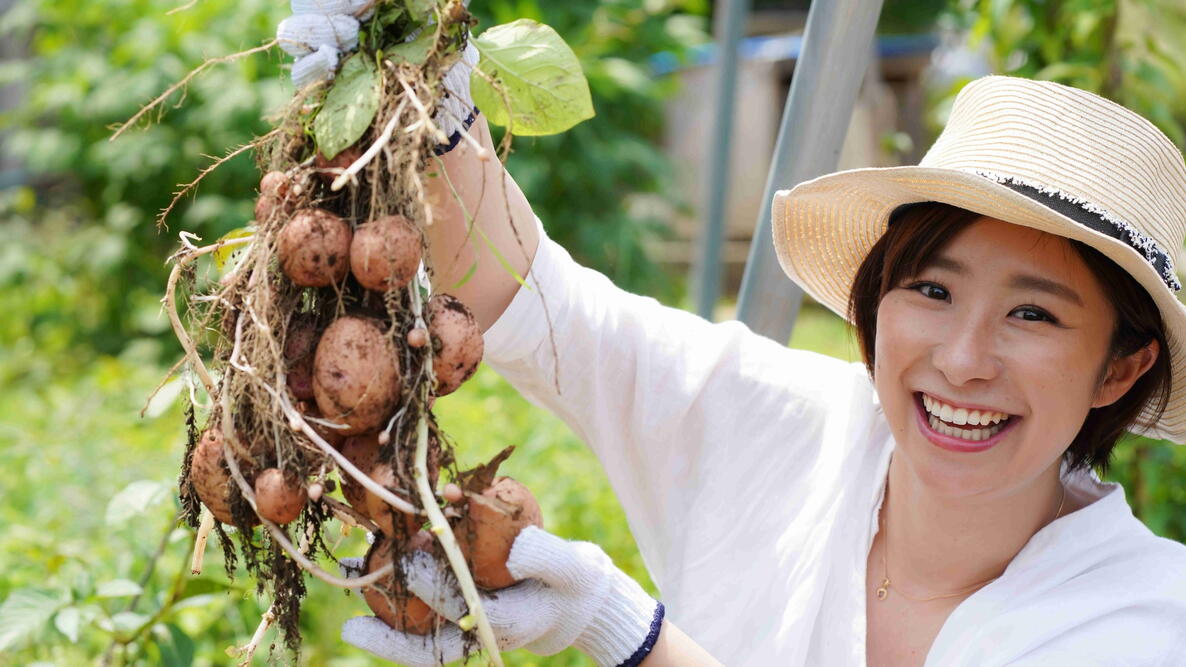

There is something unusually satisfying about digging potatoes. Unlike tomatoes, beans, or berries, you can’t see your crop waiting for you. You have to reach into the soil and find out what’s there.
Digging potatoes is a little like digging for gold. Unlike tomatoes, beans, or berries, you can’t see your crop waiting for you. You have to reach into the soil and discover what’s there.
Kirsten Colantino knows that feeling well. Every fall, she returns to her family’s farm in Monticello, Maine, with her children, Cully and Florence, for potato harvest.
Kirsten grew up spending summers and winters there herself. Her grandfather, Lawrence Good, founded Good Farms; her uncle Tom carried it on. Now another generation is learning the cold mornings, long harvest days, and particular pleasure of pulling food from the earth with their own hands.
For the children, digging potatoes can feel a little like Christmas. Kirsten understands why.
A Family Harvest Tradition
Cully, 13, and his younger sister, Florence, return to the farm each year to help with harvest and spend time with family.
“I was raised spending summers and winters on the farm,” Kirsten says. “My grandfather started it. His name was Lawrence Good, and he named it Good Farms. He passed it on to my Uncle Tom, who has worked on the farm all his life. Now my kids have been following this tradition.”
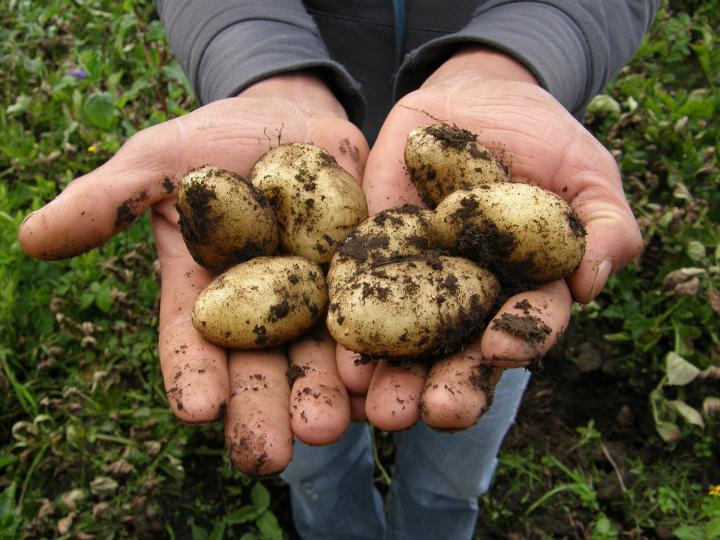
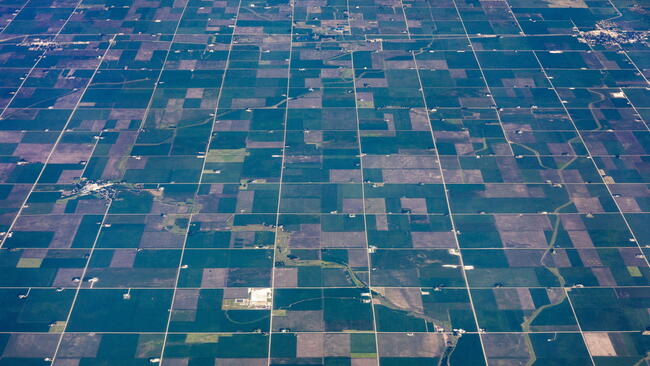
The farm covers about 1,000 acres, with 48 acres devoted to potatoes. The crop goes into the ground in spring, when the soil is still cool and heavy.
By summer, the fields look entirely different.
“You might be surprised by how beautiful potato fields are,” Kirsten says. “Beautiful, green low foliage covers the ground with white flowers. It’s so majestic to look out at the fields to see green and white.”
By fall, the foliage yellows and dies back. The crop is ready.
Waiting for the Frost to Lift
Potato harvest in northern Maine usually falls between late September and mid-October, and the weather sets the schedule.
On cold mornings, the children may get up early only to find frost covering the fields. Sometimes the family must wait until afternoon before digging can begin. The ground needs to be warm enough and dry enough to work.
Once conditions are right, the equipment starts moving.
Windrowers travel through the rows first, lifting potatoes from the soil and laying them on top of the ground.
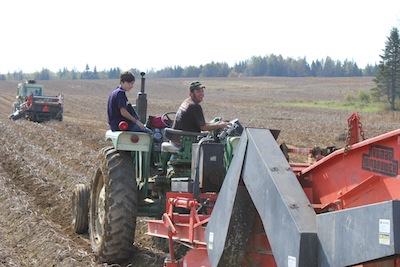
Harvesters follow, separating potatoes from soil, vines, and rocks before carrying them up conveyors into waiting trucks.
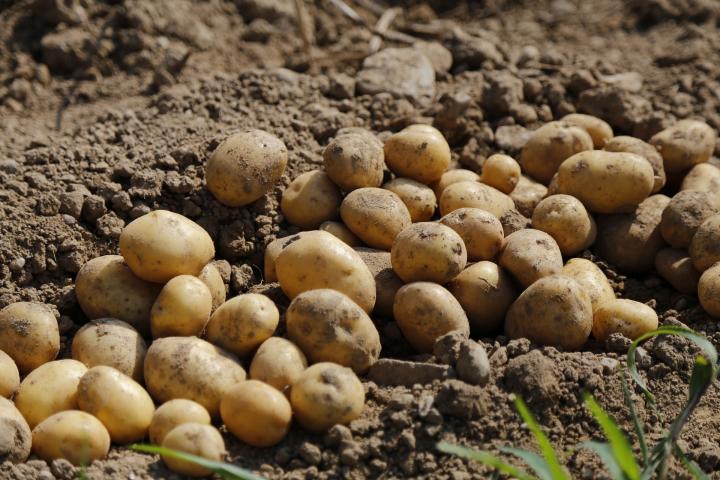
The trucks haul the crop to large, cool, dark storage buildings, where the potatoes wait to be sold to grocery stores and French fry makers.
The following year, these fields will grow a different crop, such as wheat, as part of a rotation that helps protect the soil.
Digging Up Treasures
The machines are impressive. But the real magic happens closer to the ground.
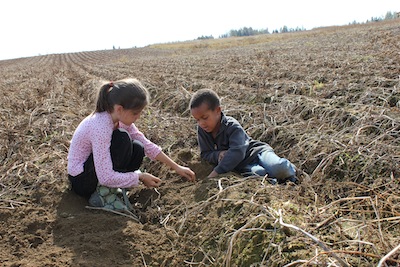
Cully and Florence dig with their hands, feeling through the soil for what they can’t yet see.
Each potato is a little surprise—a large one, a tiny one, a strange shape, another hiding underneath. Every find feels like a small piece of buried treasure.
The children’s eyes light up with every find.
That sense of discovery is part of what makes harvesting potatoes different from picking many other garden crops. The plant aboveground gives away very little. The reward stays hidden until you dig.
And perhaps that is why it is so hard to stop. One potato suggests there might be another. Then another.
.JPG)
More Than a Harvest
Kirsten sees more than excitement in those long harvest days.
“They see how hard everyone is working in the fields and how hard it is to move earth,” she says. “The potatoes must be harvested all at once, from 6:30 A.M. to 8 P.M., seven days a week, until it’s done.”
By the end, everyone is exhausted—but happy. The farm holds a harvest celebration to thank the workers and everyone who helped bring in the crop.
Then the children get to eat what they helped dig from the ground.
“They’re participating in the circle of life,” Kirsten says.
Maybe that is part of the pleasure of growing potatoes anywhere, whether on a large farm or in a backyard garden. Much of gardening happens in plain sight. Potatoes keep their progress hidden until the very end.
Then comes the moment when you put your hands into the soil and discover what the season has made.
At Good Farms, that small thrill has become something larger: another harvest, another season on the same family land, and another generation learning where food comes from.
It may not be Christmas in all its meaning, but there is something gift-like about it.
A potato pulled from the earth. A family tradition passed on. A little treasure that was there all along.


Comments