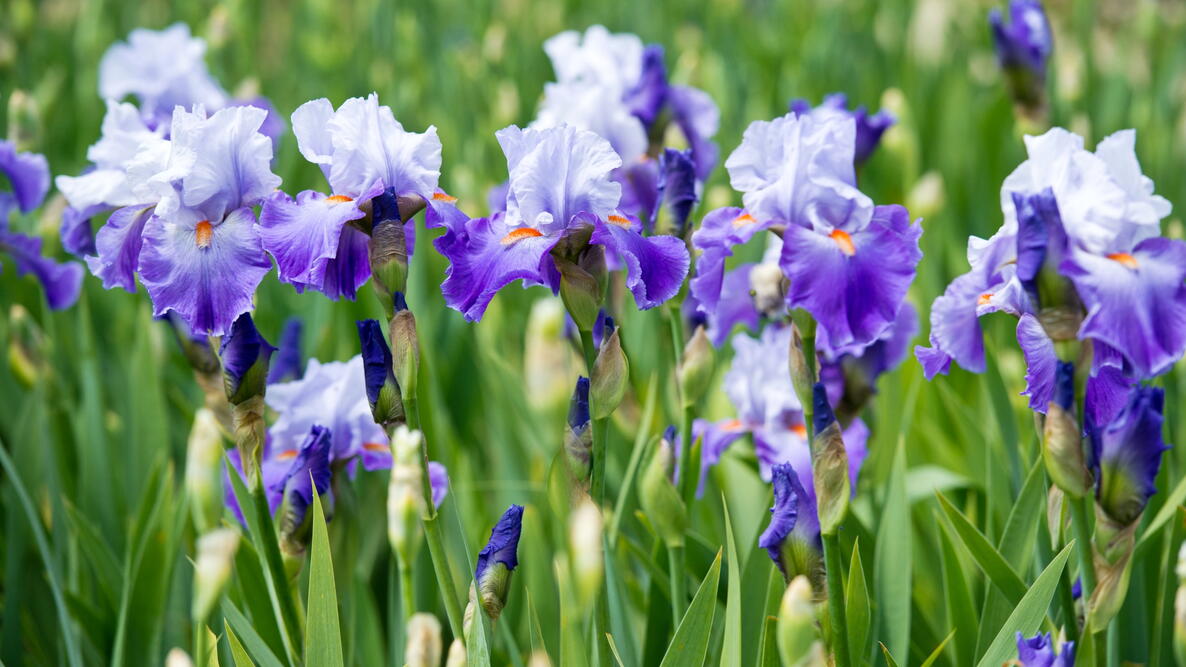

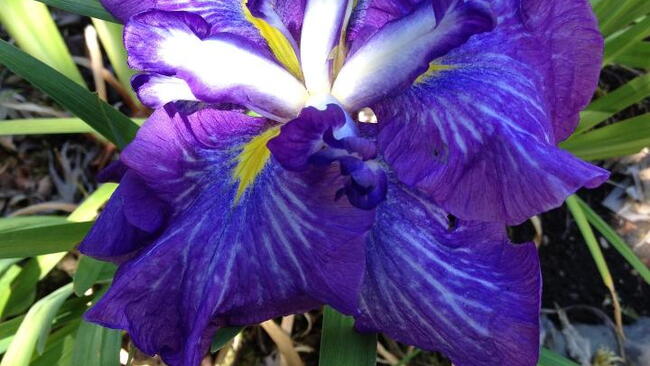
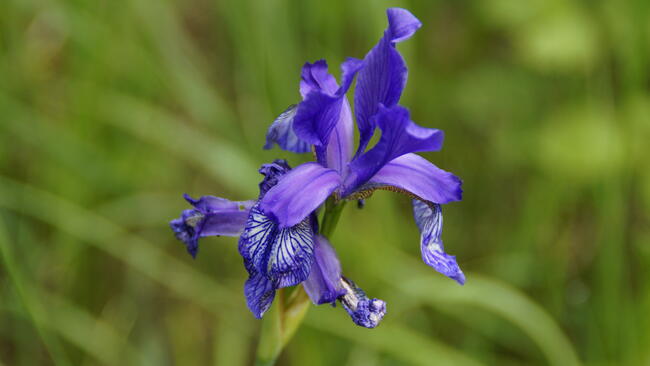
The blooming of the bearded irises is something I eagerly await each spring. This year, I made a mental note to divide and move the irises in late summer or early fall, after blooming. Here’s how to divide irises—with step-by-step pictures.
Why You Should Divide Irises
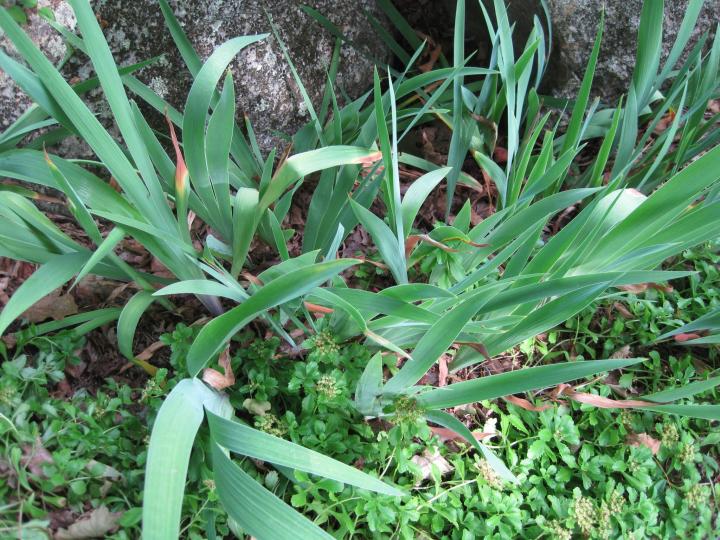
Even though my irises were planted years ago and are terribly overgrown, the blossoms were still gorgeous this spring. However, dividing irises every 3 to 5 years is a normal part of iris care. This allows the clump to rejuvenate and bloom better (not to mention a way to multiply your irises to fill in the gaps).
Also, this practice is helpful for avoiding the iris borer, a very destructive pest typically attracted to older, overcrowded gardens.
All of my irises came from the gardens of family and friends, so they are precious to me, and I don’t want to lose them due to neglect.
When Should You Divide Irises
It’s important to divide and replant at the right time of year. In many regions, July and August are the best months to dig, divide, and transplant bearded irises. You can probably get away with dividing through mid-September, too. Do NOT divide in the spring. You must do this job post-flowering during the summer.
This is hot, heavy work involving a lot of digging, so I waited until the weather cooled down a tad before starting. My goal was to rework the iris beds, add some compost, eliminate the invading sedums and tree roots, and divide and replant the crowded rhizomes.
Best time: Divide bearded irises about 6–8 weeks after flowering, typically July through September depending on your climate.
How to Divide Bearded Irises
Step 1. Dig Up the Rhizomes
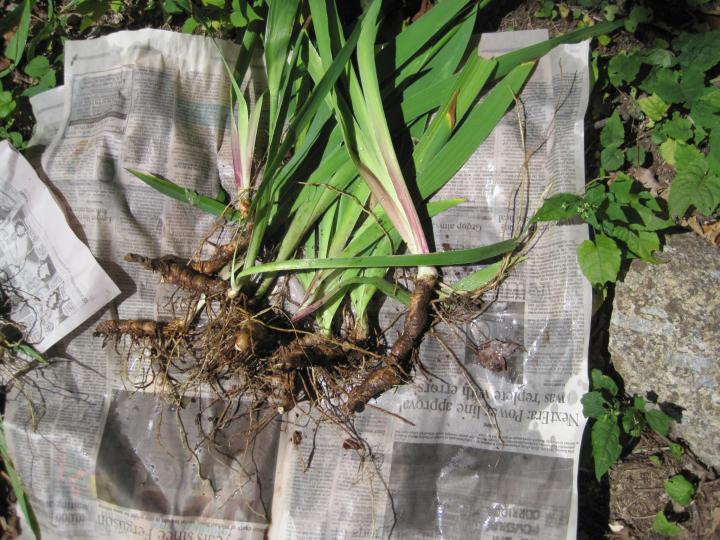
First, dig the rhizomes up. Try to dig carefully around the plants so as not to do any unnecessary damage to the rhizomes.
Step 2. Inspect for Disease and Iris Borers
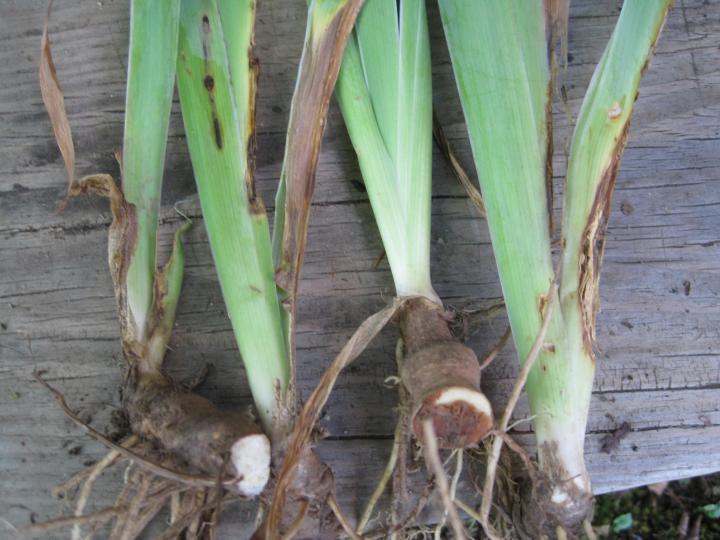
Check them for disease or insect damage. We found some borer damage and mushy rhizomes that we discarded.
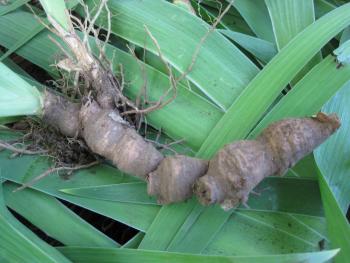
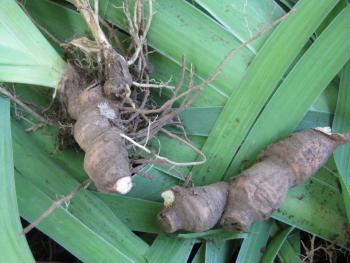
Step 3. Remove Old Rhizomes
Snap or cut off the old part of the rhizome, since it will not flower again.
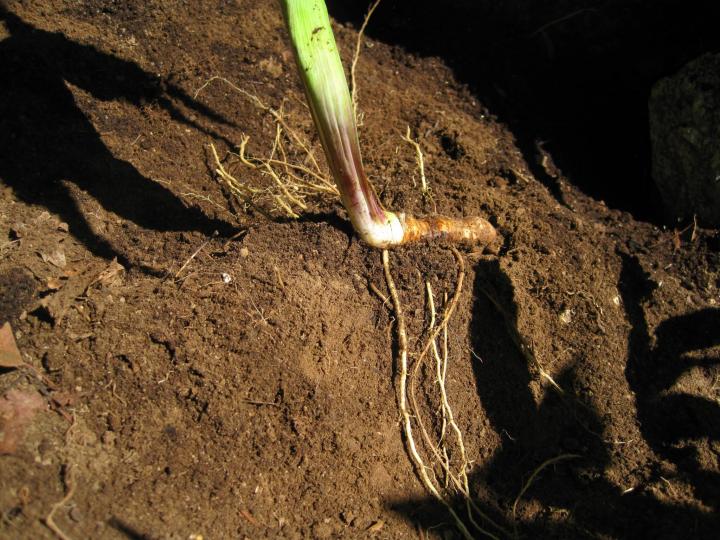
The roots are quite long and will help anchor the newly planted rhizome in place.
Step 4. Prepare the Soil
Amend the soil with compost and dig a shallow hole or trench. Make a mound of soil in the middle to place the rhizome on, spread the roots out over the mound, and cover them with soil.
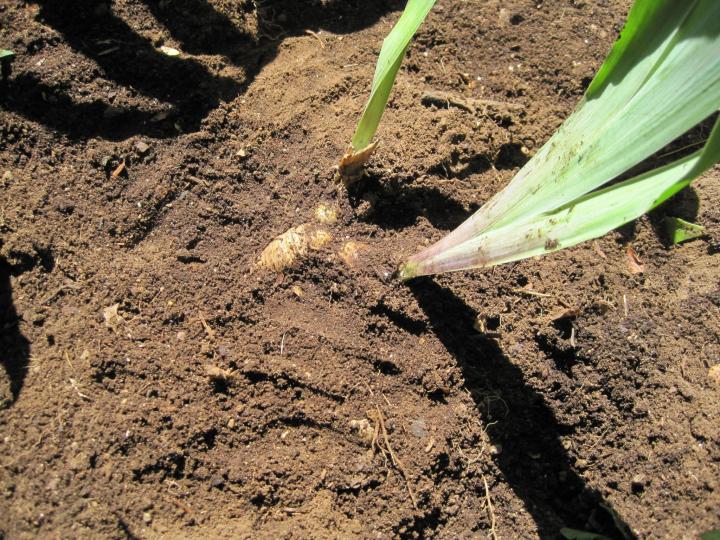
Step 5. Replant the Rhizomes
Leave the top of the rhizome exposed.
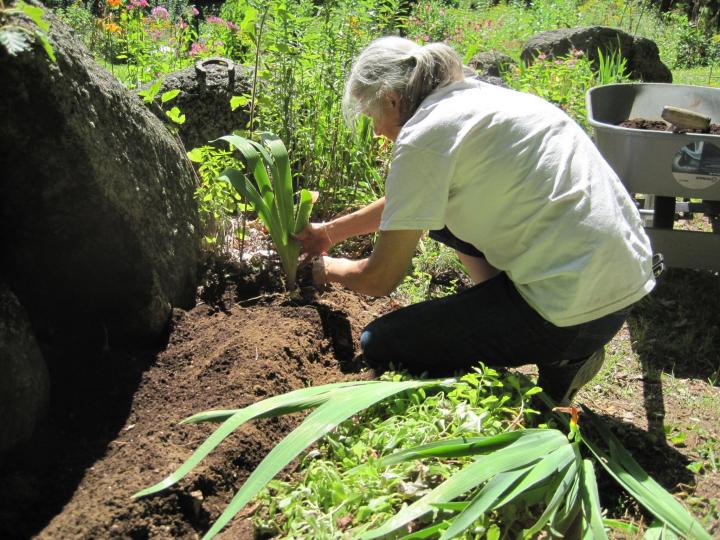
Next season’s plant emerges from the fan end of the rhizome, so when replanting, face it in the direction you want plant growth to travel. Space the pieces 12 to 24 inches apart for tall types, closer for dwarf ones.

I planted mine closer, for a more immediate display, knowing that I will have to divide them again sooner.
It is easier to plant if you cut the tops back to about 6 inches tall.
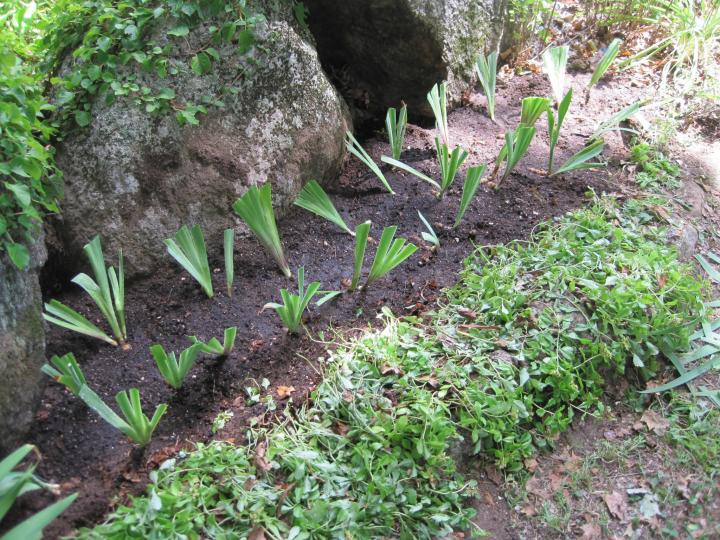
Step 6. Water and Care for Newly Planted Irises
Water well to settle the soil around the roots and continue to water deeply once a week until new growth appears. Once established, bearded irises are drought-tolerant and won’t need additional watering. Fertilize early in spring and again right after blossoming with compost or a low-nitrogen fertilizer.
It was sweaty work, even on a cool day, but so rewarding to see it done. We had enough leftover rhizomes to plant another bed on the other side of the stone wall. Next spring we should have twice the blossoms!
Frequently Asked Questions
How often should irises be divided?
Most bearded irises benefit from dividing every three to five years to prevent overcrowding and maintain vigorous flowering.
Should iris rhizomes be buried?
No. The top of the rhizome should remain slightly exposed above the soil to reduce the risk of rot.
Can you divide irises in spring?
It’s best not to. Dividing irises in spring can reduce flowering because the plants are actively growing. Wait until after blooming in summer.
Why aren’t my irises blooming?
Common reasons include overcrowded rhizomes, too much shade, planting too deeply, excess nitrogen fertilizer, or a lack of dividing every few years.
Learn more about growing irises in the Almanac’s Iris Growing Guide.

More Like This




The next to last picture is to show how the tubers were placed. In the last picture some of them have been covered with a thin layer of soil, which is okay. Much of it gets washed away when watering or during a rain storm. The trick is not to deeply bury the rhizomes. When you mulch, try not to cover the rhizome. Just put it on the bare soil around the plants.
- « Previous
- 1
- 2
- …
- 10
- Next »

Comments