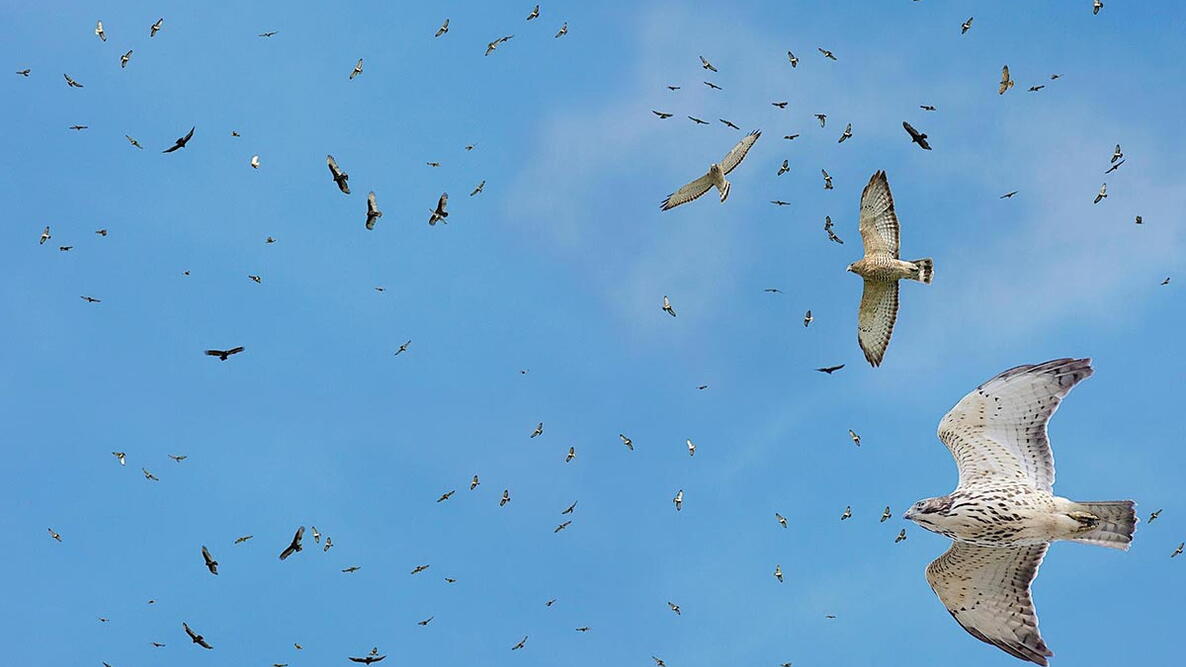

Every fall, hawks put on quite a show as thousands take to the skies for their annual migration. Where are they going, and when is the best time to see them? Discover how hawks travel, why they gather along ridges and shorelines, and how to find a hawkwatch near you.
Do Hawks Migrate?
Many hawks migrate south in autumn, though not every species—or every individual—makes the journey. In general, hawks breeding in Canada and the northern United States travel farther than those living in warmer regions.
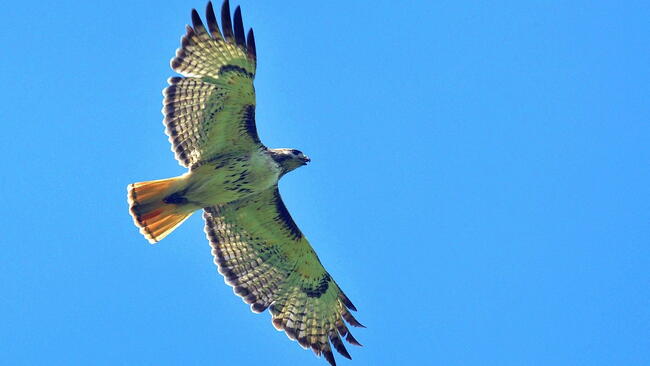
Red-tailed Hawks, Cooper’s Hawks, Sharp-shinned Hawks, Broad-winged Hawks, and many other birds of prey begin streaming south from late summer through fall.
Migrating raptors follow both coasts of North America, circle the Great Lakes, cross the Great Plains, and travel along the Appalachians and Rockies. Some are eventually pressed together into the funnel of Mexico, while others continue into Central and South America.
The birds don’t necessarily know one another; they simply find themselves shoulder to shoulder, wing to wing, headed in the same direction!
Where Do Hawks Go in Winter?
Where a hawk spends the winter depends on its species and where it began its journey. Some travel only a few hundred miles, while others fly thousands.
Broad-winged Hawks leave much of North America for wintering grounds in Central and South America. Swainson’s Hawks make an even more remarkable journey, traveling as far as Argentina and Uruguay. Other species, including some Red-tailed Hawks and Cooper’s Hawks, may move only far enough south to find dependable food and open water.
Unlike most songbirds, which migrate at night, hawks and other raptors generally travel during the day. They take advantage of rising warm air
When Is Fall Hawk Migration?
Fall hawk migration begins as early as August and can continue into December, depending on the species, region, and weather. September and October generally offer the greatest variety and some of the most dramatic flights.
One day, the skies may seem empty. The next, they’re full—as if someone had turned on a spigot.
| Raptor | Typical Fall Migration Peak |
|---|---|
| Broad-winged Hawk | September |
| Osprey | September into October |
| Sharp-shinned Hawk | September through October |
| Cooper’s Hawk | September through October |
| Peregrine Falcon | September through October |
| Red-tailed Hawk | October through November |
| Golden Eagle | Late October through November |
Migration timing varies by location. Broad-winged Hawks may pour through northeastern watch sites in mid-September, while Red-tailed Hawks and Golden Eagles tend to peak later in autumn.
Ospreys abandon their local ponds, harriers their marshes, and falcons their cliff ledges.
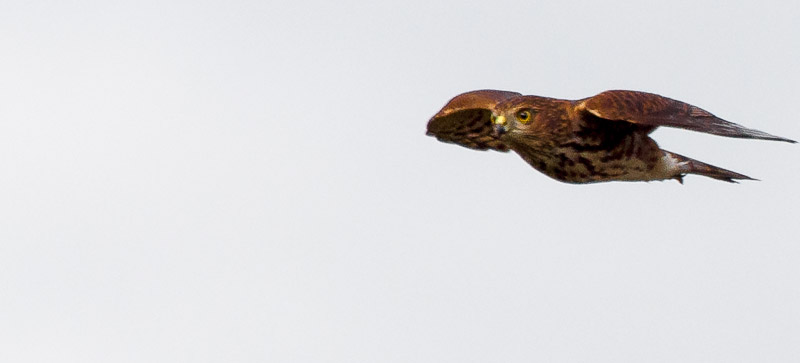
Merlins, little angular missiles with wings stuck out like an anchor’s flukes, go zipping by almost too fast to register.
Sharp-shinned Hawks, long-tailed dashers of the forest, harass one another with the reckless abandon of fighter pilots.
A Golden Eagle, ravens swooping at it from above like gnats, cruises past without twitching a muscle, its 6-foot frame throwing an even larger shadow.
.jpg)
Why Do Hawks Form Kettles?
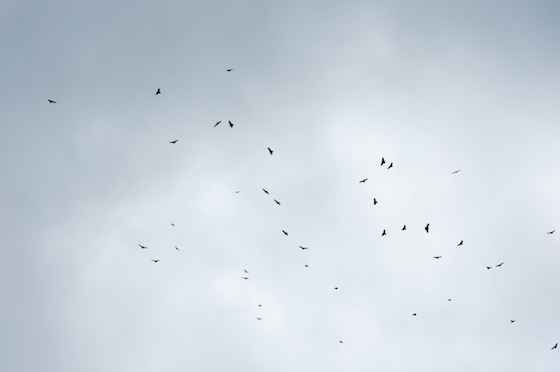
A swirling group of hawks is called a kettle. These spectacular gatherings form when hawks circle together in a thermal—a column of warm, rising air.
By riding the thermal upward, the birds can gain altitude without constantly flapping their wings. Once they reach the top, they glide toward the next thermal and repeat the process. This allows them to cover long distances while conserving precious energy.
This is delightful not because it doesn’t make sense, but because the sheer scale of it is so hard to comprehend. My tastes have changed as I’ve gotten older: A Shriner on a tiny scooter seems tame compared with a kettling cloud of Broad-winged Hawks overhead, rising silently in a towering thermal on their long journey to the tropical forests of Central and South America.
When Is the Best Time to Watch Hawks?
Most migrating hawks are active between about 8 A.M. and 5 P.M., although the best viewing time depends on the weather.
On sunny days with light winds, hawks use thermals that strengthen as the ground warms. Midmorning—from about 9:30 to 11:30 A.M.—and mid-to-late afternoon—from about 2:30 to 4 P.M.—may provide especially good views. Around midday, strong thermals can carry the birds so high that they become difficult to spot.
On windy days, migrating raptors may fly steadily from dawn until dusk. In autumn, a clear day following a cold front can produce an especially impressive flight. Northwest winds often concentrate birds along ridges and other natural pathways.
Where to Watch Migrating Hawks
Mountain ridges, shorelines, coastlines, and the edges of large lakes are among the best places to watch migrating hawks. These natural features concentrate raptors into predictable flight corridors.
Organized hawkwatches operate at hundreds of sites across North America. Trained observers count passing raptors, record weather conditions, and contribute valuable information about changes in bird populations.
Visit the Hawk Migration Association of North America to find a hawkwatch and explore migration-count data. HawkWatch International also operates a network of raptor migration sites, especially across the American West.
What to Bring to a Hawkwatch
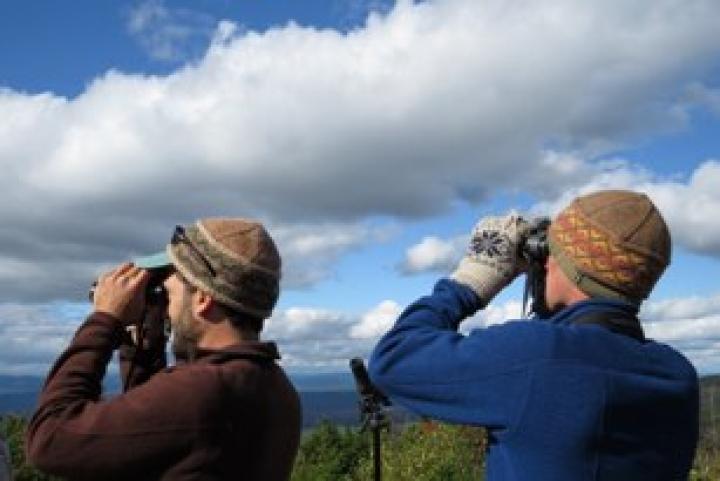
Bring binoculars if you have them, along with sunscreen, a hat, sunglasses, food, water, and warm layers. Mountain weather can change quickly, and many hawkwatches are exposed to wind.
A field guide or bird-identification app can help, but don’t worry if you’re a beginner. Experienced hawkwatchers are often happy to point out birds and explain how they identify distant raptors by their shape, flight style, and behavior.
Or dust off your old pair of opera glasses and spend an afternoon scanning the skies where you live. The parade is strung out across the whole continent, but it’s certain to pass somebody’s door!
How to Help Migrating Hawks
You can help hawks and other migrating raptors by protecting the places they depend on throughout their journey.
- Support organizations that preserve migration corridors, nesting areas, and stopover habitat.
- Avoid using rodenticides, which can poison hawks that eat contaminated mice and rats.
- Make large windows safer for birds by using exterior screens, film, or closely spaced window markers.
- Volunteer at or donate to a local hawkwatch or raptor-conservation organization.
- Respect posted trails and observation areas when visiting migration sites.
- Share your observations through community-science programs when appropriate.
Migration counts collected year after year help researchers track raptor populations and recognize troubling declines. Simply visiting and supporting a hawkwatch can help continue this important work.
Frequently Asked Questions
Do all hawks migrate?
No. Migration varies by species, age, food availability, and location. Some hawks travel thousands of miles, while others move only short distances or remain in the same region throughout the year.
What month do hawks migrate?
Fall hawk migration generally occurs from August through December. September and October are often the busiest months, but each species and region has its own peak period.
Where do hawks go during winter?
Some hawks winter in the southern United States or Mexico, while long-distance migrants continue into Central and South America. Others remain near their breeding territory if food remains available.
What is a kettle of hawks?
A kettle is a group of hawks or other raptors circling together in rising warm air. Kettles may contain a handful of birds or thousands during major migration flights.
Why do migrating hawks follow mountain ridges?
Winds striking a mountain ridge are deflected upward, creating lift. Hawks use this rising air to travel while expending less energy.
Do hawks migrate during the day or at night?
Most hawks migrate during the day because they rely on thermals and ridge lift. These currents are created by sunlight and daytime winds.
What weather is best for hawkwatching?
Clear weather following a cold front often produces good fall flights. Favorable winds can concentrate hawks along ridges, shorelines, and other migration corridors.
Learn more about bird migration and how birds know when to migrate!

- « Previous
- 1
- 2
- …
- 10
- Next »

Comments