Caption
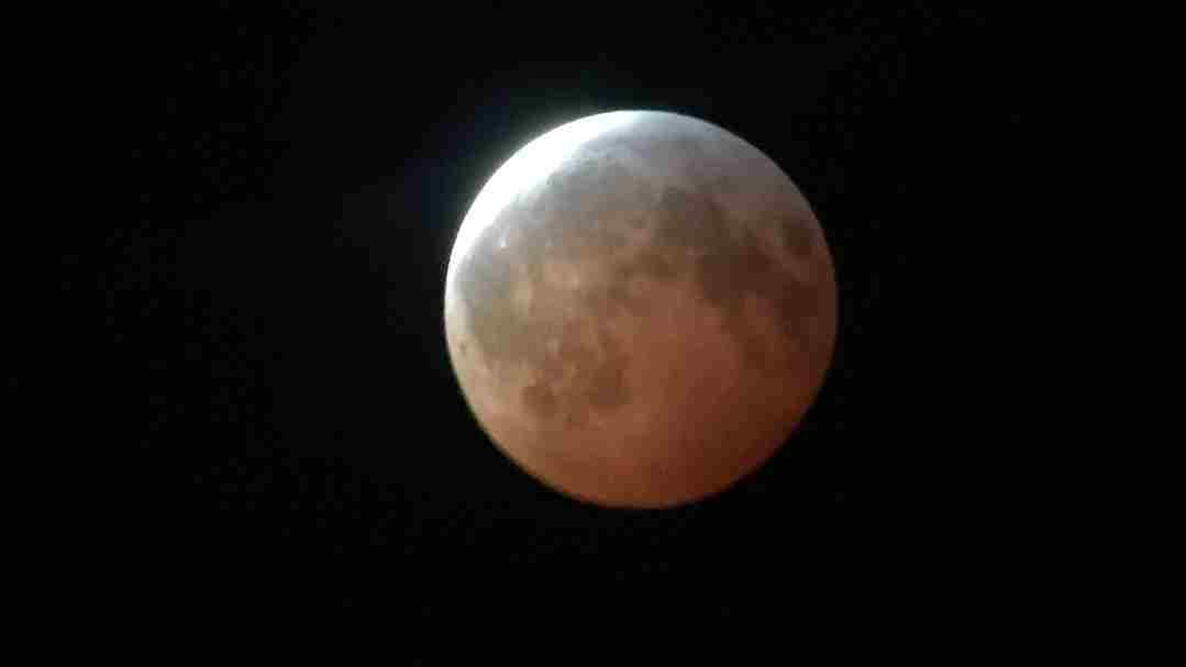
A bright sliver emerges after the 2015 total lunar eclipse—a view similar to what we may see in August 2026.
Mark your calendars: On August 27, 2026, a partial lunar eclipse will leave the Moon nearly swallowed by Earth’s shadow, with only a narrow bright sliver remaining—and likely to resemble a red-orange Japanese lantern glowing in the night sky. Here’s when and where to watch.
This partial lunar eclipse is especially deep, with about 96 percent of the Moon’s face covered. It’s not quite total—but it may look close enough to take your breath away.
When Is the August 2026 Lunar Eclipse and What Time Does It Start?
For most of North America, the lunar eclipse takes place on the evening of Thursday, August 27, 2026. In the Eastern Time Zone, maximum eclipse comes just after midnight on Friday, August 28.
The eclipse reaches maximum at:
- 12:12 a.m. EDT on Friday, August 28
- 11:12 p.m. CDT on Thursday, August 27
- 10:12 p.m. MDT on Thursday, August 27
- 9:12 p.m. PDT on Thursday, August 27
The entire eclipse lasts more than 5 hours, but the obvious partial phase—when Earth’s dark inner shadow crosses the Moon—lasts about 3 hours and 18 minutes. The first and last penumbral stages are much more subtle.
Use the timetable below to follow the eclipse from beginning to end in your time zone.
| Stage of Eclipse | EDT | CDT | MDT | PDT |
|---|---|---|---|---|
| Moon enters penumbra | 9:22 p.m. | 8:22 p.m. | 7:22 p.m. | 6:22 p.m. |
| Penumbral shading may become visible | 10:12 p.m. | 9:12 p.m. | 8:12 p.m. | 7:12 p.m. |
| Moon enters umbra | 10:33 p.m. | 9:33 p.m. | 8:33 p.m. | 7:33 p.m. |
| Maximum eclipse | 12:12 a.m. | 11:12 p.m. | 10:12 p.m. | 9:12 p.m. |
| Moon leaves umbra | 1:52 a.m. | 12:52 a.m. | 11:52 p.m. | 10:52 p.m. |
| Penumbral shading may disappear | 2:13 a.m. | 1:13 a.m. | 12:13 a.m. | 11:13 p.m. |
| Moon leaves penumbra | 3:03 a.m. | 2:03 a.m. | 1:03 a.m. | 12:03 a.m. |
Early stages may occur before moonrise in parts of western North America. Check your local moonrise time for August 27 to see what will be above the horizon from your location.

Illustration by Joe Rao using SkySafari.
Where Will the Eclipse Be Visible?
- United States and Canada: Across much of the central and eastern United States and Canada, the Moon will be well above the horizon during the deepest part of the eclipse, offering an excellent view. Viewing circumstances will differ farther west:
- Western Canada and the West Coast: In parts of western Canada, Washington, Oregon, and Northern California, the partial eclipse will already be underway when the Moon rises around sunset. Find a location with an unobstructed view toward the eastern horizon.

Illustration by Joe Rao using SkySafari.
- Hawaii: The Moon will rise about two-thirds covered. Maximum eclipse will already have passed, and the Moon will be slowly slipping out of Earth’s shadow.
- Europe and Africa: Across much of these regions, the Moon will set during the early hours of August 28 while it is still passing through Earth’s shadow.
The diagram below shows how the Moon will travel through Earth’s shadow and which parts of the world will face the Moon at maximum eclipse.

- Hawaii: The Moon will rise about two-thirds covered. Maximum eclipse will already have passed, and the Moon will be slowly slipping out of Earth’s shadow.
- Europe and Africa: Across much of these regions, the Moon will set during the early hours of August 28 while it is still passing through Earth’s shadow.
The diagrams below show how the Moon will travel through Earth’s shadow and which parts of the world will face the Moon at maximum eclipse.
How to Watch the Eclipse
A lunar eclipse is completely safe to watch with your eyes alone. Unlike a solar eclipse, it does not require special eclipse glasses.
You do not need a telescope, either. Simply step outside at the appropriate time and look for the Full Moon.
Binoculars or a small telescope can make the colors and contrasts appear even more striking, but your unaided eyes are all you need to enjoy the show.
If you live on the West Coast, choose a location with a clear view toward the eastern horizon because the Moon may rise while the eclipse is already underway.
How the Lunar Eclipse Unfolds
A lunar eclipse happens when Earth passes between the Sun and the Full Moon, casting its shadow across the lunar surface.
The eclipse begins quietly as the Moon enters the penumbra, the pale outer fringe of Earth’s shadow.
At first, the shading is so faint that casual observers may notice nothing at all. Only when the Moon’s leading edge is nearly three-quarters of the way through the penumbra should a delicate gray veil begin to creep across its lower-left edge.
From there, the shadow steadily deepens.
The real drama begins when the Moon’s edge enters the umbra, Earth’s dark inner shadow. This marks the start of the partial eclipse, which lasts about 3 hours and 18 minutes as the Moon moves through the northern part of Earth’s shadow.

Unlike the penumbra, the umbra is much darker and more sharply defined. At first, the Moon’s edge may seem to vanish. Deeper in, it should begin to glow faintly, like the coils of an electric stove just beginning to heat.
Will It Look Like a Blood Moon?
Although the term “Blood Moon” most often refers to a total lunar eclipse, this deep partial eclipse may look much the same near maximum, when nearly the entire Moon is inside Earth’s dark shadow.
But the Moon does not always blush red.
Its color depends on volcanic activity, atmospheric dust, and other conditions around the globe. The eclipsed disk may glow orange-yellow, burn coppery red, deepen to chocolate brown, or fade to ashen gray.
Near maximum eclipse, the Moon glows reddish-orange. I describe it as a Japanese lantern because it appears as a pale sunlit cap above a darker red or orange disk. It’s the same effect that paints sunrises and sunsets red: Longer red wavelengths pass through Earth’s atmosphere and fall onto the lunar surface.
Some observers may even notice a narrow blue or turquoise band near the shadow’s edge. This can appear when sunlight filters through ozone high in Earth’s atmosphere. However it appears, binoculars should make the view even more striking.
When Is the Next Lunar Eclipse?
If clouds interfere this time, the next partial lunar eclipse visible from North America will occur on the evening of January 11, 2028. It will be much smaller, with Earth’s shadow taking only a small bite—about 7 percent of the Moon’s width.
There will also be subtle penumbral lunar eclipses before then, but they can be difficult to notice because the Moon does not enter Earth’s dark inner shadow.
- A total lunar eclipse occurs on December 31, 2028, but the total phase will not be broadly visible across North America.
- The next total lunar eclipse widely visible across North America will arrive on the evening of June 25, 2029. That event will favor eastern observers. In parts of the Mountain and Pacific Time Zones, the Moon will rise while the eclipse is already underway.
See all solar and lunar eclipse dates for 2026 and 2027.
FAQs
What is a lunar eclipse?
A lunar eclipse happens when Earth passes between the Sun and the Full Moon, casting its shadow across the lunar surface.
What time is the August 2026 lunar eclipse?
Maximum eclipse occurs at 12:12 a.m. EDT on August 28; 11:12 p.m. CDT, 10:12 p.m. MDT, and 9:12 p.m. PDT on August 27.
What will the Moon look like during the eclipse?
The Moon may glow orange-yellow, coppery red, chocolate brown, or even ashen gray. Its exact color will depend on atmospheric dust, volcanic activity, and other conditions around the globe.
Is this a total lunar eclipse?
No. It is a very deep partial lunar eclipse. At maximum eclipse, Earth’s dark shadow will cover about 96 percent of the Moon’s visible surface, leaving only a narrow bright sliver.
Will the lunar eclipse look like a Blood Moon?
It may. Although this is officially a partial lunar eclipse, nearly the entire Moon will be inside Earth’s shadow and could take on an orange, copper, or reddish glow.
Do I need eclipse glasses to watch a lunar eclipse?
No. A lunar eclipse is completely safe to watch with your eyes alone. Special eclipse glasses are needed for viewing a solar eclipse but not a lunar eclipse.
Do I need binoculars or a telescope?
No equipment is required. Binoculars or a small telescope can make the colors and contrasts more striking, but the eclipse will be visible to the unaided eye.
Can I see the lunar eclipse from a city?
Yes. A lunar eclipse is bright enough to see from cities and suburbs. Try to find a location with a clear view of the Moon and move away from direct streetlight glare if possible.
What happens if it is cloudy?
Clouds can block the view, but the eclipse lasts several hours. Brief breaks in the clouds may still give you a chance to see part of the show.

More Like This

Comments