
Have you ever “trolled the ancient Yuletide carols” without really knowing what Yule is? Long before Christmas trees and Santa Claus, people gathered around roaring fires on the darkest night of the year to celebrate Yule—a festival of light, warmth, and renewal. From burning massive logs to baking chocolate ones, this centuries-old solstice celebration continues to glow in our modern holidays.
What Is Yule? The Origins of an Ancient Winter Festival
Today, “Yule” and “Yuletide” are largely synonymous with “Christmas” and “Christmastide,” but the meaning behind them is quite different from that of the Christian holiday.
“Yule” comes from Old English geol, which shares a history with the equivalent word from Old Norse jól. Both these words referred to a midwinter festival centered around the winter solstice, which traditionally marked the halfway point of the winter season. After the solstice—the shortest day of the year—the days again begin to grow longer, so it’s thought that Yule was a celebration of the reappearance of the Sun and the fertile land’s rebirth.
The celebration of Yule is one of the oldest winter celebrations in the world. Ancient people were hunters and spent most of their time outdoors. The seasons and weather played a significant part in their lives. The customs and traditions associated with it vary widely. Most commonly, the celebration consisted of a hearty feast and general revelry, which included wassailing (caroling), drinking, and dancing.
Later, when Christianity came to the British Isles, Christians adopted aspects of the pagan festival into a celebration of the birth of Christ. As Christianity began to spread in the 4th century, the Christmas feast day was set on December 25 by Pope Julius I to align with the Roman pagan holiday Dies natalis solis invicti, “the birthday of the invincible Sun.” The rest is history.

The Burning of the Yule Log
Burning a log in celebration of Yule started well before medieval times. It began as part of the winter solstice festivities.
The candles and lights associated with Christmas, meant to symbolize guiding beacons for the Christ child, may have evolved from the Yule log, which was lit to entice the Sun to return as part of the jól (Yule) festival in Scandinavia.
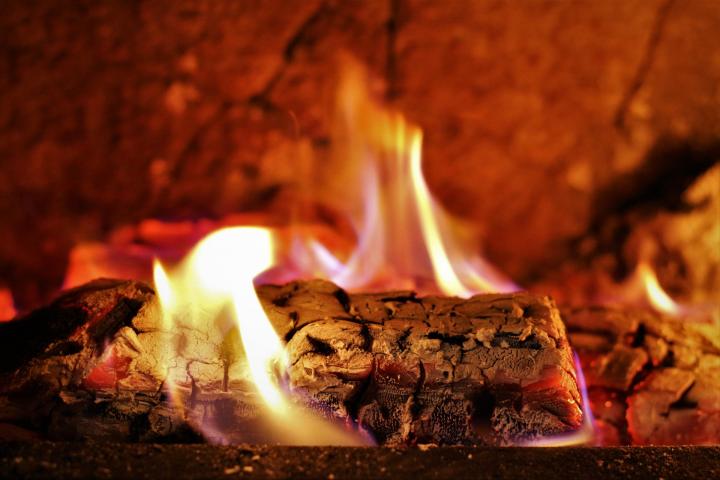
Interestingly, the Yule log was originally an entire tree! Families would bring the trunk of the Yule tree inside and stick the big end of it into the fireplace. The log would feed the fire through the 12 Days of Christmas (from Christmas Day through the evening of the 5th of January—known as Twelfth Night).
The ashes of Yule logs were said to be very good for plants. Wood ashes do indeed have beneficial uses in the garden!
Yule Log Decor and Dessert
Today, a Yule log is still a Christmas tradition in some cultures; a large log is traditionally burned in the fireplace on Christmas Eve. For other cultures, the Yule log is a log-shaped chocolate cake enjoyed as a Christmas dessert.
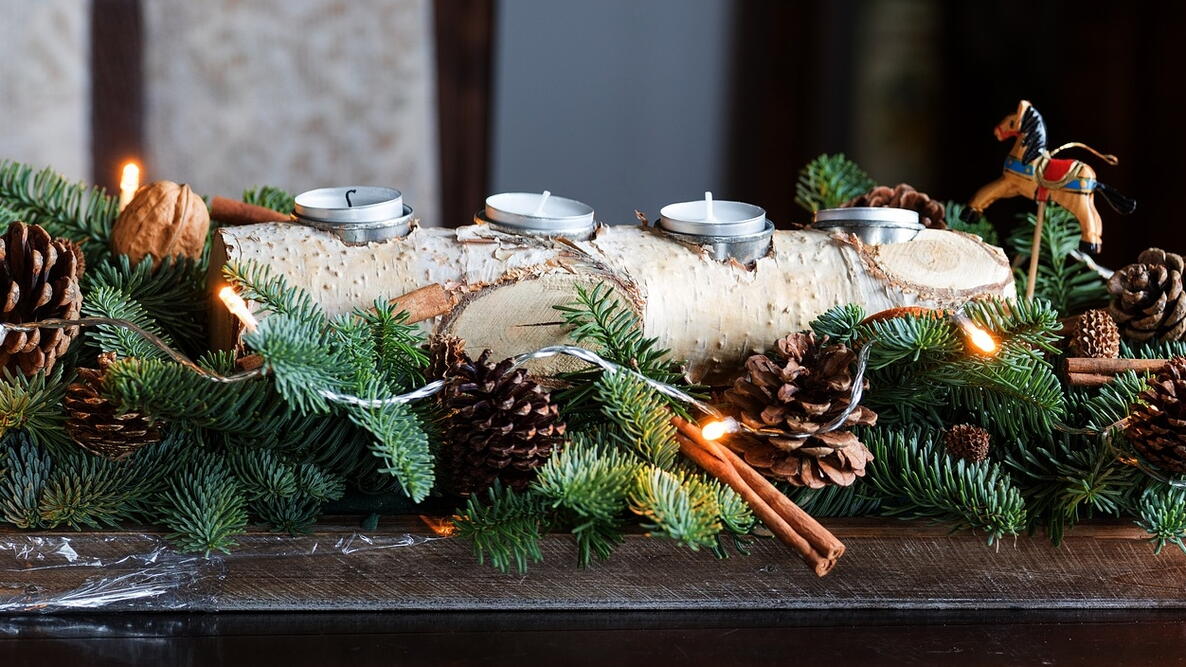
- If you are in the woodlot, plan to cut some of that white birch into Yule logs for your friends. The logs can be used in fireplaces or as decor. Tied with red ribbon, such logs make ideal Christmas gifts!
- The Yule log also makes an excellent centerpiece for tapers or tea lights. You could also use the purple and pink Advent candles. Our town’s Boy Scout troop drilled holes in birch logs to create special candle holders for Scout ceremonies.
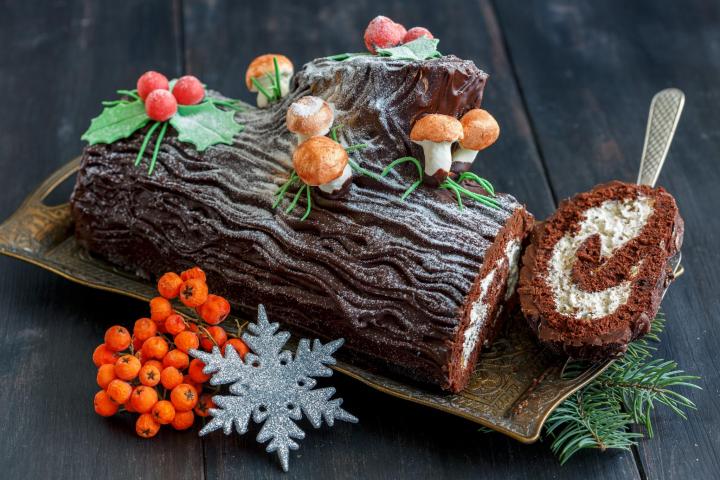
Photo Credit: S Marina/Shutterstock
- Make an edible Yule log! Here’s our dessert recipe for a light bûche de Noël! It’s a Christmas favorite, adding a festive flair to any holiday table.
Frequently Asked Questions
What does Yule celebrate?
Yule celebrates the winter solstice—the shortest day and longest night of the year. It’s an ancient festival marking the rebirth of the Sun and the return of longer days, symbolizing hope, light, and renewal during the darkest time of winter.
When is Yule celebrated?
Yule is celebrated on or around the winter solstice, which falls between December 20 and 23 in the Northern Hemisphere. Traditionally, Yule festivities could last for 12 days, a custom that inspired the “12 Days of Christmas.”
What is the origin of the word “Yule”?
The word Yule comes from the Old English geol and Old Norse jól, both referring to ancient midwinter festivals. These celebrations honored the return of the Sun and were later intertwined with Christian Christmas traditions.
Why do people burn a Yule log?
Burning the Yule log was an ancient custom meant to honor the Sun and encourage its return after the long, dark winter nights. The Yule log was often kept burning for 12 days and nights, and its ashes were believed to bring good luck and protect the home.
What is a modern Yule log?
Today, the Yule log can refer to both a decorative log burned or displayed during Christmas and the Yule log cake, known as bûche de Noël—a rolled sponge cake filled with cream and decorated to look like a wooden log.
How is Yule different from Christmas?
Yule is a pagan solstice celebration that predates Christianity, while Christmas celebrates the birth of Christ. Over time, many Yule customs—such as evergreen decorations, feasting, and the Yule log—were adopted into Christmas traditions.
What are common Yule symbols?
Common Yule symbols include evergreen branches, holly, mistletoe, candles, wreaths, and, of course, the Yule log—all representing life, renewal, and the return of light after the darkest night of the year.
Can you eat a Yule log?
Absolutely—but only if it’s the dessert version! The edible Yule log, or bûche de Noël, is a delightful sponge cake rolled with cream filling and decorated to look like a wooden log. It’s a sweet nod to the ancient Yule tradition—and a delicious centerpiece for any holiday table.
What does “troll the ancient Yuletide carols” mean?
You might recognize the phrase from Deck the Halls! In old English, “troll” meant to sing in a hearty or merry way, not the mischievous Internet kind. So when you “troll the Yuletide carols,” you’re joyfully singing Christmas songs—just as people have done for centuries during Yule and Christmas celebrations
Learn more about Christmas traditions, from the Christmas Tree to the Holiday Wreath.

More Like This

- « Previous
- 1
- 2
- …
- 10
- Next »

Comments