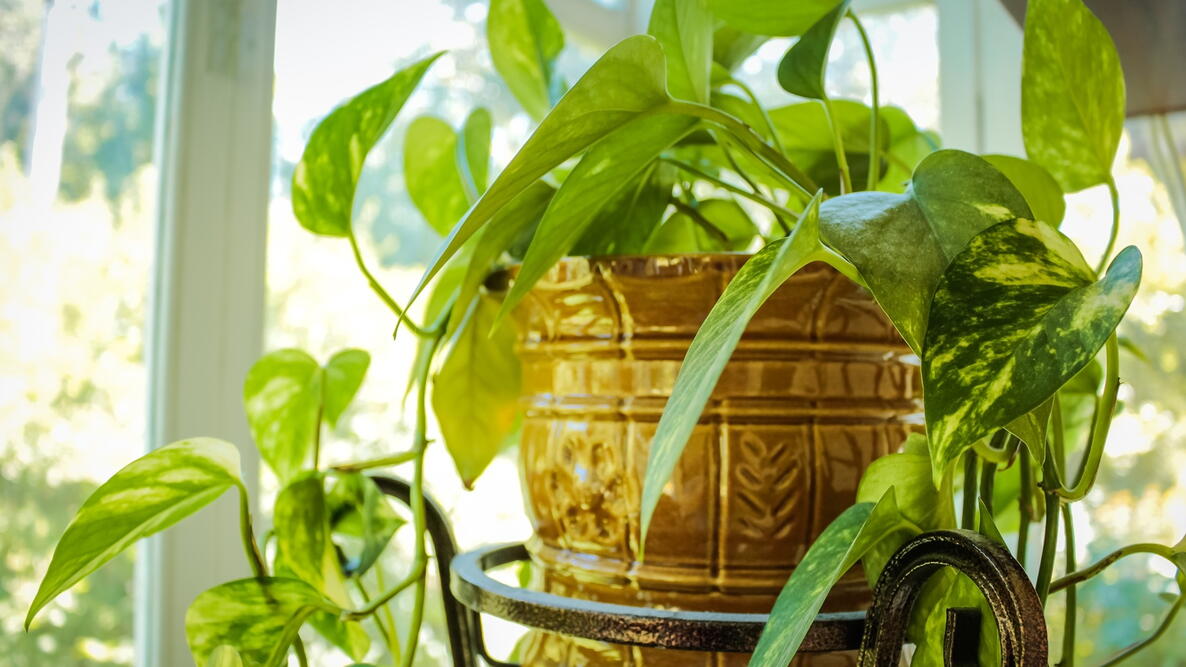

Keep your houseplants happy and healthy! From knowing how often to water to providing the correct amount of light, here are tips to ensure that your indoor plants not only stay alive, but thrive.
To learn about a specific type of houseplant, check out our Houseplant Growing Guides.
Choosing the Right Light for Your Houseplants
Before you buy a houseplant, make sure your house can provide the amount of light that the plant needs. For example, if you buy a cactus, you will need a window that provides bright light (or a supplemental light).
When you first bring a plant home, it’s normal for the plant to drop a few leaves as it gets used to its new space. If the lighting is to its liking, it will soon adjust.
- Plants that can tolerate full sun and bright light thrive in south-facing windows (examples are cacti, aloe vera, tropical hibiscus, Lantana, and ponytail palms).
- Plants that like partial shade or moderate light do best in east- and west-facing windows (examples are ficus, philodendrons, monstera, and bromeliads).
- Plants that do well in low light will be happy in north-facing windows (examples are snake plants, pothos, and the cast-iron plant).
- Most houseplants grown for their flowers need to be within three feet of a bright window (examples: African violets, gardenias, orchids).
- All plants require a period of darkness; it’s when they do most of their growing! Light exposure should not exceed 16 hours.
- Rotate plants once in a while to encourage even growth and prevent legginess.
- Plants become acclimated to light levels, so try not to move them from one light exposure to another too quickly. Make the change gradually, if possible, especially if moving a plant from a dark spot to a sunny area.
Signs Your Plant Isn’t Getting Enough Light
How do you know if plants aren’t getting enough light? The plant will not flower, it will show little new growth or spindly (leggy) growth, or it will lose its lower leaves.
On the other hand, if the edges of a plant’s leaves scorch, or the leaves bleach out or appear dull, then the light may be too bright.
Using Artificial Lighting for Indoor Plants
If you don’t have a bright window in your home, you can still grow plants that require medium to high light levels. Place the plant next to the brightest window you have and use artificial lighting to provide extra light. This is especially important in the darker winter months.
Fancy “grow” bulbs and red-blue LEDs aren’t necessary for your average houseplant, so don’t bother spending hundreds on a complicated setup. A “daylight” or “full-spectrum” LED bulb that is equivalent to at least 60 watts will provide enough supplementary lighting to grow most plants indoors just fine. To grow flowering or fruiting plants indoors, you will need something stronger, however. Learn about using grow lights to grow veggies indoors.
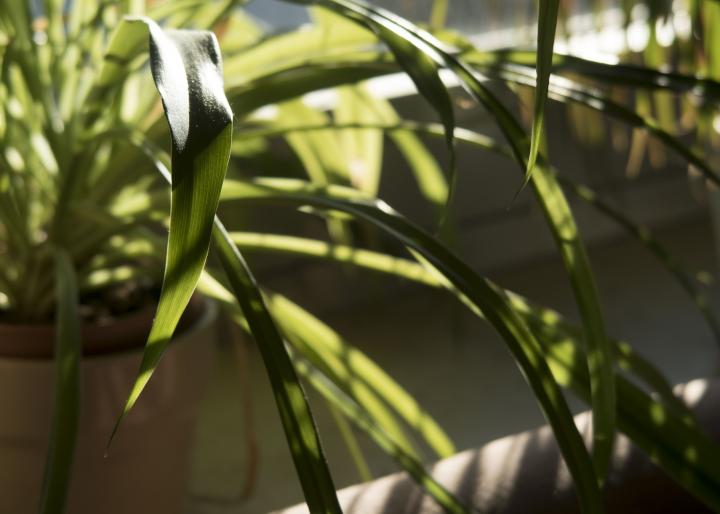
How to Water Houseplants Properly
Believe it or not, more houseplants die from overwatering than from anything else! Most houseplants can not tolerate soil that is always wet. Some succulent plants (such as cacti or jade) can survive a month or two without watering. Learn the preferences of your plants.
The first step, of course, is to ensure the bottom of your pot has drainage holes. Otherwise, you will need to repot the plant into a pot that provides sufficient drainage. If a plant sits in wet soil for too long, it can develop root rot and die!
When and How Often to Water Your Plants
Starting in late fall, water houseplants sparingly until daylight hours begin to increase in the new year. The best time of day to water is in the morning, except when it is cloudy or rainy outside, and there is no sunlight. Avoid watering on a fixed schedule; instead, check the soil and water when needed.
Water when the roots, in the lower two-thirds of the potted soil, begin to dry. Push your finger 2 inches down into the soil of a 6-inch-diameter pot. If the soil feels moist, do not water. Repeat until the soil feels dry, then water. Push your finger to a 1-inch depth in smaller pots. (If it is not possible to push your finger into the soil, the soil may be compacted and need porous material, or the plant may be root-bound and could benefit from being transplanted.) Alternatively, lift the potted plant when it is dry and then again when it is wet. You may learn to “feel” its needs.
Learn more about watering your houseplants.
Tips for Watering Different Types of Pots
- Water plants with room-temperature water. Cold water can be a shock to a houseplant’s roots—like sticking your toes into an ice bath!
- Use filtered water if your tap water contains high amounts of minerals or chemicals. Fluoride can cause the leaf tips of some houseplants, such as peace lilies, to turn brown.
- Always water until the excess water drains out of the holes. Even plants that prefer dry soil should be watered this way (just not as frequently).
- Water gently over the top of the soil; avoid water on the plant leaves or crown. A long-spouted watering can works best.
- If water is not almost immediately absorbed by the soil, drainage is poor. Mix perlite, vermiculite, or sand into the soil. For best results, remove and repot the plant in the amended soil, if possible.
- Watering from the bottom can benefit plants, too. Set a plant pot (that has holes in the bottom) on a saucer or in a shallow pan. Pour water into the saucer or pan to about an inch depth. Add more water as necessary until the surface of the soil in the pot is moist. Remove the plant from the saucer or pan and set it aside to let excess moisture run out.
- If the soil is exceptionally dry, water may not be absorbed but instead flow rapidly down the sides of the pot and out into the catch basin/saucer, bringing no moisture to the plant’s roots. If this happens, submerge the whole pot in a deep sink or pail full of water until air bubbles stop being released. Remove the plant from the water and set it aside to let excess moisture run out. Consider repotting the plant into a looser medium mix.
Maintaining Optimal Humidity for Indoor Plants
Humidity is a tough factor to perfect, as most homes are fairly dry—especially in the winter. Here are some things to consider about humidity:
- Many of the most common houseplants come from tropical regions, where humidity is naturally high. They will be happiest when the relative humidity is kept at 50 percent or higher.
- Plants like cacti and succulents can tolerate lower levels of humidity.
- Group houseplants near each other to form a support group to cope with the low humidity of most homes in winter.
- Place plants in a bathroom or kitchen where humidity is higher.
- Set plants on shallow trays of moistened gravel to raise humidity.
- Pack damp sphagnum moss between pots in plants.
- Occasionally, turning on a humidifier near your plants can be effective at combating indoor dryness.
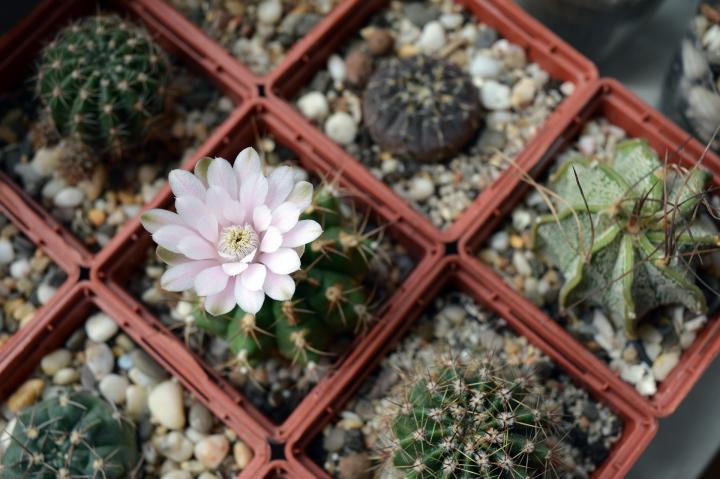
Fertilizing Houseplants: What You Need to Know
Most houseplants respond well to feeding, but be sure to follow the instructions included with whichever fertilizer you buy.
Too much fertilizer can be detrimental to a plant’s health, so don’t fertilize more than necessary. In winter, feed sparingly or not at all; houseplants will be especially sensitive to overfeeding at this time of year, when most go into dormancy. Come spring, start to feed plants again. This, along with more hours of daylight, will help to kickstart their growing phase. Continue feeding through fall.
A balanced fertilizer (10-10-10) works fine for houseplants, although fertilizers with a higher ratio of nitrogen will promote greater foliage growth. For flowering plants, use a fertilizer with more phosphorus. Learn more about how to fertilize houseplants.
Common Houseplant Pests and How to Fight Them
Pests can be a real problem. They usually appear after outdoor plants are brought inside for the winter, or when a new houseplant is brought home.
- To get rid of bugs in houseplants, push a clove of garlic into the plant’s soil. If the garlic sprouts and grows, just cut it back.
- Spider mites are apt to thrive in warm, dry houses. Frequent misting under the leaves of houseplants will discourage them. A solution of 1 cup flour, 1/4 cup buttermilk, and a gallon of cool water, applied in a mist, is a good organic deterrent.
- Small flies may occasionally appear around houseplants. These are called fungus gnats and are harmless to plants (and humans) in their adult form, although their larvae can damage young roots. Letting the soil dry out a bit between waterings can discourage fungus gnats from calling your houseplants home.
- Your houseplants may sprout bugs once brought inside your house because they no longer have outdoor predators.
- Remove aphids from houseplants with a mixture of equal parts rubbing alcohol and water, plus a drop of dishwashing detergent. Apply this to troubled plants with a soft brush.
- Mealybugs and scale are commonly seen on houseplants. The mixture of rubbing alcohol, water, and dishwashing detergent described above works on mealybugs and scale, too. Regular monitoring of your houseplants is key to beating an infestation.
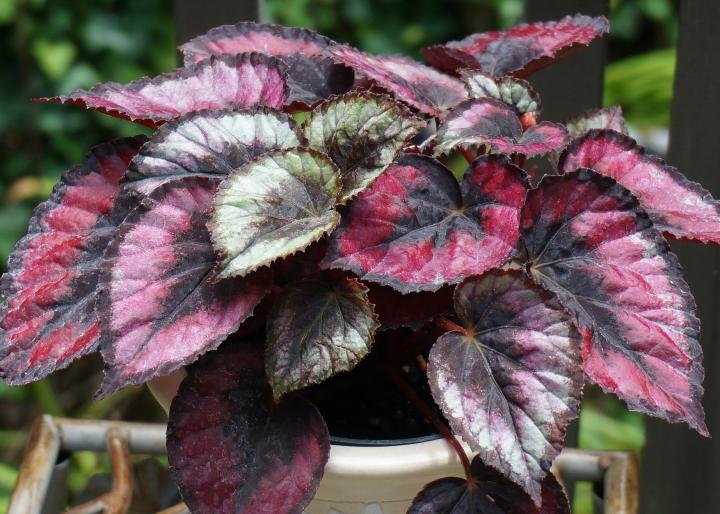
Winter Care Tips for Indoor Plants
Even indoors, winter conditions can be tough on plants. Fewer hours of sunlight, drier air, and cooler indoor temperatures can take their toll, so be prepared.
- In colder regions, houseplants that have been outside for the summer should be brought in in August. A sudden cold spell will be too much of a shock for them to survive. This is also a good time to take cuttings.
- It’s also good to bring in plants before you start heating your home. This gives them a chance to adjust. Wash them thoroughly before bringing them in to rid them of any pests.
- You can dig up your rosemary, basil, tarragon, oregano, marjoram, English thyme, parsley, and chives to grow them inside as houseplants. Keep them in a cool, sunny spot, and allow the soil to dry out before watering. Snip off the leaves as needed in the kitchen, but do not strip them completely.
- Divide and re-pot any pot-bound plants so they will grow well during spring and summer. Prune judiciously to create a compact, attractive specimen.
- Provide extra protection to houseplants on windowsills if it is very cold. Place cardboard between the plants and the glass. Be sure the plants don’t touch the windowpanes.
- Houseplants grow slowly in December light, so reduce watering by half until active growth resumes. Hold off on fertilizing as well.
- If your plants seem a little worse for the wear after winter ends, provide them with more sunlight, fresh air, and frequent bathing.
Frequently Asked Questions
Can I use tap water for my houseplants?
Yes, but if your tap water contains high minerals or chemicals like fluoride, it’s best to use filtered or distilled water, as these chemicals can damage some plants’ leaves.
How much light do indoor plants need?
It depends on the species. Bright-light plants like cacti need south-facing windows, medium-light plants like monstera prefer east or west-facing windows, and low-light plants like snake plants do well in north-facing rooms.
How can I increase humidity for tropical plants?
Group plants together, use pebble trays with water, mist regularly, or place a humidifier nearby. Bathrooms and kitchens often naturally provide higher humidity.
What is the best way to fertilize houseplants?
Use a balanced fertilizer (10-10-10) for general growth. For flowering plants, choose a fertilizer higher in phosphorus. Avoid overfertilizing, especially in winter, when plants are dormant.
How do I prevent pests on indoor plants?
Inspect new plants before bringing them indoors, wipe leaves, and monitor regularly. Use natural solutions like diluted rubbing alcohol, dish soap sprays, or garlic cloves in the soil to deter pests.
How should I care for plants in winter?
Bring sensitive plants indoors before the first frost, reduce watering, avoid fertilizing, and protect them from drafts. Give them extra sunlight when possible.
Can I use leftover cooking water for my plants?
Yes! Starchy water from pasta or vegetables (unsalted) can be a mild nutrient boost. Make sure it’s cooled and free of salt or oils.
Do you have any tips for taking care of houseplants? Share them in the comments below!

More Like This
- « Previous
- 1
- 2
- …
- 10
- Next »

Comments