Primary Image


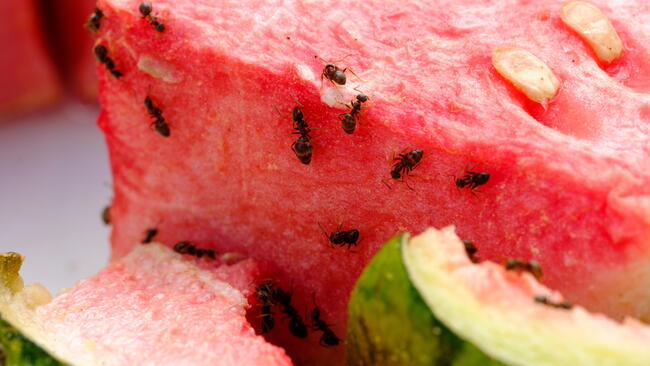
I raise a small garden for my wife and I to have fresh vegetables. Every year I have small black ants that are attracted to my okra plants. The ants seem to be drawn to the flowers so I assumed they were after the nectar. They do not bite but are bothersome when they crawl all over your hands while harvesting pods. I also had a problem with "crazy ants" on our 7 acres. They get into the control box on our electric gate and ruin the circuit board. However, I do have an exterminator that has controlled that problem with spraying every 3 months.
This year, for the first time, I have lots of ant hills in my large, spread out lawn, not in my perennial or veggie garden. The ants are very small. There will be 2 to 4 hills in one spot, and then more in multiple other places. Wonder what has caused this and will they head to my house and veggie garden??
Twenty or so years ago, I found a colony of fire ants in my tomato patch (actually, they found me). They had set up shop in the roots of a particular plant, so I chose not to try to dig them out or poison them. Two days later, I noticed the 'infested' plant was twice as big as the others, darker green, and flowering. I guessed that the ants were aerating and fertilizing my tomato, and decided to leave them alone. After a couple of weeks, they moved on to a new location.
Now I welcome ants of any kind into my garden. Their presence indicates a healthier system, happier plants, and less work for me.
What about Fire ants? What do they help? They get in my flower pots etc? Thank you
I have shared my garden with fire ants for years. We peacefully coexist, with me getting the benefit of aerated soil, fewer pest insects, and free fertilizer. I've even used them to help excavate an old oak stump, scooping the colonies up from other parts of the yard and depositing them in areas of the stump that were already decomposing. As long as I respect their space, they respect me. After a few weeks, they move on to other locations.
I have been scattering used coffee grounds over my entire yard and shrub and flower beds for years. I have eliminated red ants from my lawn entirely. It does keep the squirrels away somewhat. It also repels most other ants. I dry them out in the filter on an aluminum pie plate, then when dry put them in a bucket. When I have a good amount I scatter them around my yard.

Check out our tips on getting rid of fire ants.
Yes, I have fire ants in my garden! No, I do not see them as a benefit! I. Do not use pesticides in my garden but have found club soda causes the colony to die or move away.
They are nasty little SOBS!
I live on a 1/2 acre in rural Ontario, Canada. I have zillions or tiny red fire ants. Doesn't matter where you look or turn a shovel in my 1/2 acre , there are ants. They bite me and the fire in a bite is extreme. Only an ice pack will ease the pain til it subsides. They don't bite my husband !!!! I can no longer kneel down and work in my flower beds. Even walking across my yard, I find them on my shoes and clothing and end up getting bitten if I don't get them brushed off fast!!!!! I have tried so many things but nothing seems to deter them. I am hoping someone here has a solution. I would so love to be rid of them!!!!!
- « Previous
- 1
- 2
- …
- 10
- Next »
📣The Gardening Club Just Got Better! 3 Deliveries, 10% Store Discount, and more!

Comments