
Here are five super-speedy vegetables that produce a harvest in just a few short weeks! They’re perfect for filling in gaps in the garden, especially as older crops get harvested. You’ve done so much work, so why not get the most from your garden?
If you’re a beginner gardener, it’s satisfying to see vegetables grow quickly. For greens and radishes, you can harvest the early leafy greens within two to three weeks! (Just leave a few plants to grow to their full size for a bigger harvest later.)
Also, as a gardening season progresses, gaps will inevitably start to appear in your garden as plants are harvested. It’s a bad idea to leave those gaps, as the bare ground will attract weeds and be prone to erosion during summer storms. Plus, it’s a wasted opportunity to grow another crop! You’ve already prepared the soil and established your garden—go ahead and sprinkle some more seeds to yield a fresh harvest of veggies.
You don’t need to leave gaps at all, even if you have plans for fall crops later on. With plenty of heat and long days in summer, some plants require very little time to go from sowing to harvest time.
We’ll look at five of these super-speedy vegetables that go from sowing to harvest in very little time at all.
1. Radishes
Sowing to harvest: 25 days
Radishes are one of the fastest vegetables, taking just 3 to 4 weeks to reach harvest time. They’re also exceptionally easy to grow.
Seeds can be sown into prepared ground or pots of potting soil. Sow the plump seeds very thinly, spacing them about one inch apart. Sowing small batches every few weeks until the very end of summer will give you a continuous crop of the peppery roots. The seedlings will pop up within three to five days. If necessary, thin the seedlings so the roots have enough room to expand.
You can harvest the radish greens (and thinnings) too!
Keep the ground free of weeds, and water in dry weather. Harvest the roots before they get too large, when they can turn woody in texture and become overpoweringly hot.
See the Almanac’s Radish Growing Guide.
2. Salad Leaves
10 to 15 days to harvest: grow microgreens
15 to 20 days to harvest: baby arugula and pea shoots
25 to 30 days to harvest: baby leaf lettuce
30 to 35 days to harvest: baby kale and Swiss chard
30 to 45 days: loose-leaf salad
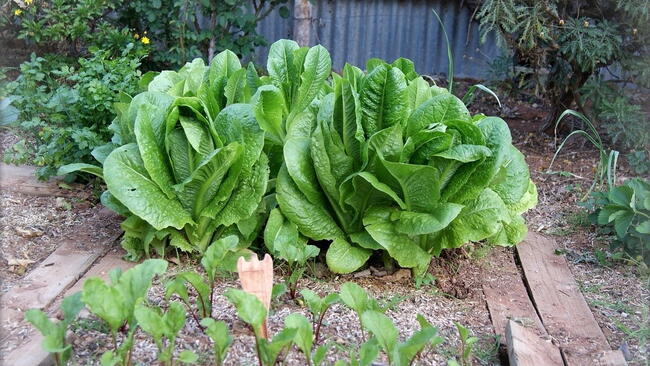
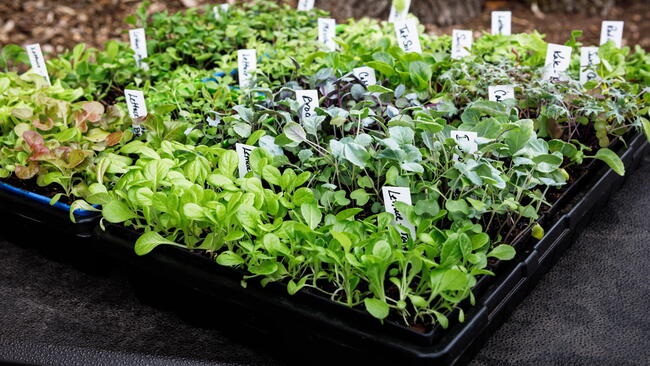
Ever-versatile salads present a symphony of leaf shapes, textures, and tastes ideal for livening up meal times. Grow individual varieties or create your own salad blend by mixing two or more varieties together before sowing. Suitable salads include lettuce, mustards and other Oriental leaves, kale, and arugula.
For the quickest results, sow a mix of salads sold for repeat or cut-and-come-again harvesting. Sow the seeds very thinly into drills spaced around 6 to 10 inches apart. Cover the seeds back over then gently pat the surface of the soil down. Water along the rows, then keep the soil moist and weed-free as the seedlings grow. If summers are very hot in your area, you may need to wait a few weeks or use shade cloth to reduce temperatures for germination and good growth.
Harvesting can start less than 3 weeks after sowing. Take two or three outside leaves from each plant at any one time. This allows the remaining leaves to grow on and provide another cut in a few days’ time. Cut little and often for best results.
See the Almanac’s Growing Guides to Lettuce, Swiss Chard, and Kale.
3. Bush Beans
Sowing to harvest: 60 days
The quickest pods in town, bush beans, can be sown immediately after a previous crop to give a speedy picking before the end of the current growing season. Taking just 2 months from sowing to pod production, these trouble-free beans are a must—and kids love them!
In summer, the beans can be sown directly into the ground or into pots of potting soil. Poke the seeds into the soil so they are 10 to 16 inches apart. Sow a batch once a month until the end of summer. The short, bushy plants will soon come into flower.
Pick the pods every few days, as they appear, so that you are always enjoying them while they are still smaller and more tender. Regular picking encourages plants to continue forming pods. Savor the beans lightly steamed with a curl of butter and a grind of the pepper mill.
See the Almanac’s Growing Guide to Beans.
4. Carrots
Sowing to harvest: 50 days
Carrots are not the most obvious speedy vegetable, but choose a quick-growing finger-sized variety and you can expect sweet, crunchy roots in just 6 weeks.
Sow into pots of potting soil, spreading the seed thinly over the surface, then cover with a thin sieved layer of potting soil. Or sow the seed into drills spaced about 6 inches apart, cover back over, and water.
If you have pests (such as carrot flies), a row cover will help. Once the seedlings have appeared, thin them on a rainy day when there will be fewer carrot flies about, or on a still, cloudy day to about 1 inch apart. Water afterwards to settle soil back around the roots.
Pull up the tender carrots while they are still young, using a border fork if necessary to first loosen the soil.
See the Almanac’s Growing Guide to Carrots.
5. Spinach
Sowing to harvest: 30 days
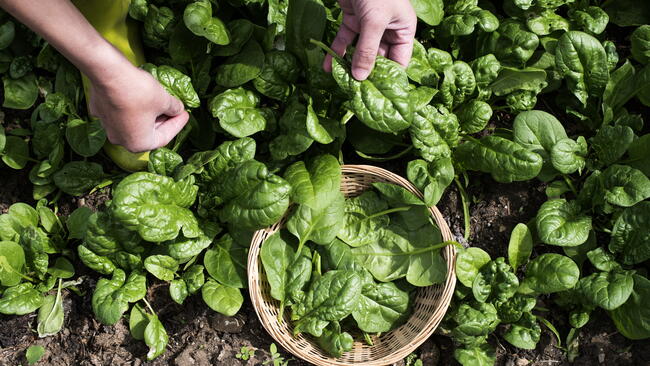
The smooth, succulent leaves of spinach are extraordinarily versatile. Use them in salads, as a key ingredient to quiches and flans, or stirred into risottos or pasta dishes. Start spinach off once a month to enjoy right up until the first frosts.
Sow into rows about a foot (12 inches) apart. Set the seeds an inch apart, then thin the resulting seedlings to roughly 8 inches apart. Plants can quickly bolt in hot weather, which causes the leaves to turn bitter. Prevent this by sowing in light shade during the heat of summer and by always keeping the ground moist.
Cut the leaves away using a sharp knife or scissors. Don’t let the leaves get too big, and remember to harvest little and often. Later sowings can be covered with a row cover or tunnel to help growth along as the weather turns cooler.
See the Almanac’s Growing Guide to Spinach.
For more information on planting vegetables, here are all of our free Vegetable Growing Guides.
Preparing the Ground
Sow your super-speedy crops into well-prepared soil. This simply means ensuring that the soil has enough nutrients to support healthy growth and has the right texture to encourage even germination. In most cases all that’s needed to prepare the ground is to sprinkle on a top-up of organic fertilizer before raking the soil surface to a fine tilth.
All of these super-speedy vegetables can also be grown in pots of good-quality, multipurpose potting soil.
Learn more about preparing your soil for planting.
Protecting Against Pests
While our quintet of super-speedy vegetables will have little time to attract pests, do take a few precautions. Carrot flies have already had a special mention. Use the same type of row covers protecting your carrots to guard against flea beetles on radishes and some salad leaves. Slugs can decimate seedlings, so set up beer traps or shady retreats such as an upturned grapefruit shell, then collect and discard any slugs you find.
It’s perfectly plausible to sneak in some super-speedy vegetables even up until surprisingly late in the summer. Try some of these quick croppers and get ready for a bonus harvest in next to no time. We’d love to hear what other super-speedy vegetables you recommend for your area, so why not drop us a comment below and tell us.
Garden Planner: Free for 7 Days.
After you watch this video, why not take a look at our online Garden Planner? It’s never too early—or too late—to learn.
We’ve made the garden planner free for 7 days. A week is ample time to play around on your computer and plan a garden!
Check our our free Garden Planner trial here to plan your own garden.

More Like This

Cucumbers are a very fragile plant when it comes to temperature, so you'll want to wait to plant them outdoors until you're certain that no late spring frosts will occur. Cucumbers also can be difficult to transplant, so we would recommend leaving them in whatever pot you have them in and just transplanting directly to the garden when the time comes. Do so very gently, as you will not want to damage the cucumbers' roots. Learn more about cucumbers here.
As for radishes, they are a cold-tolerant crop, so it's generally recommended to seed them directly in the garden. Once your radishes start coming up, plant them outside in containers or the garden so that their roots can develop undisturbed. Learn more about radishes here.
