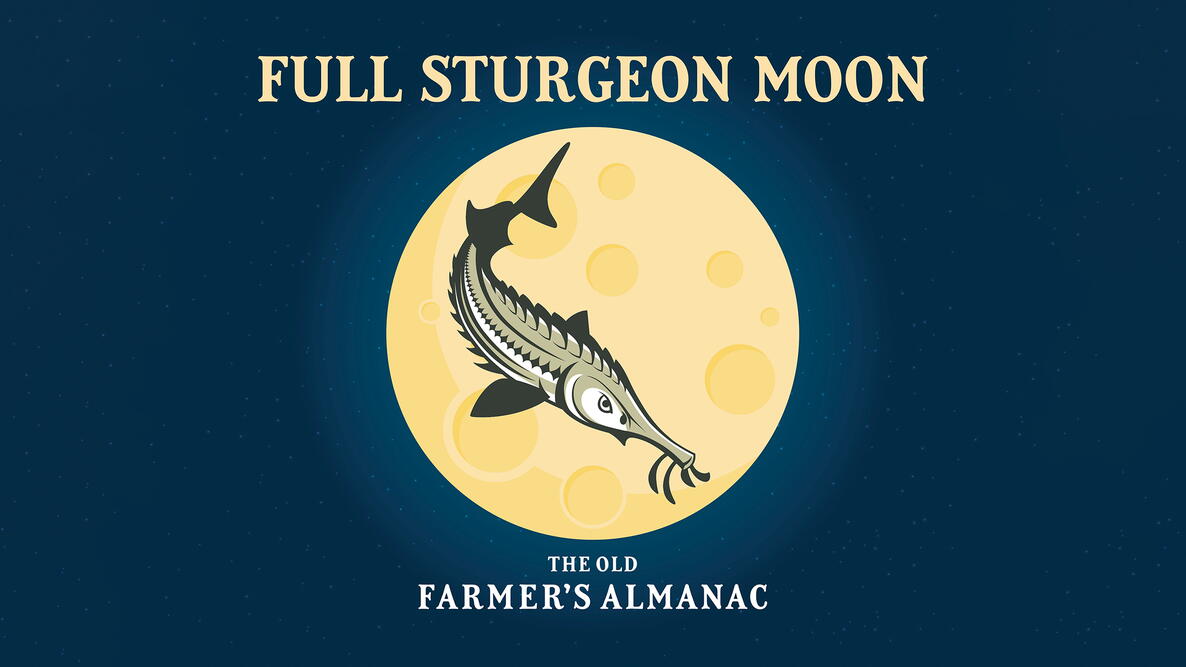

The Full Sturgeon Moon of August 2026 will peak on Friday, August 28, marking the traditional full Moon of late summer. Why do we call it the Sturgeon Moon? Is it full of fish? We’ll explain what makes the August Moon special and how to view this gorgeous summer sight best.
When to See the Full Moon in August 2026
August’s full Moon will crest on Friday, August 28, reaching peak illumination at 12:18 A.M. Eastern Time. Look up on the evening of Thursday, August 27, to catch a spectacular view of the full summer Moon. You can convert 12:18 A.M. Eastern Time to your time zone using our tool.
Why Is It Called the Sturgeon Moon?
The full Moon of August is traditionally called the “Sturgeon Moon.”
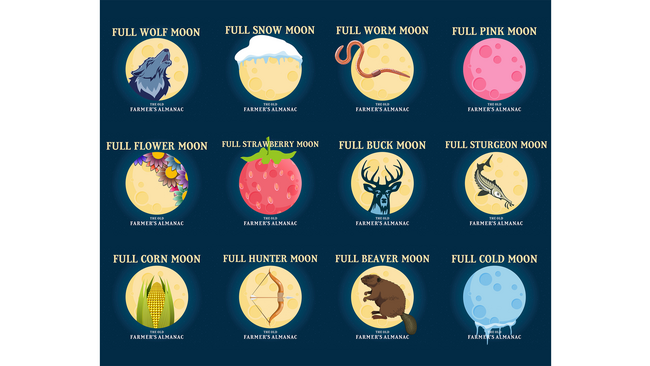
The full Moon names used by The Old Farmer’s Almanac have different origins, including Native American, Colonial American, and European sources. Traditionally, each full Moon name was applied to the entire lunar month in which it occurred, not solely to the full Moon.
The Sturgeon Moon
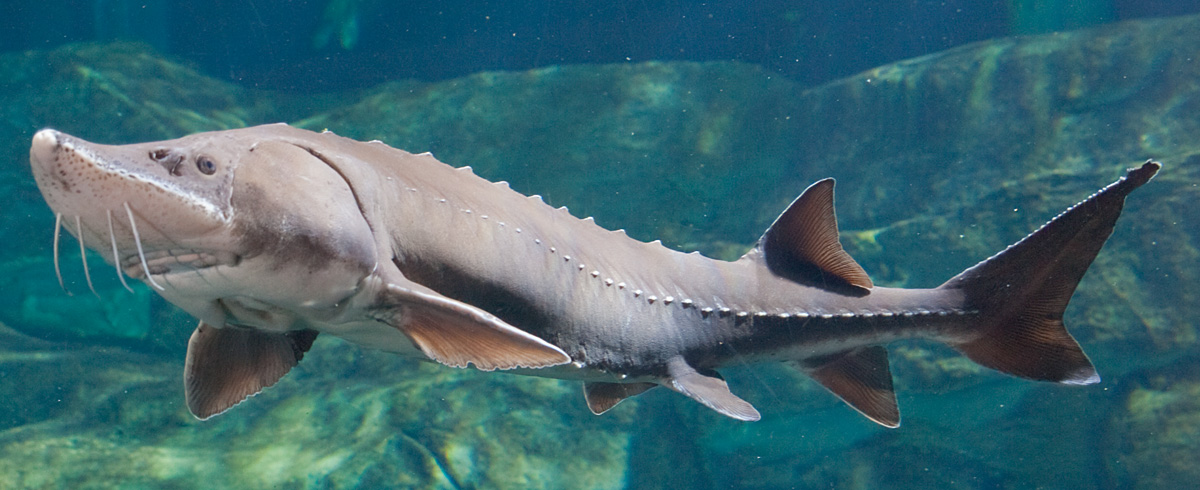
The name Sturgeon Moon comes from the giant lake sturgeon of the Great Lakes and Lake Champlain; this native freshwater fish was readily caught during this part of summer and an important food staple for Native Americans who lived in the region. At one time, the lake sturgeon was quite abundant in late summer, though they are rarer today.
What Is a Sturgeon?
These prehistoric-looking fish have been traced back to around 136 million years ago, and many people call them “living fossils.”
- Females require around 20 years to start reproducing, and they can reproduce only every 4 years. However, they can live up to 150 years!
- Today, there are about 29 species worldwide, including the lake sturgeon found in the Great Lakes. They have evolved in size from the size of a bass to a monster sturgeon as big as a Volkswagen.
- The lake sturgeon is quite rare today, due to intense overfishing in the 19th century, pollution, and damage to their habitat.
Alternative August Moon Names
Flying Up Moon is a Cree term describing the time when young birds are finally ready to take the leap and learn to fly.
Corn Moon (Algonquin, Ojibwe), Harvest Moon (Dakota), and Ricing Moon (Anishinaabe) signify that this is the time to gather maturing crops. Along the same vein, the Assiniboine people named this period Black Cherries Moon, referring to when chokecherries become ripe.
The Tlingit people of the Pacific Northwest traditionally called this time of the season the Mountain Shadows Moon.
→ See all Full Moon names and their meanings.

Moon Phases for August 2026
See Moon phase dates and times below. Note: All dates and times are ET. Go to the Moon Phase Calendar for your time zone.
.png) | Last Quarter: August 5, 10:21 P.M. |
.png) | New Moon: August 12, 1:37 P.M. |
.png) | First Quarter: August 19, 10:46 P.M. |
.png) | Full Moon: August 28, 12:18 A.M. |
→ For your next full Moon, see our Full Moon Dates chart.
Full Sturgeon Moon Video
Each month, we will explain the traditional names of the Full Moon along with some fascinating facts. In this video, learn about the Full Sturgeon Moon. Click below to watch the video.
Best Days in August 2026
Below are the best days for activities, according to the Moon’s sign and phase in August.
| Activity | Best Days |
| Cut Hay | 3, 4, 30, 31 |
| Set Eggs | 7, 24, 25 |
| Fishing | 12-28 |
→ See Best Days for MORE activities.
Moon Folklore
- Clothes washed for the first time in the full Moon will not last long.
- If you glimpse the new Moon over your right shoulder, you will have good luck.
- To have a project prosper, start it during the new Moon.
- Babies born a day after the full Moon enjoy success and endurance.
Share your thoughts about this month’s moon below!
More Like This

You are absolutely right! We think that it would be especially rare, and lucky, to see a new Moon over one's right shoulder--since it is practically impossible to do so! The new Moon rises around the time of the Sun, and travels the sky in daytime; the sunlight prevents us from seeing it with just our eyes. One might, with special eye protection, be able to see a new Moon during a solar eclipse, though.
We're not sure how this folklore came about, but it might actually refer to the thinnest crescent just past the new Moon phase; this is sometimes referred to as the "new Moon" even though the actual moment of the phase (when the Moon is totally dark from our view) has passed.
Some of our retailers offer free shipping! Check out where to buy an Old Farmer's Almanac.
- « Previous
- 1
- 2
- …
- 10
- Next »

Comments