Planning a landscape begins with imagination—but turning your ideas into a workable design takes careful thought. How will you use your yard? Where does the sun shine? Which areas need privacy, shade, or better drainage? Before choosing plants, learn how to evaluate your property, sketch a simple landscape plan, and create an outdoor space that complements your home and lifestyle.
Frederick Law Olmsted, one of America’s most influential landscape architects, believed that home landscapes should surround families with nature. His timeless principles—using natural forms, framing views, and designing for discovery—can still inspire today’s gardens.
We won’t leave you with a blank sheet of paper! Here is some advice to get you started:
Walk around your neighborhood. Look at other gardens and yards that you admire.
Evaluate your own land. Where are the problem areas, such as poor drainage, do you need to consider? You’ll want a deign that moves water away from your house. Think about how much sun/shade your land receives (and when) because this affects plant choice. Consider your climate and soil type. See the USDA Plant Hardiness Zone.
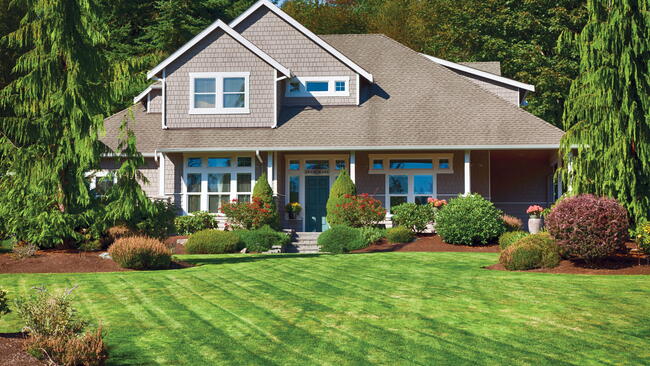
Think about the style of your house. Is it formal or informal? Your landscaping shouldn’t compete.
How do you plan to use your landscape? For kids’ play, for gardening, for outdoor entertaining? Do you need to create different spaces for different uses?
How much space do you have? Walk around your yard and make a simple sketch to get a sense of scale.
How much time do you have to maintain your landscape? Be as realistic and not overly ambitious. Are you going to take care of your landscape by yourself? Are you planning to hire someone? Are you at home during the summer when the garden will need lots of care and maintenance? See our article on low-maintenance landscaping.
Fill a scrapbook with ideas. Include magazine clippings and photos and colors that you can reference at a nursery or with a contractor.
As you start to sketch out a plan, keep these design principles in mind:
Frame and mass at the edges. Keep the largest plantings off to the side.
Avoid scatter—no flower beds in the middle of lawns, no brilliantly colored plants without a background of green foliage to set them off.
Make flowers incidental, to supply color and finish. The lawn and the mass plantings are the main pieces of the plan. Flower sparingly.
Avoid plantings that might grow and block the windows and light. At the same time, use plantings to hide less desirable parts of your home.
Consider position carefully. Far more important than the right choice of plant is its correct position with reference to other plants and to structures.
Olmsted designed his own 1.76 acre property with the same design principles that he used for large-park concepts. Here are some of the principles he executed:
Imitate nature’s unorderly growth habit. Olmsted hated hedgerows or any straight lines that merely imitated a city grid.
Color with nature’s palette. Olmsted biographer Witold Rybczynski says that “Olmsted actually disliked flowers. His idea of a landscape was really shades of green.”
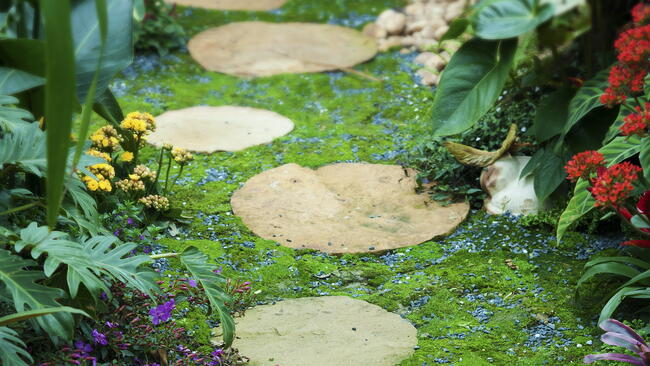
Enhance nature. Olmsted liked to embellish nature’s design. At his own home, there was a natural depression in the earth, so he created a lush grotto.
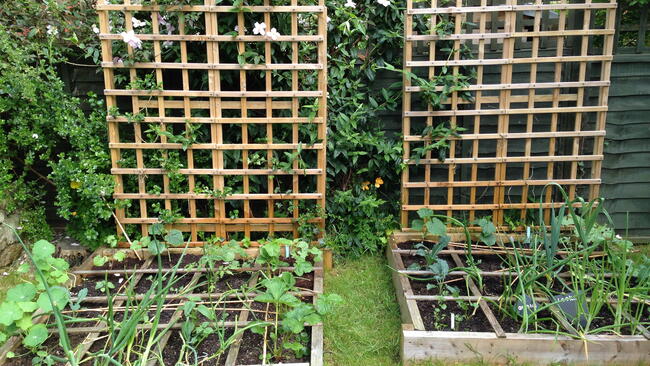
Hide the house. Landscapes are often designed to draw attention to a building. Olmsted wanted just the opposite. He strung a wire trellis across two of his home’s walls, allowing the structure to be swallowed by vines.
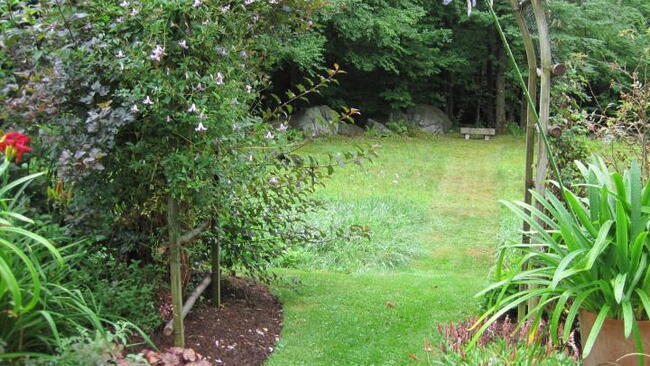
Look beyond the landscape. Olmsted always tried to borrow distant views.
Design for surprise. Winding paths that kept these end points secret were common design elements for Olmsted.
Olmsted’s principles demonstrate that we all have different philosophies, likes, and dislikes for our home landscape. Take time to dream and plan, especially during the winter months. Then, as the earth warms, walk outside your front door.
I prefer winter and fall, when you feel the bone structure of the landscape. —Andrew Wyeth (1917-2009)
Catherine Boeckmann is the Executive Digital Editor of Almanac.com, the digital home of The Old Farmer’s Almanac. She leads digital editorial strategy and publishing across a wide range of Almanac sub...
<a title="View user profile." href="/author/editors">The Editors</a>Mon, 05/14/2012 - 16:32
Best time to transplant is the fall, once the summer heat breaks and the weather cools off. It's a hardy plant so I'm sure it will go well! All the best, TOFA
Reply to comment
📣The Gardening Club Just Got Better! 3 Deliveries, 10% Store Discount, and more!
Comments