
With their triangular heads, folded forelegs, and lightning-fast reflexes, praying mantises are among the most fascinating insects in the garden. Known as skilled hunters and natural pest controllers, these remarkable predators have inspired centuries of folklore and curiosity. Learn what praying mantises eat, whether they really prey on hummingbirds, how to identify common species, and why gardeners often welcome them into the landscape.
Praying Mantis Quick Facts
| Feature | Details |
|---|---|
| Scientific Order | Mantodea |
| Average Size | 1–4 inches (some species are larger) |
| Diet | Insects, spiders, and occasionally small vertebrates |
| Lifespan | About half a year on average |
| Habitat | Gardens, grasslands, forests, and shrubs |
| Garden Benefit | Natural pest control |
| Vision | Up to 300° field of view |
| Head Rotation | Up to 180° |
Mantis vs. Mantid: What’s the Difference?
We’ve often been asked about the difference between mantis and mantid. The first term, mantis, refers only to members of the genus Mantis, like the European mantis, Mantis religiosa. The term mantid refers to an entire order (Mantodea) of insects. In common usage, the terms are essentially used interchangeably, and we say you can call it what you wish.
What Do Praying Mantids Eat?
- Often considered a beneficial insect, praying mantids are actually generalists (i.e., willing to eat a variety of things) that prey on bothersome insects and beneficial ones.
- As carnivores, mantids dine primarily on insects like crickets, flies, grasshoppers, mosquitoes, and moths. They can even feast on prey over three times their size, including small animals such as frogs, lizards, and—yes—even hummingbirds.
- Because of their voracious appetite for insects, praying mantids are sometimes considered a friend to farmers and gardeners since they work well as a natural form of pest control. However, remember that they will eat the good bugs too!
- These insects will even eat each other. In fact, praying mantids are famous for being cannibalistic: a female will sometimes eat a male just after—or even during—mating.
- Although they may eat other beneficial insects (and, occasionally, each other), they often eat insects that coincidentally do great damage to crops, such as beetles, grasshoppers, and other small insects.
Are Praying Mantises Good for Gardens?
Praying mantises are generally considered beneficial insects because they prey on many common garden pests, including beetles, flies, grasshoppers, and moths. However, they are opportunistic hunters and may also eat beneficial insects such as bees, butterflies, and ladybugs.
Do Praying Mantises Eat Hummingbirds?
Recently, mantids have gained some notoriety for preying on larger animals such as lizards or small birds. Generally, the species of mantids native to North America—including the Carolina mantid (Stagmomantis carolina)—are not usually large enough to take on prey as big as hummingbirds.
However, there are several non-native species—introduced in the 1800s and 1900s to help control insect pests—that have become naturalized in North America. The Chinese mantis (Tenodera sinensis) is one of the most widespread and the largest, sometimes growing up to 5 inches in length. This species in particular, perhaps in part because of its size, has been known on occasion to catch a hummingbird at a feeder, especially if it is very hungry or if it mistakes the bird for a bee or other insect that seeks the sugar water.
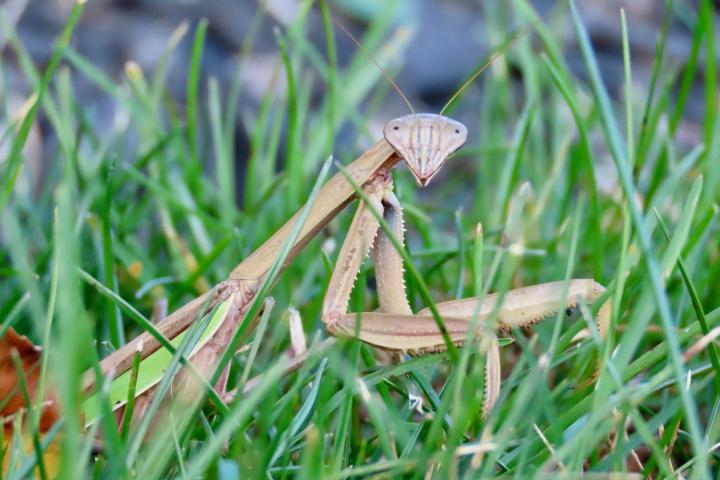
To avoid this unfortunate occurrence, move any hummingbird feeders away from surrounding bushes and branches, so that the mantids are easier for the birds to see. It also can help to add a broad cover over the top of the feeder, to discourage mantids. If you do see a mantid on the feeder, coax it onto a stick and move it gently away.
The other prominent non-native mantid in North America is the European mantis (Mantis religiosa). This mantid is smaller on average than the Chinese mantid and is generally not a threat to hummingbirds.
How to Identify Common Praying Mantis Species
Wondering which praying mantis you’ve seen in your backyard? There are various species of mantids in North America, but the three mentioned in this article are the most widespread. Below are the key differences between these species.
| Carolina Mantid | European Mantid | Chinese Mantid | |
|---|---|---|---|
| Average Size | 2-2½ inches | Up to 3 inches | 3–4 inches or more |
| Color | Green or mottled gray/brown | Light brown to dark green | Green or brown, often with a green-yellow stripe down the wings |
| Identifying Features | Females have short wings that don’t cover the entire length of their abdomen. Egg cases are flatter, often laid on vertical surfaces. | Black and white “bull’s-eye” markings can be seen under the front legs. | Pattern of vertical stripes on the forehead (between the eyes). Egg cases are more globular, often laid on branches. |
Fascinating Praying Mantis Facts
- Mantids are found on every continent except Antarctica. Of the 1,800 or so known species, most are between 1 and 3 inches in length. Some tropical species may grow to 8 inches or more, though!
- Many praying mantids are able to fly, although some females might not be able to.
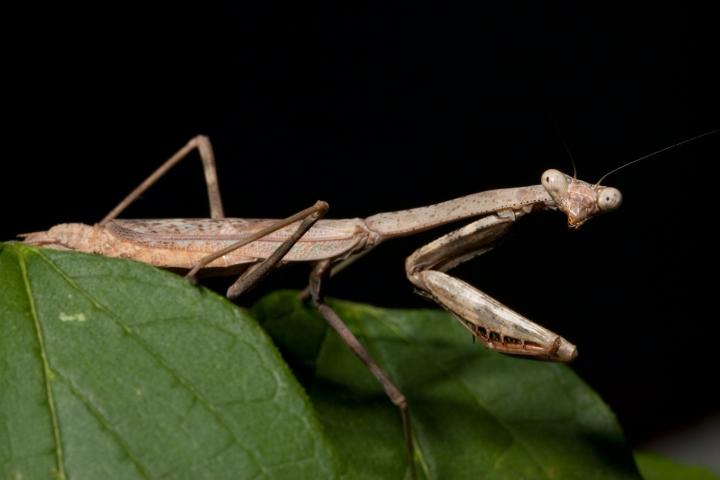
- Mantids have triangular heads and long, flexible necks that bend easily, allowing them to turn their heads 180° from side to side, giving them a 300° field of vision. Reportedly, some can spot the slightest movement from up to 60 feet away.
- They have two large, compound eyes and three simple eyes located between them.
- Masters of disguise, praying mantids are rarely seen. They are typically green or brown, but some species will take on the color of their habitat. They may mimic leaves, twigs, flowers, grass, and even other insects. Some tropical species so closely resemble flowers that pollinators will land on them in search of nectar!
- Females can lay hundreds of eggs regularly (in egg cases), and the nymphs hatch out looking much like smaller versions of their parents.
Nature’s Perfect Predator
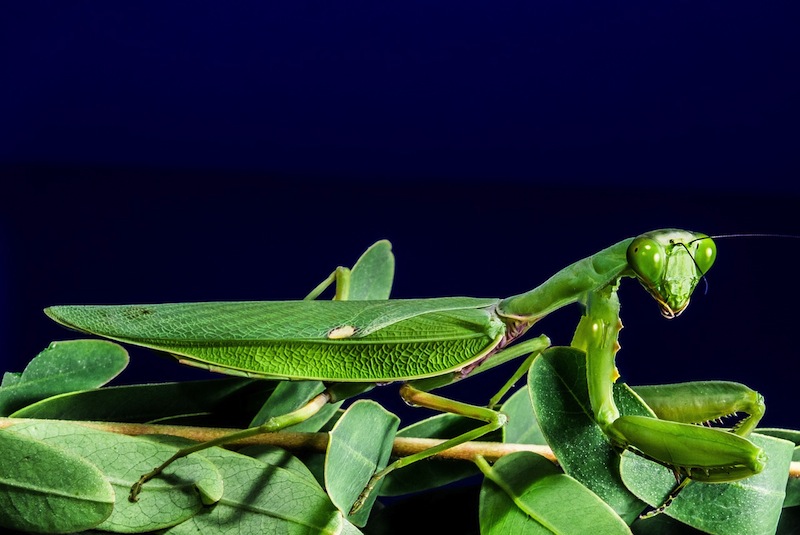
- The strange praying stance of the praying mantid is not an act of reverence but rather the position that this fierce predator takes while patiently waiting to ambush other insects. They are the martial artists of the insect world.
- Their powerful forelegs are armed with rows of overlapping spikes, which are used to snare their prey and pin it in place while they devour it with strong, sharp mandibles. They use their entire arms like razor blades, with movements that are so rapid that they are impossible to gauge fully with the naked eye.
- With flexible necks and two prominent eyes, praying mantids calculate the distance to their prey rapidly and in three dimensions.
Praying Mantis Folklore and Symbolism
- The French once thought that a praying mantis would point a lost child home.
- In some parts of Africa, it is considered good luck if one of these curious creatures lands on you.
- The Greek-derived word mantis means “prophet” or “seer.” When at rest, the insects hold up the fronts of their bodies and position their huge forelegs, appearing to pray for insight.
Frequently Asked Questions
Are praying mantises beneficial in the garden?
They can be. They help control many pest insects, including beetles, flies, grasshoppers, and moths.
What do praying mantises eat?
Praying mantises primarily eat insects but may eat many things and occasionally consume spiders, small reptiles, frogs, and even tiny birds.
Do praying mantises bite humans?
They can bite if handled roughly, but they are not dangerous to people.
How can you tell a Chinese mantis from a Carolina mantis?
Chinese mantises are larger and often have a green-yellow stripe along the wings, while Carolina mantises are smaller, and females have shorter wings.
How long do praying mantises live?
Some praying mantises live about one year from hatching to adulthood. On average, they live about half a year.
Are praying mantises endangered?
Mantis species are not endangered in the US, although some populations may face habitat loss.
Why is it called a praying mantis?
The insect holds its front legs in a position that resembles folded hands, giving the appearance of praying.
As with many of nature’s predators, these hunters often become the hunted. The mantid’s natural enemies include bats, birds, lizards, snakes, and spiders. With so many enemies to worry about, perhaps praying mantids actually are saying their prayers!
Learn More
Find out about other fascinating and beneficial insects like fireflies and dragonflies!

More Like This

- « Previous
- 1
- 2
- …
- 10
- Next »

Comments