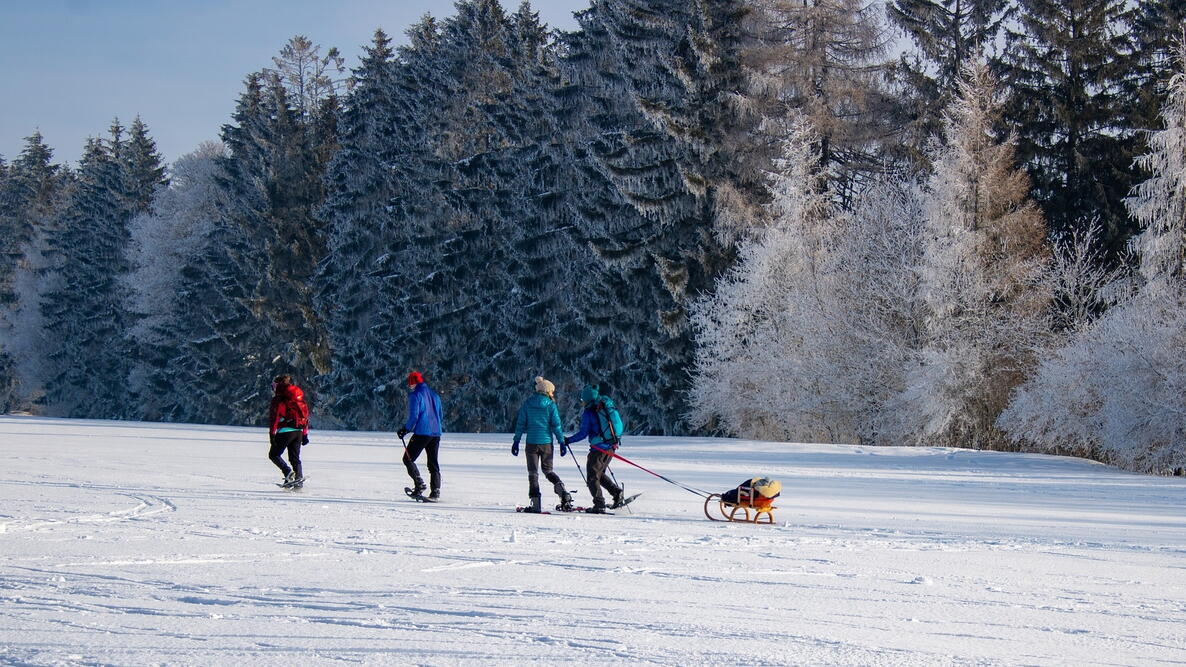

Snowshoeing is a fun, low-impact winter activity that’s perfect for beginners and outdoor lovers. Once a survival tool, modern snowshoes let you glide over snowy trails, explore forests, and enjoy the winter landscape—without breaking a sweat. Here’s how to get started and make your first snowshoeing adventure a success.
The History of Snowshoeing
Snowshoes have come a long way since their invention some 7,000 years ago. Back then, it’s safe to guess, snowshoeing was not considered a leisurely winter sport! In fact, snowshoes were made so that people could survive winter. You know: head out, forage for food, return home with your quarry—also known as “dinner for the family.”
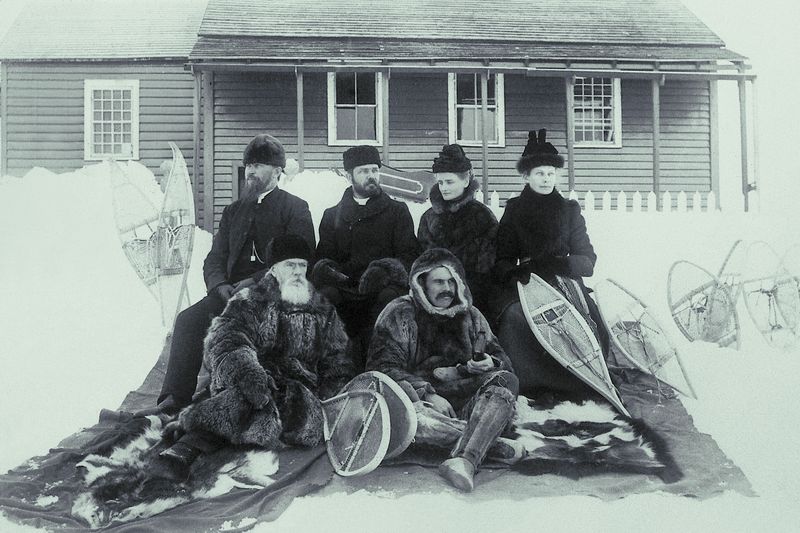
Originally, snowshoes were made from wood and rawhide. Current-day versions using those materials are still available to buy, as are authentic antique versions that are often found adorning the walls of vacation ski homes. However, the rapid growth of snowshoeing as a sport in the 1990s was due to modern versions of snowshoes made with aluminum or stainless steel frames and nylon, plastic, or polypropylene decking. They are light and relatively inexpensive.
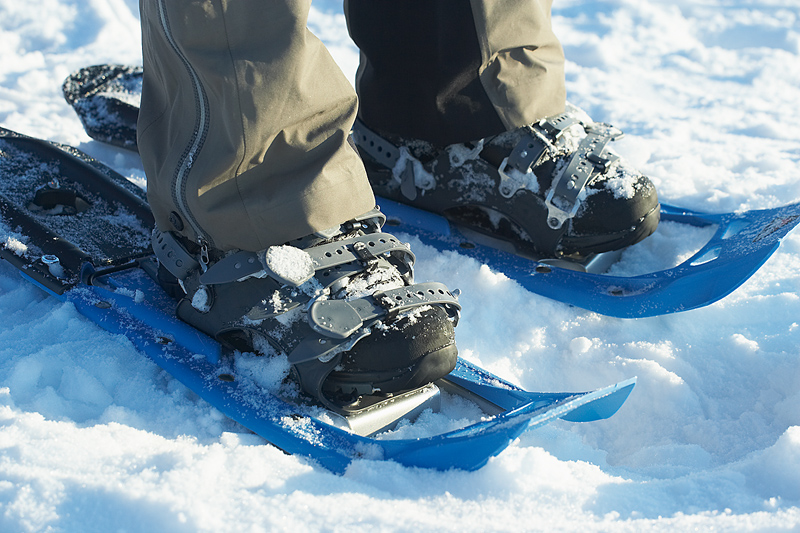
I bought a pair of Tubbs snowshoes in the late 1990s. Except for adjusting the straps or bindings to fit whichever pair of boots (waterproof and insulated work best) I am wearing, they are quite simple to use. Newer versions have even easier-to-adjust bindings and straps. In fact, if you are reasonably fit and feel comfortable walking, then you should have an easy time learning to snowshoe!
Essential Snowshoeing Gear for Beginners
You don’t need a ton of specialized gear to get started, but there are a few requirements:
- One pair of snowshoes (many outdoor shops rent equipment and offer lessons)
- Proper outdoor clothing—especially breathable layers that can be removed (or added) depending on how active you are being
- Sturdy winter boots (or specialty snowshoe boots)
- One pair of ski poles or trekking poles (optional)
- Gaiters (optional)
- Headlamp (for nighttime snowshoeing)
The best way to learn a new sport is from a professional instructor, and many places that rent or sell snowshoes offer short lessons.
Tips & Techniques for Your First Snowshoeing Adventure
Here’s what to keep in mind on your first day out:
Practice on Flat Surfaces First
Practice on a flat, snowy surface without ice. Most modern snowshoes have crampons on the bottom. These crampons work best in fluffy snow and aren’t as easy to use on icy, steep slopes, especially going downhill. That’s just something to keep in mind as you are experimenting with this new sport.
Master the Walking Motion
“Put one foot in front of the other.” The movement pattern is the same as walking. Lift your left foot, bending at the knee so that the snowshoe comes off the snowy surface, and take a step. Repeat this with your right foot. That’s it—just like walking, except that you have much larger “shoes” that hinge away from your foot as you lift your foot. Gaiters are also optional for snowshoeing. If the snow is very light, not packed down, and very deep, gaiters will help to protect your boots and the bottom of your snow pants from snow getting inside. In most instances, snowshoes do a great job of keeping you above the snow, and you will not need gaiters.
Using Poles for Balance
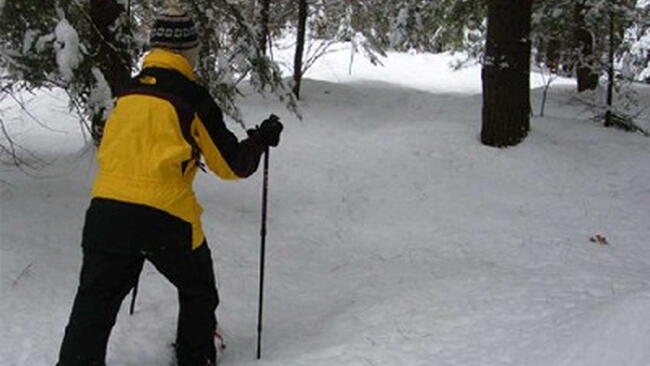
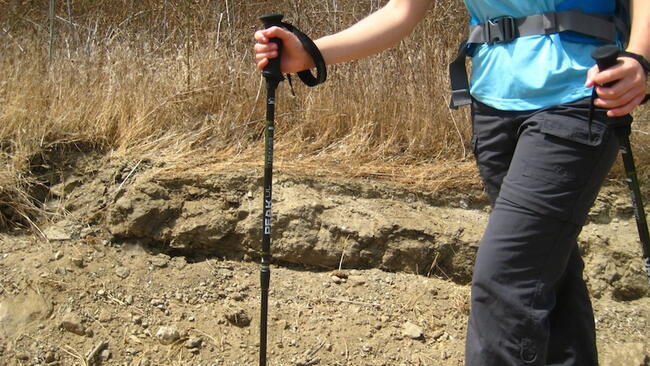
Use poles. Though poles are optional, they give you two more points of balance while snowshoeing. I prefer trekking poles that are adjustable so I can dial in the perfect pole length. The arm motions using poles are the same as when you walk and should feel natural. Simultaneously, step with your left leg and swing your right pole forward with a light flick of the wrist to put the pole basket in front of you, then plant the pole. In this case, your balance is moving from your right foot to your left foot and right pole as your momentum moves forward. That’s as much physics as I can share with you. Just remember: It feels like walking.
Look Ahead for Safety and Enjoyment
Look ahead, not straight down at your shiny new snowshoes. There are two reasons you should look ahead. The first: You are outside, and it’s a beautiful winter wonderland. Take in the sights, sounds, and smells. The second: Looking ahead improves your balance.
Frequently Asked Questions
What is snowshoeing?
Snowshoeing is a winter activity that allows you to walk on snow without sinking. Snowshoes distribute your weight across a larger surface area, making it easier to move through deep snow.
Do I need to be in shape to snowshoe?
Not at all! Snowshoeing is suitable for all fitness levels. Beginners can start on flat terrain, and the activity can be as gentle or challenging as you choose.
What gear do I need to start snowshoeing?
Essential gear includes snowshoes, warm winter clothing in layers, waterproof boots, and optional trekking poles and gaiters. A headlamp is useful for nighttime adventures.
Can I snowshoe on any type of snow?
Snowshoeing works best on soft, fluffy snow. Icy, compacted surfaces can be more challenging, especially on steep slopes, so take caution or choose flat areas when starting out.
How do I walk in snowshoes?
Walking in snowshoes is similar to normal walking. Lift your foot, place the snowshoe down, and step forward. Use poles for extra balance if desired.
Where can I go snowshoeing?
Snowshoeing can be done on snowy trails, parks, frozen lakes, or even in your backyard if there’s enough snow. Many ski resorts and outdoor centers offer marked snowshoe trails.
Can snowshoeing be done at night?
Yes! Nighttime snowshoeing under the Moon can be magical. Use a headlamp for safety and enjoy the quiet winter landscape.
Are snowshoes expensive?
Snowshoes range in price from around $50 for basic models to several hundred dollars for advanced designs. Many outdoor shops offer rentals if you want to try before you buy.
How do I stay safe while snowshoeing?
Stick to marked trails, dress in layers, stay hydrated, and be mindful of weather conditions. Bring a friend or let someone know your route, especially for remote areas.
Snowshoeing is a great sport for all ages. You can head out on wooded adventures or across a frozen lake.
So, ready to snowshoe? Ever tried snowshoeing? What do you think? I’d love to hear from you.

More Like This




Comments