
Planting
When to Plant Basil
Basil is a heat-loving plant that’s usually not started outdoors in most areas. Many gardeners grow basil from starter plants purchased at local nurseries. But you can also start basil seeds indoors 6 to 8 weeks before your last local frost date and plant the seedlings outside when the soil has warmed to at least 50°F (10°C) and nighttime temperatures are consistently above 50°F too.
Remember, don’t rush basil. Without heat, this plant just won’t grow!
Where to Plant Basil
Basil grows best in sunny locations that receive 6 to 8 hours of bright light per day, but are lightly sheltered when the sun is high overhead. Direct sun can scorch basil leaves in hot weather, so many gardeners interplant it with taller plants, like tomatoes, for extra sun protection and natural pest control perks. If you’re keeping basil indoors, situate it under a grow light or in a window that receives lots of bright, indirect sun.
Wherever you plant basil, make sure the soil drains well and is moderately fertile yet moist. These plants thrive in containers or raised beds, but you can can grow basil in in-ground gardens, hydroponic setups, and windowboxes too. Ideally, the pH of the soil should be slightly acidic to neutral with a range of pH 6.0 to 7.5.
How to Plant Basil
- To start basil seeds indoors, fill pots or seedling trays with seed starter mix and plant 2 seedlings per pot or cell by burying the seeds no more than ¼ inch deep. Keep the seeds under grow lights, add a heating mat if you have one, water regularly, and expect the seeds to germinate in 5 to 7 days. Once the seedlings have true leaves, snip off the weakest plants with fingernail scissors so you have just one plant per cell or pot.
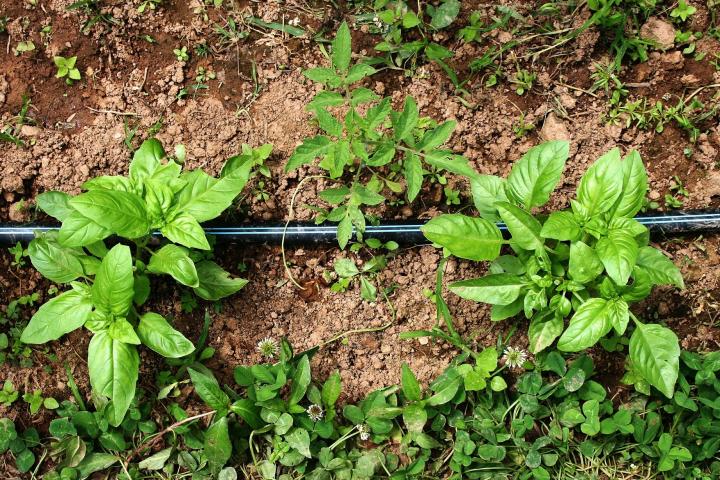
- To transplant starter plants or seedlings outdoors, wait until temperatures are warmed sufficiently and then plant the basil plants at the same depth they were growing in their nursery pots. Multiple plants should be spaced 10 to 12-inches apart, while a single basil plant will do just fine in a 6 to 10-inch container.
- After planting, consider adding a 2- to 3-inch layer of mulch or compost around the base of your plants to retain soil moisture and minimize weeds. These plants are ideal for companion planting with tomatoes and other nightshades!
Growing
Watering
Basil craves water and soil should stay consistently moist around these plants. If you live in a hot area, adding mulch is a handy way to cut down on watering and keep basil hydrated longer.
Fertilizing
Feel free to fertilize basil after the seedlings have produced several sets of true leaves. Then regularly fertilize your plants with a liquid balanced or 5-10-5 fertilizer diluted to 1/4 strength throughout the growing season.
Pruning or Maintenance
Harvesting or pinching back basil regularly keeps plants compact and slows down the bolting process, which leads to basil flowers and changes the flavor of basil leaves. Once your plants produce their first few sets of true leaves, pinch the leaves back to just above the second set of leaves to encourage branching. Then, continue to harvest or pinch back your plants to a leaf node every week or two.
If any flowers appear on your basil, pinch them away — unless you want to feed the bees and aren’t so concerned with harvesting the leaves!
Seasonal Care
Basil doesn’t do well in cold weather and you may need to cover your plants with cloches or frost blankets, or move potted plants indoors, if a late chill threatens. If a sudden frost is imminent, harvest your basil as the plants won’t survive.
During summer, basil needs more frequent watering and protection from hot, direct sun. Potted plants may need to be watered once or twice a day if temperatures climb super high.
t
Types
- Cinnamon basil tastes a bit like cinnamon and adds a unique twist to any dish.
- Purple basil adds rich color to gardens, but can also be steeped in white vinegar to create an intriguing condiment.
- Thai basil adds a sweet licorice flavor to cooking and is a must if you love Thai fare.
More Like This

We are excited to hear how it goes, Nebrija!
Hi, Mary, Were all the basils in the same bed? Was there something different about this basil? Was it shaded by another plant, preventing sunlight? Was it crowded and affected by airflow? Was it planted in a corner that was waterlogged or didn't drain well? Sometimes it's a pest or disease. 3 out of 4 ain't bad!
- « Previous
- 1
- 2
- …
- 10
- Next »

Comments