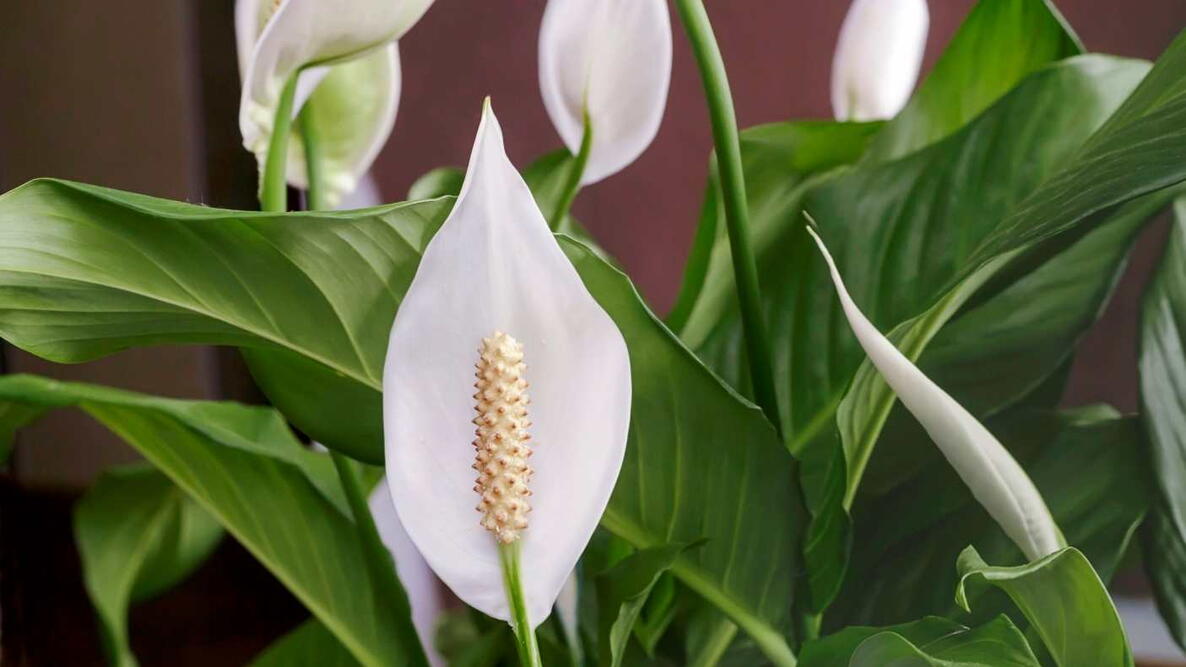

Learn how to care for a peace lily, one of the most popular indoor plants. These beautiful houseplants are fairly easy to grow, but knowing how often to water peace lilies and what to do if their leaves droop or turn yellow is essential. Plus, find tips on how to repot your peace lily to keep it happy!
About Peace Lilies
Peace lilies are not true lilies. They are tropical, evergreen plants in the Arum family, native to tropical Central and South America. These plants thrive on the forest floor, receiving dappled sunlight and consistent moisture and humidity. Replicating these conditions in the home is the key to keeping your peace lily happy and healthy.
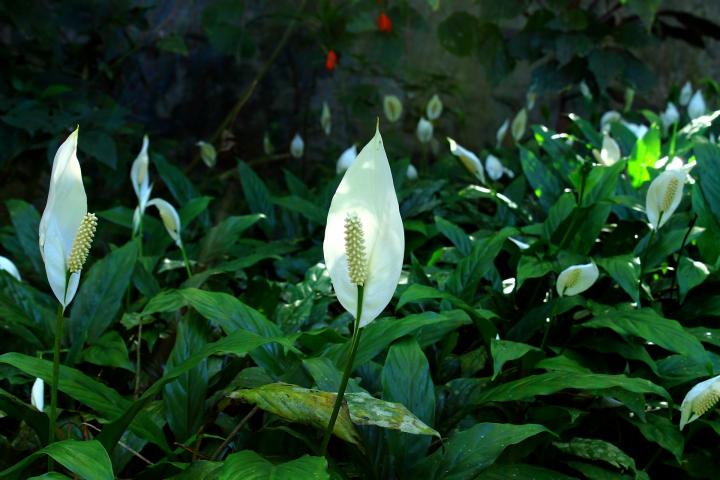
With enough light, peace lilies produce white to off-white flowers starting in the early summer and continue to bloom throughout the year in the right conditions.
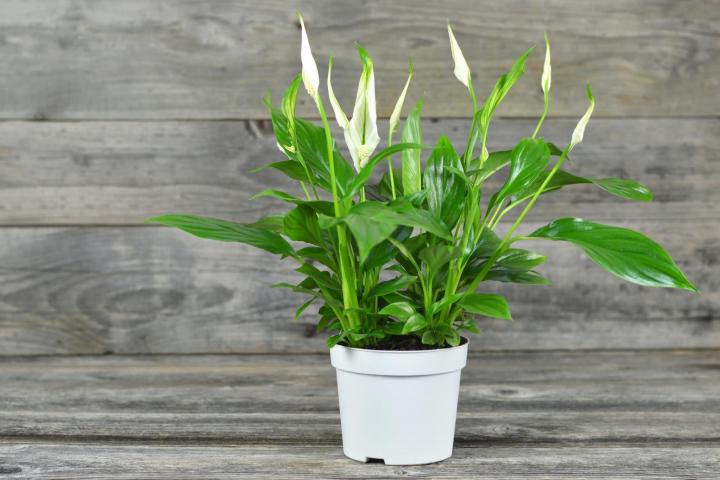
Most household varieties of peace lily grow up to 16 inches tall, but larger outdoor cultivars can reach up to 6 feet tall. Peace lilies are not cold-hardy, so they can only be grown outdoors in warm, humid climates (USDA Zones 10, 11).
Growing
Peace Lily Care
Perfect for busy plant parents, total beginners, or anyone whose home doesn’t get a ton of sunshine, Spathiphyllum plants are surprisingly easygoing. They don’t mind lower light, and if you forget to water them once in a while, they’ll usually forgive you. These plants look right at home in offices, apartments, or any cozy, shaded corner—bringing fresh green leaves and graceful white blooms without demanding much in return. Once you get the hang of peace lily care, you’ll find they’re the kind of plant that quietly gives back all year long.
Lighting
- Place peace lilies in indirect but bright sunlight. An east-facing window is perfect, as the plant will be exposed to the bright morning sun. A north-facing window would also be a good choice for a peace lily.
- Keep peace lilies out of areas where they’ll get direct sunlight all day (such as in a south-facing window), as it may dry them out too much.
Watering
- The dryness of the soil is what counts. Keep the soil lightly moist to the touch but not overly saturated. Peace lilies can tolerate short periods of dry soil, but their leaves will develop brown tips if they don’t have enough water or humidity.
- Tip: One nice thing about peace lilies is that they will tell you when they’re thirsty: the plant’s leaves start to droop. When the plant starts to look less “perky” than usual, test the soil with your finger. If it feels dry, it’s time to water again. They can be a bit dramatic; don’t panic if they start to wilt.
- Peace lilies are sensitive to chemicals commonly found in tap water, such as fluoride, which may cause brown leaf tips. Use filtered, room-temperature water or distilled water if possible.
- Learn more about watering houseplants.
Humidity
- Peace lilies enjoy high humidity. Misting their leaves or placing their pot atop a moistened tray of gravel can help to increase humidity around the plant.
Fertilizing
- Peace lilies are not heavy feeders, so fertilize only occasionally. To encourage spring and summer growth, fertilize every 6 weeks or so with a balanced houseplant fertilizer starting in late winter.
Temperature
- Peace lilies are tropical plants; they do best in temperatures between 65° and 75°F (18 to 23°C) during the day and about 10°F cooler at night.
- Keep these plants away from the furnace or a drafty window or door.
Other Peace Lily Care Tips
- The large leaves of peace lilies tend to collect a lot of dust in the home. Gently wipe them down with a wet paper towel occasionally; a thick layer of dust can inhibit photosynthesis.
How to Get Peace Lilies to Flower
- Most often, if no flowers appear, the plant is not getting enough light. Peace lilies are very tolerant of low light, but “low light” doesn’t mean no light! To encourage flowering, move the plant to a brighter location where it will receive bright, indirect light for at least a few hours each day.
- Green flowers, weak-looking flowers, or a general lack of flowers can also be caused by improper fertilizing. In the case of green flowers, cut back on fertilizing, as the plant may be getting too much nitrogen. In the case of weak-looking flowers or a lack of flowers, try switching to a fertilizer made for flowering plants. This type of fertilizer will have a higher amount of phosphorus, which plants need for blooming.
Types
Specialty varieties of peace lilies are not very easy to come by in most garden centers, though they have been growing in popularity. You may have more success ordering them from an online source.
- Spathiphyllum wallisii is a smaller peace lily, reaching only 12 inches tall.
- ‘Petite’ is smaller still, at approximately 8–10 inches.
- ‘Sensation’ is the largest variety available, capable of growing up to 4–6 feet in height and width.
- ‘Domino’, is a medium-sized variety with attractively variegated leaves.
- ‘Mojo Lime’, which has lime-green foliage, is another medium-sized peace lily.
Wit and Wisdom
- The peace lily is said to have gotten its common name from its white flowers, which rise timidly above its green foliage and resemble white flags of peace.
- Despite the peace lily’s common name, it is not related to true lilies at all.
- The plant’s attractive blooms are also the source of its Latin name, Spathiphyllum, meaning “spathe-leaf.” The flowers consist of the spathe (the white, sheath-like leaf) and the spadix (the spike of small flowers located within the spathe).
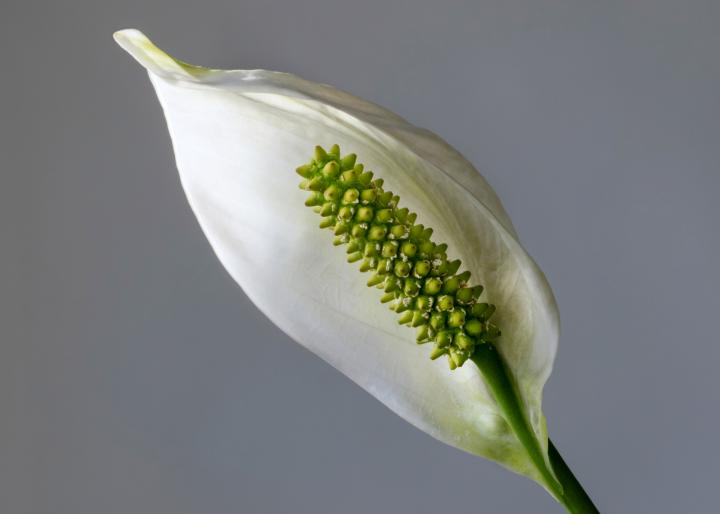
Photo by W. Carter/Wikimedia

More Like This



Hi, Dave. It sounds like Bob might like to be re-potted and perhaps given a new location. While you do not want to put Bob in direct sunlight, peace lilies thrive when they receives lots of bright, indirect sunlight. Try moving him to a place that is bright and out of the shade, but won’t be in direct sun. Also, Sherri (comment directly below) has an interesting tip about using banana-infused water!
Thanks for sharing, Sherri! Great tip!

It is natural for the peace lily’s spathe—the leaf-like wrapping that surrounds the small flowers—to be green as it develops. In its normal cycle, the spathe starts and ends green, turning brilliant white mid-season. That is probably what you are seeing. But if you feel like it is more than just that, there are a few things you can do to bring out the brighter whites. The peace lily needs minimal fertilizer, so houseplant fertilizer should be used at half strength, only once or twice a year. The peace lily thrives in bright, but indirect, light and in moist but well-drained soil.
The edges of the leaves can turn brown by overfertilization or by excessive drying. Use sharp scissors to cut away the dead, brown areas. Just be sure to follow the leaf's natural shape.
- « Previous
- 1
- 2
- …
- 10
- Next »

Comments