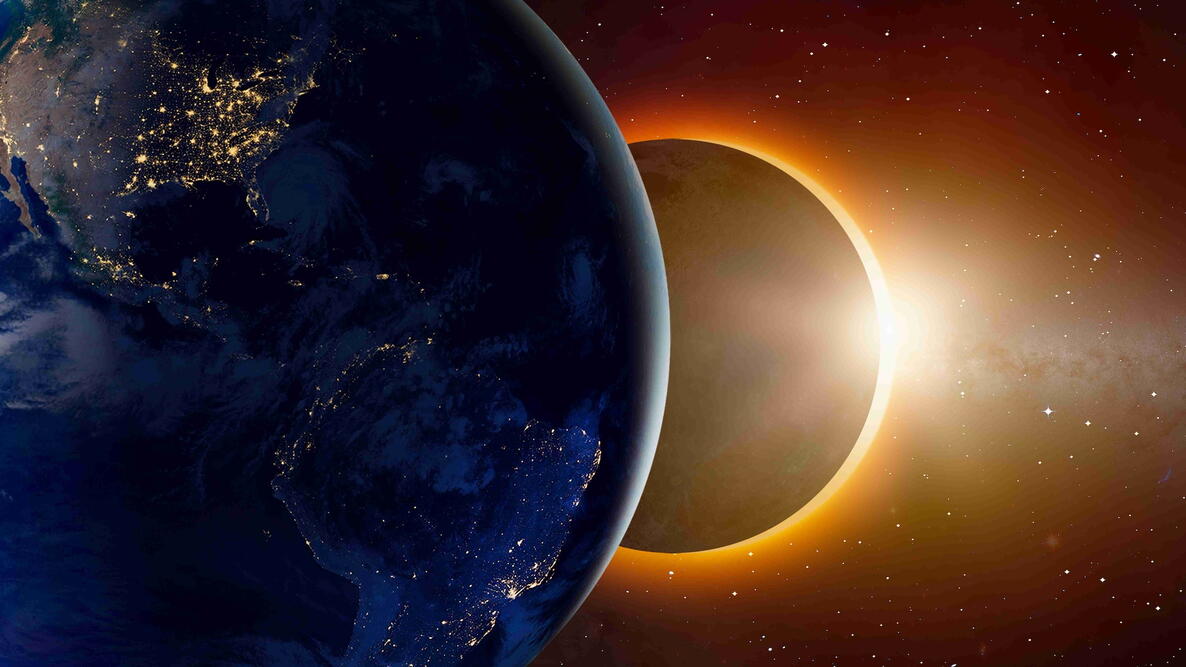
Not only are eclipses an awesome sight to behold, but they can also pack an astrological punch. Discover what solar and lunar eclipses mean in astrology—and how eclipse season may affect your birth chart. Let’s peel back the cosmic curtain!
Can you imagine what it was like for early humans to witness an eclipse? Before science, it might have felt like the world was ending! Now we know eclipses are not harbingers of doom, although astrologers do consider them intense.
To explore the astrological meaning of eclipses, I spoke with astrologers Samuel Reynolds and Shaheen Miro. But first, a quick primer.
What is an eclipse? It is a celestial event that happens when the Sun, Moon, and Earth line up, causing one to block the light from another. Here on Earth, we experience two types: solar and lunar eclipses.
- A solar eclipse happens during a New Moon, when the Moon passes between Earth and the Sun. Learn more about the types of solar eclipses.
- A lunar eclipse happens during a Full Moon, when Earth casts its shadow across the Moon. During a total lunar eclipse, the Moon may appear red or orange—an effect commonly called a “Blood Moon.”

What is eclipse season? Astronomers and astrologers use this term for an approximately 35-day period when eclipses can occur. An eclipse season usually includes a solar eclipse at a New Moon and a lunar eclipse at a Full Moon, about two weeks apart. Eclipse seasons usually occur twice a year.
Solar and Lunar Eclipses in Astrology
In astrology, eclipses are like a New or Full Moon “on steroids.” Their energy is intensified, which can make these cosmic events feel emotional, unpredictable, and sometimes challenging.
Eclipses may illuminate changes we need to make but have been avoiding. In some cases, they can suddenly “eclipse” a situation or person out of your life. One thing is for sure: They get your attention!
Solar Eclipses: New Beginnings
Solar eclipses occur during New Moons, so they symbolize new beginnings and fresh starts. However, they can bring an unexpected twist. You might be presented with a sudden opportunity—and have to make a snap decision.

Astrologer Shaheen Miro explains:
“A solar eclipse is a dramatic, energized New Moon, meaning that it is a time when a cycle begins, where something grows out of darkness, where the inkling of new life begins to take shape.
Unlike a regular New Moon, when we often imagine making wishes or setting intentions, a solar eclipse is a time when we embrace the wisdom of the universe and allow the invisible hands of fate to bring something into our path.
I often imagine a solar eclipse like the aces in tarot, where the divine hand emerges from the clouds with a gift. Usually, a solar eclipse brings about events, circumstances, and experiences that are unexpected but exactly the opportunity we needed.”
Lunar Eclipses: Endings and Release
Lunar eclipses occur during Full Moons, which are associated with completion, revelations, and release. They tend to be emotionally charged.
I sometimes get insomnia around lunar eclipses. I’m not the only one: Friends and loved ones have also told me they feel restless when a lunar eclipse shows up!
Shaheen adds:
“A lunar eclipse is a pivotal and cathartic Full Moon, a time where everything reaches a culminating point. What is fully formed and embodied is now released with a lunar eclipse.
Without sounding too dramatic, I often think of this as an energetic death, a time of truly divine and fated endings. When a lunar eclipse closes the door on something, it usually feels dramatic and unexpected, yet it often creates a more aligned experience moving forward.”
What Do the Nodes Have to Do With It?
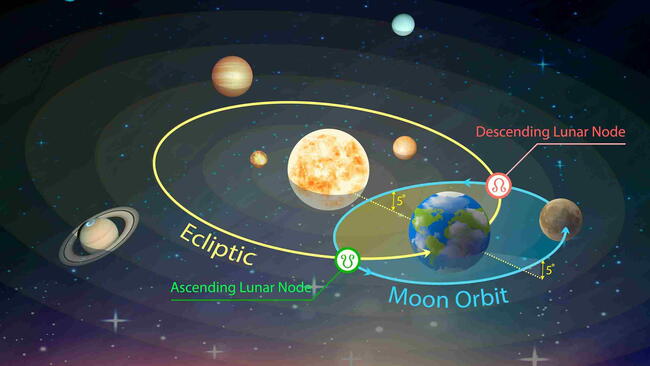
The Lunar Nodes are not planets or other objects in space. They are two mathematical points where the Moon’s orbit crosses the Sun’s apparent path through the sky.
- In astrology, the North Node—also called the Dragon’s Head—is associated with karma, growth, and the lessons you’re here to learn. This path can feel challenging because it pulls you beyond your comfort zone.
- The South Node, or Dragon’s Tail, represents familiar gifts and patterns, including those believed to come from previous incarnations. It’s where you may feel most comfortable—but staying there too long can hinder your growth.
Either a solar or lunar eclipse can occur near the North or South Node, but astrologers interpret the two Nodes differently.
North Node Eclipses: A Push Forward
A North Node eclipse brings surprises. It may push you out of your comfort zone and into the unknown. This can feel disorienting, but it may also offer an opportunity to begin again.
The key is to trust the shift rather than attempt to control-freak it.
South Node Eclipses: A Release
A South Node eclipse is more about release. Think of it as a situation finally coming to an end—perhaps the result of a wheel set in motion long ago.
In some cases, it might feel as if a karmic debt has been paid.
Eclipses and the Zodiac Signs
The Nodes are always in opposite zodiac signs. This means that if one eclipse occurs in Leo, another eclipse in the season will most likely occur in Aquarius—unless the Nodes are changing signs.
The Lunar Nodes take about 18.6 years to move through the zodiac. As they travel, two opposite signs are “in charge” for roughly 1.5 to 2 years.
For example, in 2025, we had a Lunar Eclipse in Virgo on March 13, a Solar Eclipse in Aries on March 29, a Lunar Eclipse in Pisces on September 7, and a Solar Eclipse in Virgo on September 21.
In 2026, the Aquarius/Leo cycle begins:
- February 17: Solar Eclipse in Aquarius
- March 3: Lunar Eclipse in Virgo
- August 12: Solar Eclipse in Leo
- August 27–28: Lunar Eclipse in Pisces
See the Almanac Eclipse Calendar for upcoming solar and lunar eclipse dates.
Eclipse Cycles and Their Themes
Eclipses do not work in isolation. They move through the zodiac in cycles as the Lunar Nodes travel through opposite signs. In astrology, each cycle brings different themes and lessons.
For example, the current Aquarius North Node puts the focus on the collective. How are we working together for humanity—or not? Where do we need to be individuals, and how does that fit with the greater good?
The Leo South Node points to a need to release the ego. Instead of “me first,” we have an opportunity to learn how to be a team member.
Shaheen adds, “I think it’s important to understand that they do not work in isolation but that all lunar phases are part of a cycle, and so are eclipses.”
Once the Nodes finish traveling through one pair of signs, it takes about nine years before those signs return with the Nodes reversed. The last time the Nodes were in the Aquarius/Leo axis was in 2017, when the North Node was in Leo and the South Node was in Aquarius.
Here are possible lessons and themes for each pairing:
- North Node Aries/South Node Libra: Individuality, authenticity, independence, and codependence
- North Node Taurus/South Node Scorpio: Security, self-worth, and leaving the comfort zone
- North Node Gemini/South Node Sagittarius: Communication, learning, and sharing knowledge
- North Node Cancer/South Node Capricorn: Nurturing, home, family, sensitivity, and intuition
- North Node Leo/South Node Aquarius: Ego, generosity, creativity, and personal power
- North Node Virgo/South Node Pisces: Service, devotion, work, and practicality
- North Node Libra/South Node Aries: Relationships, compromise, beauty, and diplomacy
- North Node Scorpio/South Node Taurus: Depth, rebirth, power, regeneration, and intimacy
- North Node Sagittarius/South Node Gemini: Truth, travel, philosophy, hypocrisy, and other viewpoints
- North Node Capricorn/South Node Cancer: Ambition, responsible leadership, structure, and order
- North Node Aquarius/South Node Leo: Friendship, the collective, social justice, and “we” versus “me”
- North Node Pisces/South Node Virgo: Compassion, dreams, creativity, and empathy
How Does an Eclipse Affect Your Birth Chart?
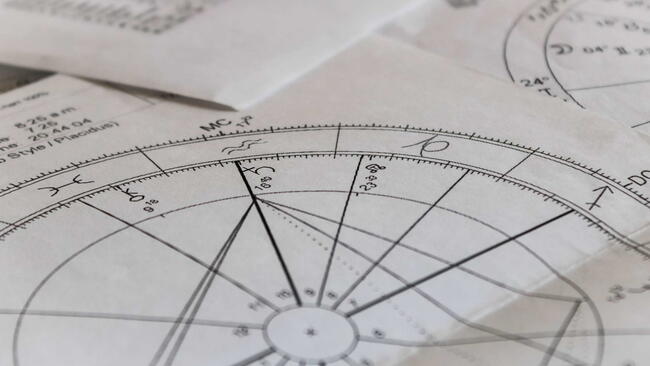
Some eclipses might affect you, while others might seem like a nothing burger. Your natal chart, also called a birth chart, can show where an eclipse might touch your life.
Find the eclipse’s zodiac sign and degree, then look at which house it lands in. That house represents the area of life where you may feel the eclipse’s energy.
Look at the House
For example, the Virgo Solar Eclipse on September 21, 2025, happened in the friendship sector of my natal chart. A long-term friend was “eclipsed” out of my life shortly afterward.
Because it was a South Node eclipse during a New Moon, I took it as a sign that it was time to let go so new friendships could blossom. Sam shares:
“Starting in 2011, roughly along the Gemini/Sagittarius axis, I knew that my fourth house, which is 17 Gemini, and my 10th house, Midheaven, is 17 Sagittarius, were lit up. And so I thought, ‘Something’s going to be happening, maybe related to my career or things related to my home.’ Because it’s along an axis—Midheaven and IC—I suspected it was something more with my career than with my home. That’s when I was approached about writing for Ebony magazine, which was, at the time, a dream job.”
Look at Your Planets and Key Chart Points
Also, check whether the eclipse falls within 5 degrees of one of your natal planets or key chart points, such as your Ascendant or Midheaven. Astrologers believe this can signal a more significant change.
In 2021, a Solar Eclipse occurred the day before my birthday, which meant it was aligned with my Sun. Around that time, I developed a serious tooth infection that almost led to the tooth being removed. Thankfully, the tooth was saved. I took the experience as a cosmic nudge to become even stricter about my dental hygiene. Hello, Waterpik!
Even if you don’t know your entire birth chart, pay attention to your Sun or Rising Sign. If an eclipse happens near one of them, astrologers believe it could signal big news, drama, or a pivot.
The Lunar Eclipse on April 15, 2014, was aligned with my Ascendant. Soon afterward, exciting new career doors opened, bringing greater visibility—and a book deal followed. Much better than a tooth infection!
Practical Tips for Navigating Eclipse Season
Eclipses can feel like a cosmic shakeup. Life may seem more intense or unpredictable, but there are ways to move through eclipse season with grace.
Pause before making a major decision. If possible, avoid rushing into a significant change on the day of an eclipse. Give it a few days for the moondust to settle—you may have a clearer sense of what’s happening.
Allow endings to unfold. If something comes to a close around an eclipse, try not to hold on too tightly. In astrology, eclipses are often associated with release and transition.
Don’t rush to judgment. Seemingly random or dramatic events may arise. Before deciding that your luck has run out, give yourself time to understand what happened—and what it might mean moving forward.
Pay attention to what is revealed. Eclipses can be illuminating. A truth may emerge, bringing much-needed clarity to a foggy situation. You might even see someone’s true character!
Find a little quiet. “The best thing is to find some measure of quietness during the time of the eclipse,” Sam advises. Journaling, meditation, or a walk in nature may help you feel more balanced if you are out of sorts.
Shaheen adds:
“The Moon herself rules the ebb and flow of life, so no matter what astrological event is happening, we still have to live in the midst of things. I would say that an eclipse is not the time to fixate on what you want to happen but rather to embrace the catharsis of it all.
If you have to make a decision during an eclipse, then leave your ego at the door and trust that the universe has your back and is going to take the reins for a bit.”
The next time an eclipse arrives, don’t assume it’s negative. Instead, look at it as an opportunity to check in, recalibrate, and evolve.

More Like This

Comments