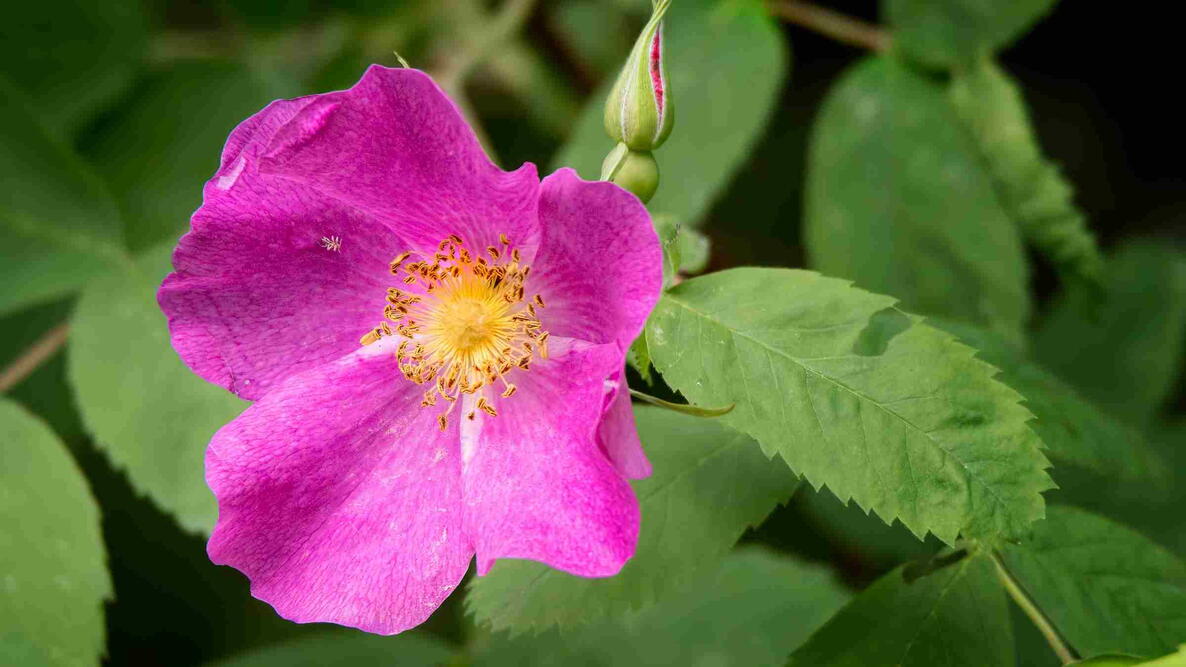

I’m wild about native roses—and for good reason. These hardy wild roses grow naturally across North America, supporting pollinators. However, most of the roses you’ll find at garden centers are hybrids; they don’t offer many benefits to wildlife and can be quite fussy in the garden. This guide will introduce you to some of North America’s top native roses—far easier to keep and far more rewarding to grow.
Are Roses Native to North America?
Yes! While many modern roses trace their origins to Asia and Europe, North America is home to roughly 35 species of native roses. Often called wild roses, these plants are adapted to local climates, evolved alongside native insects and birds, and require far less care than hybrid varieties.
Native roses can be found growing in sunny meadows and fields, prairies, woodlands, deserts, and even along busy roadways. They vary in size and bloom time and may grow as upright shrubs or climbing vines. Many share a similar look: single-petaled pink flowers, a brief but beautiful summer bloom, and edible rosehips that persist into fall and winter.

Plants Commonly Mistaken for Native Roses
Because the word rose appears in so many plant names, it’s easy to assume that all roses are related—or native. One of the most common points of confusion is the rose of Sharon.
Is Rose of Sharon Native?
Despite its name, rose of Sharon is not a true rose and is not native to North America. It’s actually a type of hibiscus (Hibiscus syriacus) native to East Asia. While widely planted, it doesn’t provide the same ecological benefits as native rose species.
Why Native Roses Are Easier (and Better for Wildlife)
If you’ve grown roses in the past, you know that it can be a chemically intensive job. Many non-native and hybrid roses are vulnerable to pests and diseases, requiring frequent applications of fungicides and pesticides. Native roses, on the other hand, are naturally resistant to most common rose ailments and typically need far less water, fertilizer, and pruning to thrive.
Native roses also lack the aggressive, invasive tendencies of non-native plants such as multiflora rose (Rosa multiflora), sweetbriar rose, and beach rose—plants that can spread rapidly and disrupt local ecosystems.
I’ve been growing native roses for years now, and I’m particularly enthralled by their ability to support wildlife. Many species serve as host plants for butterflies and moths; their hollow stems provide winter habitat for stem-nesting bees, and their rose hips attract turkeys, quail, and songbirds during the colder months.
At the same time, native roses offer plenty of ornamental appeal, working beautifully as hedges, backdrops for lower-growing perennials, and natural additions to cottage gardens and traditional landscapes alike—often in spaces where non-native roses once dominated.
Harvesting
Rose hips are the part of native roses most commonly harvested, and they’re ready to pick in fall once the hips have fully ripened and turned red or orange. Many gardeners wait until after the first light frost, which can soften the hips and improve their flavor.
Harvest rose hips selectively, leaving plenty behind to feed birds and other wildlife through winter. To use rosehips for food or tea, remove the seeds and irritating hairs before eating.
If you prefer, rose hips can also be left on the plant to add winter interest and provide a valuable cold-season food source for wildlife.

Try This With Your Harvest
Rosehip Jam
Take the hips you’ve gathered and turn them into a simple, old-fashioned rose hip jam packed with flavor. Here’s our recipe for Rose Hip Jam.
Types
There are many native roses, and the best varieties for your garden are those native to your local growing region.
- Virginia Rose (Rosa virginiana): Pretty as a picture, Virginia roses grow between 4 and 6 feet high, and they produce dainty pink flowers that linger from June to August. They’re also salt-tolerant and great for coastal gardens!
- Swamp Rose (Rosa palustris): As the name suggests, swamp roses tolerate wetter soil than most and are ideal for pond margins and poorly draining gardens that experience occasional flooding. Hardy in Zones 4 to 9, these plants max out at around 6 feet tall and are at their best in full- to part-sun.
- Pasture Rose (Rosa carolina): Another pink-flowered native rose, pasture roses are found in open areas throughout the Eastern United States and are particularly good for hedges and edible rose hips.

- Smooth Rose (Rosa blanda): Native to the Northeast, the smooth rose has relatively few thorns, which makes it easier to work with in the garden.
- Wood’s wild rose (Rosa woodsii): One of the hardiest native roses you can find, Wood’s wild rose is native to the Rockies and Western United States and tolerates shade well.
- Nootka Rose (Rosa nutkana): Pictured at the top of this page, Nootka rose’s fragrant summertime blooms are replaced by an abundance of rose hips in fall. Native to the Pacific West.
- Climbing rose (Rosa setigera): A good choice for pergolas and fences, climbing rose stems stretch up to 10 feet long and provide autumn interest with their color-changing leaves.

Propagation
Native roses can be propagated from stem cuttings and seeds, but you’ll need to wait longer for plants started from seed to bloom.
From cuttings
Take 4- to 6-inch-long tender stem cuttings from healthy native roses in spring or summer. Dip the cut stem ends in rooting hormone, remove the lower leaves from the cuttings, bury the cuttings 2/3 of the way up in pots filled with potting soil, water often, and transplant the cuttings into their permanent growing location once their roots are sturdy and you notice new growth emerging from the cutting’s top.
From seed (outdoor method)
Plant rose seeds ¼ inch deep in outdoor pots under cold frames in fall, keep the seeds lightly moist but not soggy, allow the seeds to cold-stratify in the pots over winter, and water them regularly as the weather warms in spring.
From seed (indoor method)
Alternatively, plant the seeds in trays or pots in spring, cover the pots with clear plastic, and place them in your fridge to cold-stratify for 10 to 12 weeks. Then move the pots to a warm, bright location, water often, and feed the seedlings with half-strength liquid kelp fertilizer when they start to grow. Rose seedlings can be transplanted outdoors when the risk of frost has passed, but seeds have a roughly 20% germination rate, so it’s wise to plant more seeds than you think you’ll need!

More Like This

Comments