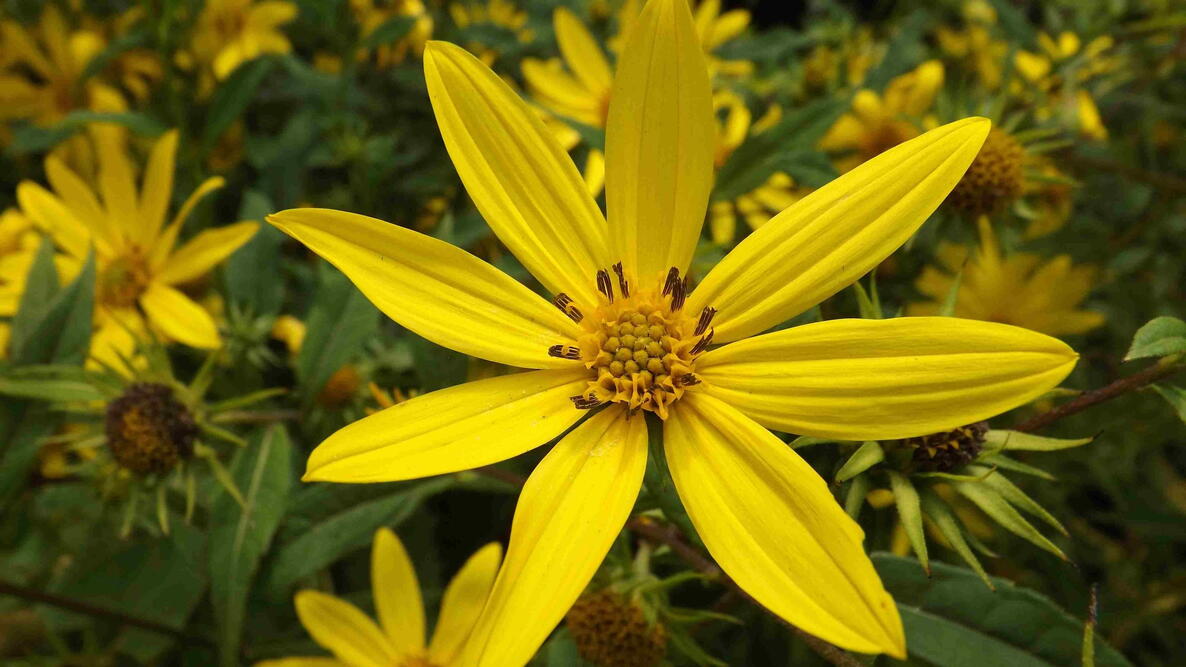
Caption
Perennial woodland sunflowers bloom in late summer and fall, returning year after year in sunny gardens.

Annual sunflowers are easy to love with their sunny disposition, bright yellow blooms, and edible seedheads that can be harvested for people or left for birds to munch on. But if you adore sunflowers and don’t want to replant them every spring, there’s another option: perennial sunflowers.
Native perennial sunflowers are just as pretty as annual sunflowers, but they’re even easier to care for—and they come back year after year even in cold climates. I grow perennial sunflowers in my wildlife garden to attract pollinators and wild birds, but you’ll find even more reasons to keep them and how to grow them right here in this guide.

At first glance, many of these sunflowers look very similar, but their flowers and leaves can vary in size and color, and their leaves may branch out differently on the plant’s slender stems.
Compared to annual sunflowers, perennial sunflower blooms and seeds are usually smaller. However, perennial plants often flower more abundantly, with blooms that can last 8 to 12 weeks from late summer into fall. Like annual sunflowers, they attract bees, birds, and other pollinators—and they also make excellent cut flowers.
I like to grow perennial sunflowers in a patch in my wildlife garden, but they fit right into cottage gardens, cutting gardens, and lots of other planting designs. Some species can be invasive in some areas, so it’s wise to choose a variety that’s native to your location. Once established, perennial sunflowers are drought-tolerant and hardy, and they may stretch between 2 and 10 feet tall depending on the species you decide to plant.
Types
All perennial sunflowers produce cheery, daisy-like blooms, but their flower color, leaf shape, and other characteristics can vary slightly.
- Woodland Sunflower (Helianthus divaricatus): Pictured at the top of this page, the woodland sunflower is a good choice for shade gardens. Native to eastern and central parts of the United States, it grows in full sun to part shade.
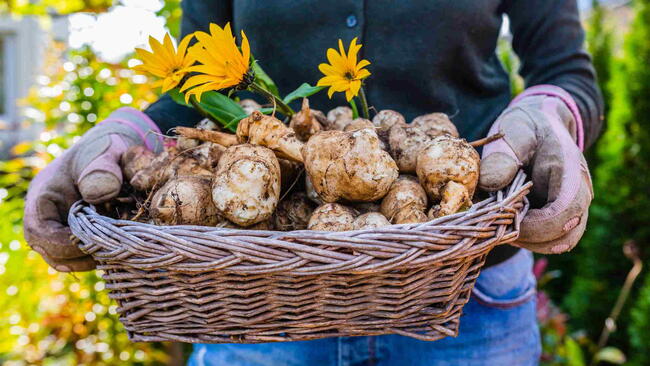
- Jerusalem Artichoke (Helianthus tuberosus): Most growers cultivate Jerusalem artichokes for their edible roots, which can be roasted or boiled just like potatoes. These plants also produce yellow flowers and are native to the Americas, but can be invasive outside their native range.

- Prairie Sunflower (Helianthus pauciflorus): Native to the Great Plains and other parts of Central and Western North America, prairie sunflowers require full sun and grow between 2 and 6 feet tall.

- Swamp Sunflower (Helianthus angustifolius): For rain gardens, swamp sunflowers are one of your best bets. These plants tolerate more moisture than most and are native to the Eastern and Southern United States.

Deadheading native sunflowers before they go to seed in fall will also limit their ability to spread. However, if you leave the dried flower heads intact through winter, they’ll draw in winter birds!
Propagation
Most perennial sunflowers are relatively short-lived, with individual plants living about 3 to 5 years. However, you can keep patches of native sunflowers growing for much longer by propagating them from seed or by dividing established plants.
Propagating From Seed
- Leave dried flower heads on your plants to allow them to self-sow naturally, or cut flower heads before seeds drop and place them upside-down in an open paper bag indoors.
- Allow the flowers to dry for another week or two. Then rub the seed heads to release the seeds.
- Let the seeds dry on a tray for a few more days.
- Store dried seeds over winter in labeled paper envelopes.
If you are worried about birds eating the seeds before you harvest them, cover flower heads with paper bags as seeds begin to ripen.
Propagating by Division
- Gently dig up your plants in early spring—just as they begin to produce new growth.
- Divide the rhizomes with a sharp knife or spade so that each section has healthy roots and stems.
- Replant divisions immediately at the same depth they were growing, and water well.
Dividing every 3 years helps maintain plant health and prevents overcrowding.

More Like This

Comments