Caption
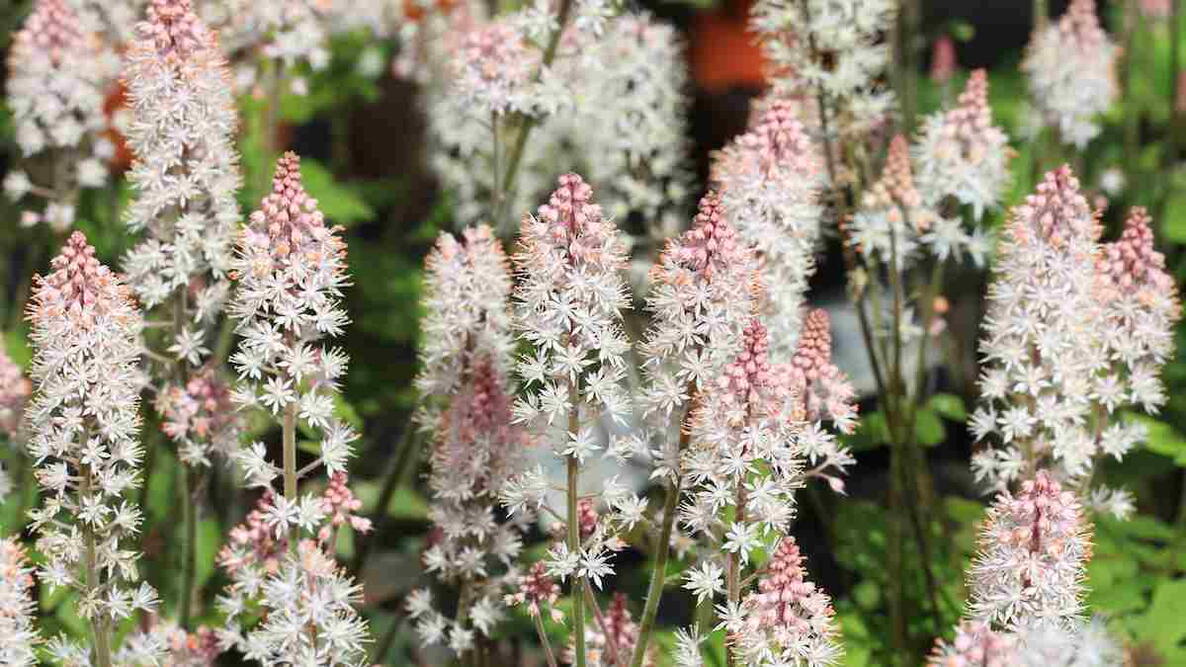
Foamflower (Tiarella) in bloom, with airy spring flowers rising above its low-growing foliage.

Get ready to fall head over heels for the heart-leaf foamflower (Tiarella cordifolia): an easy-care perennial groundcover that’s perfect for shade gardens, pollinator habitats, and erosion control. Not only is this North American native plant well-adapted to low-light gardens, but it’s also naturally resistant to deer and rabbits and becomes tolerant of dry soil once its roots are established.
I’ve grown foamflowers in my woodland garden for years, and in this growing guide I’ll share everything I’ve learned about foamflower care—along with why I think these spring bloomers are some of the best shade plants money can buy.

What foamflowers lack in flashy foliage, they make up for with airy, foamy white to soft pink flowers that bloom from March to July and attract bees, butterflies, and other beneficial insects.
I like to grow foamflowers in my shade garden with other plants that tolerate lower light conditions, like moss phlox, wild ginger, Solomon’s seal, and native ferns. I find these plants work particularly well when grown as sequential bloomers with earlier flowering ephemerals like bloodroot and trout lilies. That said, you can grow foamflowers with non-native annuals and perennials too, and they’re well adapted to container growing as long as you’re prepared to divide your plants every few years to give them more growing room.
When mature, foamflowers grow between 6 and 12 inches tall and spread gradually by creeping rhizomes that root wherever they touch the soil. This mat-forming growth habit makes foamflowers an excellent groundcover for weed suppression and erosion control, without the aggressive or invasive tendencies of many non-native groundcovers.
Planting
When to Plant Foamflower
Potted foamflowers grow best when they’re planted outdoors after the last frost of spring. Foamflower seeds can be directly planted outdoors in fall or started inside in spring about 8 to 10 weeks before your last frost date. However, the seeds germinate best if they’re cold-stratified before planting, which can be done by fall sowing or by keeping the seeds in a bag of damp sand in your fridge for about 90 days before spring sowing.

Where to Plant Foamflower
In the wild, foamflowers grow in moist forests and along shaded rocky outcroppings, but they also thrive in shade gardens, cottage gardens, woodland habitats, and wildflower beds. In the garden, these plants work well in borders or at the front of flower beds, and they can also be planted on hillsides to reduce soil loss and the need for mowing.
They grow best in dappled light and can tolerate full to part shade and morning sun. Shield this plant from bright afternoon light, though, as direct sun can cause leaf scorch!
How to Plant Foamflower
Most growers cultivate foamflowers from potted plants, but foamflowers can be grown from seed too if you’re patient and don’t mind waiting a bit longer for flowers!
To plant potted foamflower plants:
- Dig a hole slightly larger than your plant’s root ball in a shady to partially shaded area with rich, well-draining, moisture-retentive soil.
- Amend the excavated soil with compost.
- Plant at the same depth it was growing in its nursery pot.
- Add mulch and water well.
- Space plants 12 to 18 inches apart for a dense groundcover look.
To plant foamflower seeds in spring:
- Fill seed-starting trays or pots with damp seed-starting mix.
- Sow 2 pre-stratified seeds per cell or pot and lightly cover with substrate.
- Keep seeds evenly moist and in bright light.
- Thin out the weakest seedlings once true leaves appear.
- Harden off and transplant the seedlings outdoors when their stems are sturdy, and the risk of frost has passed.
To plant foamflower seeds in fall:
- Prepare your planting site before the ground freezes by removing weeds and raking compost into the soil.
- Surface sow seeds and lightly cover with compost or weed-free straw.
- Consider adding a cold frame over the plants for extra insulation.
- Seeds will naturally cold stratify and only need watering once they sprout in spring.
Growing
Watering Foamflowers
Growing these plants in well-draining, moisture-retentive soil will help reduce their watering needs. Once established, foamflowers are relatively drought-tolerant, but they grow better if you water them about once a week in summer and less during winter. Just don’t water them too much or allow them to languish in soggy soil, as this can lead to rot.
Growing Foamflowers in Containers
If you want to grow foamflowers in pots, that works too. Just choose a well-draining container that’s at least 12 to 18 inches in size, use a well-draining potting mix, and be prepared to water your plants slightly more than you would if they were growing in the garden. During winter, potted foamflowers should be brought into an unheated garage or shed to protect their roots and watered sparingly, but they can be moved back outside once the risk of frost has passed.
Dividing Foamflowers
These plants benefit from being divided every few years, though, and doing this will produce lots of new foamflower plants for your garden for free.
- Divide mature foamflower plants in fall—a few weeks before frost is expected in your area.
- Dig up the plants with a spade or shovel, then cut or pull them apart with your fingers to divide them into clumps with roots and stems.
- Plant the divisions as soon as possible at the same depth they were previously growing.
- Space multiple foamflower plants at least 12 inches apart and water well.

Types
Today, there are seven known species of foamflowers (Tiarella spp.), as well as a number of cultivars available at plant nurseries. However, heart-leaf foamflower (Tiarella cordifolia) is the easiest to find and the most widely grown variety in home gardens.

More Like This


Comments