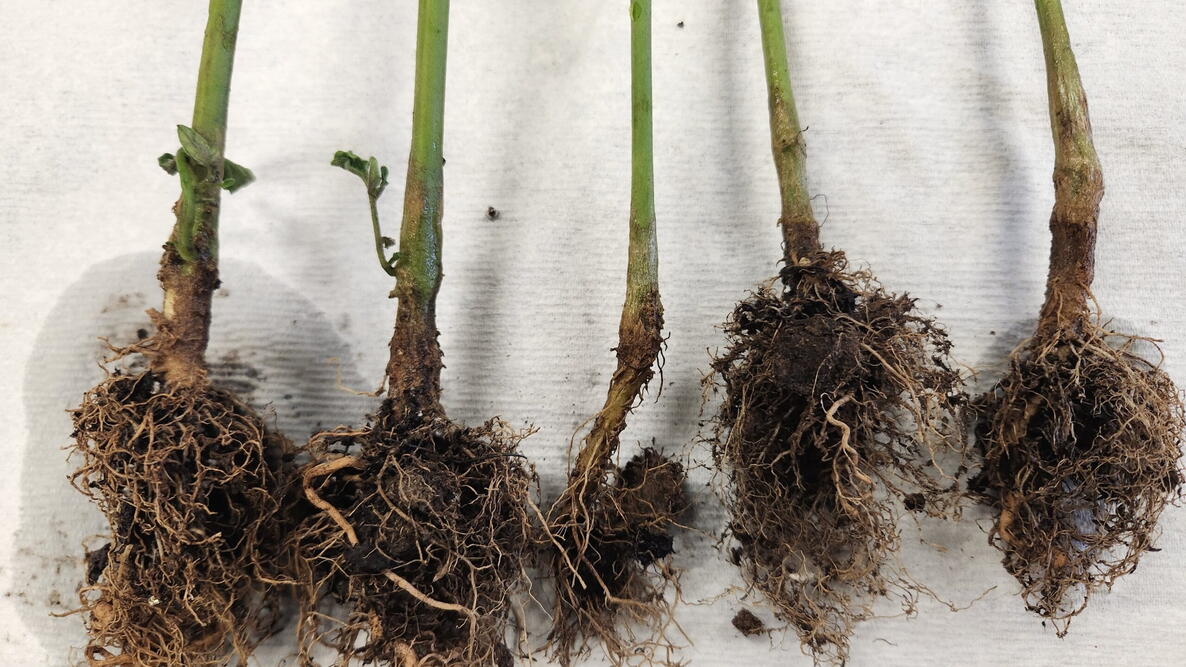
Caption
Root rot damages plant roots, preventing them from taking up water and nutrients.

Identification
As gardeners, we usually don’t notice root rot until symptoms appear above ground. Even then, it’s easy to misdiagnose. A wilting plant gets watered. Yellowing leaves get fertilized. But watering a plant with root rot is akin to giving a drowning person a glass of water. Unfortunately, these actions can make root rot worse.

Root rots affect the plant’s root system, rotting away the fine root hairs that absorb water and nutrients. As the disease progresses, larger roots and even the plant’s crown may be affected.
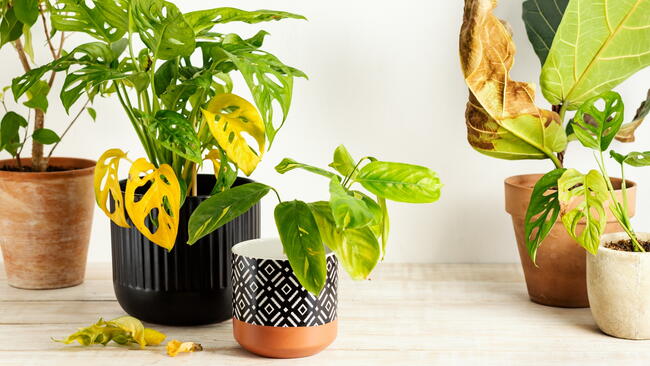
Because the roots are no longer functioning properly, the symptoms above ground can appear confusing. Plants may appear dehydrated or nutrient-deficient even when soil moisture and fertility seem adequate.
When roots are decaying and not functioning, the symptoms above the ground make sense. They match what you’d expect plants wilt, grow poorly, and show discoloration because the roots can no longer supply enough water or nutrients.
The dehydration and nutrient deficiencies are real—but they are caused by damaged roots, not by a lack of moisture or nutrients in the soil. That’s why watering or fertilizing often doesn’t help, and may even make the problem worse.
Common Above-Ground Symptoms of Root Rot
- Stunted or slow growth
- Wilting leaves and stems, especially when the soil is moist
- Yellowing or reddish foliage that resembles a nutrient deficiency
- Dieback begins at the tips of shoots or branches
These symptoms make sense once you remember the cause: the roots can no longer supply water or nutrients to the plant.

Inspect the roots
The most reliable way to confirm root rot is to look at the roots.
For garden plants, gently lift the plant or remove soil from around the base. For houseplants, remove the plant from its pot to inspect the root system.
- Healthy roots are firm and white or cream-colored.
- Rotted roots are brown or black, soft, and mushy.
- In some cases, the outer layer of the root may slough off easily.
Root rot often has a noticeable odor, similar to rotting vegetables. The crown of the plant may also appear darkened, softened, or water-soaked.


More Like This

Comments