Haworthia Care: How to Grow Healthy Succulents

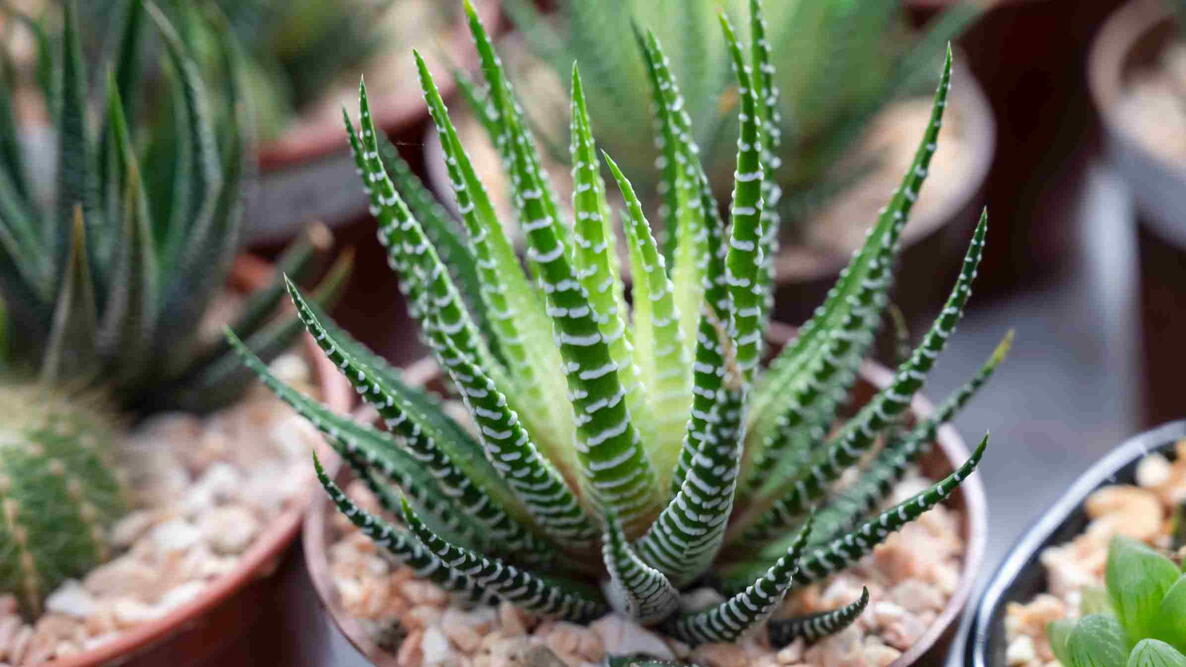
Close-up of a Haworthia zebra plant in natural sunlight. A small succulent plant with short leaves and bands of white tubercles.

Caption

Mini striped succulent bringing life to your home décor.

Photo Credit
Nooumaporn
Botanical Name
Haworthia spp.
Plant Type
Sun Exposure
Soil pH
Bloom Time
Flower Color
Hardiness Zone
Subhead

Expert Tips for Watering, Light, and Soil to Keep Your Haworthia Thriving

Written By: Lauren Landers Master Gardener and Contributing Writer

Zebras can’t change their stripes, but who’d want to change the flashy patterns on zebra plants anyway? Haworthia succulents are easy-care plants that look like mini aloes, but they’re pet-safe and come in fun shapes and leaf patterns. Whether in pots, dish gardens, or outdoor xeriscapes, the right Haworthia care—watering, light, and soil tips—will keep them healthy and thriving. Here are the basics, plus insider tips I’ve learned from years of growing these plants at home!

About Haworthia Plants

Also known as the zebra cactus, star window plant, pearl plant, or cushion aloe, haworthia belongs to the Asphodelaceae family, which includes other popular succulents like gasteria and aloes. There are currently over 100 recognized haworthia varieties, which vary mostly in the size and shape of their fleshy leaves. Some types display white dots or banding, while others have translucent “window” leaves that catch the light beautifully.

In the wild, Haworthia grow in dry regions of southern Africa, often under the shade of bushes and rocky outcrops. As houseplants and garden plants, they tolerate sun and dry soil but generally grow best in light afternoon shade. Too much direct sun can damage their delicate leaves! 

Although related to aloes, Haworthia succulents are non-toxic to pets and usually stay smaller. Some varieties grow up to 20 inches tall, but most stay under 6 inches. I like to grow haworthia singly in small, unglazed terracotta pots indoors. Outdoors, in frost-free areas, Haworthia can thrive year-round in rock gardens and xeriscapes.

Succulent houseplant Haworthia in a pot on wooden shelf.
Pet-safe Haworthia adds charm to any shelf. Credit :Andrey_Nikitin

Planting

Haworthia are small, slow-growing plants that will grow contentedly in the same pot for years. Whether you’re keeping these succulents indoors or out, here’s how I like to treat haworthia when I bring new plants into my home.

  • Check for pests: Always check new plants for pests before adding them to your garden or houseplant collection. I quarantine them for a week or two, and sometimes preventively treat them with an organic soap spray just to be safe!
  • Choose the right location: Haworthia need sun, but not too much. Outdoors, pick a well-draining spot with some afternoon shade.
  • Pick a quality pot: Haworthia don’t need large pots to be happy, but any container you choose should have drainage holes in the base. I use 3–4 inch terracotta pots for single plants, and this setup has been working well for years.
  • Use well-draining soil:  Potted haworthia thrive in succulent or cactus mix. You can make your own blend using equal parts potting mix, sand, and perlite.
  • Plant right: Haworthia have small root balls and they should be planted deep enough so that the soil line is beneath the leaves and the roots are fully covered. Add sand or pebbles on top for stability, and water lightly after planting.

Growing

Haworthia don’t need a lot of root space and can be kept in shallow dish gardens with other succulents that have similar care needs. If you want to try a mix planting of this sort, consider pairing haworthia with plants like jades, echeveria, prickly pear, or aloes. These plants can also be mixed and matched together outdoor rock gardens as long as you live in an area that doesn’t experience chilly winters!

Water
Easy does it! These plants are prone to root rot. Overwatering can quickly turn their leaves and roots mushy. To avoid this, keep haworthia in well-draining soil, water deeply only when the top 1 to 2 inches of soil feels dry, and allow all excess water to run out of the pot’s drainage holes before returning your plant to its saucer.
Light
Place in bright, indirect light or locations that receive direct sun in the morning and light shade in the afternoon. Too much sun can cause haworthia to burn or develop red, purple, or bleached-out leaves, while too little light will cause these plants to become leggy. South- or west-facing windows tend to work well, but you may need to add a grow light if your home doesn’t receive much sun.
Humidity
Haworthia can tolerate a range of humidity levels, but they grow best in dry locations.
Temperature
Temperatures between 70 to 95°F are ideal for haworthia. If you’re keeping these plants indoors, position them away from drafty windows and A/C units.

Fertilizer

In general, succulents don’t need much fertilizer, and that’s true for haworthia. Just feed these plants once or twice during the growing season with a succulent fertilizer or a liquid organic houseplant fertilizer diluted to ¼ strength.
Toxicity
Unlike the similar-looking aloe plant, haworthia are non-toxic to pets!

Pests/Diseases

The most common issues that affect haworthia usually stem from overwatering; however, these plants can sometimes attract pests if they’re already stressed by their environment.

  • Pests like mealybugs will sometimes feed on haworthia, while fungus gnats may frequent these plants if they’re overwatered. Fixing watering issues should make fungus gnats dissipate, while organic soap or horticultural oil sprays will bust through even tough mealybug problems.
  • Yellowing, browning, or mushy leaves and leaf drop usually occur when haworthia plants receive too much water. But haworthia can also look bleached out if they’re kept in too much sun.
  • Drooping and shriveling leaves can indicate that haworthia need more water, but it may also be a sign of overwatering and root rot. To determine the cause, feel the soil and only water your plants if the soil feels bone dry!

Potting and Repotting

Haworthia succulents grow in the Japanese tea cup.
Haworthia succulents growing in a Japanese teacup. Credit: Padungsak Vaiyavat

How Often to Repot

Slow-growing haworthia rarely need repotting and should only be repotted every 3 to 5 years if the plants appear to need it. Signs include offsets crowding the container, the plant being rootbound, or the soil breaking down. Always use a well-draining succulent or cactus mix and a slightly larger pot.

When to Repot

You’ll know it’s time to repot haworthia if the plant’s roots are showing through the pot’s drainage holes or the plant has produced so many offsets that it looks crowded. Although you can repot indoor haworthia at any time, repotting in spring and summer usually yields the best results.

How to Repot

  • Select a quality pot: Use a well-draining container that’s only slightly larger than your plant’s existing pot. If your plant hasn’t outgrown its old pot, you can reuse it!
  • Repot when dry: Remove your haworthia from its old pot when the plant’s soil is good and dry.
  • Plant at the proper depth: Using a succulent potting mix, repot the plant at the same depth it was growing in its old container and water deeply.

Propagation

Haworthia can technically be propagated from seeds, the easiest and most reliable method is by separating offsets, or “pups,” from the parent plant. Offsets are also faster.

  1. Separate the pups: Baby haworthia or “pups” can be separated from the parent plant at any size. Just use a sharp, sterilized knife to cut the base of the pup free from the parent plant.
  2. Let dry: Place the pup in a warm, dry spot for 1 to 2 days (to allow the cut stem to callus over).
  3. Repot: Plant the pup in a new container filled with succulent potting mix, locate the plant in bright, indirect light, and water often enough to keep the soil evenly moist. Once roots form, reduce watering and treat the pup just like the parent plant.
Close up Haworthia Murasaki Obtusa.Succulent plant in pot.
Glassy, dewdrop-like leaves form a compact rosette on Haworthia ‘Murasaki Obtusa.’ Credit: Karnwela

Seasonal Care

Some growers move haworthia outdoors in summer to take advantage of the extra light. If you go this route, position your plant in a lightly shaded spot in your garden, and bring it back indoors when temperatures start to dip below 50°F. During fall and winter, reduce watering and only fertilize these plants in spring and summer when they’re actively growing.

Wit and Wisdom

  • Henri Auguste Duval was the first to document the discovery of haworthia plants in 1809. These succulents were later named after Adrian Hardy Haworth, a famous botanist and succulent collector.
  • Some haworthia have translucent leaf windows that let sunlight penetrate inside the leaf. This maximizes photosynthesis and allows the plant to photosynthesize on both the outside and inside of its leaves!
  • Traditionally, some types of haworthia were used in herbal remedies or as protective talismans against evil and lightning strikes.

Frequently Asked Questions

Q: Is Haworthia toxic to cats?

A: No! Haworthia succulents are completely pet-safe, unlike some similar-looking aloes. Cats and dogs can safely be around these plants without any worry.

Q: Can Haworthia survive my forgetful watering habits?

A: Yes! These tough little succulents forgive occasional neglect. Just let the soil dry between waterings—overwatering is their only real threat.

Q: How do I make my Haworthia look extra photogenic?

A: Rotate the plant regularly for even light, wipe leaves clean, and display them in small decorative pots or dish gardens to highlight their unique stripes and patterns.

Q: Do Haworthia get along with other plants?

A: Absolutely! They mix well with other succulents like jade, echeveria, or aloe in dish gardens or rock gardens, as long as the other plants have similar light and watering needs.

About The Author
Lauren Landers

Lauren Landers

Master Gardener and Contributing Writer

Lauren is a gardener, writer, and public speaker with over a decade of experience helping others learn about gardening, homesteading, and sustainable living.She combines years of practical gardening a...