At last, March is here—the first taste of spring! It’s time to sow your first crops of the season, from juicy tomatoes to frost-tolerant greens, and even a flower or two that secretly protects your garden from pests. Get your hands dirty and your seeds in the soil—and watch optimism bloom along with your seedlings.
Sow early spring in prepared, compost-rich soil. Space 1 inch apart; thin to 6 inches once seedlings appear. Intercrop with radishes for faster harvest.
Radishes
Root Vegetable
Seeds
Outdoors
Hardy
Sow between rows of parsnips; harvest quickly before parsnips mature.
Collard Greens
Leafy Green
Seeds or Seedlings
Indoors / Outdoors
Hardy
Sow indoors first, transplant seedlings to garden. Cut-and-come-again style for ongoing harvest.
Potatoes
Root Vegetable
Seed Potatoes
Outdoors
Hardy
Plant main-crop varieties like ‘Sarpo Mira’ for blight resistance. Protect from late frosts with cloches or mulch.
Poached Egg Plant (Limnanthes douglasii)
Flower
Seeds
Outdoors
Hardy
Companion flower for pest control. Scatter seeds in garden borders or under taller crops like broccoli or beans.
Peppers, Cucumbers, Eggplants
Vegetable
Seeds
Indoors
Sensitive
Start indoors on heat mat to speed germination. Transplant after frost danger passes.
Starting Tomato Seeds
While you can buy small start plants at the nursery, tomatoes can also be grown from seed. Sweet and juicy, there’s no beating garden tomatoes for flavor, made all the more intense if you grow them yourself.
Consider planting a variety: sweet cherry tomatoes for salads, perhaps plum tomatoes for sauce, and your classic tomato for slicing.
Look for blight-resistant tomatoes! While no tomato is 100% resistant, we’ve had experience with some suitable varieties:
Burlesque
Cocktail Crush
Consuelo F1
Crimson Cherry
Crimson Crush
Lizzano
Losetto
Mountain Magic
Sowing tomatoes is straightforward. Use an all-purpose potting mix in planting pots and space the seeds as far away from the surface as possible. Then, cover lightly with the mix. Water in and cover with plastic. To speed germination (1 to 2 weeks), you can place the pots on a sunny, warm windowsill or your kitchen on a heat mat.
On the heat mat, we also grow peppers, cucumbers, and eggplants. Get yours started if you haven’t already. Once seedlings appear, you will transfer them into bigger pots or outside, depending on where you live and frost dates. See the full guide to planting tomatoes.
Sowing Parsnips for Winter Harvest
You may find it odd to think of winter when we’re just leaving it, but parsnips and leeks are planted in early spring for the winter harvest.
Parsnips, the royalty of root vegetables, are very reliable germinators, so long as the soil is warm enough. Rake the soil level and add a topping of garden compost. Mark out a couple of rows about a foot (30 cm) apart. Then sow a seed about every inch or so and cover them back over. See the parsnip planting guide.
Growing Radishes with Parsnips
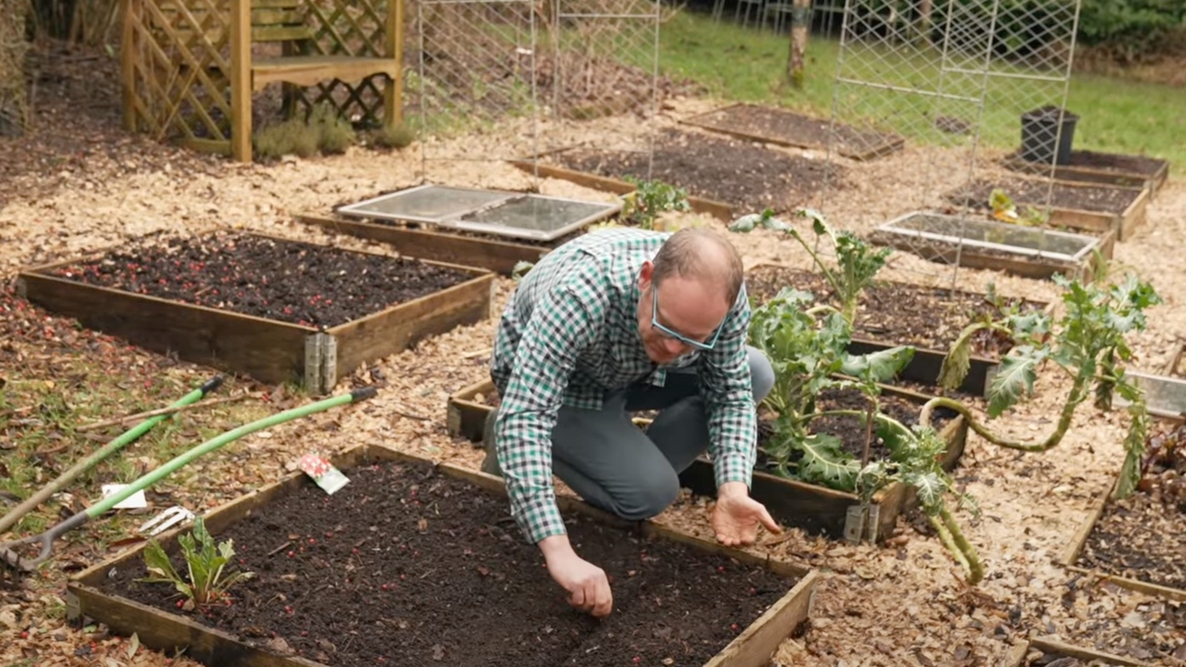
Because parsnips take several weeks to sprout, add a row of radishes between them; the radishes will be harvested long before parsnips need the extra space. Space the seeds about an inch apart again and cover back over. Give everything a thorough water.
Once the parsnip seedlings appear, thin those in stages until the plants that are left are around 6 inches (15 cm) apart.
Sowing Leafy Greens in Early Spring
March is time for the first leafy green sowing of the year: collard greens, which are a non-hearting type of cabbage. Collards can also be harvested in more of a cut-and-come-again style, so twist off leaves as needed, leaving the plant to grow on.
You may sow them initially into a pot, then once they have popped up, carefully transfer them into their own plugs to grow on before going out into a dedicated bed of soil enriched with garden compost.
Planting Potatoes in March
March is a great month for planting potatoes if you can offer them protection from late frosts. See our planting guide to learn how to plant potatoes in containers.
For main-crop potatoes, look for a blight-resistant variety such as ‘Sarpo Mira’. Potatoes and tomatoes are related (nightshades), so they can both suffer from late blight. If you haven’t bought any seed potatoes yet, get on and do so pronto before stocks run low.
Poached Egg Plants: A Companion Flower for Your Veg Garden
No, this is not the vegetable eggplant. Poached egg plants are flowers that are great companions in the vegetable garden. They attract beneficial bugs that will pollinate your crops and devour your pests. Lovely stuff! They’re great as a living mulch beneath taller plants like broccoli and beans, and they often stay green and protect the soil right through winter in milder areas.
To sow along the border, the first job is to scrape back this mulch and then fork over the soil to fluff it up a bit, ready to receive the seeds. Then take a pinch of seeds, scatter them, and then tickle and pat them in. Learn more about companion flowers.
Planning Your Spring Garden
Sowing directly like this in the spring sunshine can’t help but instill a real sense of optimism. Remember: Forward planning is a must. Knowing what to sow when can be a bit of a logistical conundrum, but we find the OFAGarden Planner is invaluable for this because it works out exactly what needs sowing when, based on data from your local weather station. Try the Garden Planner—for free— for yourself.
Catherine Boeckmann is the Executive Digital Editor of Almanac.com, the website companion of The Old Farmer's Almanac. She covers gardening, plants, pest control, soil composition, seasonal and moon c...



Comments