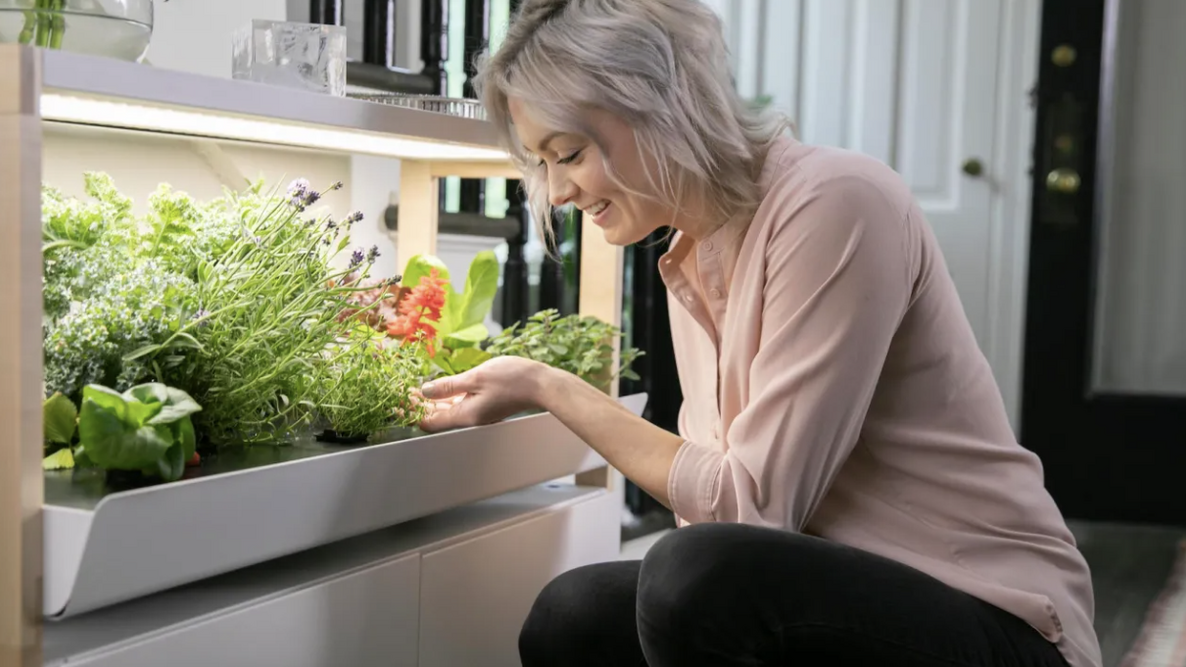

When winter shuts down the garden, your harvest doesn’t have to stop. With the right plants and a little indoor know-how, you can grow fresh, homegrown vegetables right on your windowsill or under lights—no backyard required. From fast-growing greens to compact tomatoes and carrots, here’s how to grow vegetables indoors all year long.
Just imagine tossing together a salad of crisp lettuce, crunchy carrots, and juicy tomatoes—without ever setting foot in the grocery store. Moreover, you’ll enjoy watching something grow and thrive when the outside world is cold and dormant.
So, prepare to grow vegetables indoors with these plant suggestions and how-to-grow tips. (If you’re a fan of fresh herbs, check out our article on growing herbs indoors.)
The Best Vegetables to Grow Indoors
| Vegetable Type | Light Needed | Pot Size | Difficulty | Time to Harvest |
|---|---|---|---|---|
| Lettuce | Low–Medium | Small | Easy | 30–45 days |
| Spinach | Medium | Small | Easy | 30–40 days |
| Kale | Medium | Medium | Easy | 40–60 days |
| Tomatoes (dwarf) | High | Large, deep | Moderate | 60–90 days |
| Radishes | Medium–High | Medium, deep | Moderate | 25–35 days |
| Carrots (short) | High | Deep | Moderate | 60–75 days |
Easiest Vegetables to Grow Indoors
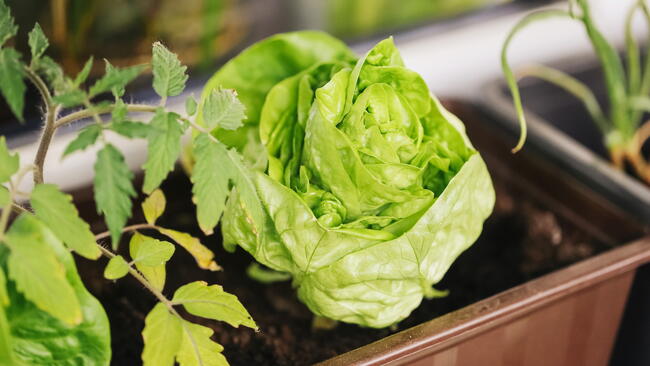
We’ve got one word for you: greens! They’re fast-growing, so you can make the most of your space. Plus, they need less light than fruiting or root vegetables—just 4 or more hours per day—so a sunny windowsill should be enough for your plants to flourish, even during the short days of winter.
Choose your favorite green(s):
- Lettuce
- Swiss chard
- Spinach
- Kale
- Microgreens
Trickier Vegetables to Grow Indoors
Greens are great, but most folks long for more veggie variation as the cold months stretch. We have good news: You can also grow some fruiting and root vegetables indoors, as long as you keep three things in mind:
- These veggies need more light to grow the fruit or root—we’re talking at least 6 to 8 hours per day—so you will likely need to supplement with a grow light.
- You’ll want to choose compact or “micro” varieties bred to grow in pots (see below for some suggestions) because smaller veggies tend to mature more quickly and grow to a more manageable plant size.
- Speaking of pots, while greens will grow in smaller pots, both fruiting and root vegetables require larger, deeper pots that allow enough room for strong root growth (more on that below).
Try these fruiting and root vegetables:
- Tomatoes (like ‘Tumbling Tom’, ‘Tiny Tim’, or ‘Heartbreaker’)
- Peppers (like ‘Mini Bell’, ‘Lunchbox’, or ‘Thai Hot’)
- Radishes (like ‘Cherry Belle’, ‘D’Avignon’, or ‘French Breakfast’)
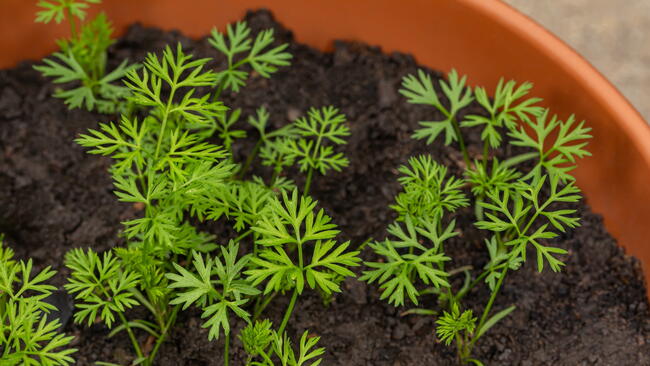
- Carrots (like ‘Little Finger’, ‘Parisian’, or ‘Chantenay’)
How to Grow Vegetables Indoors
- Start by planting your seeds. If it’s your first time, follow the directions in our Seed-Starting Secrets for Beginners article. (Growing microgreens? Check out this how-to.)
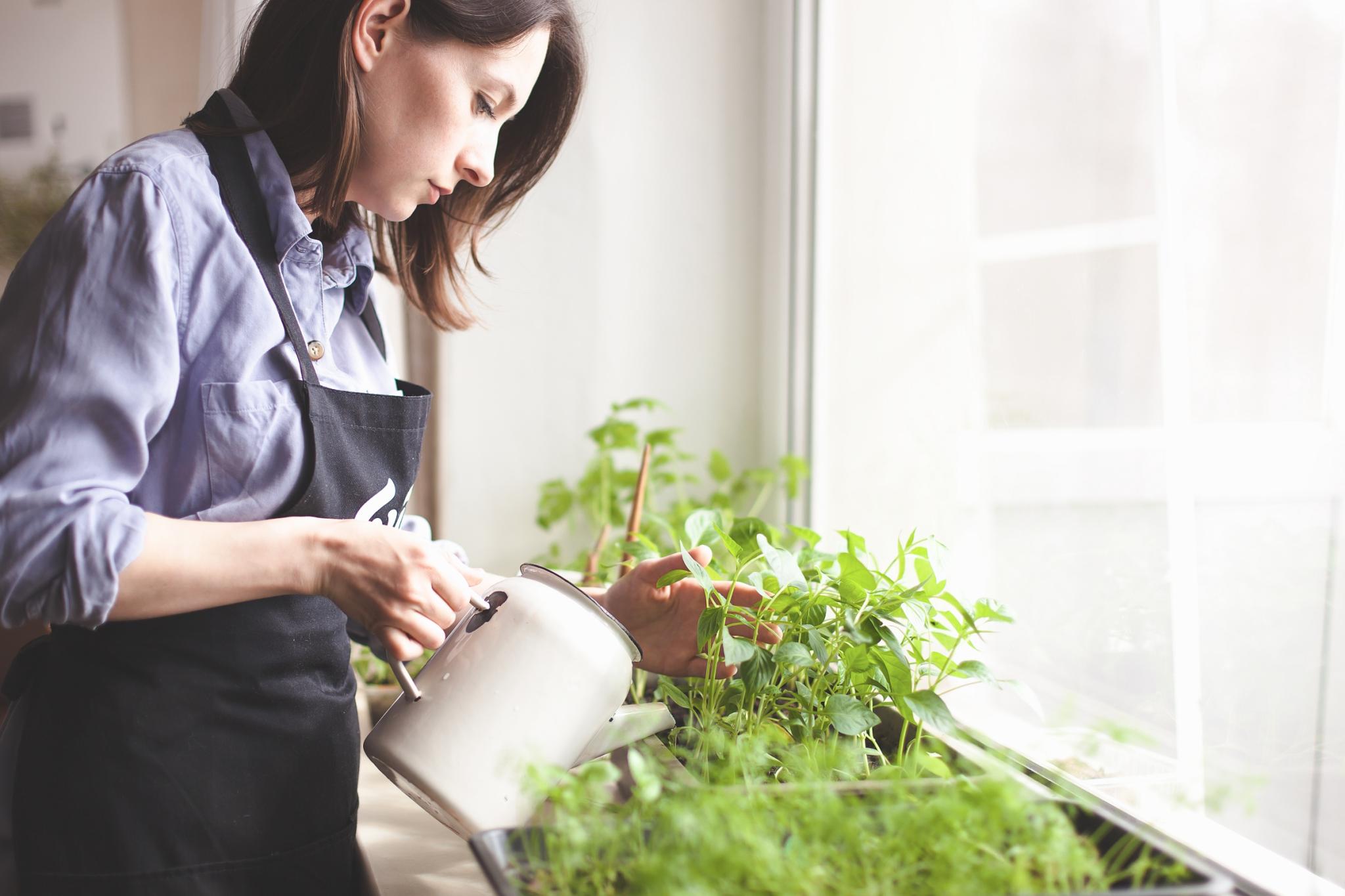
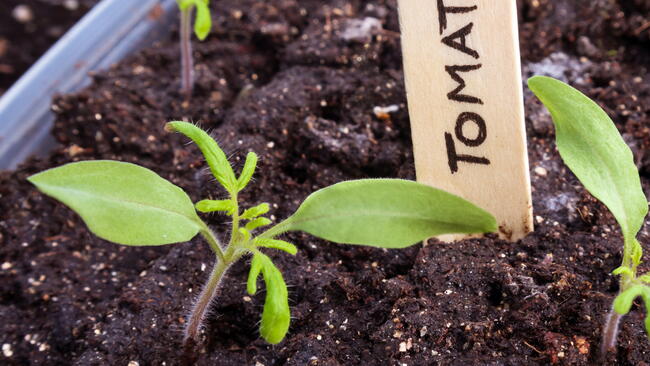
- Once seedlings have developed a few “true” leaves, it’s time to transplant. (The first two leaf-like growths you’ll see on a new plant aren’t actually leaves at all and will eventually fall off.) Move each one into a pot large enough to allow for growth—that means at least 8 to 10 inches in diameter and relatively deep for fruiting or rooting veggies. Containers for greens can be a little smaller and shallower. Be sure each pot has holes for drainage, and use a high-quality potting mix.
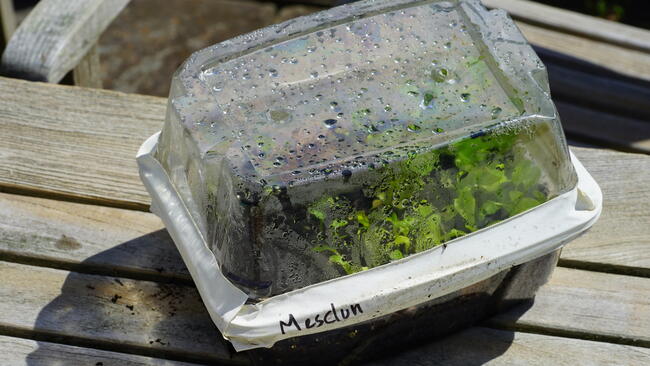
- If you want to grow “baby greens” instead of full-sized plants, there’s no need to transplant. Just plant seeds in a tray-style container deep enough to hold 2–3 inches of soil, such as a takeout or salad container with holes punched in the bottom.
- Another option is to skip the soil entirely and grow in water. Intrigued? Learn more about hydroponic gardening.
- Place the container either on a sunny windowsill (south-facing is best) or under a grow light. Choose a spot that is away from drafts, leaky windows, and heat vents.
- Water whenever the top inch of soil is dry. Stick your finger right into the soil to check.
- Growing plants need a steady source of nutrition, so be sure to feed them regularly with plant food. The easiest way is to use a liquid or water-soluble fertilizer once a week when you water.
- Keep an eye out for pests like aphids, white flies, and fungus gnats, and treat them as soon as you see them.
- When harvest time comes for your greens, snip off the older outer leaves, leaving the newer leaves to continue growing. (Baby greens must be replanted after a couple of harvests.) For root vegetables, begin checking once the “time to maturity” listed on the seed packet has passed. For tomatoes and peppers, the fruit is ready to pick once it turns the color shown on the seed packet.
Frequently Asked Questions
What vegetables grow best indoors?
Leafy greens like lettuce, spinach, and kale are the easiest, while dwarf tomatoes, peppers, carrots, and radishes also grow well with extra light.
Do indoor vegetables need grow lights?
Greens can grow with bright window light, but fruiting and root vegetables usually need grow lights for best results.
How often should indoor vegetables be watered?
Water when the top inch of soil feels dry. Avoid soggy soil to prevent root rot.
What size pots do indoor vegetables need?
Greens can grow in smaller containers, but root and fruiting vegetables need deeper pots—at least 8–10 inches.
Can vegetables be grown indoors year-round?
Yes! With proper light, water, and nutrients, indoor vegetables can grow and produce year-round.
Growing vegetables indoors keeps fresh food on your table—even in winter. Start with greens, add a grow light, and enjoy harvesting right from your home.
So, let’s raise a watering can to freshly grown veggies harvested in the warmth and comfort of your own home—without ever having to go outside.

More Like This

Comments