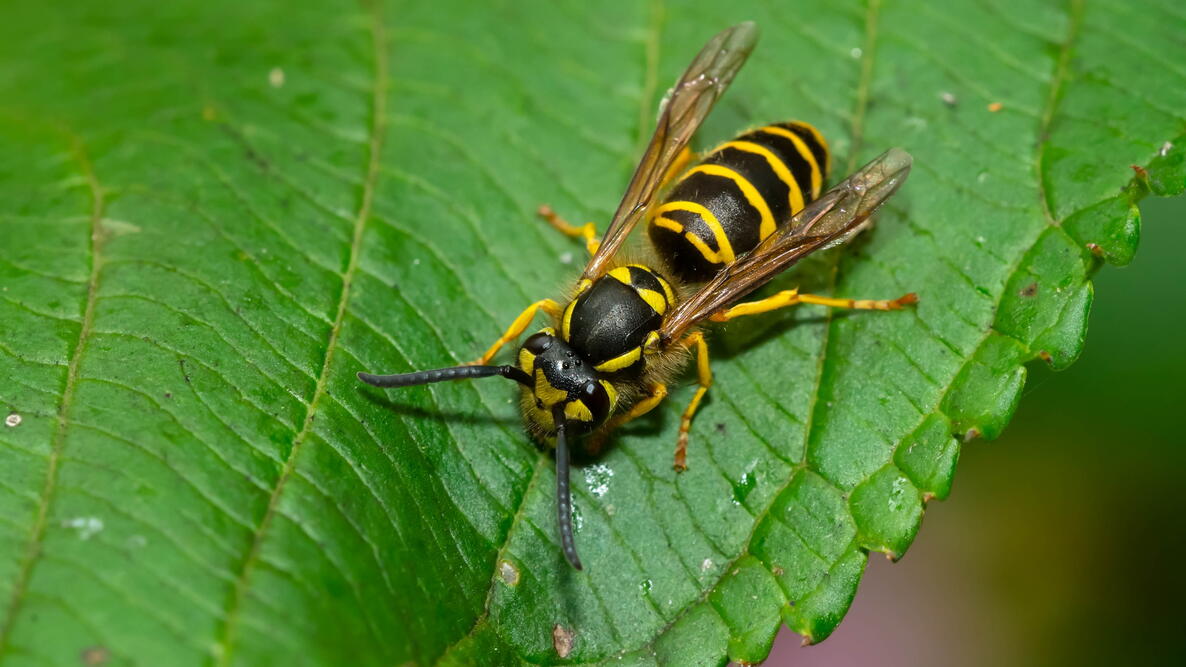
Caption
An Eastern Yellowjacket is resting on a green leaf. Taylor Creek Park, Toronto, Ontario, Canada.

By late summer, many gardeners notice yellow jackets, solitary ground wasps, and fire ants becoming much more aggressive. As flowers fade and insect colonies reach their peak, these stinging pests become more defensive and more likely to cross paths with people. Here’s why stinging insects are so active from August through October—and how to stay safe while working in your yard and garden.
Why are yellow jackets more aggressive in late summer?
Yellow jackets become more aggressive from August through October because their colonies are at their largest, natural food sources are declining, and workers are gathering sugar to help the colony survive. This combination makes them more likely to investigate people, food, and drinks outdoors.
Why Stinging Insects Become More Aggressive in Late Summer
You’ll see much more activity from stinging insects from August through October. Why?
- They’ve had all summer to build up their populations. This means their nests are bigger, and many new babies have been born.
- At the same time, winter is around the corner, and insects such as bees need to keep their queen alive, so they’re on a mission to find and store food for her.
- Compounding this, there tend to be fewer flowers and less nectar toward the end of summer and fall. Since these insects are in search of carbs and sugar, they may land on your cola can!
See our article on wasps, bees, and hornets to tell the difference between these stingers.
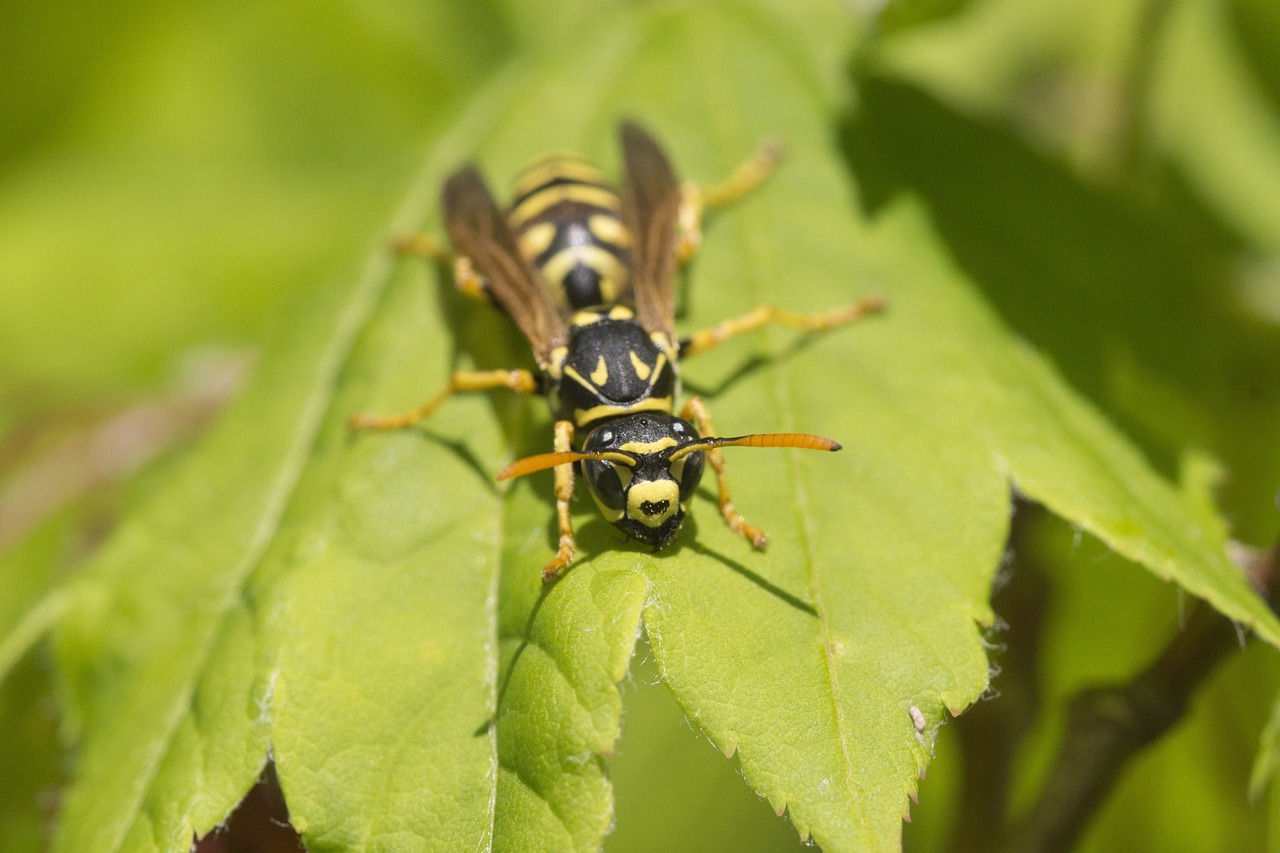
Ground Wasps: Why They Sting and How to Avoid Them
My friend Laura hobbled into work recently, her foot and ankle swollen and red. An attack by ground wasps was the cause. She was aware of the nest near her strawberry patch and was working a few feet away, cutting back wayward shrubs, when the insects struck. Yelling, running, waving her arms—all actions that further inflamed them—she was chased all the way into the house with insects stinging her as they went. Days later, her foot was still swollen and sore.

Solitary ground wasps are usually not aggressive. They are beneficial pollinators and eat garden pests. Sometimes they band together, forming a colony of nests in the same area. If they feel threatened, they will sting. Like yellow jackets, they are drawn to sweets and often nest near nectar-rich flowers, fruit trees, and, as in Laura’s case, berry patches. Like yellow jackets, they get riled up by vibrations, so don’t mow or run a chainsaw near the nest.

Credit: S.Melange/SS
If you encounter these ground-dwellers, the list of don’ts includes running, yelling, waving your arms, and swatting at them, but I don’t know of anyone who could calmly and quietly walk away while getting stung!
Yellow Jackets: Identifying Nests and Staying Safe
We are all aware of yellow jackets, and when we see them flying in and out of a 1- to 2-inch-wide hole in the ground, we know to give them a wide berth. However, sometimes they go unnoticed until you run the lawn mower over their nest and their “welcome committee” flies out to greet you. Unlike honeybees, each yellow jacket can sting you more than once, making an attack more dangerous, especially if you are allergic to their venom. They feed on a wide variety of insects but also have a sweet tooth and will visit flowers and your picnic table if something sugary is on the menu.
Learn more about how to prevent and treat yellow jacket stings.


How to Remove a Yellow Jacket or Ground Wasp Nest
If you need to get rid of a yellow jacket or solitary ground wasp nest that is located in a bad location near your house or where children play, there are several ways to do it.
- Make sure to wait until evening when all the insects have returned to the nest for the night. They are less active, less likely to sting, and will all be in one spot, to make eradicating all of them easier. Wear protective clothing, goggles, and a face mask, especially if working with dusty products such as diatomaceous earth (DE).
- Carefully dust in and around the nest with the DE. It is scratchy and will pierce the insects’ exoskeletons, causing them to dehydrate and die. It is not immediately effective and may take a few days to work, or a few more applications, especially after it has rained. To make it more effective, add a little bit of pyrethrum powder to the DE.
- Drown the insects by flooding the nest with water. Add a bit of dish soap to the water to keep them from flying out, then cover the hole to keep them contained. Some folks use boiling water just to make sure they are killed.
Also, don’t feel compelled to kill these insects unless it is necessary. Both types will be killed by freezing weather anyway. Yellow jacket queens will winter over, but they don’t return to their last season’s nest, and the larvae and pupae of solitary ground wasps survive the winter to start a new colony, but they don’t reuse the previous year’s nest either.
Fire Ants: Why They’re Dangerous and How to Control Them
Fire ants are very aggressive and a major problem in the South. The opening to their nest is generally in a mound of sand or clay soil, and if it is disturbed, they will sting to defend it. They are constantly raising queens, so killing the queens is important to eradicate the whole colony.

Record heat and dry weather in the South have caused the ants to dig deeper nests, making them harder to reach. The nests can contain as many as 200,000 ants, be as deep as 10 feet underground, and have tunnels that extend up to 30 feet long. The ants will become more active as cooler fall weather sets in, and they will nest closer to the surface.

There are many home remedies for fire ants, but most don’t kill the queen, so she just moves to another spot and starts a new colony. Folks at Texas A&M University recommend these methods:
- Pouring 3 gallons of extremely hot water on a fire ant mound kills about 60 percent of the ants. Adding soap to the water increases the success rate to 70 percent. This treatment will also kill surrounding grass and plants, and you need to be careful not to burn yourself! After rain, when new mounds appear, they should be shallow enough for boiling water to reach the queen.
- Another home remedy being evaluated and showing some promise is to flood the ant mound with a mixture of dishwashing liquid and citrus oil.
- The Texas Two-Step method advises homeowners to treat the mounds when they appear and also treat the entire lawn with long-lasting insecticides to prevent new fire ants from moving in. Some OMRI-rated insecticides (from the Organic Materials Review Institute) have been shown to be effective.
Even if a colony is only weakened, it may give native ants a chance to keep populations of invasive fire ants in check. They are natural enemies and will kill new queens starting new nests.
FAQs About Stinging Insects
Are ground wasps aggressive?
Most solitary ground wasps are not naturally aggressive and prefer to avoid people. However, they will sting if their nest is disturbed or if they feel threatened. Avoid mowing, digging, or using power equipment near ground nests.
How can I tell the difference between a yellow jacket and a solitary ground wasp?
Yellow jackets are social insects that live in colonies and often build underground nests with many workers. Most ground wasps are solitary insects that nest individually in the soil and are generally less aggressive unless disturbed.
Do yellow jackets return to the same nest every year?
No. Yellow jacket colonies die off after the first hard freeze. Only newly mated queens survive the winter, and they build new nests the following spring rather than reusing old ones.
What’s the safest time to remove a wasp nest?
If a nest must be removed, evening or after dark is generally the safest time because most of the insects have returned to the nest and are less active. Wear protective clothing and use caution when treating any nest.
Why are fire ants so difficult to eliminate?
Fire ant colonies can contain hundreds of thousands of ants and multiple queens. If the queen survives, the colony can recover or relocate, which is why treatments that target the entire colony are more effective than simply killing worker ants.
How can I avoid getting stung while gardening?
Wear closed-toe shoes, gloves, and long sleeves when working outdoors. Watch for insect activity before mowing or digging, avoid wearing strong fragrances, and keep sugary drinks covered when spending time outside.
If you have some efficient, effective remedies to share, please do tell us your tips below!

More Like This

- « Previous
- 1
- 2
- …
- 10
- Next »

Comments