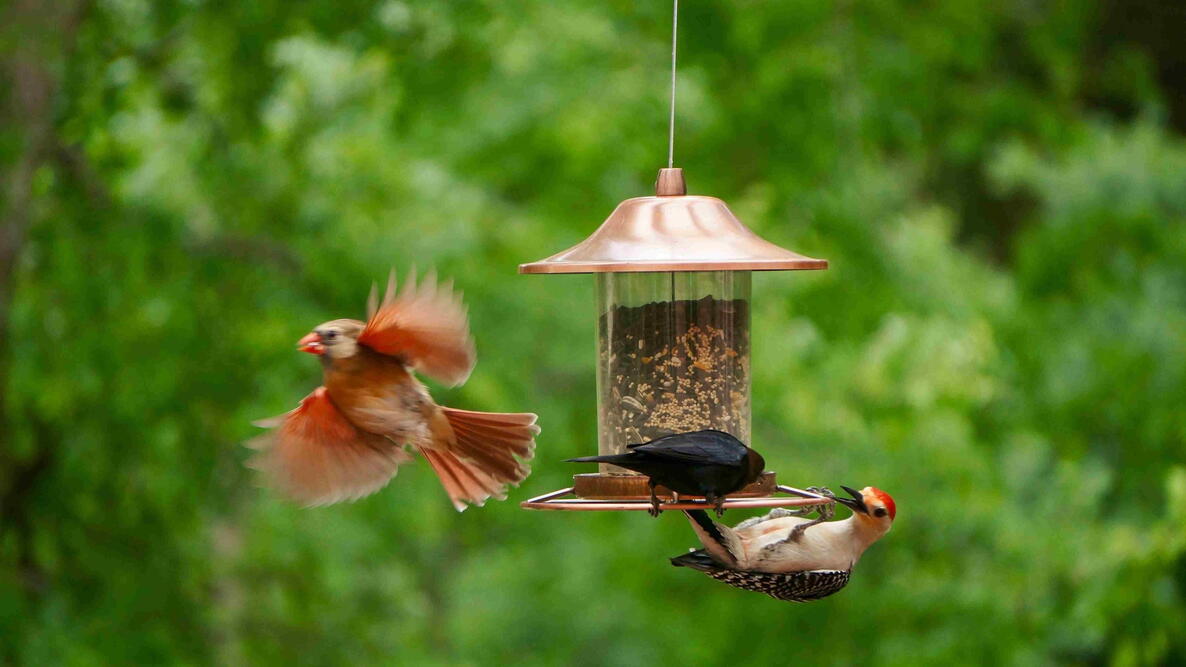
Caption
A steady feeder and a safe perch can turn your yard into a regular stop for visiting birds.

If you’ve set up a bird feeder and are still waiting for birds to show up, you’re not alone. It can take time for birds to discover a new food source—but with the right setup, you can make your yard much more inviting.
As an avid birdwatcher, I’ve spent years experimenting with feeder placement, food choices, and habitat features to attract more birds to my garden. Some changes made an immediate difference, while others took a bit of patience—but those often paid off with a wider variety of birds over time.
Below, I’ll walk you through the tips that worked best for me—from choosing the right feeders and foods to creating a habitat that keeps birds coming back. You’ll also learn how to attract birds to feeder stations and encourage them to help control garden pests.
Key Points
- Birds are more likely to visit feeders placed near trees or shrubs, where they can quickly access shelter while still spotting food from above.
- A mix of foods, fresh water, and nearby cover helps attract more birds and encourages repeat visits.
- With consistent feeding and a well-kept space, birds often return regularly and become familiar visitors throughout the seasons.
How to Attract Birds to Your Feeder (and Why Birds Aren’t Coming Yet)
Choosing the Right Feeder
The type of feeder you use can influence which birds show up.
Most people are familiar with the classic house-style bird feeder, which looks a bit like a small house with a peaked roof and enclosed sides. These feeders hold a supply of seed and allow birds to perch and feed from openings near the base, making them a good starting point for attracting a variety of birds.
That said, not all birds feed in the same way. Tube feeders, for example, tend to attract smaller birds like finches and chickadees, while more open feeders may appeal to a broader mix.
If you’d like to see more variety, you can experiment with a different feeder style—or even group a couple together into a simple “feeder station.” (See our guide to different types of bird feeders and what they attract.)

Where to Place Your Feeder
Birds are cautious by nature. When placing a feeder, it helps to think like a bird—looking for food, but always staying close to safety.
Most backyard birds are drawn to areas that offer a mix of open space for feeding and nearby cover for safety. Feeders placed too far out in the open can feel risky, while those tucked too deeply into shrubs may be hard to spot.
The best locations strike a balance. Place feeders within easy flying distance of trees or shrubs so birds have a quick place to retreat, but keep them visible enough that birds can spot them from above as they pass by.

I have my feeders positioned about 10 feet from my balcony and about 10 feet from the nearest wood line, so birds feel comfortable while I can still easily see them from my window. I find that my birdbath gets more visitors when it’s located in direct sun, while my hummingbird feeder does better in light shade to keep the nectar from overheating in summer.
Even a small amount of nearby cover—such as a shrub, low branch, or garden bed—can make a feeder feel much safer and more inviting.

Once birds discover a feeder they trust, they tend to return often—and may even bring others with them.
Birds rely on sight and routine, so if a feeder is in a new location, they may not recognize it as a food source right away. Until they spot it and learn to trust it, they may simply pass it by.
Food
Some birds prefer insects, while others go for fruit and seeds. Most, though, are opportunists and eat a bit of everything—feeding on insects in summer and switching to seeds and fruit when the weather cools and insects are harder to find.
In colder months, birds rely more heavily on feeders as natural food becomes scarce. High-energy foods like sunflower seeds and suet can be especially helpful in winter.
Offering a variety of foods is the best way to attract the widest range of birds to your yard.
Seeds for Feeders
If you’re filling feeders, it helps to match the seed to the birds you’d like to attract. I find that black oil sunflower seeds are a perennial favorite—they draw the widest range of birds and are my go-to if I’m only putting out one thing.
Offering a mix is even better. Doves enjoy millet, finches prefer thistle, bluebirds will take mealworms, and orioles are especially fond of fresh or dried fruit—I’ve had good luck putting out orange slices or a bit of jam to draw them in.
Common foods you may want to offer in feeders include black oil sunflower seeds, thistle seeds, millet, safflower, cracked corn, peanuts, milo, nectar, and suet.
Other Foods Birds Love
Many birds that visit feeders will also go for foods beyond seed. Offering a few extras—especially in the right feeder—can help attract a greater variety of birds.
- Fruit. Fresh or dried fruit is especially appealing to birds like orioles and waxwings.
- Mealworms. A favorite for bluebirds and other insect-eating birds.
- Suet. A high-energy food that’s especially helpful in colder months and attracts woodpeckers and other clinging birds.
- Nectar. A simple sugar-water solution used in hummingbird feeders.
Don’t Forget Natural Food Sources
Even if you rely on feeders, birds will continue to forage for natural foods. Insects, berries, and seed heads all play a role in their diet, especially in warmer months when food is more abundant.
Keeping pesticides out of your garden naturally allows more insects in—and attracts the birds that feed on them. You can encourage this even more by planting flowers that attract beneficial insects, such as yarrow and borage.

In fact, many of the birds that visit your feeders will also help control garden pests naturally by feeding on insects throughout your yard. Some species can eat hundreds of bugs in a single afternoon.
Water

Of course, just like us, birds need fresh water to drink. A simple birdbath is often enough, and placing it in a sunny spot near a tree or shrub makes it easier for birds to find while still giving them a place to retreat.
Birds don’t just drink water—they also use it to bathe, which helps keep their feathers clean and properly insulated.
I’ve noticed my birdbath gets more visitors when it’s in direct sun, but nearby cover is just as important so birds feel safe while they drink and bathe.
In colder climates, a birdbath heater can keep water from freezing over in winter, when natural water sources are scarce.
Although birdbaths work for most birds, they’re usually too deep for hummingbirds. For these little guys, I installed a solar-powered fountain in my birdbath, which makes it easy for hummingbirds to get a drink without tumbling in.
Shelter
Birds are more likely to visit—and return to—yards where they feel safe. In backyard settings, that often means having nearby places to perch and quick cover within reach of feeders.
Structures like decks, fences, and low branches can give birds a place to pause before approaching a feeder. I’ve seen this firsthand in my parents’ yard, where large shrubs planted right next to the deck make a big difference. Birds use them as quick shelter if something passes overhead, and the deck railing gives them an easy place to perch as they move back and forth to feed.
If you’re growing native plants to attract birds, place them where they’ll thrive. I like to group the plants I deliberately grow for birds in a slightly out-of-the-way section of my yard where they feel safer. I keep a few feeders there, too, to make the space even more bird-friendly.
Aside from natural nesting spots, I also like to grow plants that provide soft, fluffy materials for birds to line their nests. Plants like milkweed, thistles, and cattails produce fibers that birds readily use. I even let dandelions go to seed and keep lichens around, since birds often gather these materials when building nests.

Birdhouses

Not all birds use birdhouses, but species like sparrows, swallows, and bluebirds will if the setup is right. If you’d like to encourage nesting, it helps to choose a house designed for the specific birds you want to attract.
Many birds will only use birdhouses with very specific sizes and entrance holes, so it’s worth doing a bit of research before putting one up.
When installing birdhouses, place them about 5 to 15 feet above the ground on poles or sturdy mounts to help deter predators. I’ve found that houses mounted on poles or buildings tend to attract more birds, while hanging houses can sway and discourage some species.
Plants That Attract Birds

Feeders are helpful—especially in small spaces—but many birds also rely on natural food sources.
If you want to attract a wider variety of birds, adding plants that provide seeds, fruit, and nectar can make a big difference—especially if you focus on native species that birds recognize and feed on naturally.
Remember, too, that birds are drawn to food throughout the seasons. They’ll stay longer in your yard if it offers plants that flower or produce berries at different times of the year.
- Seed-producing plants. Plants like black-eyed Susan, sunflowers, bee balm, asters, thistles, coneflowers, Joe Pye weed, goldenrod, and ornamental grasses produce seeds late in the season and attract birds like finches.
- Fruit-producing plants. Cedar waxwings and other birds that love fruit flock to gardens with fruit-producing plants, like hollies, chokecherry, dogwood, serviceberries, hawthorns, and cane fruit.
- Nectar-producing plants. Hummingbirds are particularly attracted to nectar-producing flowers that are tube-shaped in form and bright orange or red in color, including native plants such as Eastern red columbine, coral honeysuckle, bee balm, and cardinal flower, as well as ornamentals like petunias, foxglove, and pineapple sage.
Grouping plants in layers—such as trees, shrubs, and lower plantings—can make your yard feel safer and more inviting by giving birds places to feed, perch, and quickly retreat.
Instead of cutting everything back right away, let some seed heads and dried stems stand through fall and winter. These provide a natural food source for birds when other options are limited—and give your yard a bit of extra life in the colder months.
Keep Birds Coming Back
It can take birds a bit of time to find feeders, so don’t despair if birds don’t flock to your garden as soon as you place feeders out. Keeping feeders filled and in an easy-to-see spot should eventually draw birds in.
Once birds start visiting your space, make a habit of refilling feeders regularly. When birds visit my garden often, I may refill the feeders every day or two and refresh my hummingbird feeder at least twice a week.
As long as birdseed stays fresh and dry, I may only fill up my feeders once a week in summer when birds are more likely to be feeding from wild plants and gobbling up insects!
Sometimes I get questions about squirrels. They may also visit your feeders, but they don’t usually keep birds away—they just mean you may need to refill a bit more often.
Keep Birds Safe and Healthy
When deliberately attracting birds to your space, it’s important to take a few precautions to keep birds safe. This can look like:
- Adding decals to your windows to reduce bird strikes.
- Keeping pets indoors.
- Reducing herbicide and pesticide use so seeds and insects are safe for birds.
- Cleaning out bird feeders, birdbaths, and birdboxes regularly.

Birdbaths and bird feeders can get dirty fast and potentially make birds sick. To avoid this, make sure to clean birdboxes out before the nesting season begins and clean and refresh birdbaths and feeders as needed.
I’ll usually refresh my hummingbird feeders and birdbaths at least twice a week in summer. If the birdseed in my feeders gets damp, moldy, or clumpy, I’ll toss it out, scrub the feeder, and refill it with fresh seed.
When cleaning supplies for birds, don’t use soap or household cleaners, as they can be toxic. Sometimes I’ll just scrub feeders out with hot water, a stiff brush, and perhaps a bit of distilled white vinegar. However, if birdbaths, feeders, or boxes are particularly dirty, I’ll give them a 30-minute soak in a 10% bleach solution, rinse them with water, and let them air dry before hanging them back up.
Enjoy the Birds
Attracting birds to your yard is as much about patience as it is about preparation. With a steady supply of food, fresh water, and a safe place to rest, birds will begin to find their way to you—often when you least expect it.
I’ve found that the more consistent I am with my feeders and plantings, the more birds return throughout the seasons. Before long, your yard will feel a little more alive, filled with the color, movement, and song of visiting birds.
Frequently Asked Questions
How long does it take for birds to find a feeder?
It can take anywhere from a few days to a few weeks for birds to discover a new feeder. Placement, visibility, and consistency all play a role in how quickly they find it.
Why aren’t birds coming to my feeder?
Birds may not be visiting if the feeder is in a new location, hard to spot, or too exposed. They are cautious by nature and need time to learn that a feeder is a safe and reliable food source.
What is the best food to attract birds?
Black oil sunflower seeds attract the widest variety of birds, but offering a mix of seeds, fruit, and suet can bring in even more species.
Where should I place a bird feeder?
Place feeders near trees or shrubs so birds have quick access to shelter, but keep them visible enough to be spotted from above.
More Like This

Comments