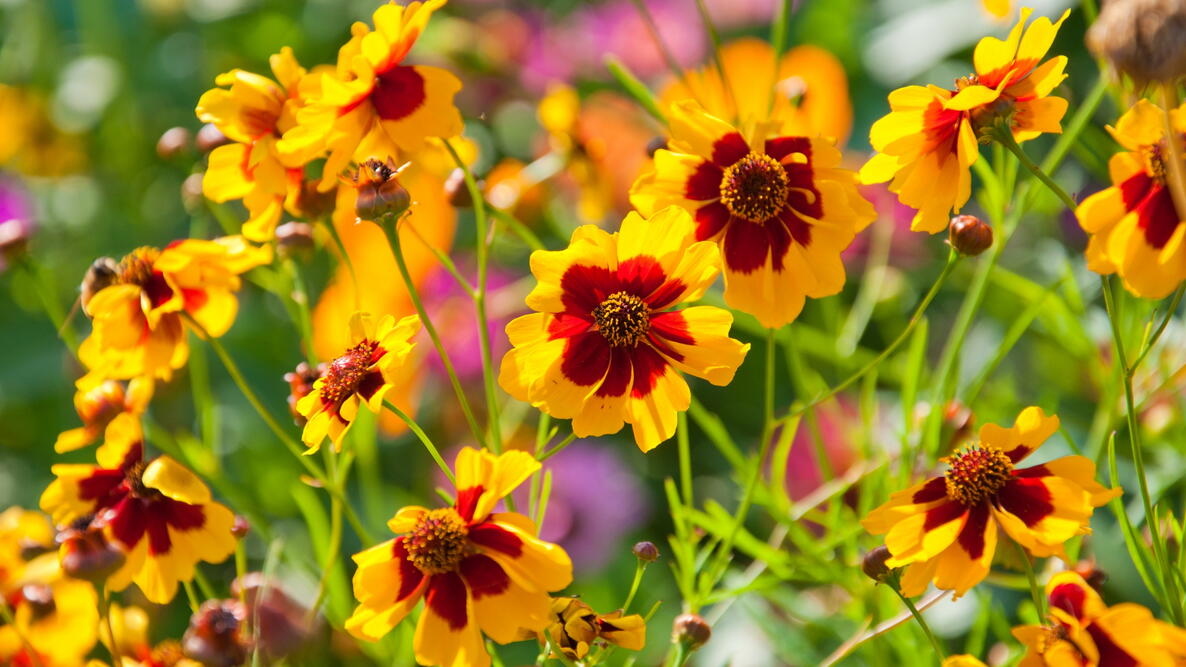

The coreopsis flower (tickseed) is a long-blooming perennial that flowers from early summer until fall frost. Planted in fall or spring, this deer-resistant native is beloved by bees and butterflies. Here’s how to plant this fan favorite as well as deadhead coreopsis—and other growing tips.
Coreopsis is usually planted as a perennial that spreads with rhizomatous roots. However, there are annual types, too, that tend to be short-lived and self-sowing. The annual varieties are often included in wildflower seed mixes. Some hybrids put energy into making colorful blooms (but set few seeds).
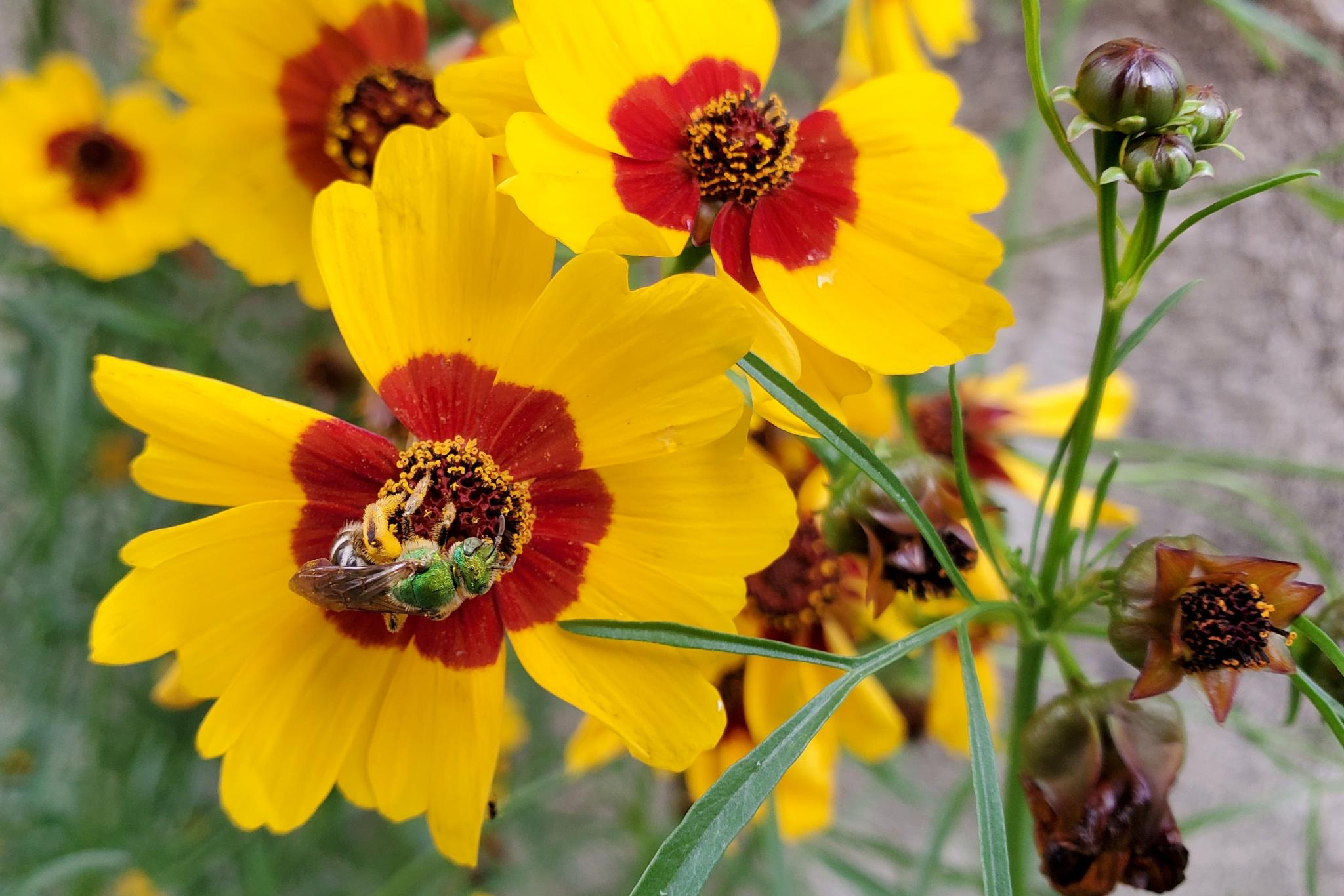
The daisy-like yellow, red, orange, pink, and violet flowers bloom from summer to fall. Even as other summer flowers fade in the fall, coreopsis is often still strong. Countless small blooms sit atop thin, branching stems, making coreopsis suitable for planting in a number of areas. Not only do bees and butterflies love its nectar, but small birds, such as goldfinches, love its seeds.
This low-maintenance plant makes few demands. It tolerates heat, humidity, and drought, and when cut, adds cheer to a bouquet. Plant in masses for striking visual effects. It is well suited to beds, borders, and containers.
Growing
- Water established coreopsis plants during dry spells.
- Be careful with fertilizer, which may cause spindly plants with few flowers. Only apply 10-10-10 lightly in spring, if desired.
- Deadhead flowers for continuous blooms, removing both the spent flower and its stalk.
- In mid- to late summer, when flowers fade, shear off 1/4 to 1/2 of growth to encourage late-season reblooming.
- After a couple of fall frosts, cut perennials back to 6 to 8 inches to protect the crowns. Remove plant debris. Or, leave the seed heads on the plants in the fall for the birds.
- Spread a layer of compost, then a layer of mulch, around—not on—the crown.
- Annual varieties can be dug up and discarded after a few frosts.
- Divide perennials every 3 to 4 years in spring or early fall.
Types
- Coreopsis verticillata (Threadleaf Tickseed) ‘Zagreb’: golden yellow; 12 to 18 inches tall; hardy in Zones 4 to 9
- C. grandiflora ‘SunKiss’: large yellow flowers with burgundy centers; 12 to 14 inches; ideal for cutting; hardy in Zones 4 to 9
- C. auriculata ‘Snowberry’: creamy white flowers with burgundy centers; 24 to 30 inches tall; hardy in Zones 3 to 8
- C. auriculata ‘Nana’: yellow flowers; 2 to 4 inches tall; makes a beautiful ground cover; hardy in Zones 4 to 9
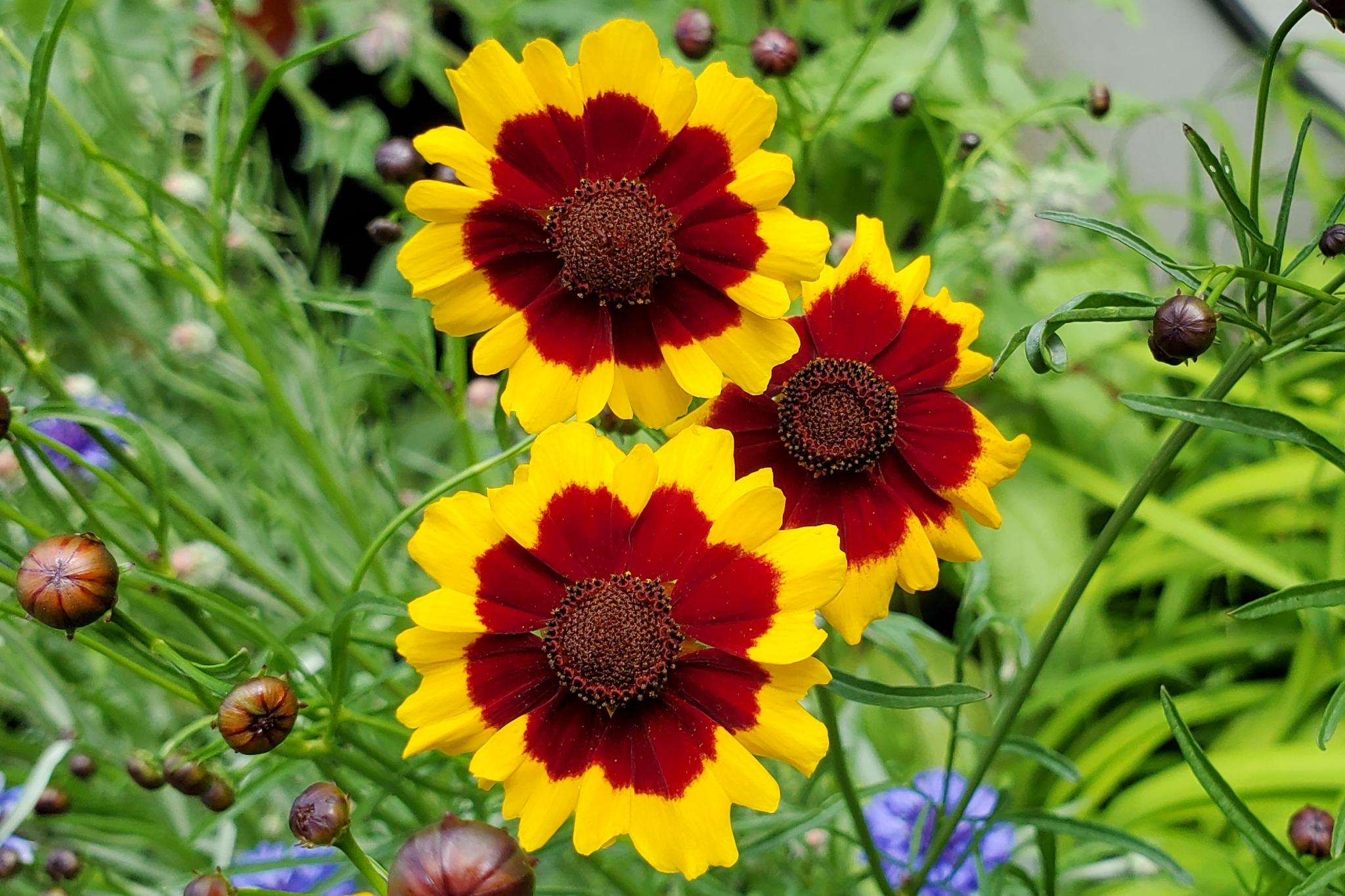
- Annual native C. tinctoria (aka plains coreopsis and calliopsis): yellow-red flowers with dark-red centers; 2 to 4 feet tall; hardy in Zones 2 to 11
- Hybrid C. ‘Razzle Dazzle’: large violet-purple blooms with white tips; 16 to 22 inches; hardy in Zones 5 to 9
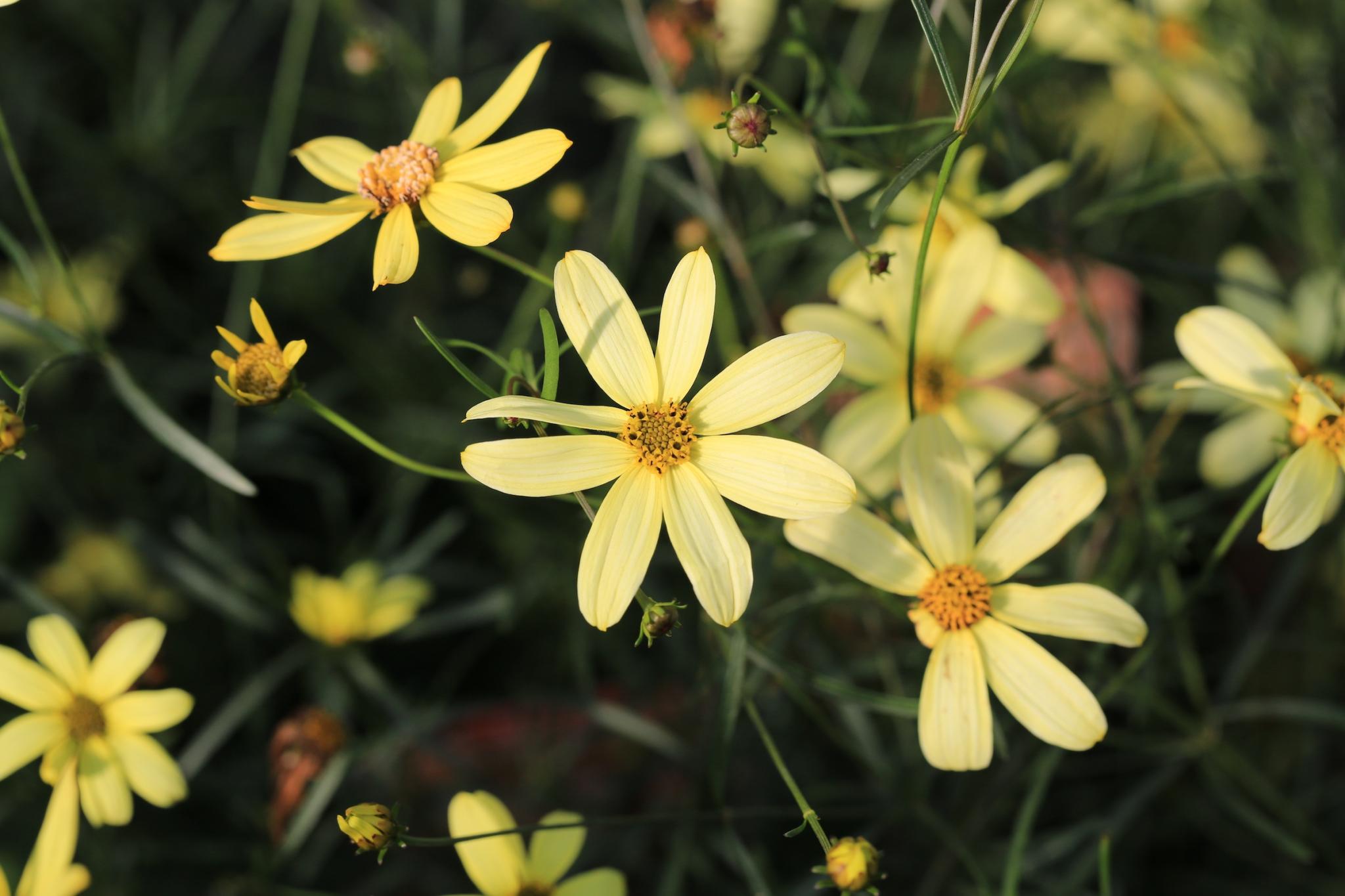
- Hybrid C. ‘Moonbeam’: light creamy yellow, 12 to 18 inches tall; hardy in Zones 4 to 9

More Like This

Comments