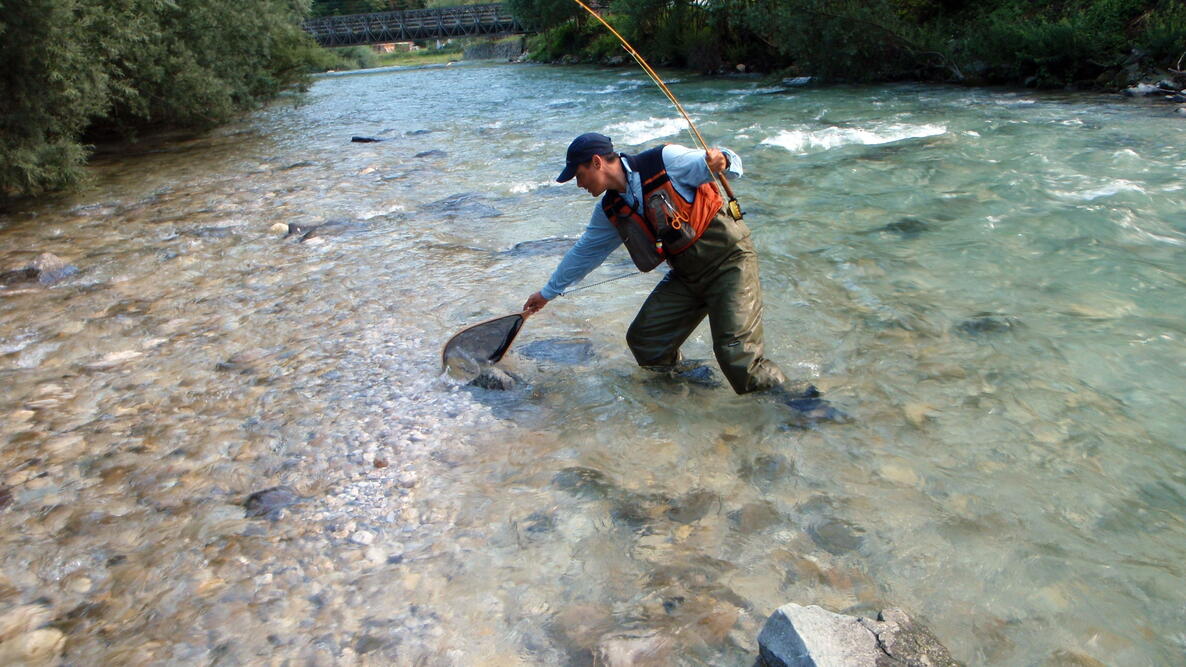

Fly fishing for beginners doesn’t have to be intimidating. Whether you want to catch trout, bass, salmon, or other freshwater fish, learning a few basic techniques can make your first trips much more successful. These 10 beginner fly-fishing tips from competition angler Bobby Malouin will help you build confidence on the water.
How Bobby Malouin Got Started in Fly Fishing
These beginner fly-fishing tips come from Bobby Malouin of Rhode Island, who won the top prize and a $1,000 college scholarship at just 15 years old in a national fly-fishing competition sponsored by United Fly Tyers Inc. We first featured Bobby in The 2005 Old Farmer’s Almanac, and years later he told us he’s still fly fishing for species including striped bass, bluefish, bonito, and false albacore.
Bobby first discovered fly fishing after watching another angler catch several fish while he struggled with a spinning rod. Inspired, he switched to a fly rod and quickly fell in love with the sport. Mentors helped him along the way, and before long he was tying his own flies, practicing several times a week, and mastering hundreds of fly patterns.
Here are Bobby’s top beginner fly-fishing tips.
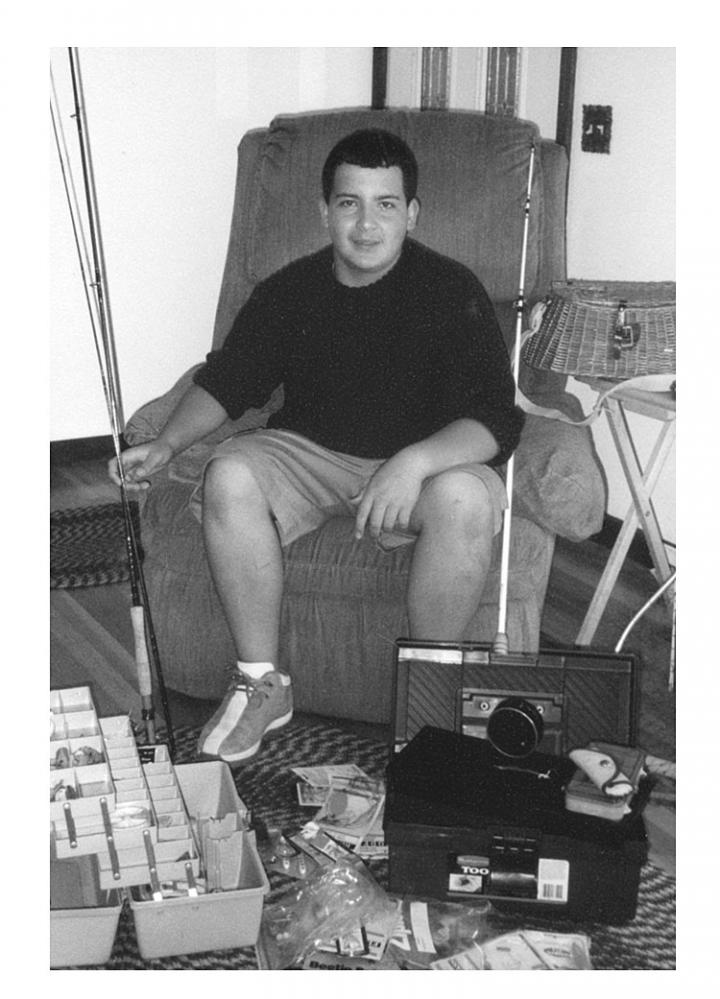
Photo Credit: Krstyna Malouin
Essential Fly Fishing Gear for Beginners
Before heading to the water, make sure you have these fly-fishing essentials:
- Fly rod – a 5-weight rod is a versatile choice for beginners.
- Fly reel – balances your rod and stores the line.
- Fly line – weight-forward floating line is easiest to learn with.
- Leader and tippet – connect the fly to your line.
- Polarized sunglasses – reduce glare and help you spot fish.
- Fly box – keeps your flies organized.
- Nippers and forceps – for trimming line and removing hooks.
10 Tips for Fly-Fishing Beginners
Here are Bobby’s recommendations for fly-tying and fishing:
- Ask local fishermen about which flies are best to use. Or find out for yourself with a dip net, which is usually dragged across the lake-, river-, or streambed to catch nymphs, emerging insects, and other aquatic life. It works especially well after you’ve turned over stones, wood, and other matter on the bottom.
- When learning to tie, start with big and easy ones so that you become confident with the basic technique. Try Woolly Buggers, Woolly Worms, and Montanas.
- When fish aren’t biting any of your flies, try the Pheasant Tail. Add a copper thorax to it so that it sinks faster, head down, into the water.
- Don’t worry about losing your flies—you can just tie more.
- The color of a fly has a lot to do with catching fish. If the fly doesn’t look like what the fish are feeding on, they won’t go for it. Woolly Buggers work very well. Put flash—a shiny, sparkly material—on the sides.
- Time of year and weather conditions determine which flies work best. When the trout are hitting wet flies or nymphs, try heavily weighted flies colored olive and black.
- Practice your technique. Use a crude fly (to help straighten the line out) with the hook clipped off (to help avoid injuries).
- Mash down the barbs on your hooks. This makes a smaller hole in the fish’s mouth, and you won’t lose the fish as long as you keep pressure on the line when you’re bringing it in.
- Fish in places where fish hide or stay to save their energy: undercut banks, obstructions, on the side of the current, in front of and behind rocks. Never fish from upstream to downstream; stirred-up debris will scare the fish.
- Wear polarized sunglasses; they’ll help you to see the fish.
Have patience. You’ll get better as you go.
The first fish that Bobby Malouin caught using a self-tied homemade fly was a big rainbow trout on a Pheasant Tail. His first successful use of a store-bought fly was with a Muddler Minnow.
Common Fly-Fishing Terms
Here are 20 fly-fishing terms, defined by Silvio Calabi, author of The Illustrated Encyclopedia of Fly-Fishing (Henry Holt & Co., 1993).
| Term | Definition |
|---|---|
| Arbor | The spindle, or axle, of a fly reel |
| Bucktail | Animal hair used to tie streamer flies and other fly patterns |
| Cree | A mottled ginger-colored feather pattern |
| Danglies | Small tools and gadgets that fly anglers hang from their fishing vests |
| Fingerling | A young fish about the size of a finger |
| Flue | The soft fibers at the base of a feather |
| Flymph | A soft-hackled fly |
| Gape | The opening, or bite, of a hook |
| Haywire Twist | A strong loop connection used when tying wire to a fly |
| Herl | An individual barb from a peacock feather or ostrich plume used in fly tying |
| Hippers | Hip waders worn for fly fishing in shallow streams and rivers |
| Kype | The hooked lower jaw that develops on spawning trout and salmon |
| Matching the Hatch | Matching your fly to the insects trout are feeding on to improve your chances of success |
| Parr | A young salmon, usually 5 to 8 inches long |
| Popper | A topwater fly that creates a popping or gurgling sound to attract fish |
| Priest | A club used to humanely dispatch a fish that won’t be released |
| Salmon Fawning | A type of dry fly |
| Salter | The sea-run form of the brook trout |
| Skater | A high-floating dry fly designed to “skate” across the water’s surface |
| Square Tail | A nickname for brook trout |
| Teaser | A hookless bait or lure used to draw a game fish within casting distance |
Frequently Asked Questions
How do beginners start fly fishing?
Start with a basic rod and reel outfit, practice casting on grass before heading to the water, and use simple flies recommended by local anglers.
What is the best fly for beginner fly fishing?
Many experienced anglers recommend Woolly Buggers and Pheasant Tail nymphs because they imitate a wide variety of natural food.
Do I need expensive gear to start fly fishing?
No. A quality beginner rod, reel, fly line, and a small selection of flies are enough to learn the basics.
Is fly fishing harder than regular fishing?
Learning to cast takes practice, but many beginners become comfortable after a few outings. Patience and repetition are more important than expensive equipment.
Can you fly fish in lakes and ponds?
Yes. Fly fishing works in rivers, streams, lakes, ponds, and even saltwater, depending on the fish species.
What is the easiest fish to catch when learning fly fishing?
Trout and panfish are excellent species for beginners because they readily take a variety of flies and are found in many lakes, ponds, and streams.
Fly fishing is a skill that improves with every outing. Start with simple gear, practice your casting, and don’t worry if you lose a few flies along the way. With patience and these beginner fly-fishing tips, you’ll soon be catching more fish and enjoying one of the most rewarding outdoor sports.
Read more about fishing:


Comments