

Twilight. The word evokes gorgeous colors. But what exactly is twilight? We’ll explain the three stages of twilight, plus you can check your own twilight times with the Almanac’s calculator. Get ready for adventures in the Twilight Zone.
That famous TV show would not have been a hit on Pluto. In fact, creatures on any known planet would be amazed by the unique twilight we Earthlings take for granted. Our world alone experiences the luxuriant palette of colors that mark the day’s transition to darkness. So, what exactly is twilight?
Throughout most of the universe, the Sun sets, and wham, it’s like a power failure: instant blackness.
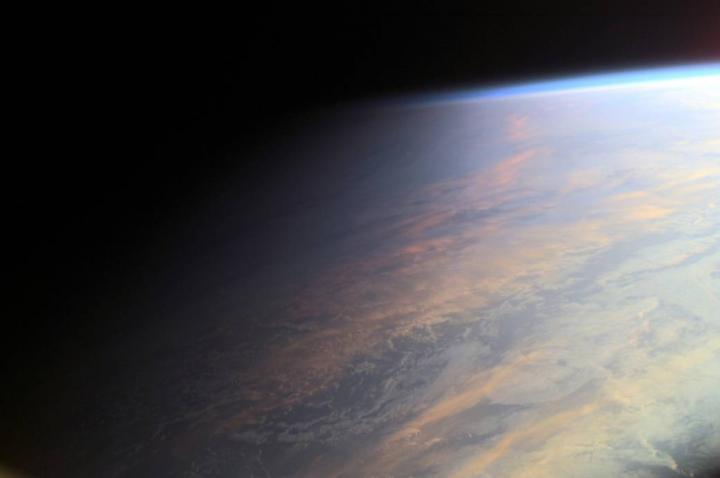
What is Twilight?
What is the correct definition of twilight? The concept suggests vagueness. But in actuality, it’s a very specific event. And there’s really not one twilight but three! And they’re each so distinct; they have their own names. Below, we describe the stages of twilight as they occur in the evening. These stages also occur before sunrise, in the reverse order.
- Civil twilight starts at sunset and ends roughly 45 minutes later when the Sun’s center has plunged 6 degrees below the horizon—equal to 12 times its own width. According to most municipal ordinances, streetlights must be on at that time.
- Nautical twilight occurs when the Sun’s center is between 6 and 12 degrees below the horizon. After this, the horizon vanishes when a mariner cannot distinguish between sea and sky.
- Astronomical twilight occurs when the Sun’s center is between 12 and 18 degrees below the horizon. After this point, the faintest stars emerge. The conclusion of this stage of twilight heralds the arrival of full darkness.
See the Almanac’s sunrise/set calculator to get all three twilight times!
By the way, twilight differs from dusk, which occurs after sunset. (Sunset can be defined as the moment when the top of the Sun’s disk has passed the horizon.) As with twilight, there is civil dusk, nautical dusk, and astronomical dusk, occurring at the exact moment when the center of the Sun’s disk is at 6 degrees, 12 degrees, and 18 degrees below the horizon, respectively. Stages of dawn occur before sunrise, in the reverse order as described for dusk.
Twilight’s duration is not usually expressed in units of time, but rather degrees, and for good reason: its length varies. Depending on the time of year and the latitude of the observer, twilight can expire in less than an hour or linger throughout the night! Twilight is always the shortest in the tropics, where less than 1 hour is the most you ever get. From the latitude of New York, 1 1/2 hours is about average, while from Alaska, there is simply no night at all between May and August. There, the choice is either daytime or twilight.
What We See During Twilight
Only Earth has twilight. You could argue that our neighbor Mars has something of a twilight. But its lethally thin air cannot produce anything resembling our planet’s rich hues. That leaves Earth alone to ponder the phenomenon!
And there’s much more to twilight than pretty colors. Twilight hosts phenomena not seen at any other time, such as “crepuscular rays.” Crepuscular? A great word that means “pertaining to twilight” and which can describe those fantasyland rays that often stream up from the setting Sun, indeed called crepuscular rays. It has such a great sound that I try to use that word as often as possible, even when it’s not appropriate.
During twilight, we also see bats and those crepuscular characters who cleverly avoid both day and night predators.
Also, during twilight, we will more often enjoy the appearance of Mercury or Venus, or the sudden profusion of Earth satellites, which are most numerous during the first 90 minutes after nautical twilight ends. Or, we’ll even see the Earth’s shadow, looking like a blue-gray band low in the east during twilight’s first 15 minutes.
Yes, currently, there is a lot of action at twilight. And the price is right.

More Like This
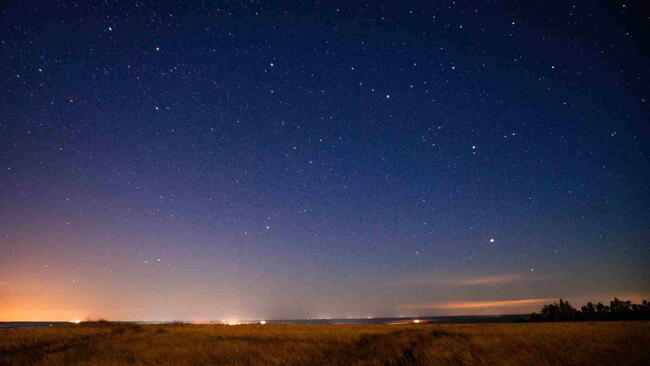

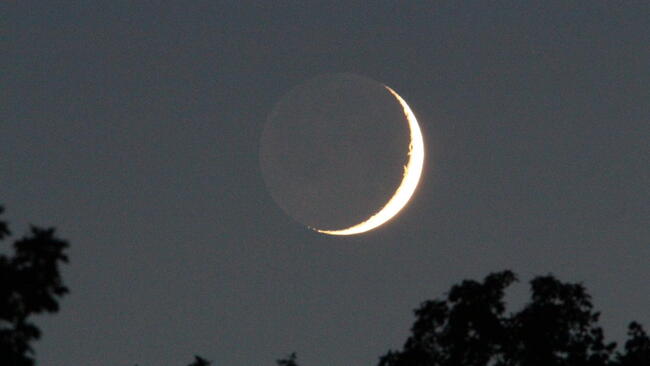



Yes, twilight occurs before sunrise and after sunset, with the same stages (civil, nautical, astronomical) as described above, only in the reverse order. In the morning, astronomical twilight occurs first, then nautical, then civil, before sunrise.
Twilight is the period of time between when the Sun first hits the horizon and when it finally sinks below the horizon, whereas dusk begins after the Sun is below the horizon. Twilight occurs directly before dusk.
If you are following the same definition for both—i.e., nautical twilight and nautical dusk—there will be no overlap between the two. However, if you are following mixed definitions—such as nautical twilight and civil dusk—then there is technically some overlap and it could be said that nautical twilight and civil dusk occur simultaneously for a period of time.
- « Previous
- 1
- 2
- …
- 10
- Next »

Comments