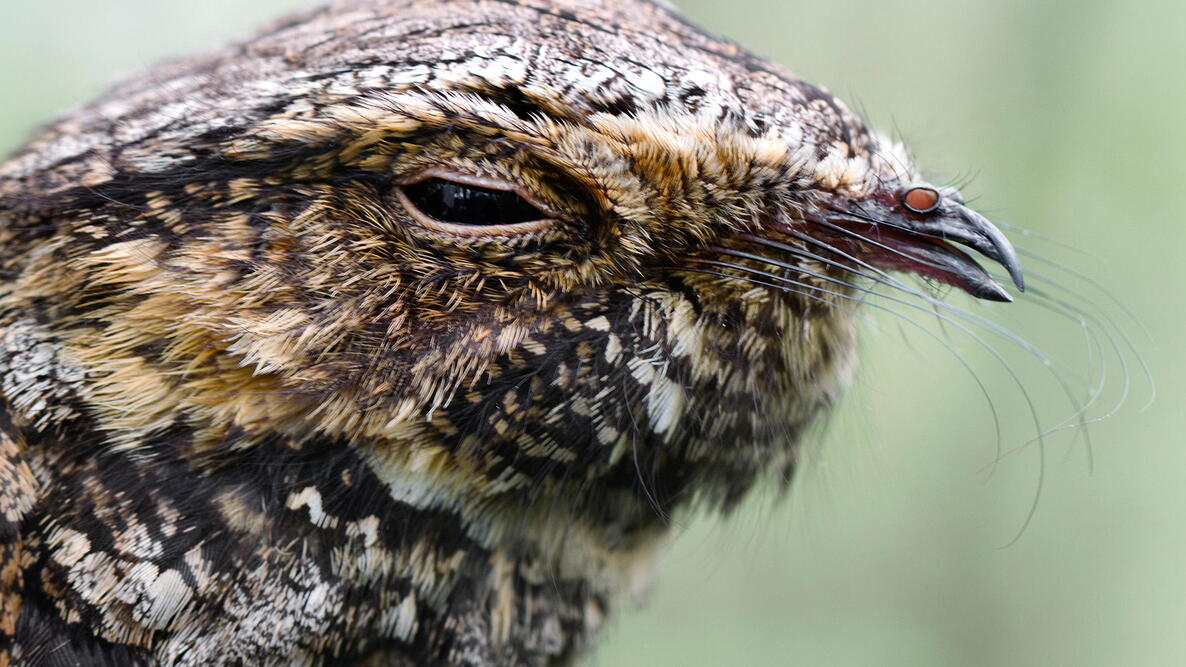

Does the whippoorwill drink goat’s milk? Does it foretell death, marriage, or woe? Can your aching back be cured by its call? Few birds have spun such a crazed web of mythology and myth-information. At the heart of this confusion and misdirection is a medium-size bird called the whippoorwill.
Introduction to the Whippoorwill
The merit or blame for this bird’s name belongs to Aristotle. The wise philosopher took a frivolous side trip into illogic to report a ridiculous story about the whippoorwill: “Flying to the udders of she-goats, it sucks them and so it gets its name,” he reported.
It was probably the whippoorwills (or their crepuscular cousins, the nighthawks) that were snagging insects as the insects congregated around the thin-haired bellies of goats. But Aristotle’s authoritative nonsense stuck with the Caprimulgidae family (the Latin word comes from capri for “goat” and mulgere “to milk”), and one common name for the bird family is the inelegant “goatsucker.”
Where Whippoorwills Live and Their Habitat
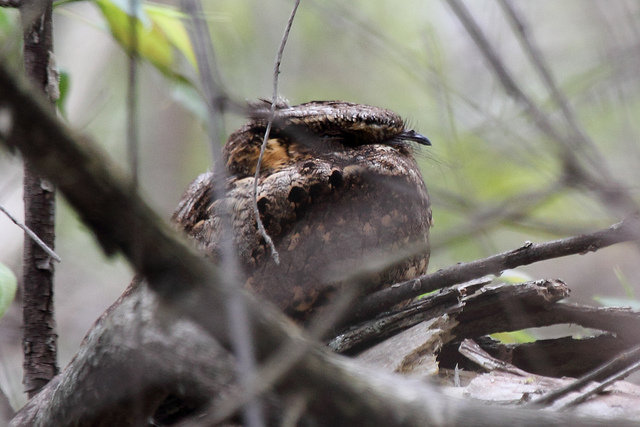
In North America, whippoorwills range from eastern Texas to southern Canada and east to the Atlantic. The night is theirs, although in both daylight and dark the birds depend on their superb camouflage to see them through.
Whippoorwill Behavior and Courtship Rituals
Whippoorwills do their courting after sunset. The male’s spring ritual is an elaborate one, involving strutting, throat-puffing, and a variety of noises designed to convince the silent female that he is the best mate among a forest swarming with calling males. It’s almost impossible for a spring woods traveler to escape the questionable music of one of the family to which the whippoorwill belongs. If you venture into a forest in the weeks ahead, keep an ear cocked for the whippoorwill’s call and be prepared to make a wish, do a somersault, or see the Moon in a frog pond.
► Listen to the haunting call of a whippoorwill, courtesy of the Cornell Lab of Ornithology.
It could mean many things, according to the wealth of myth surrounding this night flyer.
The note of the whippoorwill borne over the fields is the voice with which the woods and moonlight woo me.
–Henry David Thoreau, American Writer (1817–62)
Whippoorwill Folklore and Superstitions
Old wives worked overtime to whipstitch the tattered fabric of whippoorwill folklore. Here are some examples…
- When a single woman heard her first whippoorwill in springtime, she must have felt her heart lurch in panic, for if the bird did not call again, she would remain single for a year. If the birdsong continued, she was fated to remain single unless she had been quick-thinking and made a wish upon hearing the first call. If she kept that wish secret, she ultimately would be married.
- Whippoorwills singing near a house were an omen of death, or at least of bad luck.
- A man could rid himself of an aching back if he turned somersaults in time to whippoorwill calls.
Native American Beliefs About Whippoorwills
- If an Omaha tribe Native American heard a whippoorwill’s called invitation, he or she was advised to decline it. If the bird then stopped calling, a person who had answered would die. But if the calls continued, the person would have a long life.
- The Colorado Utes believed that the whippoorwill was one of the gods of the night and could transform a frog into the Moon.
- The Iroquois believed that moccasin flowers were the shoes of whippoorwills.
Frequently Asked Questions
What is a whippoorwill?
The whippoorwill is a medium-sized, nocturnal bird native to North America. It is known for its distinctive “whip-poor-will” call and excellent camouflage in forests.
Where do whippoorwills live?
Whippoorwills range from eastern Texas and the Gulf Coast to southern Canada and east to the Atlantic. They prefer open woodlands, forest edges, and areas with leaf litter for nesting.
What does the whippoorwill’s call mean?
The call is primarily for attracting mates and establishing territory. Folklore has also given magical or mystical attributes to the call, such as the ability to predict marriage, bad luck, or death.
Why is the whippoorwill called a “goatsucker”?
The name comes from a long-standing myth that whippoorwills suckle goats. This misconception dates back to Aristotle but is entirely false. The birds actually feed on insects.
Are whippoorwills endangered?
Whippoorwill populations have declined in some areas due to habitat loss and light pollution, but they are not considered endangered. Conservation efforts focus on protecting forest habitats.
Can I hear a whippoorwill at night?
Yes! The whippoorwill is most active at dusk and night during the breeding season. Listen for its rhythmic call, often repeated dozens or hundreds of times in a row.
Have you ever heard the call of a whippoorwill? Tell us about it in the comments below!

More Like This
- « Previous
- 1
- 2
- …
- 10
- Next »

Comments