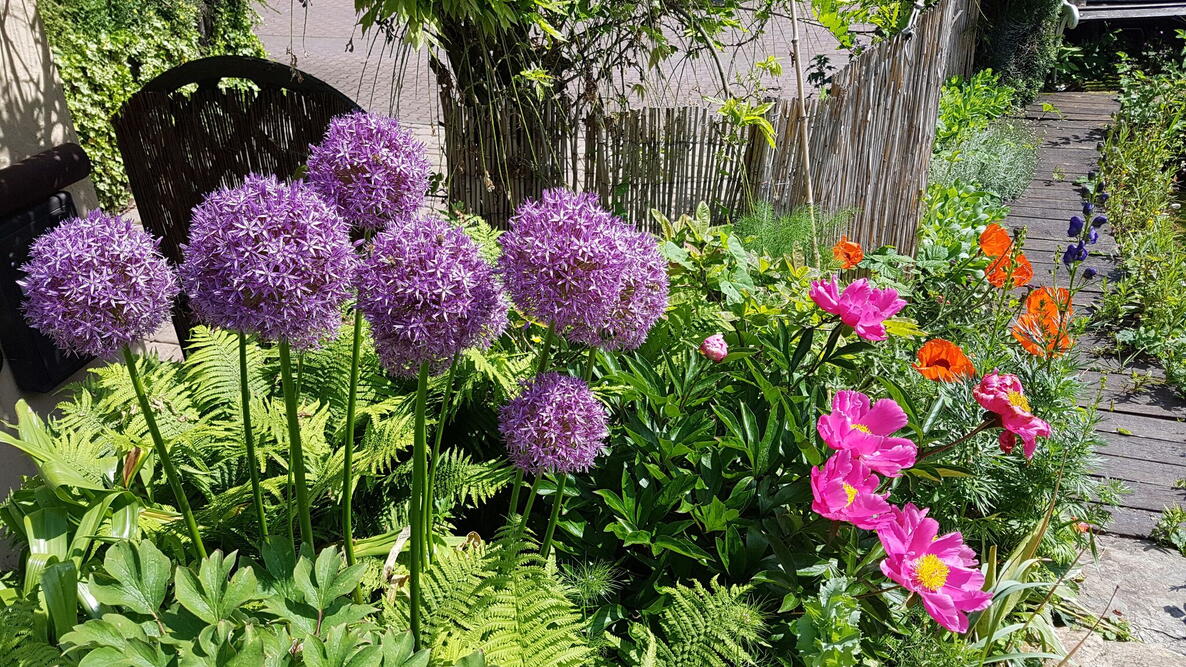

Looking for a flower that’s part firework, part lollipop, and 100% fabulous? Meet the allium. These ornamental onions shoot sky-high in spring, exploding with pom-pom blooms that stop visitors (and pollinators) in their tracks. They’re bold, deer-proof, and ridiculously easy to grow—just tuck the bulbs into the ground in fall and wait for the magic show to begin.
Add Alliums to Your Garden
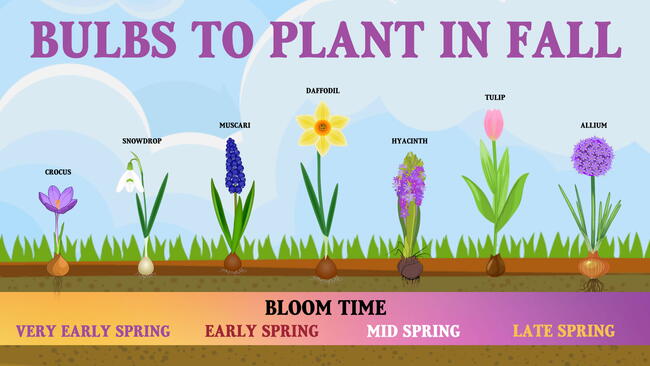
Every fall, I am seduced into planting more bulbs. After 30 years, you would think I couldn’t possibly need any more daffodils—and I really don’t—but that doesn’t stop me from planting more!
When it comes to bulbs, you have a lot to choose from. A favorite category of mine happens to be the ornamental onions (alliums).
Distant cousins of edible alliums such as onions and garlic, there are over 700 species of ornamental onions. Some are tiny—reaching only 6 inches high—while others grow to be over 5 feet tall! Some have nodding, bell-shaped blossoms, while others look like bursts of fireworks.
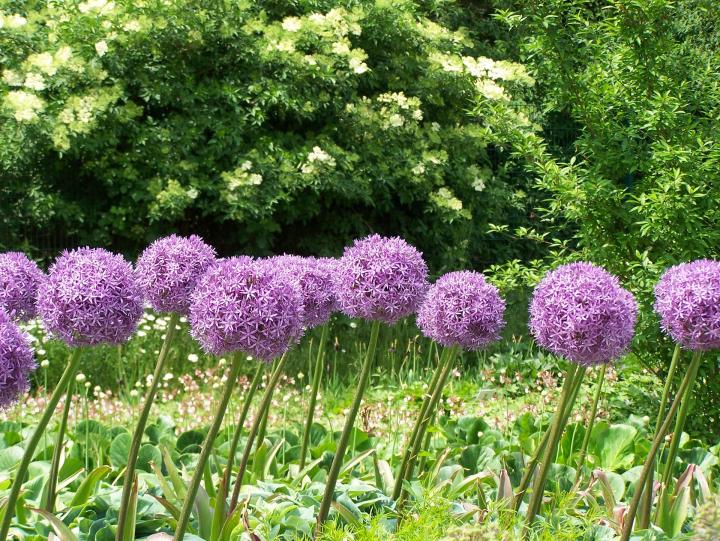
Then there are the huge, round flowerheads that resemble chive blossoms on steroids! The blooms tower high in the air and wave globes of color at the end of long, slender stalks. Most alliums bloom later than the spring bulbs so if you need an exclamation point of color to carry your garden from daffodils to peonies, look for an allium.
Alliums look awesome on their own, or great when planted by the dozens. They are perfect for a naturalistic planting scheme.
See this video to enjoy their beauty and range:
Deer- and Rodent-Resistant
Since they are in the onion family, rodents, rabbits, and deer tend to leave them alone, repelled by their strong flavor. In fact, a ring of allium around more vulnerable plants might serve to protect them from grazers.
However, the flowers don’t smell “oniony” at all; most are quite pleasantly fragrant and are a favorite of bees and other pollinators. Although their leaves and stems give off an oniony scent when bruised, most allium flowers are sweet-scented. They make long-lasting cut flowers and can be dried as well.
Best Allium Varieties
With over 700 ornamental onion species, alliums come in every size—from tiny rock garden cuties to towering giants that look like floral fireworks. Here’s a quick guide to help you pick the right ones for your garden:
Small & Compact (Under 1 foot)
Perfect for rock gardens, borders, or adding pops of color at ground level.
- Allium oreophilum – Rose-pink, fragrant clusters; 3 to 6 inches tall.
- A. cernuum (Nodding Onion) – Purple, pink, or white bell-shaped blooms; 6 to 8 inches tall. A North American native!
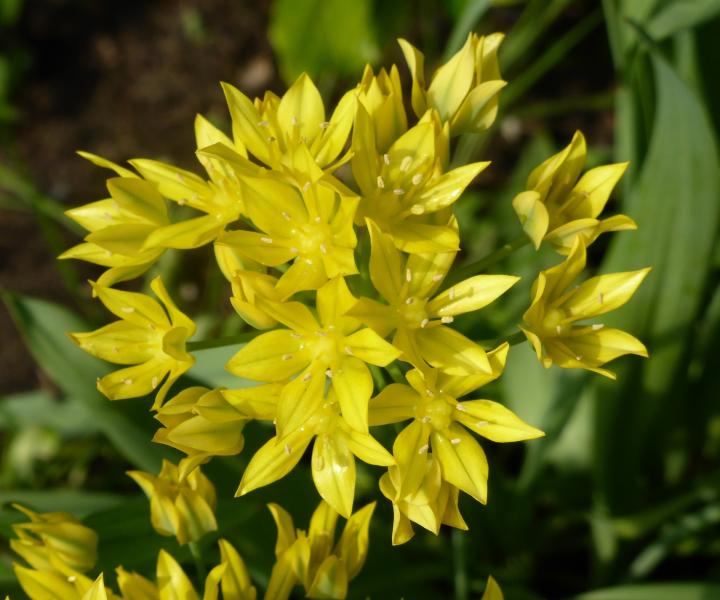
- A. moly ‘Jeannine’ (Golden Garlic) – Cheerful yellow star-like flowers; 8 to 10 inches tall.
Mid-Size Marvels (1 to 2 feet)
These are versatile alliums that blend well in perennial beds and cut flower gardens.
- Allium caeruleum – True-blue, globe-like blossoms; 12–18 in. tall.
- A. christophii (Star of Persia) – Enormous pink-purple globes; 18 to 24 inches tall.
- A. neapolitanum (Bride’s Onion) – Sweet-scented, white star-shaped flowers; 12 inches tall (Zones 7–8).
- A. schubertii – A firework in flower form, pink starbursts; 12 to 18 inches tall.
- A. sphaerocephalon (Drumstick Allium) – Maroon-red, drumstick-shaped blooms; 20 to 24 inches tall.
Tall Showstoppers (2 to 6 feet)
These are the “wow” alliums—perfect for bold focal points in the garden.
- Allium aflatunense (Ornamental Garlic) – Lilac-purple globes; 24 to 30 inches tall (‘Purple Sensation’ is a favorite).
- A. ‘Summer Drummer’ – The tallest hybrid; purple-and-white baseball-sized flowers; 4 to 6 feet tall.
- A. giganteum (Giant Onion) – Deep purple and white flowerheads up to 10 inches wide; 4 to 6 feet tall.
- A. giganteum ‘Globemaster’ – Huge violet blooms; 6 to 8 inches wide; long-lasting; 3 to 4 feet tall.
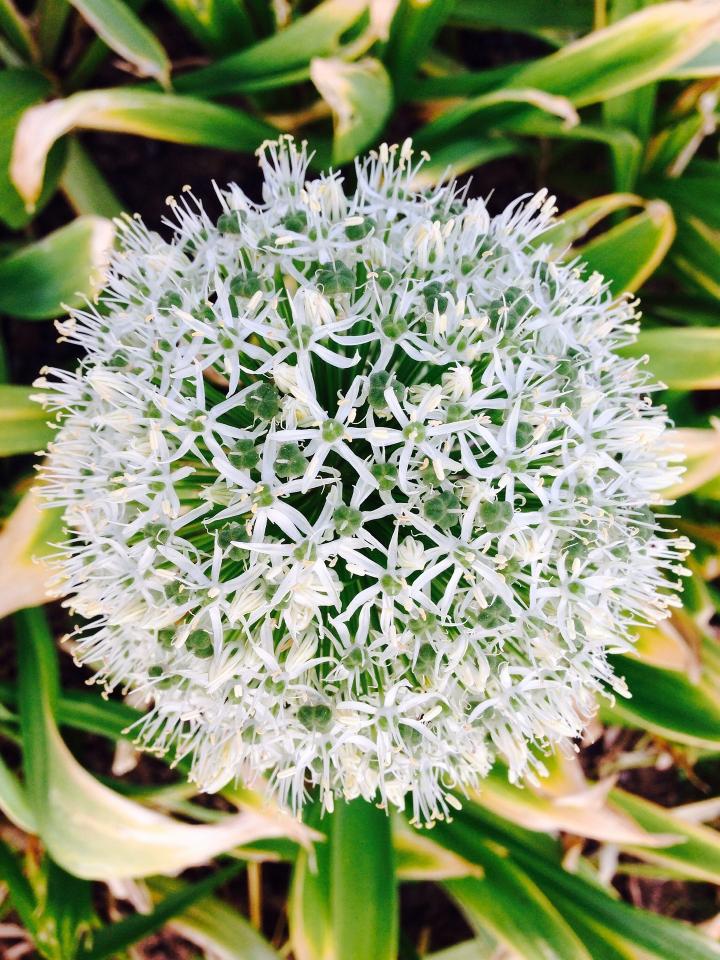
- A. stipitatum ‘Mount Everest’ – Pure white snowball blooms; 3 to 4 feet tall.
| Variety | Bloom Color(s) | Height | Bloom Time | Special Notes |
|---|---|---|---|---|
| Allium oreophilum (Dwarf) | Rose-pink | 3–6 in. | Late spring | Tiny, fragrant clusters |
| A. cernuum (Nodding Onion) | Purple, pink, white | 6–8 in. | Summer | Native, nodding bells |
| A. moly ‘Jeannine’ | Yellow | 8–10 in. | Late spring | Prosperity symbol, naturalizes |
| A. caeruleum | True blue | 12–18 in. | Early summer | Dense, round blossoms |
| A. neapolitanum | White | 12 in. | Late spring | Sweet-scented, Zones 7–8 |
| A. schubertii | Pink starburst | 12–18 in. | Early summer | Firework look |
| A. christophii | Pink-purple | 18–24 in. | Early summer | Huge 8–10 in. heads |
| A. sphaerocephalon | Maroon-red | 20–24 in. | Summer | Drumstick-shaped, naturalizes |
| A. aflatunense | Lilac-purple | 24–30 in. | Late spring | ‘Purple Sensation’ hybrid |
| ‘Mount Everest’ | White | 3–4 ft. | Early summer | Giant snowball blooms |
| A. giganteum | Deep purple | 4–6 ft. | Early summer | Tallest, biggest flowerheads |
| ‘Globemaster’ | Violet | 3–4 ft. | Early summer | Huge, long-lasting globes |
| ‘Summer Drummer’ | Purple + white mix | 4–6 ft. | Midsummer | Tallest hybrid |
Allium Planting and Growing Tips
Planting and caring for allium couldn’t be easier:
- All alliums like rich, well-draining soil and prefer a sunny site—although many species will also tolerate shade!
- The best time to plant the bulbs is when they’re dormant in the fall. In fall, set all but the largest bulbs 4 inches deep; set the giants 8 inches deep—measured from the base of the bulb.
- Plant alliums throughout the garden in clusters—standing alone, they tend to look odd. The best effect is gained by planting a clump of bulbs—three to five spaced well apart for large alliums or a group of 10 to 15 for smaller species.
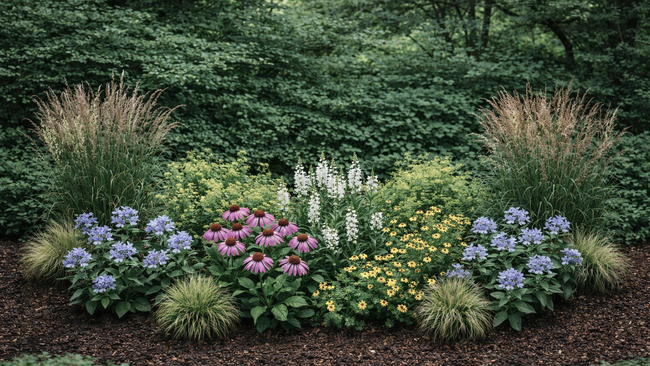
- If you’re looking for good companion plants, alliums look great among mounding perennials such as lady’s mantle, true geraniums, irises, or sedums. Hostas, silver-leaved artemisias, and peonies also make good companions. These will help to hide the alliums’ foliage, which tends to get brown by the time they flower.
- Add compost around new shoots in the spring.
- Stake taller varieties to support the blooms.
- Feed in early summer with a liquid fertilizer.
- The bulbs are long-lived and multiply readily. Most will naturalize in Zones 4 to 8, and they bloom on a most timely basis, in May or June or even July, between the carnival of spring bloom and the full flowering of summer.
- As allium fade into seed heads, they add a subtle beauty all their own.
- Cutting advice: For indoor arrangements, cut alliums when the flower heads are just one-quarter open. Any faint oniony scent released by cutting the stems will disperse as soon as you put them into water.
When you are bulb shopping this fall consider adding a showstopping giant allium or a delicate-looking dwarf to your garden!
Fall Flowers and Foliage
Fall Vegetable Gardening
Fall Garden Cleanup
Garden Soil Preparation
Fall Nature
More Like This

Hi Barbara,
Hibiscus seeds can most certainly be started indoors during the winter in preparation for spring planting.
To grow hibiscus from seed, sow indoors 12 weeks before the last spring frost date. Soak seeds before sowing. In terms of when to plant indoors, you should go to our frost dates page (https://www.almanac.com/gardening/frostdates) since dates vary depending on location in Zone 7.
As far as container to start your seeds in, just about any container should work as long as it has drainage holes.
You can try planting close to the house or next to a south facing rock wall to take advantage of the slightly warmer microclimate there but many alliums are rated as hardy in zone 3.
- « Previous
- 1
- 2
- …
- 10
- Next »

Comments