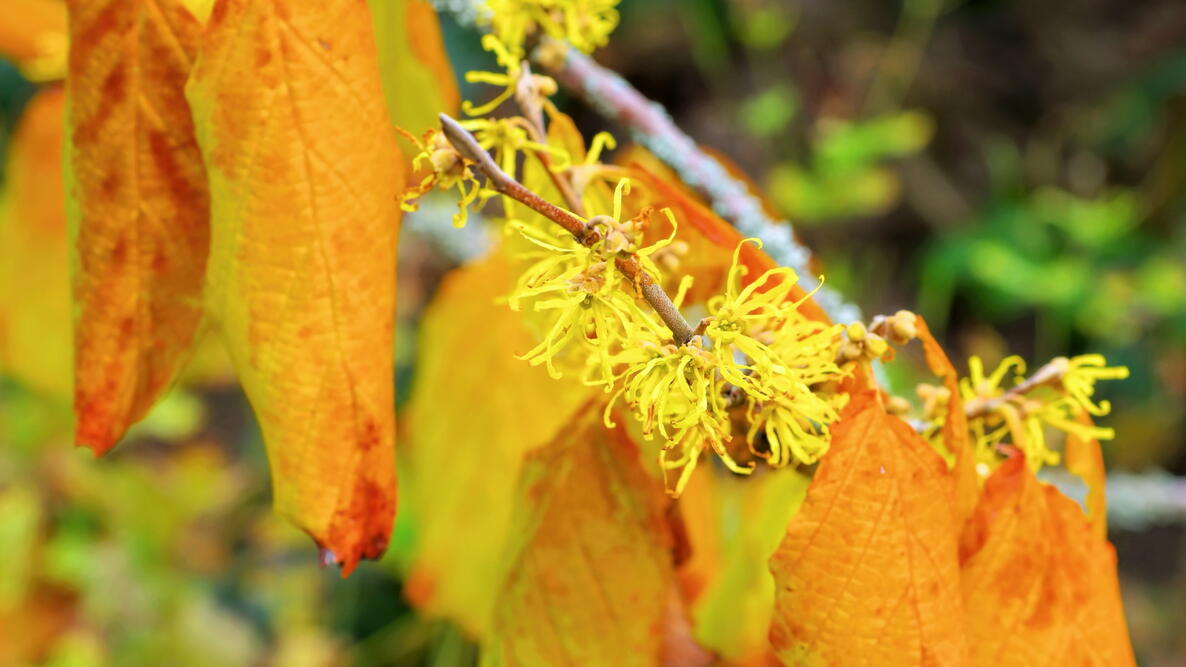
Caption
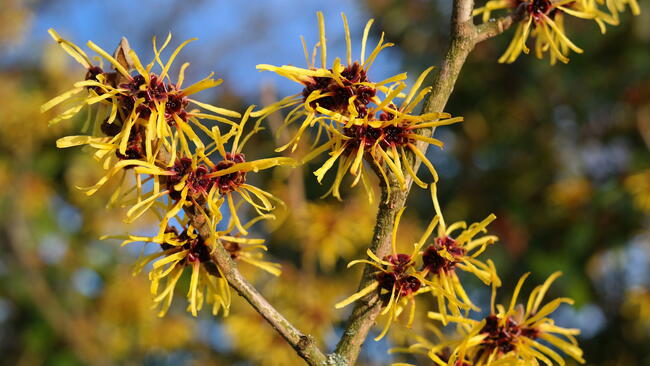
Fall-blooming witch hazel (Hamamelis virginiana)

Fall is the best time for shrubs. As the gardening season winds down, it’s the last call for filling in those bare spots in your landscaping with a beautiful shrub or two. Discover six shrubs that add those beloved colors of autumn right to your own yard!
Why Fall Is the Best Time for Shrubs
Many gardeners prefer autumn to any other season. The heat and humidity of summer have passed, biting insects are gone, and the leaves of many plants paint the landscape with bold strokes of red, yellow, orange, and purple. It’s also best for the trees. The combination of warm soil and cool air stimulates root growth to help your tree or shrub get established before the ground freezes.
Perennials are beautiful, but once they have finished blossoming and are gone, it’s the hardworking shrubs that will act as the backdrop. Fall is a good time for planting, and many garden centers are offering deep discounts on leftover trees and shrubs.
To choose plants for a fall garden, visit a nursery with paper, pencil, and camera in hand. Take notes and snapshots, and ask questions:
- Does the plant have colorful berries for winter interest?
- Will it attract birds?
- How will it look in other seasons?
6 Favorite Shrubs for Fall
Shrubs are long-lived but also offer up many features that perennial and annual flowers do: flowers, fragrance, leaf color, or pollinator appeal. Here are a few shrubs recommended not only for their autumn appeal but also for other seasons of interest:
Witch Hazel
Witch hazel (Hamamelis virginiana) is the perfect autumn shrub, turning golden-yellow in autumn and even bearing yellow, spidery flowers as the leaves start to fall off. A native plant hardy to Zone 3, it can grow to be 12 to 15 feet tall and wide, so give it plenty of room. Its leaves turn bright yellow to orange in fall. Look for the reliable cultivar ‘Arnold’s Promise’, as well as its relative, Hamamelis vernalis, which blooms in late winter.
Witch Alder
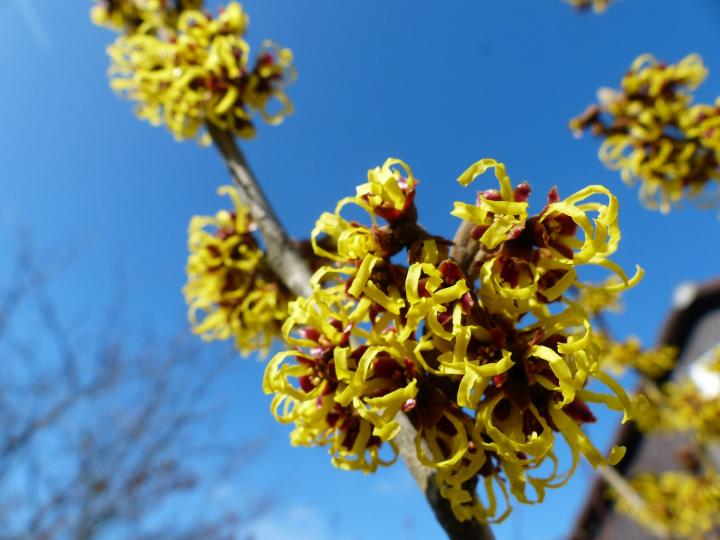
Witch Alder (Fothergilla) is in the same family as witch hazel but blooms later, usually in May, before its leaves appear. It has honey-scented white flowers that look like fuzzy bottle brushes. There are dwarf varieties that grow to be only 2 to 3 feet tall, standards that are 5–6 feet tall, or you can opt for a large Fothergilla major that will top out at 10 feet tall. They all have orange-red to bright red fall foliage and prefer a spot that has afternoon shade.
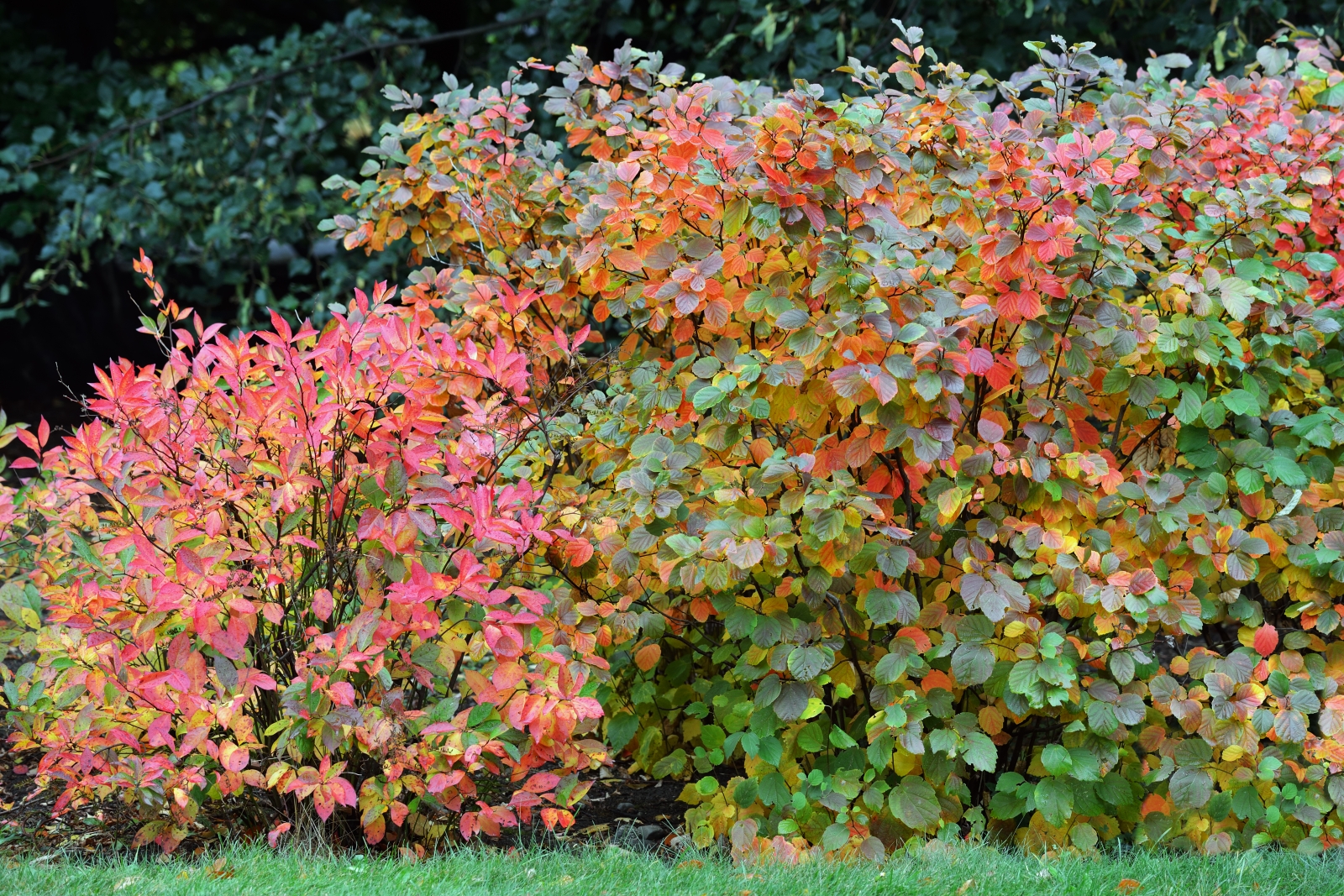
Photo by Jorge Salcedo/Shutterstock
Smokebush
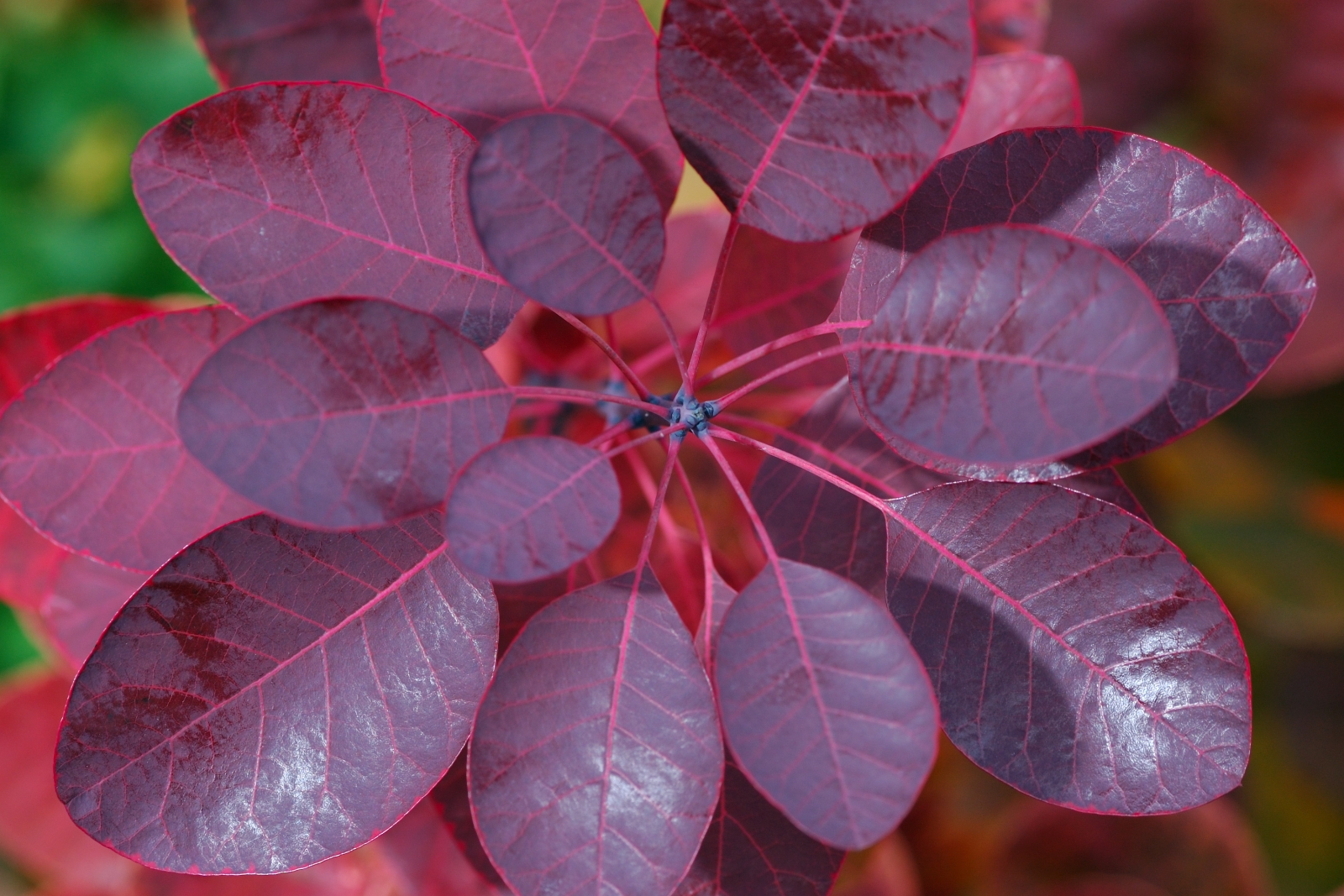
Smokebush (Cotinus coggygria) is a gorgeous shrub in any season. Purple-leaved varieties such as ‘Royal Purple’ or ‘Velvet Cloak’ turn an even deeper shade of maroon in fall. They can grow to be 15 feet tall and wide and are hardy to Zone 5.
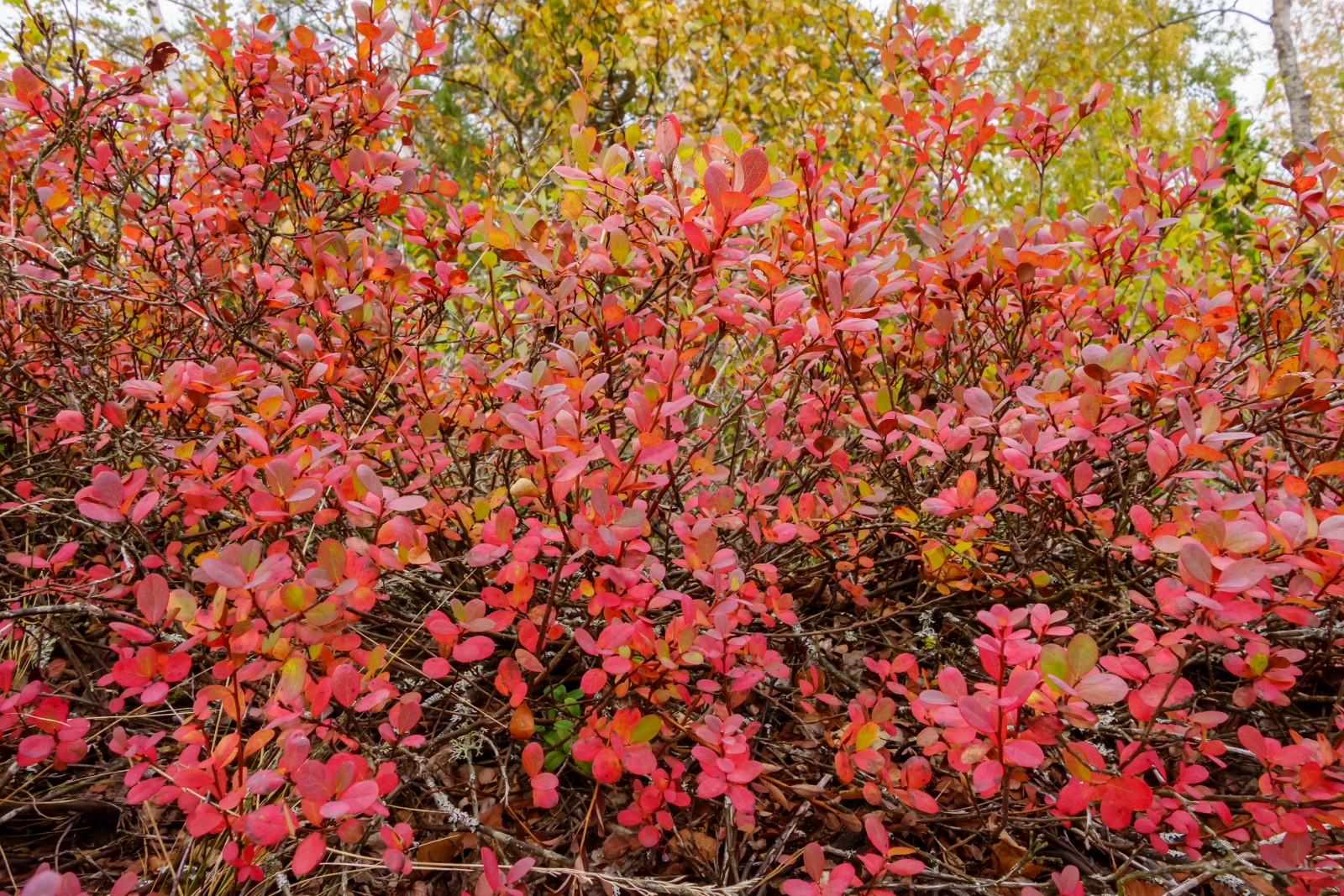
Blueberries
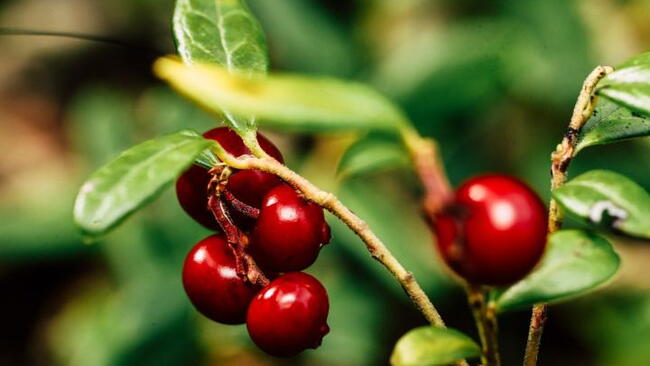
Blueberries make a wonderful edible hedge. In addition to long-lasting, bright-red autumn leaves, you’ll enjoy its white spring flowers tinged with pink and, of course, its delicious, juicy berries. ‘Jersey’ is a late-season variety that grows to be 6 to 7 feet tall and bears plenty of fruit. Learn how to plant blueberries.
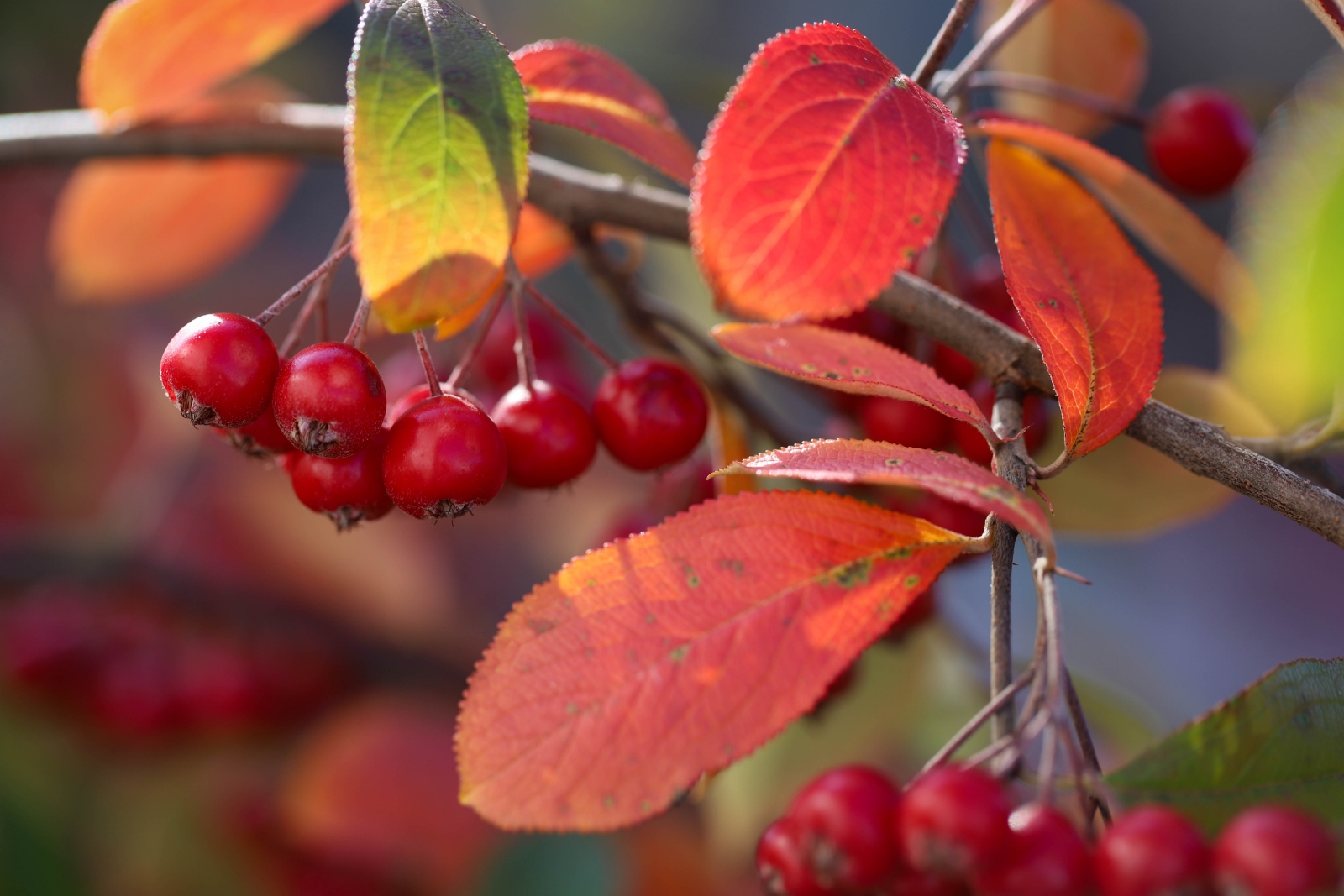
Red Chokeberry
Red chokeberry ‘Brilliantissima’ (Aronia arbutifolia) has bright orange-red fall foliage, but it also looks good in spring with its fragrant white flowers that attract a wide range of beneficial insects and glossy red fruits that persist into winter for the birds. This native is a great alternative to the invasive burning bush (Euonymus alatus). It grows 6 to 10 feet tall and 3 to 5 feet wide.
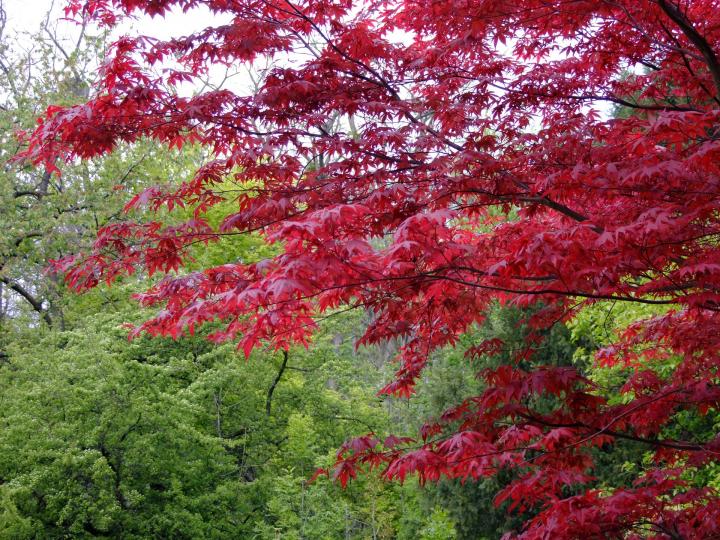
Japanese Maples
Japanese maples (Acer palmatum) are my favorite little trees. There are many to choose from; some have red foliage year-round, while others change to golden yellow, bronze, or bright orange in the fall. They come in a wide range of sizes, too, from 3-foot-tall dwarf forms to 15- to 20-foot-tall trees. An interesting one to look for is the Full Moon Maple ‘Jordan’. It has yellow-green leaves that turn orange-red in the fall. It grows 15 feet tall and 12 feet wide and does best in a shady location.
Other Fall Shrub & Tree Options
A few other options include:
- The red-flowered sumac (Rhus coriaria) has brilliant red autumn foliage and fruit clusters.
- Gingkos are a graceful, ancient variety of tree that turns beautiful golden-yellow in the fall.
- More of a tree, the ‘Autumn Brilliance’ serviceberry (a cultivar of Amelanchier x grandiflora) grows only 20 feet tall and has flaming-red fall foliage. It also features white flowers in early spring and sweet, edible berries.
How to Plant Shrubs in the Fall
In the fall, trees and shrubs are either sold in containers or with wrapped root balls, where the roots and soil are wrapped in burlap (often referred to as “balled-and-burlapped”).
Before you dig a hole, research the full-grown size of the plant, and give it the space it needs to grow! Also, you don’t want to plant a tree too close to your home or your neighbor’s property, which may cause damage to the buildings and tree roots.
Here are pointers on how to plant your shrubs properly:
- Dig a hole that’s twice as wide but no deeper than your plant’s container. Take the plant out of the container and test it in the hole. The new plant should sit at the same level or even slightly higher than the surrounding soil.
- Loosen the roots on the bottom of the rootball, as they’ve probably been in that container a long time; it’s OK to even cut them or break them apart to get them loosened.
- Put the plant in the hole, checking that the top of the rootball is not lower than the surrounding area.
- Add the soil back into the hole. Gently tamp down to avoid large air pockets, but don’t pack down or compact the soil.
- Water immediately after planting. The soil may settle. You can add a little more soil, but, again, do not compact it.
- Spread mulch around your new shrub, keeping the mulch a few inches away from the trunk or stems. Piling mulch against the bark can lead to rot or pest damage. Mulch will help insulate your new shrub’s roots in the winter and keep them cool next summer.
- Give your new shrubs frequent, deep watering through the fall. Water just until you see puddles that don’t soak into the ground right away. Do this at least twice a week during the fall and start again the next spring. After the first year, your shrub should be established enough to water regularly.
Learn more about planting trees and shrubs in the fall.
Shrubs and small trees are the basic building blocks of your garden, and there are many more that will steal the show in any season. Check out what your local garden center has to offer and get planting!
Fall Flowers and Foliage
Fall Vegetable Gardening
Fall Garden Cleanup
Garden Soil Preparation
Fall Nature
More Like This

Please see our article on the best deer-resistant plants for a list!
A native should always be your first choice. Add serviceberry, spice bush, pagoda dogwood, virburnums, and sumac to the list for their appeal to native wildlife, birds, and insects. It isn't all about us. Thanks for the reminder that we need to be mindful of the larger ecosystem in which we live and garden.

Comments