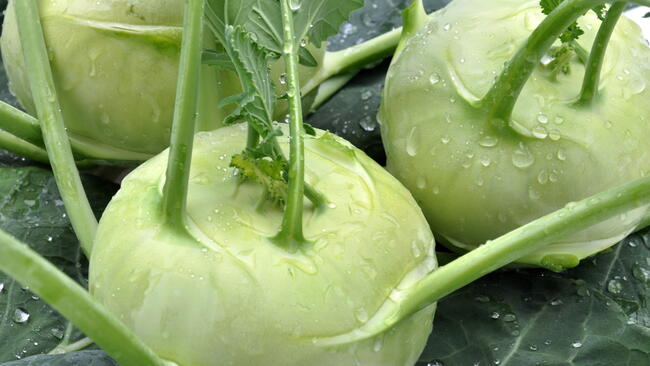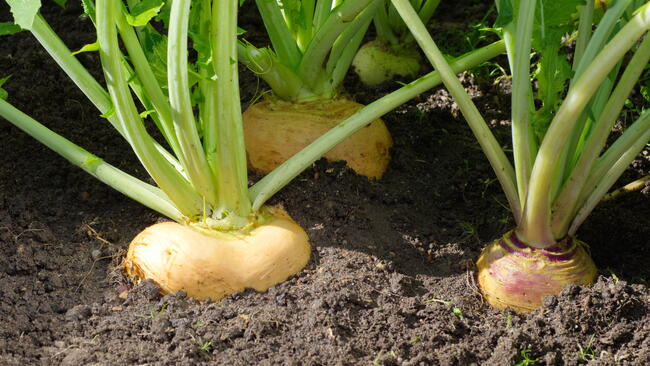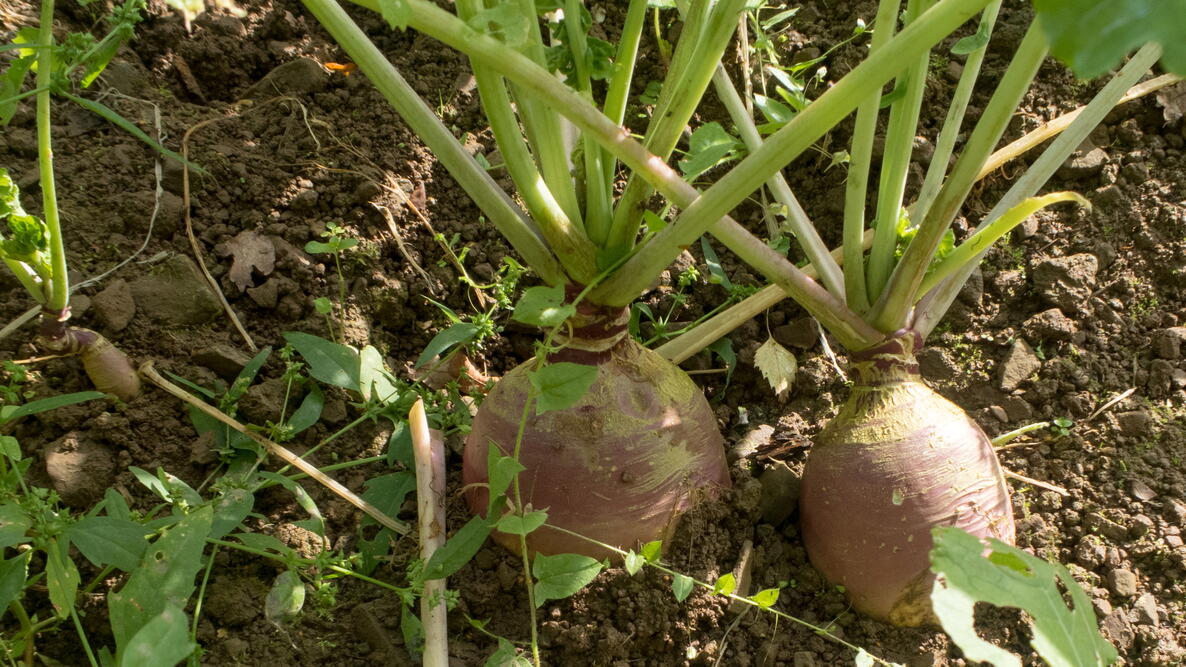
What do you get when a cabbage and a turnip fall in love? A rutabaga, of course! Also known as “swedes” or “neeps” (especially if you’re dining in Scotland), these golden root veggies are the unsung heroes of the fall garden. Bigger, sweeter, and creamier than turnips, rutabagas love cool weather and get even tastier after a nip of frost. Ready to dig in? Let’s turnip the garden fun—with a rutabaga twist!
A biennial root vegetable, rutabagas are usually treated as annual crops, generally planted in midsummer and allowed to mature in the cool weather of fall (or as a winter crop in warmer climates). They make a lovely autumn harvest vegetable after being “kissed” by a fall frost, which brings out a richer flavor.
Rutabagas are often confused with turnips; they’re called “swedes” in Europe and “neeps” in Scotland. To add further confusion, they’re also called “Swedish turnips” or “winter turnips” or “yellow turnips.” They are not turnips, though they are cousins and essentially a cross between a turnip and cabbage.
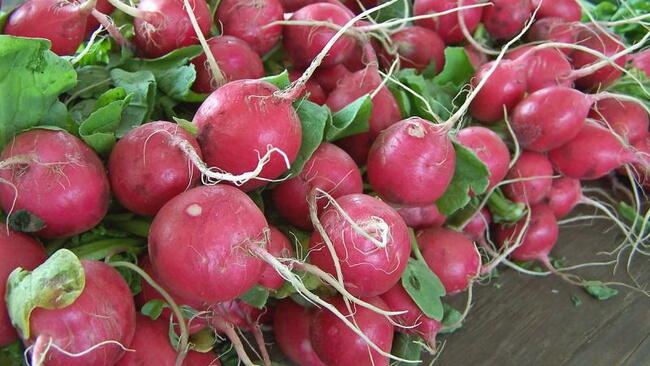
Turnips are much smaller than rutabagas, which are the size of a grapefruit (thanks to their cabbage relation). In addition, turnips have lighter skin and white flesh, whereas the rutabaga has a warmer color and yellow flesh with smooth and waxy blue-green foliage. Finally, there’s the difference in taste. Turnips generally have spicy notes; rutabagas have a mild, sweet flavor with a faint peppery flavor.
Compared to turnips, rutabagas require a few weeks longer to mature. Otherwise, the two vegetables require very similar care in the garden. This is an easy-to-grow root vegetable as long as you follow some of the basic requirements outlined below, namely planting dates and consistent watering.
Comments