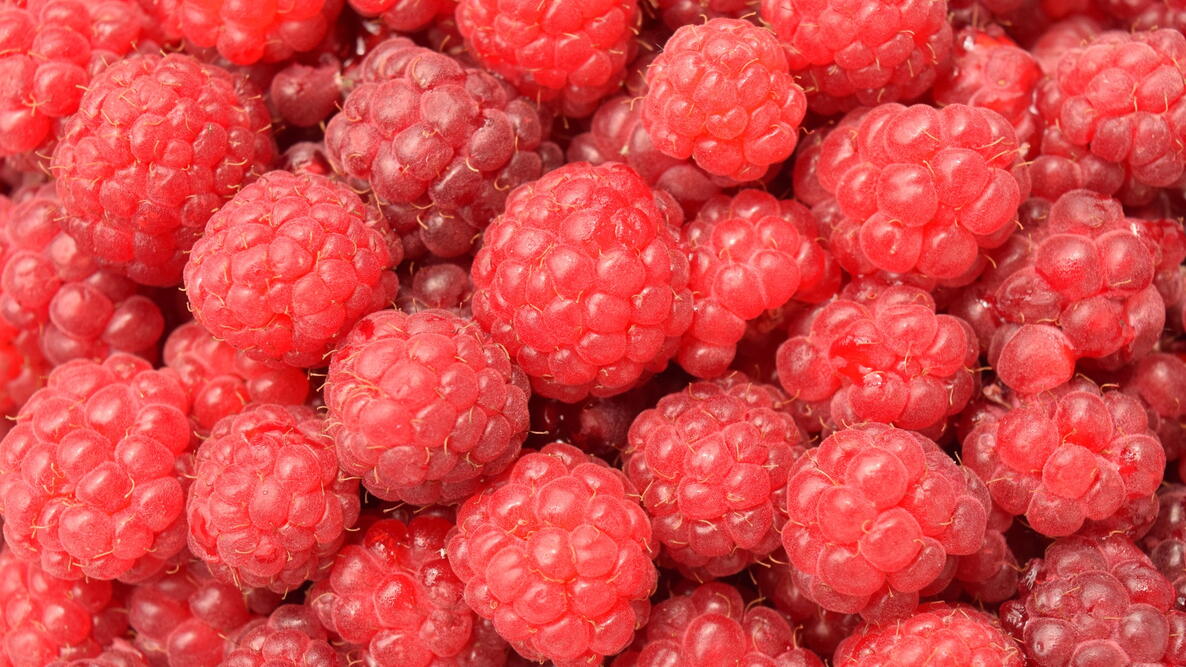
From Backyard to Berry Bowl: Your Complete Raspberry-Growing Guide

Read Next
Planting
Raspberries grow best in a sunny location, but unlike many fruits, they will also grow successfully in a partially shaded spot. However, the more sun, the more fruit!
The planting site should have rich and well-draining soil, great air circulation, and shelter from the wind. Avoid a wet and windy area, as raspberries do not like to stand in water or totally dry out.
Every year, feed your raspberry plants with a couple of inches of compost or aged manure; dig it into the soil a couple of weeks before planting (A good rate is about 3 1/2 cubic feet of compost per 100 square feet).
Plant your berries far from wild-growing berries. Otherwise, you risk spreading wild pests and diseases to your cultivated berry plants.
When to Plant Raspberries
- Start with one-year-old raspberry canes from a reputable nursery. Plant the early spring once the ground thaws out and can be worked (See your local frost dates).
- In mild areas, you could also plant in late autumn to give the plants a head start.
- Plant potted transplants in the spring after the threat of frost has passed.
How to Plant Raspberries
- Before planting, soak the roots for an hour or two.
- Dig a hole that is roomy enough for the roots to spread. If you’re planting multiple bushes, it’s easiest to dig a trench.
- Whether you’re planting bare-root or potted plants, keep the crown of the plant 1 or 2 inches above the ground.
- Canes should be spaced 18 inches apart, with about 4 feet between rows.
- Fill the soil back in, and tamp it down with your foot.
- Once the canes are planted, cut them down to 9 inches tall to encourage new growth. (Yes, it will look like a broken branch sticking out of the ground!)
- Depending on your plant variety, you may need to fashion a support to hold up canes. Many grow to head height.
- A trellis or a fence are good options. If you have a row, drive in two 6-foot posts at the end of the row and stretch galvanized wire between the posts. Summer-fruiting raspberries need three horizontal wires, and the fall types could do with two wires.
Check out this video to learn how to plant raspberries.
Growing
- Mulching is important throughout the season to conserve moisture and suffocate weeds. Keep a thick layer of mulch surrounding plants at all times.
- Water 1 inch per week from spring until after harvest. Regular watering is better than infrequent deep soaking.
- Keep your raspberry bushes tidy by digging up any “suckers” or canes that grow well away from the rows; if you don’t dig them up, they’ll draw nutrients away, and you’ll have fewer berries next year.
- If you wish, you can replant the suckers, and you’ll have new plants! Dig them up, set them in a fresh area of prepared ground, and water them after planting.
How to Prune Raspberries
Prune summer-fruiting raspberries immediately after you’re done picking! Cut only the canes that produced berries back down to the ground.
(Remember, this plant produces berries on two-year-old canes while one-year-old canes grow right beside them. You shouldn’t have trouble telling which is which: the older canes have brown stems, and the young ones are still green. Prune only the older ones, the ones that have finished their fruitful year.)
Tie the remaining canes to the supporting wires with garden string. There should not be any more than one cane every four inches of wire, so cut down additional canes.
Ever-bearing or fall-bearing raspberries
- This is easy. Just cut all canes back to the ground in late winter before growth begins in the spring. They give fruit on canes that are in their first year of growth, after which there is no reason to keep them. Mow them to the ground or use pruning shears for a small patch.
- Clean up all debris—diseases and pests overwinter.
- Pruning is only required during the growing season if you want to keep a uniform order. Dig or pull up new canes that grow well away from the rows. If your raspberry canes are disease-free you can transplant them to raise more plants.
Note: The above assumes you are harvesting a fall crop. To get both fall and following summer crop, do not remove the primocanes that produced the fall crop. Prune them back in spring to about 12 inches above the support, or to the last visible node that had fruit, cutting off the dead tips.

Types
There are many, many raspberry varieties available today—and each one is unique! Ask your local garden center or cooperative extension service which raspberry varieties are best suited for your area. Here are a few to get you started:
- ‘Canby’: red berries; summer-bearing; nearly thornless; recommended for New England, Upper Great Lakes, and Northwest
- ‘Heritage’: red berries; ever-bearing; recommended for the Mid-Atlantic and Ohio Valley
- ‘Plainsman’: red berries; ever-bearing; does well in higher altitudes (the Rockies and High Plains)
- ‘Fallgold’: yellow berries; ever-bearing; recommended for the Upper Midwest and Canada
- ‘Double Gold’: yellow berries tinged with peach; ever-bearing; better for warmer areas, as the fall crop can be quite late
- ‘Royalty’: purple berries; summer-bearing; better for warmer areas
- ‘Jewel’: black berries; summer-bearing; disease-resistant, and great for warmer areas
- ‘Black Hawk’: black berries; summer-bearing; heat and drought tolerant
Tired of raspberries? Try your hand at growing blackberries, blueberries, or strawberries instead!
Harvesting
- All varieties will begin to produce fruit in their second season. In some cases, ever-bearers may bear small berries in their first autumn.
- In early summer, berries will ripen over about 2 weeks. You will need to pick berries every couple of days!
- Try to harvest berries on a sunny day when they are dry.
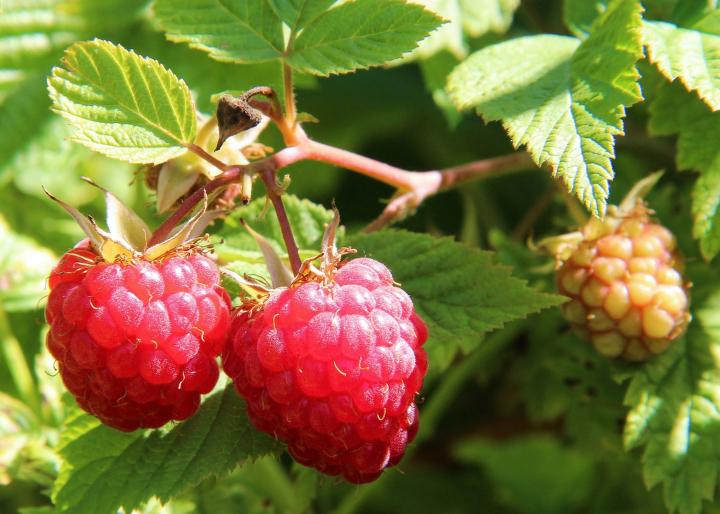
- Gently pull raspberries away from their central plug once they’re richly colored all over. They should come away easily. Don’t tug too hard on your raspberries when picking. A ripe raspberry will leave the vine willingly.
How to Store Raspberries
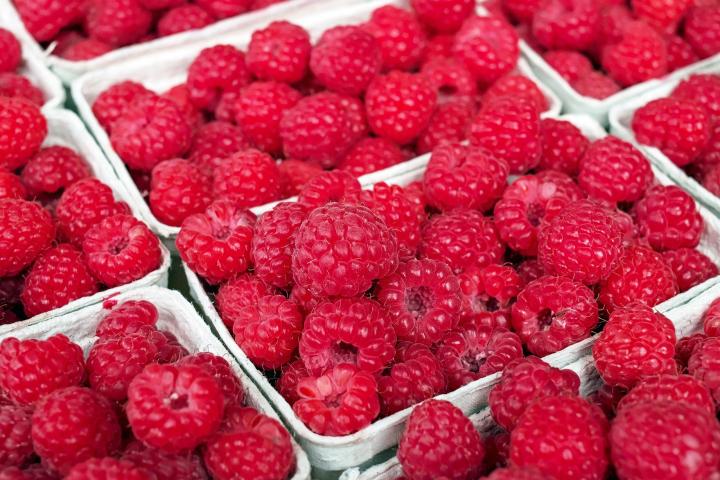
- Raspberries won’t keep for long, so enjoy them soon after picking them!
- They can be kept refrigerated for about five days. Don’t wash the berries after picking unless you’re going to eat them straight away. They will grow moldy and mushy if not kept dry in storage. If you do need to wash them, let them air dry completely before storing them.
- Raspberries can be frozen! As with freezing blueberries, make a single layer of berries on a cookie sheet. When frozen, place into airtight bags. Use on waffles, in cereal, or whenever you need a refreshing, healthy snack!
Gardening Products
Cooking Notes
Fresh raspberries are wonderful in cereals or paired with a dollop of Greek-style yogurt or cream and an indulgent drizzle of maple syrup.
Freeze excess berries to use in smoothies and desserts, or make them into raspberry jam.
If the fruit is to be made into preserves, it should be done with fruit that’s as fresh as possible.

More Like This



Hi, Montana Ann,
We can't comment on your zone; it sounds like a micro/combination. We looked at Gurney's listings for these plants and there seems to be little difference between them: the spread varies a bit, the color is white or gold, and the form is two upright, one arching. Contact the source to be sure, but it would seem like they can live together. The question might be can you live with them: You might not be able to tell the difference (aside from the fruit color) after a few years as they spread.
Note that they would like room to roam from 4 to 6 feet, according to Gurney's description. The juniper being "immediately to the west" may be too close. You might ask Gurney's this question, too.
All require full sun to partial shade; that's 6 to 8 hours of sun per day.
The holes should be prepared with well-drained, loamy, sandy, high-organic matter. One to 2 inches of water per week, dripped as described, should be good (avoid wetting the leaves), depending on local rainfall. And avoid a windswept site, as that can have a drying effect.
Hi, Jeff,
The best time to prune raspberries is in the fall. Just get these planted where they have plenty of good organic soil, sunshine, and room to grow. (They are the kind of plants to sleep the first year, then creep, then leap.) You probably will not get berries this year; these canes will be settling in. But maybe next year!
Nothing like homegrown berries!
It's hard to tell exactly what this might be; anthracnose comes to mind. That's a fungus that is common to raspberries (it's nothing you did) and spreads to other canes. Are the canes also drying/turning brown? Perhaps you can take one to a local nursery. Infected plants should be cut out; removed. You could let up on the fertilizer; water the ground, not the leaves; and see how they go.
In future, to avoid it again, keep a good air circulation between plants.
And, with good organic soil with a pH of 5.6 to 6.2, fertilizer should not be necessary.
We hope this helps.
There are several varieties of raspberries that do well in Ontario. See this fact sheet for suggestions:
http://www.omafra.gov.on.ca/english/crops/facts/99-033.htm
Shalena, You can find your zone here: http://www.almanac.com/content/plant-hardiness-zones. Philadelphia is in the pale greens to yellow zone—right about where zones 6 and 7 blend.
Raspberries usually grow in the ground, and spread by sending out runners.
Container raspberries are new on the market. One appears in the 2014 Almanac, on page 14. It's called 'Raspberry Shortcake', and it's a thornless dwarf. Is that what you have?
If not, you should plant your raspberry in the ground, rather than a pot.
Save the moisture control for something else in the pot. How about tomatoes or peas or beans or a few of each—depending on the size of the pot. You can find growing information about all of those and more at http://www.almanac.com/gardening.
- « Previous
- 1
- 2
- …
- 10
- Next »

Comments