
Plant, grow, and harvest broccoli with ease for tasty, nutritious results

Read Next
Planting
Broccoli should be planted in a site that gets full sun (6 to 8 hours of sunlight per day). Lack of sunlight may produce thin, leggy plants and subpar heads. Soil should be well-draining and fertile. Use raised beds if you can’t adjust sandy or clay soil. To increase fertility before you plant, work in 2 to 4 inches of rich compost (humus) or a thin layer of manure in early spring. The soil pH should ideally be slightly acidic, between 6.0 and 7.0.
When to Plant Broccoli
We recommend planting transplants (start plants) or seeding indoors
- For a spring crop, transplant 2 to 3 weeks before your last spring frost date, once soil temperatures reach 40°F (4°C), but warmer soil is preferred and will greatly speed up development. Consult our Planting Calendar to see recommended dates for your area.
- If you are starting seeds indoors, start 6 to 8 weeks before your last frost date.
If you plant a fall crop, we would still recommend transplanting. Direct seeding in hot weather isn’t good for cole crops.
- Start seeds 6 to 8 weeks before the first fall frost date, and transplants go into the ground 4 to 6 weeks later.
How to Plant Broccoli
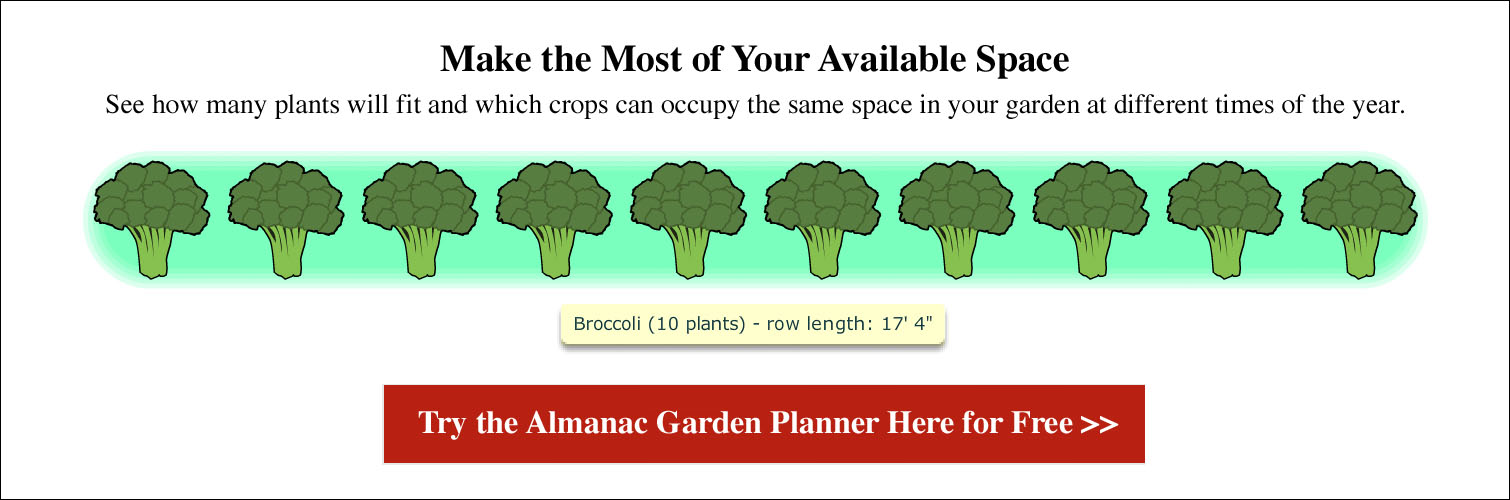
- Plant transplants that are 4 to 6 weeks old (and have 4 or 5 leaves) outdoors, 12 to 20 inches apart, in holes slightly deeper than their container depth.
- Space rows of broccoli 3 feet apart. (Closer spacing yields smaller main heads but more secondary heads.)
- Water well at the time of planting.
Video Demo of Sowing Broccoli
For those who wish to start sowing in pots, watch Ben in this video show you how it’s done! See the whole process from sowing to transplanting to broccoli care and harvesting.
Growing
- Plants thrive in temperatures between 65° and 70°F (18° and 21°C).
- Fertilize broccoli three weeks after transplanting seedlings into the garden. Use a low-nitrogen fertilizer, such as a 5-10-10 formula.
- Thin when young plants reach 2 to 3 inches tall. Plants should be between 12 and 20 inches apart.
- Provide consistent soil moisture with regular watering, especially in drought conditions. Water at least 1 to 1 1/2 inches per week.
- Do not get developing broccoli heads wet when watering, as it can encourage rot.
- Roots are very shallow, so try not to disturb the plants—suffocate weeds with mulch instead of weeding.
- Mulching around plants will also help to keep soil temperatures down.
- Use row covers to minimize pests.
- To promote the growth of a second head after the first has been harvested, maintain an active feeding and watering schedule.
Types
- ‘Calabrese’ is an heirloom broccoli (from Italy) with large heads and prolific side shoots that will mature for harvesting. Great for fall planting, too.
- ‘Flash’ is a fast-growing, heat-resistant hybrid with good side-shoot production once the central head is cut. Great for fall planting, too.
- ‘Green Goliath’ is heat-tolerant with giant heads and prolific side shoots.
- ‘Green Duke’ is heat tolerant and an early variety that’s especially good for Southern gardeners.
- ‘Green Magic’ is heat tolerant; freezes well.
- ‘Paragon’ has extra-long spears; excellent for freezing.
Harvesting
- Harvest broccoli in the morning, when the buds of the head are firm and tight, just before the heads flower.
- If you do see yellow petals, harvest immediately, as the quality will decrease rapidly.
- Cut heads from the plant, taking at least 6 inches of stem. Make a slanted cut on the stalk to allow water to slide away. (Water can pool and rot the center of a flat-cut stalk, ruining the secondary heads.)
- Most varieties have side-shoots that will continue to develop after the main head is harvested. You can harvest from one plant for many weeks, in some cases, from spring to fall, if your summer isn’t too hot.
- Learn more tips on harvesting broccoli.
How to Store Broccoli
- Store broccoli in the refrigerator for up to 5 days.
- If you wash before storing, make sure to dry it thoroughly.
- Broccoli can be blanched and frozen for up to one year. Learn how to freeze broccoli.
Gardening Products
Cooking Notes
One ounce of broccoli has an equal amount of calcium as one ounce of milk. Learn more about the amazing health benefits of broccoli.
More Like This




- « Previous
- 1
- 2
- …
- 10
- Next »

Comments