
Planting, Growing, and Harvesting Chive Plants

Read Next
Planting
Chives grow best in full sun, though they will tolerate light shade. Ideally, the soil should be moist, fertile, and well-draining. Before planting, incorporate 4 to 6 inches of well-composted organic matter. Work compost into the soil to a depth of 6 to 8 inches. (Read more about soil amendments and preparing the soil for planting.)
When to Plant Chives
- Chives are considered a cool-season crop, meaning they grow best in the spring and fall. The harsher temperatures of summer usually cause them to go dormant until cool weather arrives again.
- For a head start in colder regions, start chive seeds indoors 6 to 8 weeks before the last spring frost. (See local frost dates.) Transplants need good growth before being set in the garden.
- Outdoors, sow seeds as soon as the soil is workable in the spring. They can take a few weeks to germinate, so don’t panic! For the best germination and growth, the temperature of the soil should be between 60º and 70ºF (15º and 21ºC).
- Plant transplants outdoors once the threat of frost has passed.
How to Plant Chives
- Sow seeds about 2 inches apart and no more than ¼ inch deep. Cover with a thin layer of soil.
- Once seedlings emerge, thin them so that plants are spaced between 4 to 6 inches apart in all directions.
Types
The two species of chives commonly grown in home gardens are common chives (Allium schoenoprasum) and garlic chives (A. tuberosum):
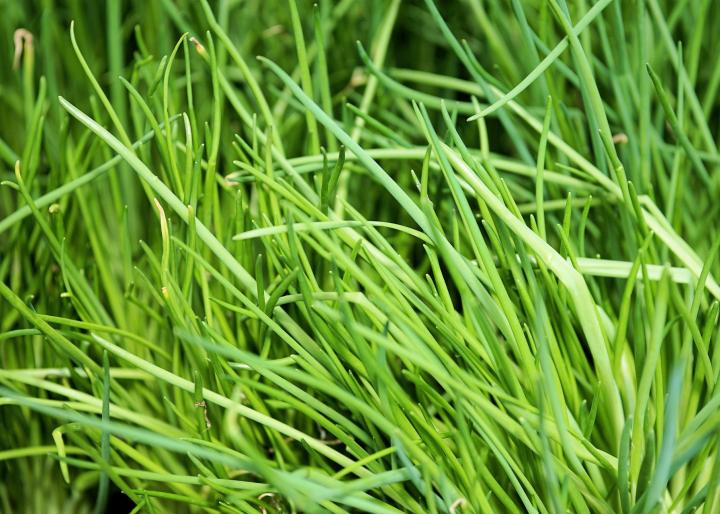
- Common chives consist of clumps of small, slender bulbs that produce thin, tubular, blue-green leaves reaching 10-15 inches in height. The edible, flavorful flowers may be white, pink, purple, or red, depending on the variety. They can be grown in Zones 3 to 9.
- Garlic chives (also called Chinese chives) look similar to common chives, but their leaves are flatter, greener, and get to be about 20 inches in height. As their name suggests, their leaves have a mild garlic flavor (bulbs are more intense). Flowers are white, and are larger and less densely clustered than those of common chives. Garlic chives are not quite as cold-hardy as common chives, so they are recommended for Zones 4 to 9.
Harvesting
How to Harvest Chives
- Begin harvesting chive leaves about 30 days after you transplant or 60 days after seeding.
- Be sure to cut the leaves down to the base when harvesting (within 1 to 2 inches of the soil).
- Harvest 3 to 4 times during the first year. In subsequent years, cut plants back monthly.
- The chive plant will flower in late spring or early summer. The flowers are edible and taste best just after they have opened—they should look full and bright.

How to Store Chives
- Use chives when they’re fresh or frozen (freeze the leaves in an airtight bag). Dried chives lose their flavor.
- Store chives in a cool place in a resealable container.
Gardening Products

More Like This



You certainly can. Each bulb produces a cluster of leaves. Just wait until the leaves are at least 6 inches tall, then you can harvest the outside leaves of the clump, leaving about 2 inches of leaf at the base, which helps the plant to regrow during the season. You can harvest a few times during a season; avoid older, yellowing leaves. Flowers may take as long as July to appear; the flowers themselves are edible, but the flower stalk is sort of woody, so should be discarded. If you won't be eating the flowers, cut the flower stalk off at the base once the flowers have finished blooming but before they go to seed (or, if you don't mind not having flowers, cut the flower stalk as soon as you see one start to develop).
I would like to start growing chives. i have a 3 x 2 container 3x2 with drainage, using corn gluten as my fertilizer. I am not worried about the spread of seeds if they will do battle with the goatweed and other weeds in my flower garden. Does this scenerio seem plausible? Thank you.
The container sounds fine--place it in full sun, and keep up with the watering (chives like good drainage, but don't like to be dry for long periods). If you live in a cold climate and want the chives to survive the winter, you'll need to bring the container inside in fall--place in an unheated area, such as a garage. Check the instructions on your brand of corn gluten--this acts also as a pre-emergent herbicide, and it is recommended usually that you don't apply it until after your plant seeds have germinated. If you are using chive transplants, they won't be affected. Corn gluten meal on its own has only nitrogen (about 9-0-0); some products will also have other things, like kelp, added which adds a little phosphorus and potassium. It's recommended not to over-fertilize chives, or it will make the flavor less intense.
All parts of chives are edible. The little bulb underground is used as a mild onion, and can be added to soups, omelets, etc. The leaves are tossed in soups and salads, or sprinkled on potatoes or cottage cheese/cracker appetizers. The flower is also separated into petals and scattered over salads. The flower stalk is edible, but not very tasty once the flower blooms--but you can still cut it up for salads if you'd like.
In terms of companion planting, chives are generally fine with most plants. Plant next to carrots and/or roses to repel aphids, mites, and nematodes.
- « Previous
- 1
- 2
- …
- 10
- Next »

Comments