
Big Leaves, Big Personality—Hostas Are the Superstars of the Shade!

Read Next
Planting
Hostas’ large leaves do not lend themselves well to full sun; they do best in partial sun or dappled shade but will grow in deep shade, too. Once established, they can take the summer heat and withstand mild droughts.
Hostas prefer soil that is well-draining and fertile (amend the soil with compost or rotted manure if your soil is poor). They do not like to sit in wet soil, so plant in a raised area or where the soil doesn’t stay saturated (especially in winter). Ideally, the soil should have a pH between slightly acidic and neutral (6.5 to 7.0), although hostas are forgiving.
When to Plant Hostas
- Buy hostas as dormant, bare-root divisions or potted plants and plant them in the spring or fall.
- Hostas can be planted during the summer growing season but will need extra attention (mostly watering) to ensure that they do not succumb to the heat of summer.
How to Plant Hostas
- Dig a hole that’s about twice the width and depth of the root ball of the plant. Loosening the soil in the planting area will benefit the hosta’s roots as they expand outward.
- If planting multiple hostas, space them out according to their expected size at maturity. Hostas are adept at filling empty spaces!
- Set the plants in the hole so that the crown (base) of the plant is even with the surrounding soil and any emerging leaf tips are visible at the soil surface.
- If buying potted hostas, plant them at the same soil level as in the pot.
- Gently dampen the soil around the plants and water until the soil is moist to settle the roots.
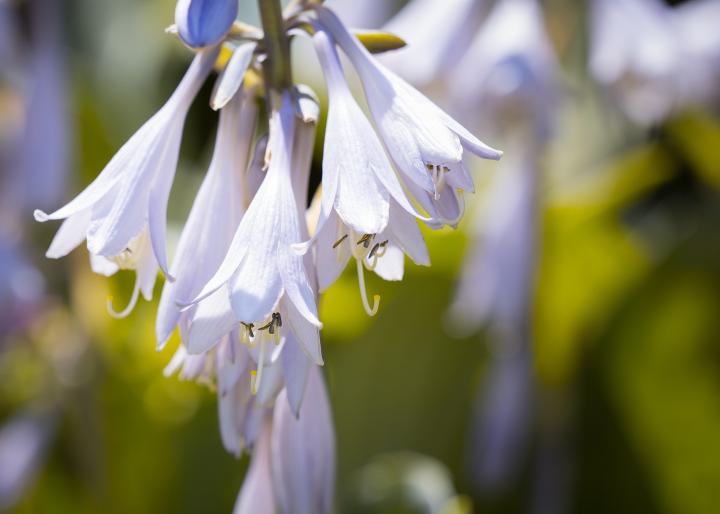
Types
Once you start exploring hostas, you’ll find they get rather addictive! From 4-inch miniature hostas to 6-foot-wide giant hostas, there’s a hosta variety to fit any situation from large borders to tiny rock gardens. Here are just a few:
- H. fortunei ‘Aureomarginata’: Deep-green oval leaves accented by a golden edge.
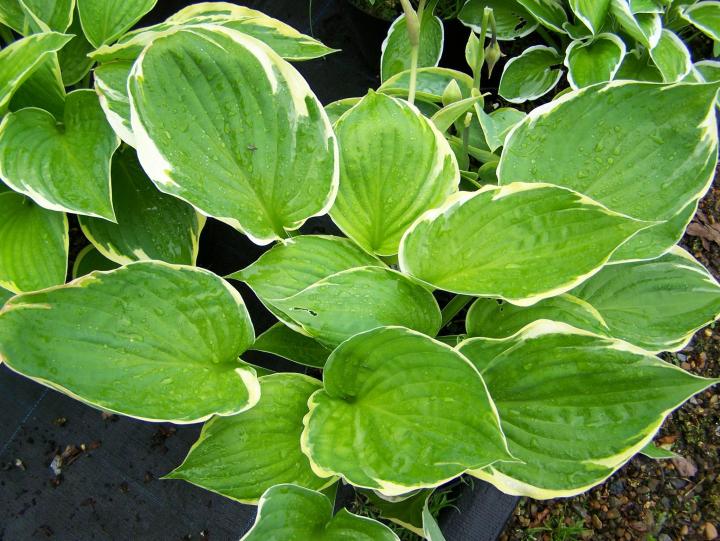
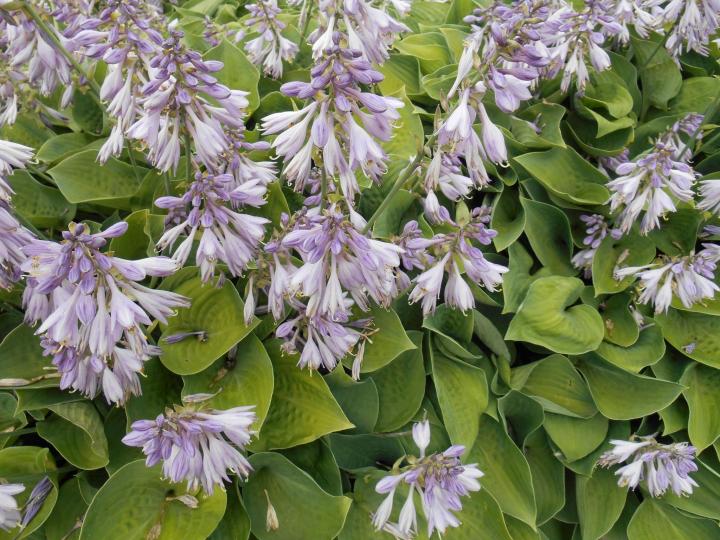
- H. x ‘Blue Cadet’: A small hosta with heart-shaped, bluish leaves. It makes for a nice edging plant. In mid-summer it blooms with mauve-blue flowers.
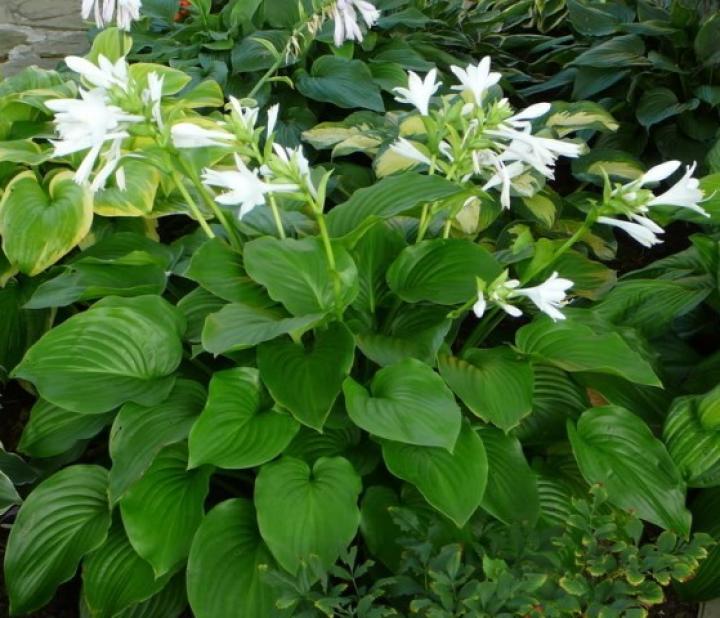
- For sunnier spots, select plants from the Hosta plantaginea group. These plants also tend to have fragrant flowers in late summer. ‘August Moon’, ‘Honeybells’, and ‘Sum and Substance’ are a few of the varieties in this category.
Gardening Products

More Like This



Show the plants some love—tough love—and leave them alone. As fairly hardy perennials they should survive; the brief spring chill was a shock and they suffered a set back. When the weather warms they should get back into their growth cycle. When they appear to be back to normal you could gently trim off some of the most faded foliage or just leave them alone.
Well, is this when they are due to come up? You give no clue to your location, and we can tell you that hostas are still in hiding in many parts of New England. Check the variety/type, if you know, and Google it or ask the folks/nursery from whom you bought it about its timing. If it does not appear at all, it could be that slugs got it . . . but don't give up on it yet.
Hard to know exactly from your description, but if the eyes are missing more or less from the center, it could be crown rot. Not pretty but not unusual; in fact, natural. Hostas put on growth on the outside of their clump each year and dead growth accumulates in the center. Dig up the crown, roots and all, and cut out or cut away from the dead center. (This amounts to dividing the plant.) You can replant each smaller plant—or give away a few.
See above for your answer, Coyne
Hello, Miami! Thank you for your enthusiasm for the Almanac! Many plants, most hostas included, require a winter dormancy period. For most hostas, that minimum 30 days at temps below 43°F. (The need is genetic, so specific to the species.) A few species have lower requirements; these include Hosta clausa, Hosta gracillima, Hosta kikutii, Hosta longipes, Hosta montana (southern forms), Hosta nakaiana, Hosta plantaginea, Hosta rupifraga, Hosta sieboldii,Hosta ventricosa, Hosta venusta, and Hosta yingeri (thanks to plantdelights.com). However, these may fail to thrive and eventually deteriorate.
Your best bet is to visit a nursery in the area and ask them for recommendations. They would be most familiar with the conditions and so knowledgable about the options.
- « Previous
- 1
- 2
- …
- 10
- Next »

Comments