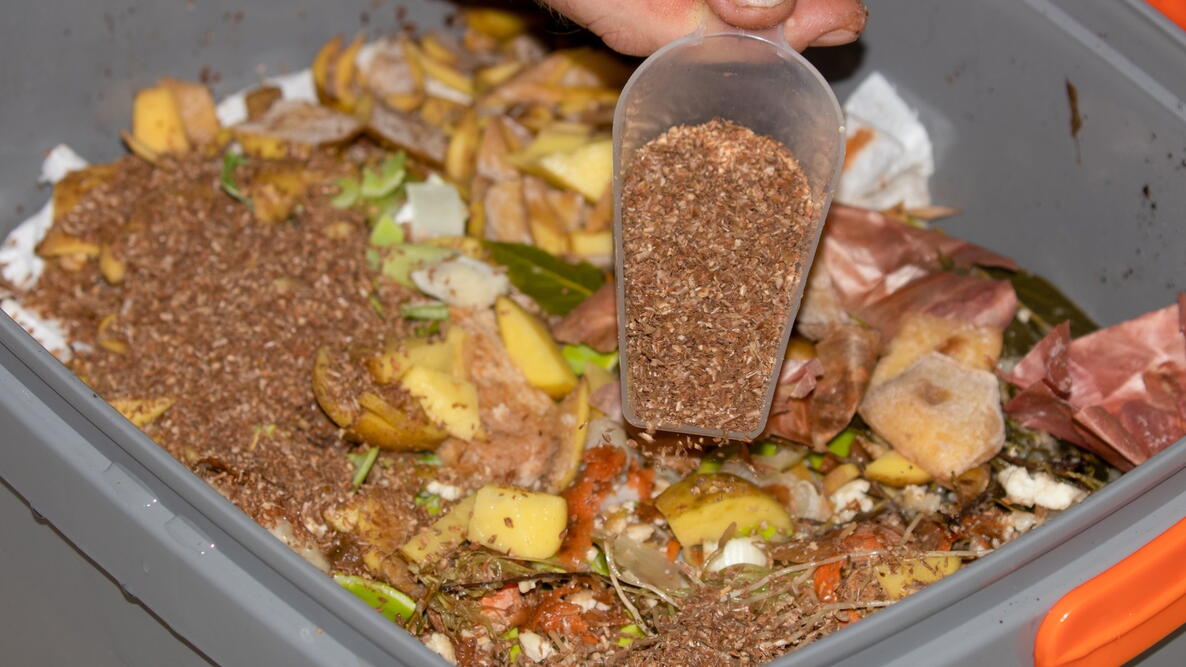

Bokashi composting is a fast, low-odor method of turning kitchen scraps into nutrient-rich compost. Unlike traditional composting, the bokashi method can handle meat, dairy, cooked food, and citrus while taking up very little space.
What is Bokashi Composting?
Bokashi composting isn’t technically traditional composting because it ferments organic material instead of composting. It uses an anaerobic method, which means without any oxygen. It is a different process than aerobic composting.
Kitchen scraps, including meat, citrus, dairy, and cooked food, can be added to the bokashi composter in layers with a required material called bran. Bokashi bran isn’t the bran you were forced to eat as a kid. It mixes bacteria and yeast, breaks down food with little odor, has a faster turnover time, and takes up very little space. You can’t do bokashi without the bran.
Bokashi composting is a great solution for folks who can’t have a regular compost pile or system due to space or other restrictions. It is faster than all but the most intensive regular composting methods and can significantly reduce food waste going into landfills.
Of note, while you could probably try to bokashi other materials, its main purpose is for kitchen scraps.

Bokashi Composting vs. Traditional Composting
The beginning and end results are the same as those of normal composting. However, while we avoid meat, dairy, cooked food, and citrus in regular composting, those are fair game with bokashi composting.
While hot composting takes a few months, and cold composting can take over a year, bokashi composting is often finished in about 4 to 6 weeks. However, cold composting, aka tossing it all on a pile and maybe hitting it with the hose now and then during dry weather, is as easy as it gets. Hot composting by turning the pile, tracking greens and browns, adding airflow, and monitoring temperature is for compost fanatics. Bokashi is kind of right down the middle.
The downside to bokashi composting is that equipment is required, and a consumable product, the bran, must be purchased or generated DIY. It isn’t free. And, as you’ll see below, the bokashi product still needs to be buried to finish decomposing. It doesn’t come out of the bin as ready-to-use compost.
| Feature | Bokashi Composting | Traditional Composting |
|---|---|---|
| Oxygen Required | No | Yes |
| Handles Meat and Dairy | Yes | Usually No |
| Odor | Minimal | Low to Moderate |
| Space Needed | Small | Moderate to Large |
| Time Required | 4–6 weeks | Months |
| Requires Equipment | Yes | Optional |
Benefits of Bokashi Composting
Bokashi composting is excellent for reducing food waste that goes to landfills and creating fast compost for the garden. While more involved than regular pile-and-forget-it composting, it is also fairly simple, and you’ll quickly get in the habit.
In my opinion, one of the two best benefits of the bokashi system is the ability to compost cooked food and meat products—which I can’t ordinarily do because of critters in my area. The large furry ones look just like black bears, and smaller raccoon-like animals act just like raccoons, only more clever.
The second excellent benefit is the ability for folks who don’t have a regular compost pile to compost their kitchen waste. People renting a home, living in an apartment, or road-tripping in an RV life can compost and create nourishing soil amendments for themselves, their gardening friends, and their houseplants—or give to trees as they travel down the road.

What Can You Put in a Bokashi Bin?
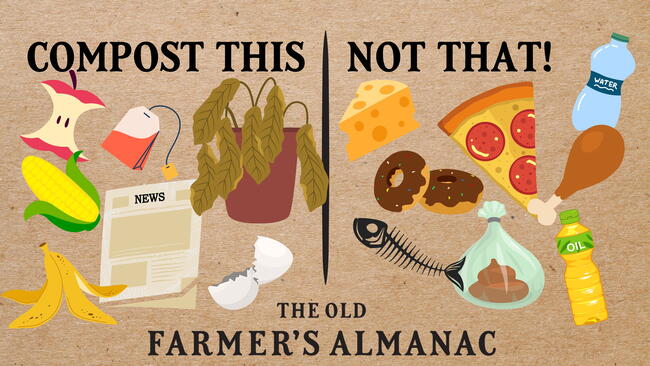
Foods You Can Compost
- Fruits and vegetables
- Meat
- Dairy
- Cooked foods
- Bread and grains
What Not to Put in a Bokashi Bin
- Oils and grease
- Rotten food
- Compostable plastics
How to Bokashi Compost Step-by-Step
You’ll need a suitable bucket or tub and some bran to start your bokashi composting journey. While you can DIY a bucket with a spigot, strainer plate, and airtight lid, you may wish to buy a complete kit for your first attempt to minimize potential issues while learning. Many people use a two-bin system, and the second bin could certainly be a DIY creation once you are familiar with the process.
The same idea applies to the “bran.” Start with a commercially prepared product you know has the right ingredients, and then graduate to making your inoculant once you’ve had some success and generated some enthusiasm.
- Collect food scraps, including meat, veggies, dairy, and cooked food. If you ate it, could eat it, or should have eaten it, but it got away from you in the fridge, you can put it in the bokashi composter. Do not put in used grease, oil, or anything already rotten beyond recognition. “Compostable” plastic bags are also a no-go.
- Chop up the scraps into 1- to 2-inch pieces.
- Add a thin layer of bran to the bottom of the bin, then add the food scraps you collected and smash them down. Remember, this system doesn’t need oxygen and should be airtight. Toss another tablespoon or two of bran on top.
- Keep layering the bin with bran and kitchen scraps until it is full, like building a layer cake. Remember to smash it down a bit to get the air out. It’s okay if this takes a week or two.
- Seal the airtight lid and set it in a warm spot.
- Drain the liquid from the bottom using the spigot for a couple of days. The collected liquid can be diluted at about 100:1 for use as a plant fertilizer or disposed of.
- In about 2 weeks, the liquid to be drained should slow to a trickle, and the bin should have a faint pickled or fermented odor. It’s time to take it outside.
Dig a hole in your garden or your compost pile and empty the bin’s contents into the hole. They’ll still look recognizable, but they are now predigested and ready for the soil microbes to do their work. Bury the bokashi product and wait about 2 to 3 weeks. Check on it again if you like, and you’ll see it has become a regular compost that is ready to nourish the soil.

Common Bokashi Composting Problems and Solutions
Although the method is simple, it isn’t foolproof. If your bokashi setup isn’t working quite right, check these problems.
- If nothing is happening in the bucket, it may be too cold. The bacteria hard at work do well at room temperature. Setting the bin on the back deck in Pennsylvania in December won’t work.
- Stinky bokashi buckets usually have one of two issues: the lid isn’t sealing and allows air inside, or the bin is filled with only one kind of scrap, say 2 gallons of old spaghetti. Mix it up, make a layer cake with scrap and bran, avoid excess liquid, and keep the lid on tight.
- Not enough or too much moisture can also cause issues. It shouldn’t be kitchen scrap soup, but it shouldn’t be a desert, either. Like a typical compost pile, it should be moist like a wet sponge, maybe a bit wetter.
Another great, and quick way to compost is to make a wormery!
Frequently Asked Questions
How long does bokashi composting take?
Most bokashi composting systems take 4 to 6 weeks from filling the bucket to having material ready for the soil.
Does bokashi compost smell?
A properly functioning bokashi bucket has a slightly sweet or pickled smell. Strong odors usually indicate excess air or too much moisture.
Can you compost meat and dairy with bokashi?
Yes. One of the biggest advantages of bokashi composting is that it can process meat, dairy products, and cooked foods.
Do you need bokashi bran?
Yes. Bokashi bran contains beneficial microbes that drive the fermentation process and is essential for success.
Can bokashi compost be used directly in the garden?
No. The fermented material should be buried in soil or added to a traditional compost pile for another two to three weeks before use.
Bokashi composting is a bit of a cure-all for kitchen waste, but it might not be for everyone. Depending on your household size, you likely will need to graduate to a two-bin system, so one bin is filled while the other is fermenting. The opportunity to compost meat scraps and cooked food can be a boon for those looking to reduce their waste stream, and your garden will surely love it.
For more information, check out Adam Footer’s popular book, Bokashi Composting: Scraps to Soil in Weeks.

More Like This

Hi Natalia,
While I would not go so far as to say that bokashi composting won't attract any attention from animals, I would be comfortable saying it will attract less attention than other sorts of composting because the food scraps are well on their way to fermenting before they are placed outside.
Hi Natalia,
While I would not go so far as to say that bokashi composting won't attract any attention from animals, I would be comfortable saying it will attract less attention than other sorts of composting because the food scraps are well on their way to fermenting before they are placed outside.
Hi Sandy,
In short, bokashi bran is a mix of sugar, water, microbes and bran, that accelerates the composting process through fermentation, breaking waste down into fertilizer and pre-compost. Here are a couple of links, one from our own Garden Planner and one from the Arizona Department of Environmental Quality, that discuss bokashi bran in a bit more detail.
https://gardenplanner.almanac.com/guides/bokashi-composting-cooked-food-waste-for-your-garden/
https://www.azdeq.gov/bokashi-compost-guide
While there are many bokashi brans available commercially, I'd check retailers in your area for local products first. If you'd like to try your hand at creating your own, a quick search will turn up many step-by-step tutorials -- https://www.gardenerspantry.ca/blog/bokashi-composting/ will get you pointed in the right direction.
All best,
Joe Bills
Associate Editor
OFA
Hi Sandy,
Four weeks is ideal, but many composters have had fine results after as little as two weeks. My advice would be to give it as close to four weeks as you can.
All best,
Joe Bills
Associate Edsitor
OFA
- « Previous
- 1
- 2
- …
- 10
- Next »

Comments