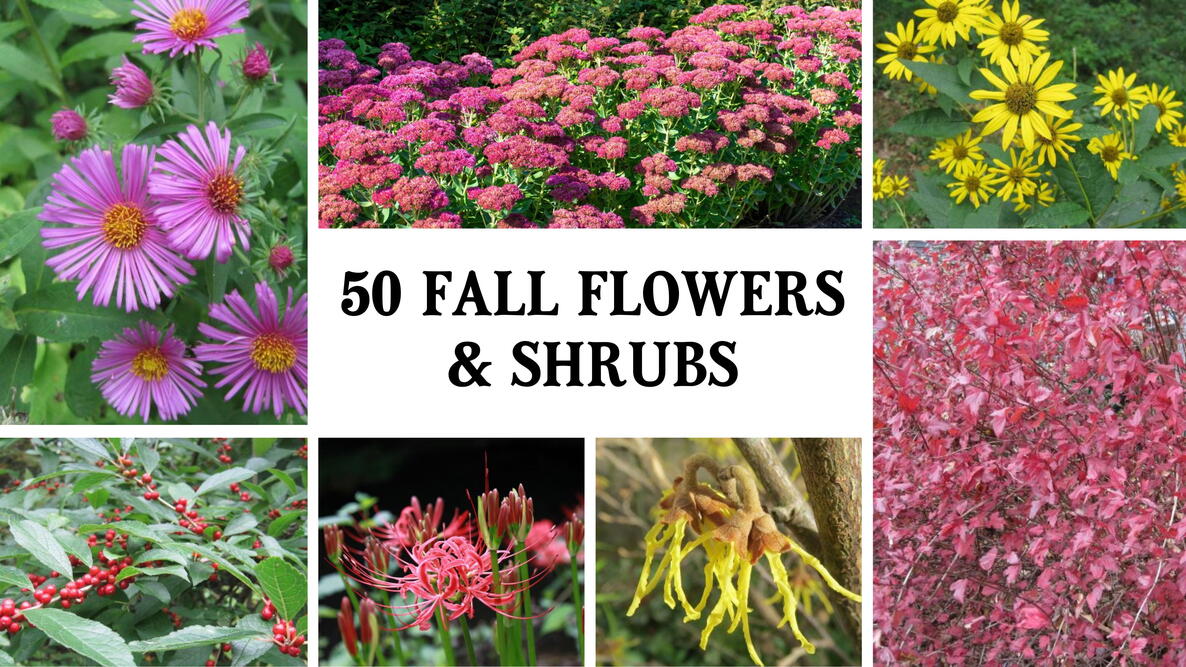

Who says summer has to take all the glory? Just when you think your garden’s show is over, fall blooms crash the party with fiery reds, golds, and purples that steal the spotlight. From surprise lilies popping up like magic to shrubs flaunting their fall fashion, here’s your ultimate guide to 50 plants that keep the color coming well into the crisp days of September and October.
Foxglove that were cut back after flowering this summer are putting out second spikes of bloom. The rugosa rose is still producing blossoms as well.
But we can add an extra season of interest with fall-blooming flowers, colorful shrubs, and other plants that are at their best in the fall. Here are some Almanac picks for spectacular fall color
Annual Flowers
Lots of annuals that can take some cooler temps will still be pumping out the blossoms into fall.
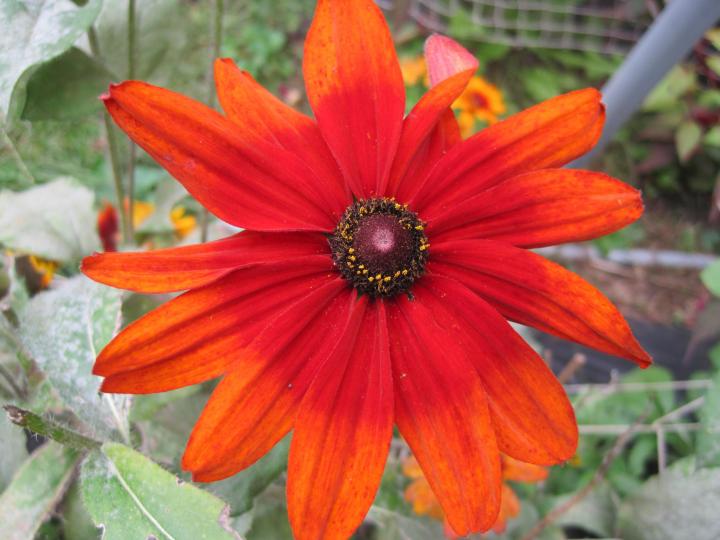
These include nasturtiums, zinnias, calendula, marigolds, and rudbeckias. See our flower growing guides for planting and growing tips.
Perennial Flowers
Fall-blooming perennials often showcase the jewel tones of the season with beautiful reds, golds, and russets.
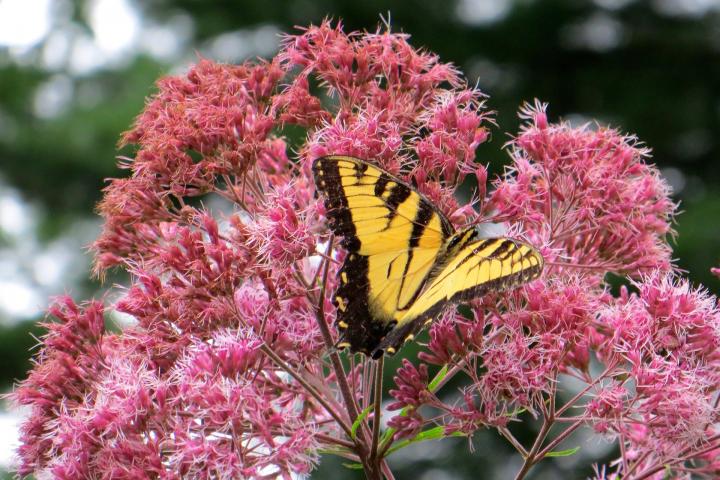
- Joe-Pye weed (Eutrochium purpureum) is a reliable native perennial that blooms from late summer through the first few frosts. The large, purple, clustered flowers grow on plants that can be over 6 feet tall in the right place. Where is that place? Since this plant likes moist soil, many wild ones grow along stream beds and riverbanks in full sun. Pollinators love Joe-Pye weed, so add a couple to the back of your sunny border.
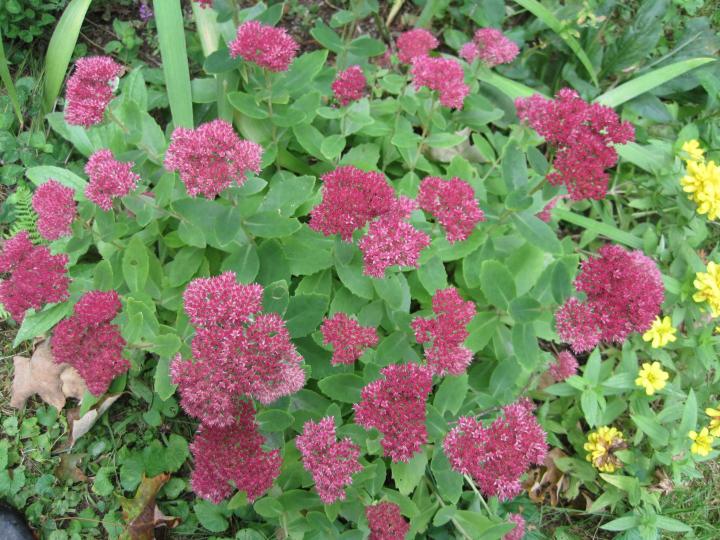
- Hylotelephium (formerly Sedum) ‘Autumn Joy’ is truly a joy this time of year, when deep-pink blooms emerge from its fleshy foliage. ‘Matrona’ is another variety that produces tall stems.
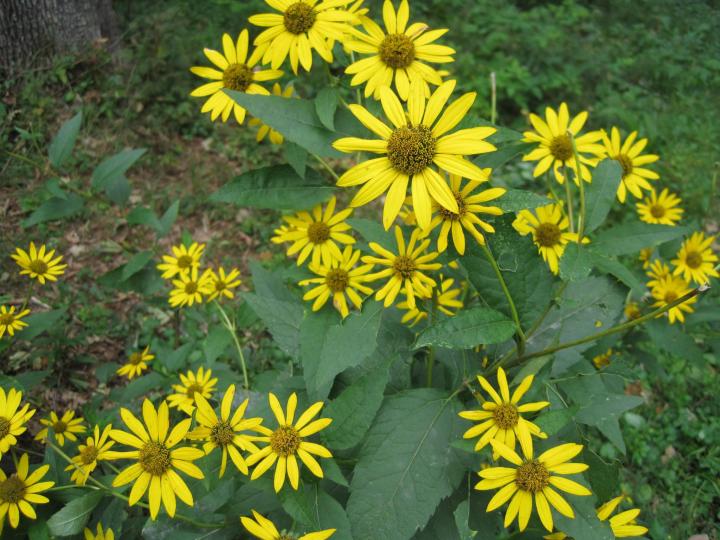
- Yellow heliopsis are in full flower in fall.
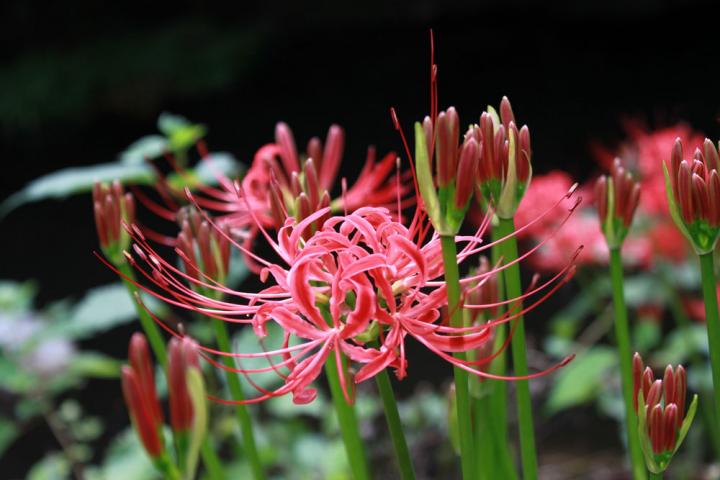
- Surprise lily, Lycoris squamigera, is known by several names, each more revealing than the next. Its genus honors the mistress of the ancient Roman Mark Antony, while it is more commonly called resurrection, surprise, and magic lily because its strap-like foliage appears in spring and dies back in late summer. And just when you think that it has failed you, its flower stem rises between 18 and 24 inches to burst forth with 4 to 7 trumpet-like rose-pink blooms that have exceptional fragrance. (Except for the perfume, the flower brings to mind its cousin, amaryllis.) All of this, and Lycoris asks for little in return—only well-draining soil, full to partial sun, and the climate conditions of Zones 5 to 9.
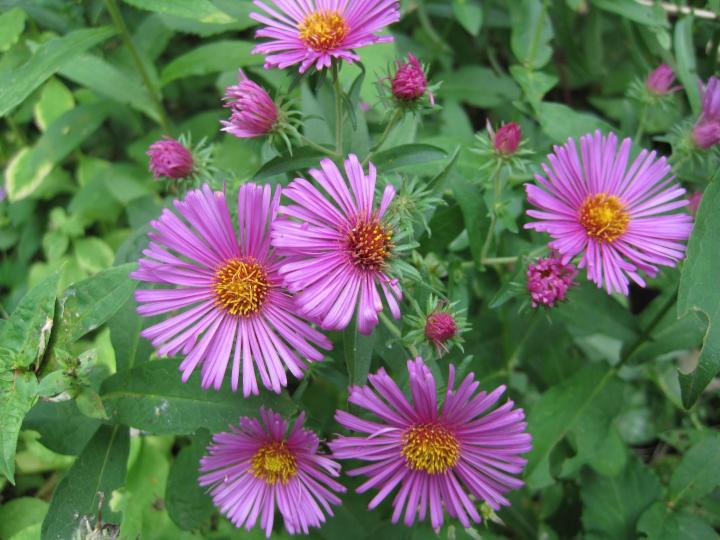
Asters are the queen and king of the fall garden, deserving of several entries. They are easily grown from seed, but this time of year, the garden centers offer a wide range of colors and heights to choose from.
- New England asters; despite their name, they grow throughout the U.S. and Canada. They can get quite tall if not chopped back by half in early summer. That quick pruning encourages them to branch, giving us even more flowers on more manageable-sized plants. They have also had a name change, being moved from the crowded aster family to their own separate genus Symphyotrichum. See the Almanac’s Growing Guide for Asters for growing tips.
- ‘September Ruby’ asters are deep magenta.
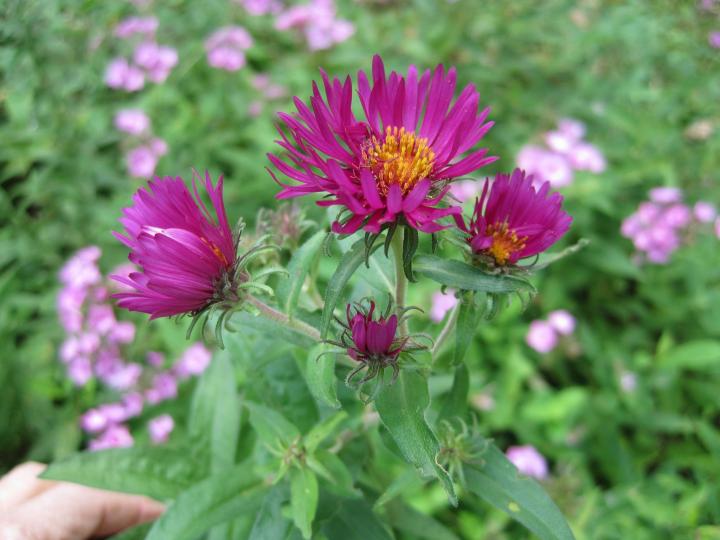
- ‘Alma Potschke’ asters are hot pink.
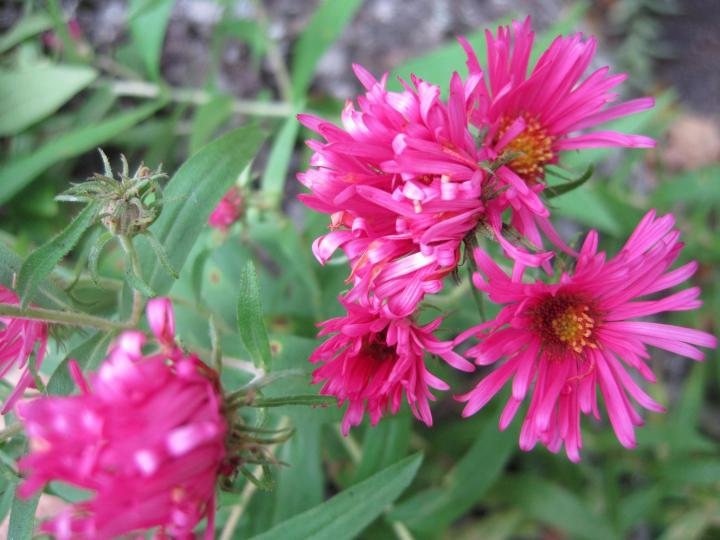
- The white wood aster blooms in the dry shade under my maple trees, but it is so invasive that even though I spend most of the spring and summer trying to rip it out, there is still plenty left to blossom in the fall. It also has a new Latin name: Eurybia divaricata. Divaricata means “spreading” and “straggly.” I can attest to those qualities!

- ‘Snowbank’ false aster, Boltonia asteroides, only sounds chilling; in fact, its billowing profusion of daisy-like flowers with their gold centers spreads sunshine. Evocative of aster (hence its nickname: false aster), coreopsis, and cornflower, this North American native begins to flower in August and continues well into September (the first frost will bring its show to an end). A compact plant, it grows just 3 to 4 feet tall and needs no staking. (Maybe that’s why another name for it is white doll’s daisy.) It’s not fussy about soil conditions (in fact, rich soil can cause it to flop) and will bring years of pleasure in Zones 3 to 10.
Other favorite perennials for fall color include:
- Canadian burnet (Sanguisorba canadensis)
- Blue monkshood (Aconitum carmichaelii)
- Hardy chrysanthemum ‘Venus’, ‘Sheffield’
- Boltonia asteroides ‘Snowbank’
- Black cohosh (aka bugbane) (Cimicifuga racemosa) ‘Hillside Black Beauty’
- Lycoris (Lycoris squamigera)
- Bugbane ‘Hillside Black Beauty’
Vines for Fall Color
Don’t overlook vines, which are a wonderful way to add interest to your garden—they add height, depth, and personality.
Climbers like clematis produce beautiful flowers—sometimes twice a year, depending on the variety. Meanwhile, vines such as English ivy and Virginia creeper offer stunningly colorful foliage.
- ‘Ville de Lyon’ clematis: This climber brings forth spectacular, long-lasting, carmine-red flowers, 4 to 5 inches (or more) across, with yellow stamens for contrast, when maintained in moist but well-draining soils in full sun or partial shade (clematises like to have their heads in the sun and their feet in the shade). It thrives in Zones 4 to 9. Prune to about a foot in height after the final blooms, or wait until spring.
- Clematis ‘Henryi’ produces large white flowers that are 6 to 8 inches across. They tend to bloom in the late spring or early summer, then again in the later summer or early fall.
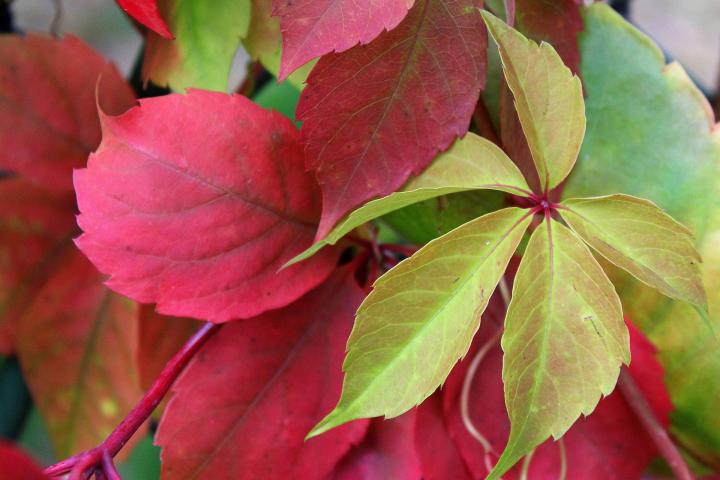
- Virginia creeper (Parthenocissus quinquefolia) is a native vine whose leaves turn a brilliant red in fall. Though not technically invasive, these vines are aggressive growers, so plant with caution!
Fall Shrubs and Trees
Flowerbeds aren’t the only ones producing blooms this time of year. Trees and shrubs can add splashes of color at eye level and above.
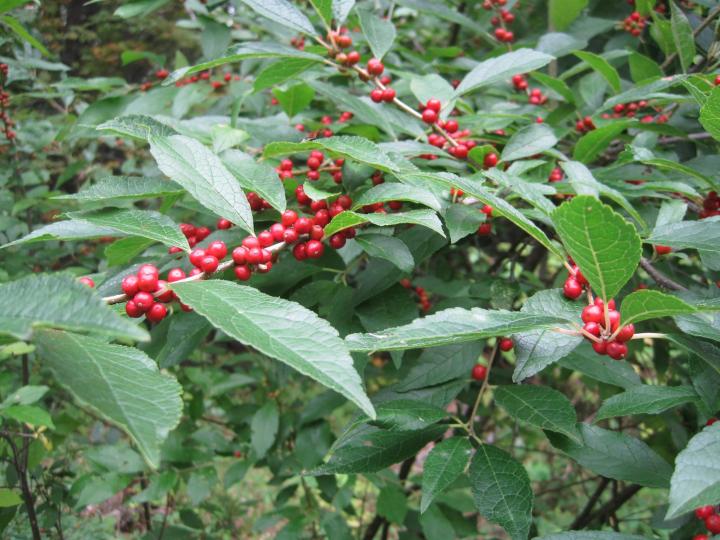
- Bright red winterberries (Ilex verticillata), a type of holly, last until a flock of hungry birds wipes them out. Be aware that the winterberry needs male and female plants that bloom at the same time to produce any berries. I saw a new one at the garden center called ‘Sweetheart’ that has both sexes in one pot. How handy is that! Other winterberries of interest include ‘Winter Red’, ‘Red Sprite’, ‘Winter Gold’, and ‘Chrysocarpa’.
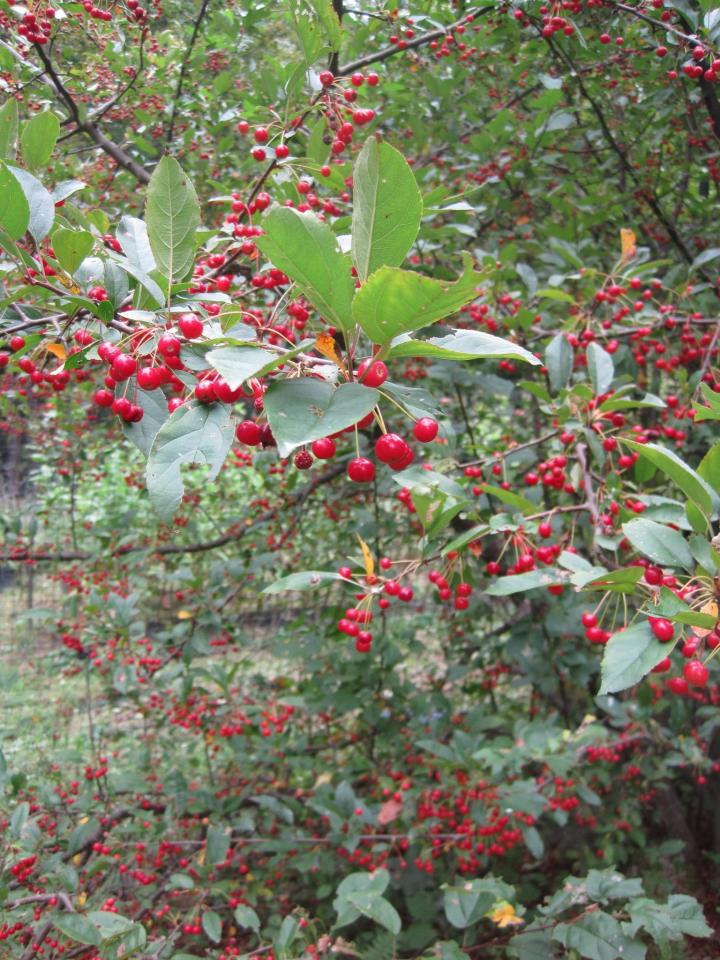
- The dark red fruit of the Sargent crabapple (Malus sargentii) will eventually contrast nicely with its yellow fall foliage and will persist into late winter. Rather than a traditionally shaped apple tree, it is a multi-stemmed shrub that grows to be about 10 feet tall and 15 feet wide. Mine has gotten huge and will get some of its many trunks removed when we are in pruning mode this winter.
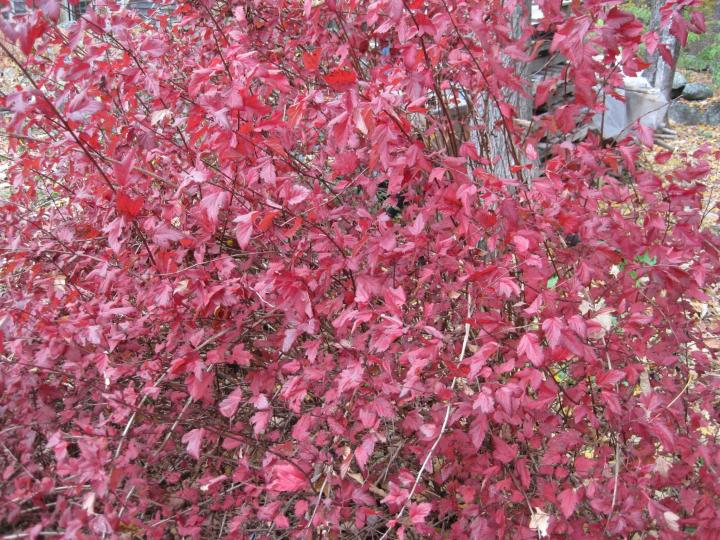
- Nine-bark (Physocarpus opulifolius) is great for fall color. I have one called ‘Summer Wine’ that has attractive burgundy leaves all season long, but they turn a brighter red in the fall. There are many other cultivars that have foliage in other colors ranging from lime green through coppery orange to deep purple.
- Smokebush (Cotinus coggygria) ‘Royal Purple’ has dark maroon foliage that turns even deeper purple in the fall. I always envied the one I drove past daily and finally bought a young “stick” a few years ago. It is slow getting going, but eventually, it will start to produce its hairy flowers that look like smoke from afar. For a native and more winter-hardy alternative, try American smoketree (Cotinus obovatus).
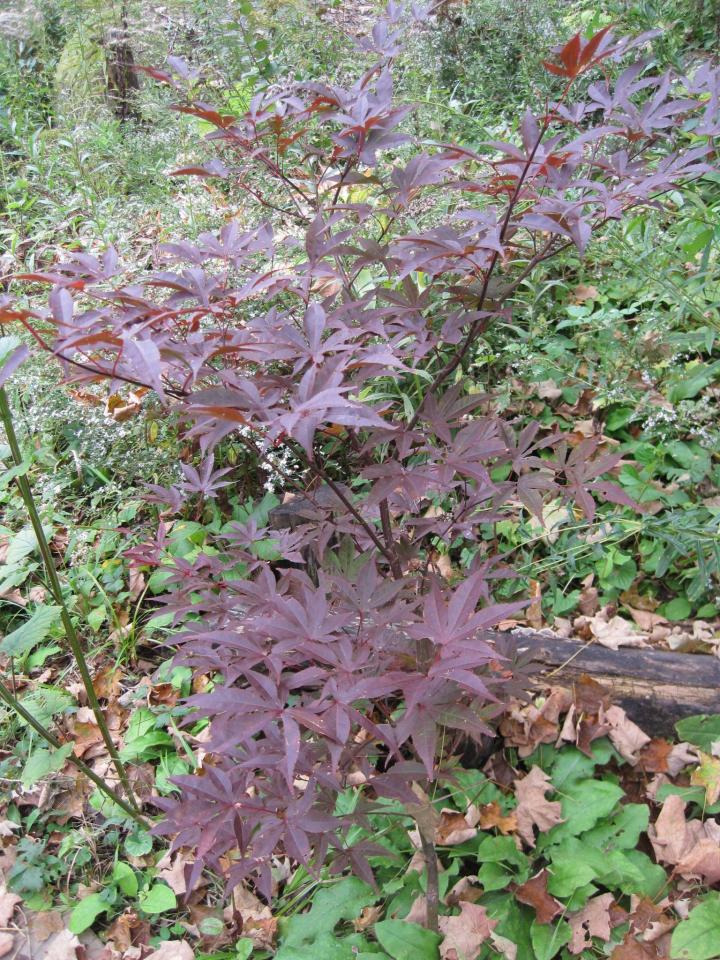
- Japanese maple (Acer palmatum) ‘Bloodgood’ stands out in any season, especially so in the fall. There are plenty of others to choose from if you are thinking of adding one to your landscape. Just pay attention to their hardiness zone. Many won’t survive winters that regularly go below minus 20 degrees. I love the ones with finely cut leaves (Acer palmatum dissectum) and just planted one outside that I had been growing in a pot for several years, called ‘Inaba Shidare’. Hopefully, it will make the transition successfully!
- Camellias are great evergreen shrubs for warmer climates that produce rose-like flowers once the cooler weather of fall comes around. A few of our favorite fall-blooming varieties include ‘Winter’s Dream’, ‘Autumn Dream’, and ‘Winter’s Charm’.
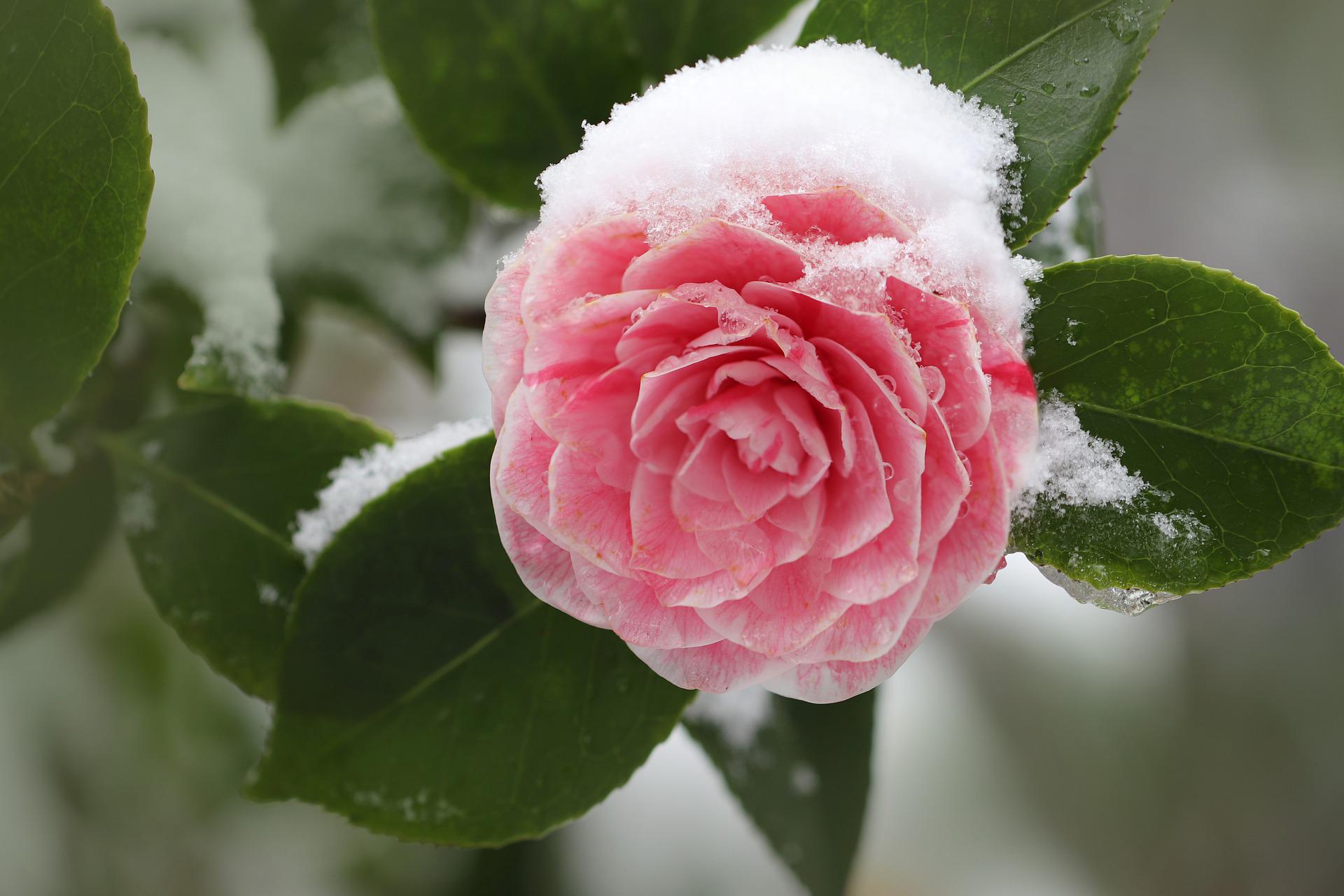
- Witch Hazel (Hamamelis virginiana) is a large native flowering shrub or small tree with dazzling clear yellow flowers that bloom in late fall or winter (depending on the variety)—adding color and fragrance during a time when much of Earth is dormant. Learn more about planting Witch Hazel.
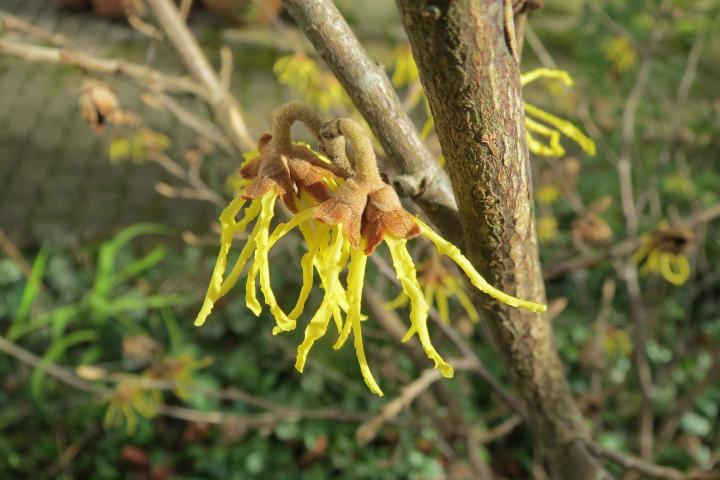
Many more shrubs are at their best in the fall with berries, fruit, and colorful leaves:
- Enkianthus (Enkianthus campanulatus)
- Arrowwood viburnum (Viburnum dentatum)
- Viburnum ‘Chicago Lustre’
- Linden viburnum (V. dilatatum)
- Virginia sweetspire (Itea virginica) ‘Henry’s Garnet’
- Fothergilla gardenii ‘Blue Mist’
- Beautyberry (Callicarpa)
- Winterberry holly (Ilex verticillata) ‘Winter Red’
- Winterberry holly (I. verticillata) ‘Red Sprite’
- Winterberry holly (I. verticillata)
- ‘Winter Gold’
- Winterberry holly (I. verticillata) ‘Chrysocarpa’
Ornamental Grasses
Add texture and form to your garden with often-overlooked ornamental grasses, especially in the fall when flowers may not be the focal point. Explore:
- Pennisetum alopecuroides ‘Hameln’
- Miscanthus sinensis ‘Silberfeder’
- M. sinensis ‘Purpurascens’
- M. sinensis ‘Morning Light’
- M. sinensis ‘Zebrinus’
- Bouteloua gracilis ‘Blue Grama’
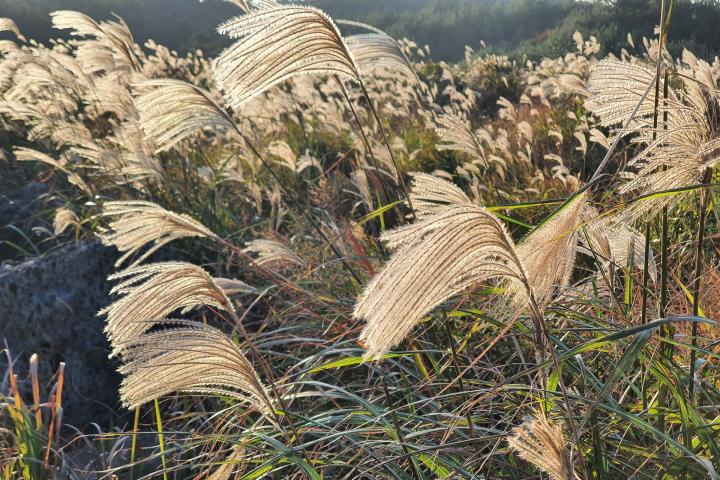
- Chasmanthium latifolium ‘Wild Oats’
Frequently Asked Questions About Fall Flowers and Plants
What are the best flowers to plant for fall color?
Some of the best fall-blooming flowers include asters, rudbeckias, calendula, and chrysanthemums. You can add rich jewel tones from other perennial plants, including Joe-Pye weed and Hylotelephium ‘Autumn Joy’.
Can I still plant flowers in September and October?
Yes! Fall is a great time to plant many perennials, shrubs, and trees because the soil is still warm, helping roots establish before winter. Choose plants that will thrive in the specific climate conditions of your area.
Which shrubs provide vibrant fall foliage and berries?
The combination of Winterberry holly with nine-bark ‘Summer Wine’, smokebush ‘Royal Purple’, and Japanese maple creates a beautiful display of fall color and berries.
How do I care for fall-blooming plants?
Many fall bloomers need full to partial sun and well-draining soil. The removal of summer-flowering plants like foxglove will lead to a second flowering period. The application of mulch serves as a protective measure for roots during cold temperatures.
Are there vines that add color to fall gardens?
Yes! Clematis varieties produce flowers that continue blooming through late autumn, while Virginia creeper and English ivy display vibrant autumn colors.
What are good annuals that bloom into the fall?
The annual plants Nasturtiums, zinnias, marigolds, calendula, and rudbeckias continue to produce flowers throughout fall while tolerating cooler temperatures.
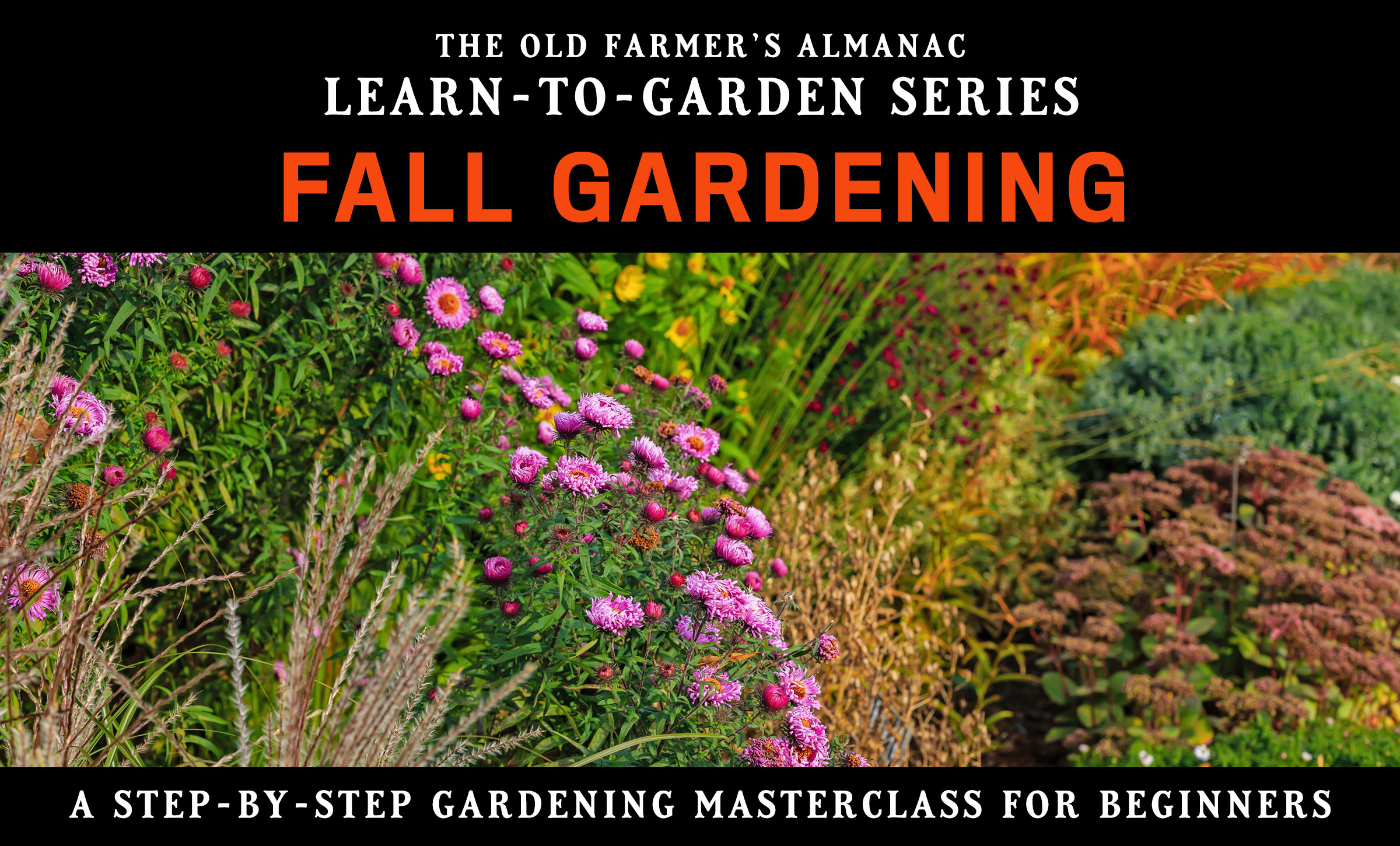
Have we missed any? As you can see, there are so many gorgeous fall flowers, shrubs, trees, vines, and grasses that bring colorful blooms and foliage through the autumn season!
And fall is a good time for planting, as the soil is still warm and moist and many garden centers offer deep discounts on perennials, trees, and shrubs. See more about great shrubs for fall planting.
Fall Flowers and Foliage
Fall Vegetable Gardening
Fall Garden Cleanup
Garden Soil Preparation
Fall Nature
More Like This
It certainly is aggressive, taking over every nook and cranny it can get its snaggly roots and tiny seeds into. Just want people to be aware of its nature before they plant it.
Some years they surprise us by wintering over but since we sell the plants I feel it is necessary to tell customers what our experience has been and let them know they need to enjoy them as an annual. If their plants come back in the spring, they got a bargain! I'm glad yours have been reliable. They are stunning flowers!
- « Previous
- 1
- 2
- …
- 10
- Next »

Comments