Done properly, mowing improves the health and appearance of your lawn. How often should you mow your lawn? Can you mow wet grass? What is a lawn mower mulcher? When should you plant grass seed? Do you really need to fertilize? Here are 10 tips on mowing better, plus lawn care tips.
The Great Lawn Debate
There is no substitute for grass as a recreational surface; it’s superior to concrete, and plays a positive environmental role by moderating temperatures and purifying air.
That said, there is a “dark side” to lawns, which largely stems from the overuse of synthetic chemicals. The U.S. has applied more chemical fertilizers on its lawns than India applies on all its food crops, and urban/suburban residents are now subjected to more pesticide exposure than their rural counterparts.
Unsurprisingly, lawns have been around for centuries without the crutch of heavy chemical use. Before World War II, splendid lawns (and gardens) on estates and homes in the United States were common. Plus, many of the lawns in Europe do not use chemicals.
When you consider our recommendations below, look for ways to reduce your dependence on the chemical industry. Grass doesn’t need to glow green!
1. Top-Dress With Compost
Before we get into mowing and lawn maintenance, let’s talk about how to get a naturally healthy green lawn. Fertilizer does not feed the soil. It feeds plants. Organic matter feeds the soil, providing food for the microorganisms (bacteria, insects, and earthworms), which convert chemicals in the soil to a form that plants can use as nutrients. Plus, organic matter suppresses weeds and deters plant disease.
- If you are planting new turf grass, work compost about 2 to 3 inches into the soil. If possible, use manure-based compost. Manure is a natural fertilizer that adds nutrients to the soil. Because lawns are hungry for nitrogen that encourages green growth, manure that’s rich in nitrogen is the best choice for them.
- For existing lawns, we recommend top-dressing with 1/4 inch manure-rich compost about once a month during the growing season. Manure can help keep your lawn healthy with its high nitrogen and phosphorus content. This will make your soil more porous, drain better, and prevent root rot.
Just by adding this first step—nourishing your soil—you’ll have a healthier lawn with fewer weeds. Each year, continue to top-dress with 1/4-inch compost and build the soil.
2. 10 Tips on Mowing Your Lawn
Mowing your lawn properly makes a big difference in its health. Did you know that there is a direct relationship between cutting height and the number of roots a grass plant can maintain? Whether you use a push mower, power mower, or a cordless lawn mower, here are 5 tips to avoid mowing mistakes.
- Trim your lawn first if you use a trimmer, so that the mower chops up the trimmings. Do NOT use a trimmer near tree trunks! Establish a grass-free circle around the tree.
- Mow the proper length or you’ll end up with an uglier lawn. Continual scalping reduces turf density and provides opportunities for weeds. Mow fescue, Kentucky bluegrass, ryegrass, and St. Augustine grasses about 1-1/2 to 2-1/2 inches high. Cut common Bermuda, centipede, and zoysia grasses about 1 to 2 inches high. Higher-cut lawn grasses are more stress-tolerant and reduce the germination of weed seeds, particularly crabgrass. This is an excellent way to reduce herbicide use.
- Follow the one-third rule. Never remove more than one-third of the grass height, or you starve the roots. To maintain grass at 2 inches high, for example, mow when it reaches no more than 3 inches.
- To adjust the blade height, put your mower on a hard surface, measure the height of the blades with a tape measure, and adjust the deck height to the desired level. Test the setting by mowing a patch of grass and checking the grass height.
- Alternate mowing directions each time you mow to help keep grass growing upright and to prevent soil compaction. Mow at a 45- or 90-degree angle to your last pattern.
- Do NOT mow when the grass is wet. Only mow when the grass is dry. Wet ragged grass cuts unevenly, and you are inviting disease. Wait until the dew has dried if it’s morning.
- Keep the blades sharp to reduce tearing the grass blades, which invites disease and makes the lawn look brown. Sharpen the blade of rotary mowers at least once a season. Disconnect the spark plug and, with the mower upended, remove the blade. Bring your blade to a shop for sharpening or do it yourself with a heavy-duty mill file.
- Mow your lawn without a bag and leave the clippings to feed the lawn. Lawn clippings return needed nutrients to the soil; therefore, avoid removing them after every mowing. Or, better yet, use an up-to-date mulching mower to grind the grass up into usable portions for your lawn.
- Rake up clumps. While it’s good to leave lawn clippings, you don’t want to leave any clumps that will smother a lawn.
- Spade the edging between the lawn and beds where needed; remulch tree rings to protect them from mower nicks, which invite disease and can kill a tree.
3. Fertilizing and Dethatching Lawns
As said above, allow clippings to stay on the lawn to filter down to the soil, decompose, and recycle nutrients back to the roots. Clippings are all the fertilizer healthy lawns need (along with manure dressing). However, if you plan to fertilize, see timing below:
- SPRING: There is a debate about when to apply fertilizer. Some experts start with a quick-release fertilizer in early spring (late March/April) to give a boost to the turfgrass and stimulate recovery after a long winter. Other experts advise waiting until late spring (May/June) and applying a slow-release fertilizer to restore the carbohydrate reserves in the roots, which may be running low. Either way, your lawn will appreciate a light application of a complete fertilizer in springtime. Just don’t overdo it!
- LATE SPRING: You also may need to dethatch your lawn if your thatch is thick and keeping grass roots from getting air and water. One indication of too much thatch is a spongy lawn. Or, if you poke your finger into the soil, the soil will be too hard to penetrate. Wait until late spring because dethatching is very rough on tender young grass shoots. Learn more about dethatching.
- SUMMER: In late summer (September is fine), fertilize to promote your lawn’s recovery from summer stress. This will help develop your root system for the winter. It also helps prevent disease and injury over the winter. Kentucky bluegrass, perennial ryegrass, tall fescue, and fine-leaf fescue are common cool-season grasses. Apply high-nitrogen fertilizer (at a rate of 0.5 to 1 pound of annual nitrogen per 1,000 square feet).
4. Weeding Your Lawn
Weeds are all about prevention. As with fertilizers, keep in mind that there are many weed control products that can be considered organic and natural versus chemical.
- SPRING: Prevent annual crabgrass with pre-emergent crabgrass control. There is a narrow window for controlling crabgrass—not too early, not too late. Soil temperatures need to be at 55°F for three days straight. Once temperatures reach 65 to 70°F, crabgrass will spread rapidly.
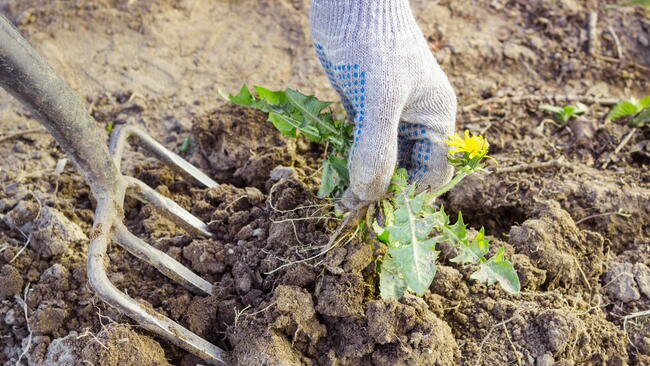
- SPRING: This is also the time to apply broadleaf weed control to prevent challenging perennial weeds from emerging. Once weeds emerge, we would not apply broad weed treatments in the lawn. Check your lawn often for weedy perennial grasses such as coarse fescue and bentgrass, and dig them out or spot treat with broadleaf weed control.
Adding mulch also helps with weed control.
5. Seeding Your Lawn
- SPRING: After you thatch in late spring, it’s a good time to overseed, planting new grass seed in bare or dead areas. Don’t seed in early spring if you’re applying non-selective weed control, as you’ll be killing the grass seeds as well. Read more about the best types of grass for your lawn.
- SUMMER/FALL: In mid-August through mid-September in mild climates (not southern), begin seeding new lawns. Or, seed bare spots from established lawns.
- The best time to seed a cool-season turfgrass (Kentucky bluegrasses, perennial ryegrasses, tall fescues, and fine-leaf fescues) lawn is in the late summer to early fall.
6. Watering Your Lawn
- Maintain 1/2 to 1 inch of water per week throughout the growing season.
- When watering, water heavily and do it in the morning. Water long enough to allow the water to soak in below the root zone. Shallow watering encourages shallow root growth (and thus, weak grass) and weeds. It will take about an inch of water to penetrate 6 to 8 inches into the soil. Set out shallow cans in the sprinkler area to measure water amounts.
- Don’t overwater. Make the lawn seek its own source of water, building longer, sturdier roots. Cut back on water, especially in midsummer, to let the lawn go dormant, strengthening it for fall and winter.
- Excess water leaches away nutrients and encourages insects. Deep waterings are better for the lawn than light waterings.
- During a drought, let the grass grow longer between mowings, and reduce fertilizer use.
7. Aerating the Lawn
If you continue to have issues with a heavy thatch layer on your lawn and hard, compacted soil, consider aerating your lawn. Aeration is the process of mechanically removing small plugs of thatch and soil from the lawn so that air, water, and nutrients can reach the roots. Root growth is essential for a healthy lawn.
In many home lawns, the natural soil was seriously disturbed by the building process, and often fertile topsoil was removed, leaving subsoil that is more compact, higher in clay content, and less desirable for healthy lawn growth. Even when topsoil is added before lawns are planted, it is generally too thin to support proper turfgrass rooting, which will reach 8” below the surface. Walking on the lawn and irrigation further compacts the soil.
Aeration can be done by renting an aerator from your local improvement stores or by hiring a lawn service to handle it. Aeration is best done in the fall. It will not only speed up thatch breakdown and allow oxygen and water to reach the roots, but it will also enhance fertilizer uptake.
Lawn Care Calendar| Season | Key Tasks | Pro Tips |
|---|
| Spring | - Top-dress with compost or natural fertilizer - Mow once grass reaches 3” (follow the one-third rule) - Apply crabgrass pre-emergent | Use organic compost to boost soil health. Never mow wet grass. |
| Late Spring | - Overseed bare patches - Dethatch if lawn feels spongy - Spot-treat weeds | Choose high-quality grass seed and rake lightly for better germination. |
| Summer | - Mow at higher settings to reduce heat stress - Deep water early in the morning - Minimize fertilizer | Let lawns go slightly dormant in droughts; avoid overwatering. |
| Fall | - Fertilize with high-nitrogen mix - Aerate compacted soil - Overseed for thick spring growth | Aeration improves root depth and nutrient absorption. |
| Winter (Dormant) | - Limit foot traffic - Keep mower blades sharpened - Plan next year’s lawn care | Prep tools and stock up on organic amendments for spring. |
A Few More Lawn Care Tips
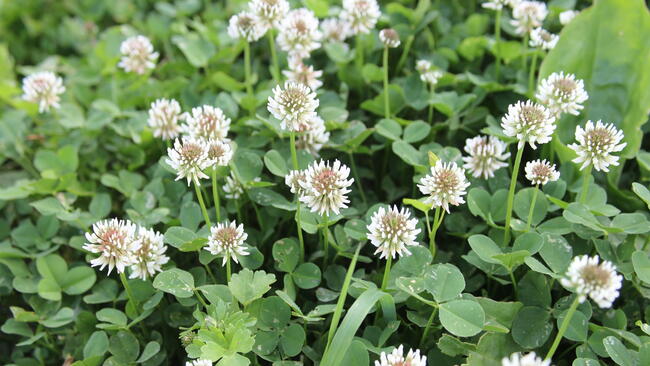
- Mix clover (which pollinators love) with your grass seed since clover is a nitrogen fixer (and often added to grass seed for this reason); it keeps the lawn greener longer. See more on clover.
- Convert part of your lawn to a meadow. A slightly wild zone or border lets volunteer grasses, dandelions, wildflowers, and herbs grow, adding variety to your landscape.
- If trees and shrubs start to shade the lawn, thin and remove lower branches. Then seed in shady areas with 5 pounds per 1000 sq. ft. of red fescue.
Do you have any other lawn care tips? Leave them in the comments below!




Comments