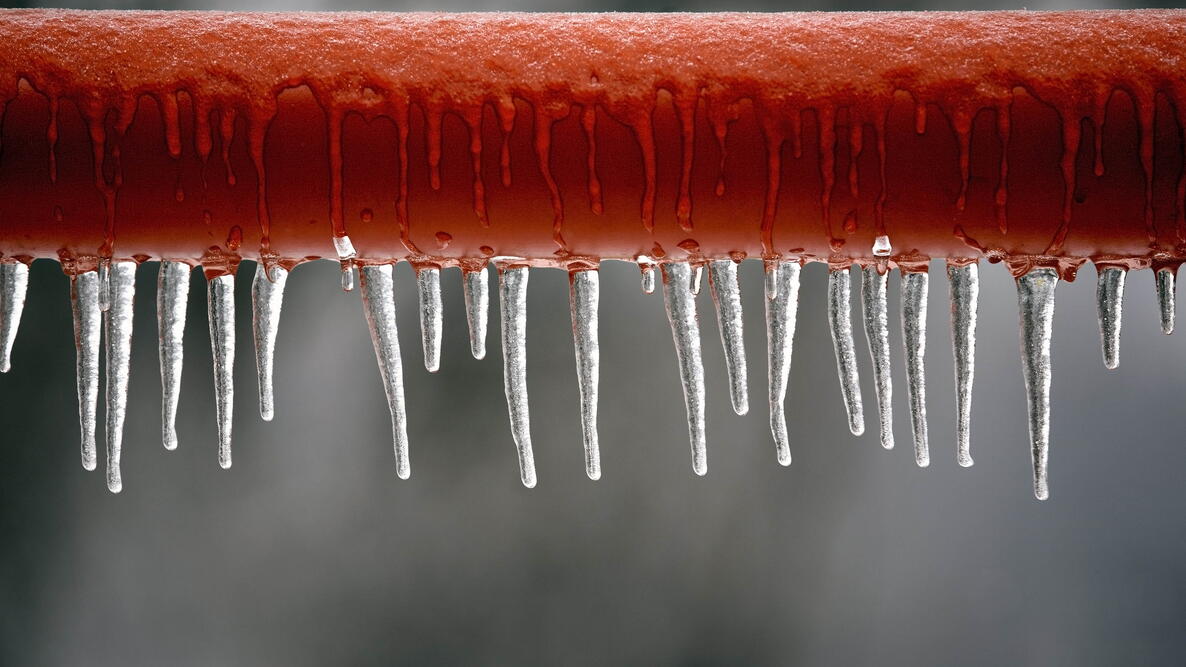
Caption
As winter comes on, find out how to keep your pipes from freezing and how to thaw them if needed!

Frozen pipes can turn a peaceful winter morning into a costly plumbing disaster in minutes. When water inside a pipe freezes, it expands—often cracking the tubing and causing leaks once everything thaws. The good news? Most frozen-pipe emergencies are completely preventable with a few smart cold-weather habits. Whether you’re preparing for an incoming cold snap or already dealing with a sluggish faucet, here’s how to protect your home, prevent freezing, and safely thaw pipes before damage occurs.
How to Prevent Pipes from Freezing
Prevention is key! Here are 10 tips:
- Keep all water-supply piping away from outside walls, where it could be exposed to cold winter weather.
- If it is imperative to have pipes located on an outside wall, be sure they are well insulated. Piping insulation is sold in both rubber and fiberglass.
- Insulate pipes in all other unheated areas as well, such as crawl spaces, basements, attics, and garages. Fix the source of any drafts (such as near cables, dryer vents, bathroom fan vents, and windows) and insulate pipes at risk.
- Before winter, close the water shut-off valve inside your home that provides water to outside spigots. Then, drain each line by opening its spigot until it no longer drips, then close the spigot.
- Keep garage doors and outside doors closed, and plug up drafts.
- Open all faucets, both hot and cold water, to just a trickle, to keep water moving in the pipes to help to prevent icing.
- Set the thermostat to at least 55ºF (13°C) both day and night—no lower. Higher is even better, especially if your home is not well insulated.
- Keep doors to all rooms open to allow heat to flow to all areas, which helps to warm the pipes in the walls.
- Open the cabinets under the kitchen and bathroom sinks so that the warmer air temperature of each room can flow around the plumbing. (Be sure to keep cleaners and other hazardous chemicals away from children and pets.)
- Check your local forecast to see if you’ll be having subfreezing temperatures sometime soon.

How to Thaw Frozen Pipes
If worse comes to worst and your pipes do freeze, here’s what to do:
- If no water comes out of a faucet or it comes out slowly, suspect a frozen pipe. Check all faucets in the house to determine if the situation is widespread. If it is, open all faucets, turn off the main water to the house, and call a plumber.
- If only one pipe is frozen, turn on the appropriate faucet to help get the water moving in the pipe once it thaws. Locate your nearest water shut-off valve to the break. Don’t turn the water off at this point, unless you find that the pipe has actually burst.
- Try the hair dryer trick. Locate the area where the pipe has frozen. Then, starting at the faucet and working backward along the pipeline until you reach the frozen section, work the dryer up and down the pipe. Continue warming the pipe until full water pressure returns to the open faucet. Then, reduce the faucet flow to a trickle until the cold snap has ended. Caution: When using a hair dryer, be sure that it and its cord will not be near any water that might start to flow through a crack in a burst pipe.
- If water starts to gush out of the pipe while you are warming it, unplug the hair dryer and close the nearest water shut-off valve immediately. Keep the faucet open. Call a plumber to fix the burst pipe.
- If you can not reach a frozen pipe to warm it, call a plumber and shut off the water supply to the pipe. Keep the faucet open.
Frequently Asked Questions
What temperature do pipes freeze at?
Pipes can begin to freeze when outdoor temperatures drop to 32°F (0°C) or below, especially if the pipes are uninsulated or located along exterior walls, crawl spaces, or unheated areas.
How can I tell if a pipe is frozen?
Common signs include no water flow, reduced water pressure, or unusual sounds (like gurgling) when you turn on a faucet. Frost on the outside of the pipe can also signal a frozen section.
Will letting faucets drip really prevent freezing?
Yes. A small trickle of water keeps pressure low and helps prevent ice from forming inside the pipe. This works especially well for pipes running along exterior walls.
Should I turn off my water if I think a pipe is frozen?
If multiple faucets have no flow, or if you suspect a burst pipe, turn off the main water supply immediately and call a plumber. If only one pipe is frozen and nothing has burst, you can usually leave the water on while thawing.
What’s the safest way to thaw a frozen pipe?
Start by turning on the faucet and gently warming the pipe from the faucet end back toward the frozen section. Use a hair dryer, heating pad, or warm towels—never an open flame or propane torch.
Can insulated pipes still freeze?
Yes. Insulation greatly reduces the risk but doesn’t make pipes immune, especially during extreme cold. Pair insulation with other steps, like keeping indoor temperatures steady and reducing drafts.
Why do pipes burst when they freeze?
It’s not the ice itself that bursts the pipe—it’s the water pressure building up behind the frozen section. As ice expands and blocks the pipe, pressure increases until the pipe cracks.
How can I prevent pipes from freezing while I’m away?
Set the thermostat to at least 55°F (13°C), open sink cabinets, keep interior doors open, and have someone check your home during very cold weather.
Are outdoor hoses and spigots at risk?
Yes. Always remove garden hoses, drain outdoor spigots, and shut off the indoor valve leading to them before winter.
When should I call a plumber?
Call a professional if you can’t locate the frozen section, can’t access it safely, suspect a burst pipe, or if thawing efforts aren’t working after a reasonable amount of time.
A little preparation goes a long way when it comes to preventing frozen pipes. From insulating vulnerable areas to keeping indoor temperatures steady, small steps can save you from major headaches and expensive repairs. And if a pipe does freeze, acting quickly—and safely—can make all the difference. Stay ahead of the cold, follow these simple tips, and your home’s plumbing will stay protected all winter long.
Have your own tricks for preventing frozen pipes? Share them with the community!
Get more tips for surviving winter weather, like keeping heating costs low in winter, winter weather terms, and keeping warm in the winter.
Have your pipes frozen before? Tell us about it below! We want to hear your tips and tricks for managing and preventing frozen pipes.

More Like This


- « Previous
- 1
- 2
- …
- 10
- Next »

Comments