Planting and Growing Zinnias

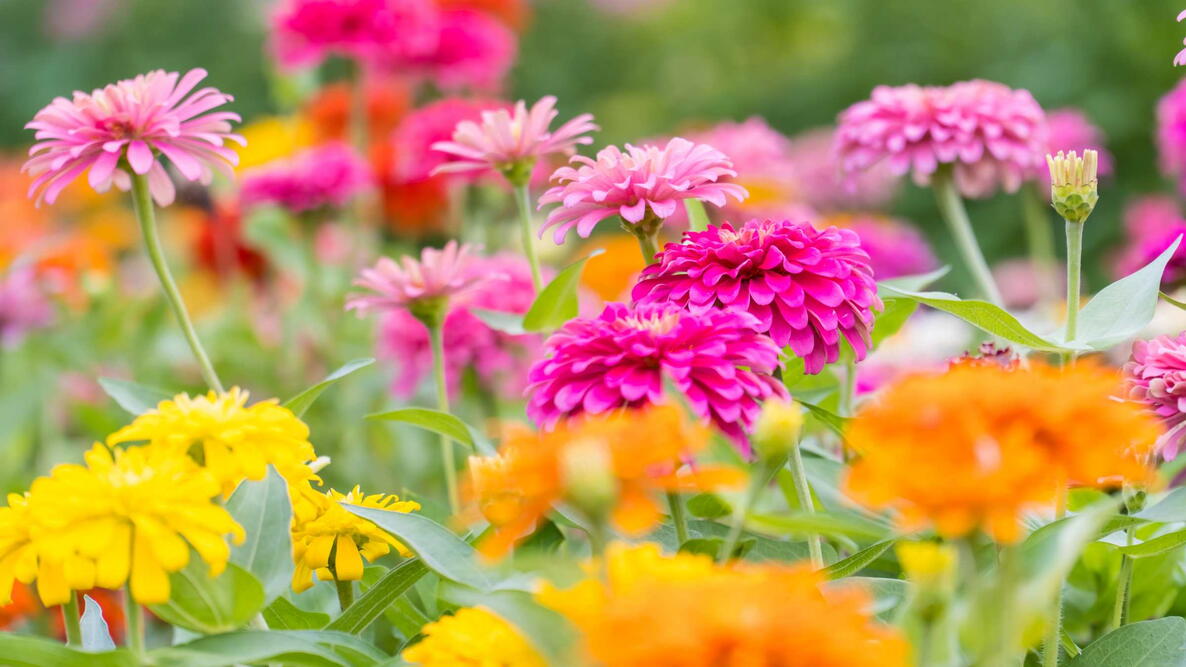
Mixed pink, yellow, and orange zinnia flowers blooming in a sunny summer garden.

Caption

Zinnias bloom nonstop from summer to frost in bright, cheerful colors.

Image Credit:
mariokinhed/Shutterstock
Botanical Name
Zinnia elegans
Plant Type
USDA Zones
Sun Exposure
Soil pH
Water Needs
Height
Spread
Bloom Time
Written By: Catherine Boeckmann Executive Digital Editor and Master Gardener
Almanac Guide to Herbs

Looking to add a punch of color to your garden with zero fuss? Zinnias are fast-growing annual flowers that thrive in full sun and bloom nonstop from summer to frost. In this guide, you’ll learn when to plant, how to grow, and how to keep them blooming beautifully all season long.

Zinnias are often the first flower beginners grow—and they rarely disappoint. Easy, colorful, and generous, they’re also among the very best flowers for cutting and filling summer bouquets.

Most varieties grow 1 to 3 feet tall, depending on the type, and branch freely once established. Bloom size and form vary widely—from simple daisy shapes to full, dahlia-like doubles—but all benefit from full sun, warm soil, and good spacing for airflow.

Tall zinnias growing in a sunny garden border.
Most zinnias grow 1 to 3 feet tall and branch freely when given full sun and proper spacing. Credit: LiuNian / Getty

Planting

When to Plant Zinnias

Zinnias are true heat lovers. Do not plant until all danger of frost has passed in your area. Use the Almanac frost date tool to determine your average last frost date.

For best results, wait an additional 1 to 2 weeks after your last frost date so the soil has time to warm. Zinnias germinate and grow best when soil temperatures are consistently around 70°F. Planting into cool soil often leads to stalled growth or seed rot.

There is no advantage to rushing the season—once warm weather settles in, zinnias grow quickly and bloom all summer.

Where to Plant Zinnias

Choose a location with full sun—at least 6 to 8 hours of direct sunlight daily. The more sun they receive, the stronger the stems and the more abundant the blooms.

Good airflow is essential. Avoid tight planting areas or spots where humidity lingers, as crowded conditions increase the risk of mildew.

Zinnias perform well in garden beds, borders, cutting gardens, and large containers—as long as drainage is good.

How to Plant Zinnias

Zinnias are best grown from seed. They germinate quickly and generally do not transplant well once established, so direct sowing outdoors into warm garden soil is the simplest and strongest method. Do not use nursery plants.

Zinnias are not heavy feeders, but healthy soil makes all the difference for strong stems and abundant blooms. Prepare the soil before sowing. Simply work some organic matter, such as compost, into the bed before planting to support strong stems and abundant blooms. I use diluted organic fertilizer, such as fish emulsion, at planting time. 

  • Sow seeds about 1/4 inch deep in warm soil.
  • Space plants about 12 inches apart in home gardens to encourage branching and airflow.
  • Water gently after sowing and keep the soil lightly moist until the seeds sprout.

Spacing is often the number one issue. In my own garden, I prefer a full foot between plants so they have room to breathe, stretch, and branch properly.

Seeds typically germinate in 4 to 7 days under warm conditions.

Young zinnia seedlings growing closely together in garden soil.
Zinnia seedlings emerge quickly in warm soil. Thin young plants to about 12 inches apart once they develop several true leaves. Credit: Ilia Baksheev

Growing

Watering

Zinnias prefer consistent moisture but do not like soggy soil. Water deeply at the base of the plant rather than from overhead to help prevent disease. Once established, they tolerate short dry spells, but steady moisture encourages stronger stems and more blooms.

Fertilizing

Zinnias are not heavy feeders, but healthy soil makes a difference. As mentioned above, work compost into the bed before planting. Optional: About 6 to 8 weeks after planting, apply a balanced, slow-release fertilizer if plants begin to slow down. 

Pruning and Maintenance

It’s hard to cut our beautiful zinnia for bouquets! But the more you cut, the more zinnias will branch and produce new buds and flowers.  Otherwise, the plant will think it’s done producing and start creating seeds.

Taller varieties grown for cutting may benefit from staking. Begin supporting plants when they reach about 12 to 18 inches tall — before stems begin leaning. Pea netting or simple garden stakes provide nearly invisible support.

Pinching young plants is optional. Most beginner gardeners (vs flower farmers) find that harvesting the first flowers naturally encourages branching without additional pinching.

Growing in Different Climates

In humid regions, prioritize spacing and airflow to reduce mildew. Maintain generous spacing (about 12 inches) in humid regions.

Gardeners in the far southern U.S. may grow two crops: early spring and fall. For a fall season, you may wish to start seeds indoors versus outdoors in the middle of summer. Just transplant carefully.

Zinnias are annual flowers, meaning they complete their life cycle in one growing season and will not return the following year.

Harvesting

When to Harvest Zinnias

Zinnias are ready to cut when the petals are fully open and the stem feels firm just below the bloom. If the stem bends easily, the flower is too young and may wilt quickly in a vase.

In my experience, cutting too early is the most common mistake. Zinnias cut too early may wilt quickly and produce weaker follow-up blooms. Wait until the petals have fully opened—you’ll get bigger, fluffier flowers and better vase life.

For the longest-lasting cut flowers, harvest early in the morning after plants have rehydrated overnight. Do not cut in the middle of the day, nor in the evening when their resources are depleted. 

How to Harvest Zinnias

Use clean, sharp pruners and make a deep cut, leaving 2 to 3 sets of true leaves on the plant. Cut more deeply than you might normally cut a stem; this encourages branching and continued flowering.

Zinnias reward frequent harvesting. The more you cut, the more flowers they produce. If blooms are left on the plant to mature fully, it shifts energy toward seed production and slows new flowering.

Storing Cut Flowers

Place stems immediately into clean water and remove any foliage below the waterline. With proper harvesting and hydration, zinnias typically last 7 to 10 days in a vase.

Saving Seeds (Optional)

If you’d like to save seeds, allow a few blooms to remain on the plant until they turn brown and fully dry. Collect the dark, pointed seeds from the base of the petals and store them in a paper envelope in a cool, dry place until spring.

Pests and Problems

Zinnias are one of the easiest flowers for beginners and are generally low-maintenance. Most problems stem from planting timing, spacing, watering habits, or overfeeding—not serious pests.

Stunted growth or slow starts
Zinnias love heat. If planted too early in cool soil, they may stall or grow slowly. Wait until temperatures are consistently warm before sowing. In my experience, once the weather truly heats up, they take off quickly.

Powdery white coating on leaves
Powdery mildew often appears late in the season, especially in humid weather. It is usually cosmetic and does not stop flowering. Good spacing, full sun, and watering at soil level help reduce mildew pressure.

Not blooming well
Zinnias require full sun—at least 6 to 8 hours daily. In partial shade, plants stretch and don’t bloom as well

Lots of leaves but fewer blooms
Overfertilizing can cause lush green growth at the expense of flowers. Avoid feeding seedlings heavily, especially if your potting mix already contains fertilizer. Zinnias prefer modest feeding and compost-enriched soil.

Crowded plants
Zinnias need room to breathe. Crowding reduces airflow and increases the risk of mildew. In my own garden, spacing most varieties about 12 inches apart results in sturdier stems and healthier foliage.

Browning or spotted leaves and damaged blooms
Watering from overhead can leave foliage damp and encourage disease. If you’re hand-watering, aim low and soak the soil at the base of the plant. I’ve found that switching to soil-level watering noticeably reduces leaf spotting.

Flopping stems
Most compact varieties do not require staking. Taller cutting types may benefit from early support, especially in windy gardens. If staking is needed, begin while plants are still young so stems grow upright naturally.

Fewer blooms over time
Zinnias reward cutting. The more you harvest, the more flowers they produce. If blooms are left on the plant to mature fully, it will shift energy toward seed production and slow new flowering.

Wilted flowers in the vase
Harvest only when petals are fully open and stems feel firm. Cut early in the morning when plants are well hydrated for the longest vase life.

Common Pests

Caterpillars, Japanese beetles, and spider mites may occasionally feed on zinnias. Minor damage is usually cosmetic. Hand-pick larger insects and use insecticidal soap only if infestations become severe.

Zinnias are generally deer-resistant.

Plant Diseases

Powdery mildew is the most common disease issue, particularly in humid conditions. Leaf spot and bacterial wilt may also occur. Plant in full sun, space properly, and water at soil level to minimize disease.

Sudden drooping that does not recover with watering may indicate bacterial wilt. Remove affected plants promptly.

Wit and Wisdom

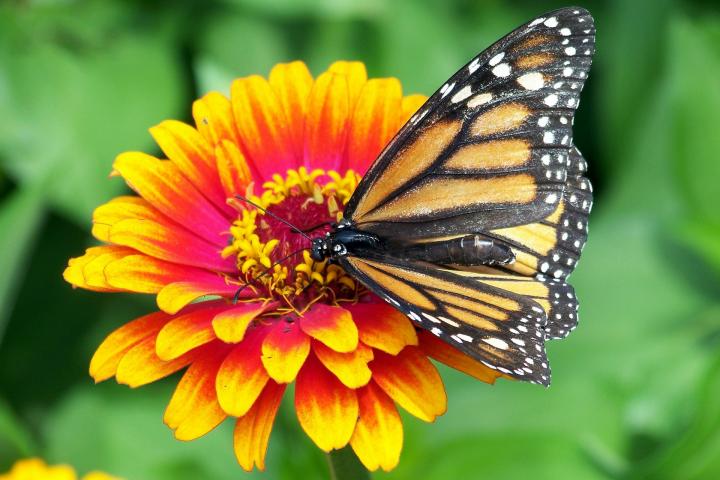
Monarch butterfly feeding on a bright orange zinnia flower.
Zinnias are magnets for butterflies and other pollinators throughout summer.
  • Butterflies flock to zinnias, making them one of the easiest ways to add pollinator life to a sunny bed.
  • Zinnias are said to symbolize thoughts of absent friends and lasting affection — fitting for a flower that keeps blooming all summer long. Learn about more flower meanings here.
  • Zinnias were the first flowers to successfully bloom in space (aboard the International Space Station)! Despite battling mold from high humidity, astronauts carefully adjusted their care—and the plants pulled through.

About The Author
Catherine Boeckmann

Catherine Boeckmann

Executive Digital Editor and Master Gardener

Catherine Boeckmann is the Executive Digital Editor of Almanac.com, the website companion of The Old Farmer's Almanac. She covers gardening, plants, pest control, soil composition, seasonal and moon c...