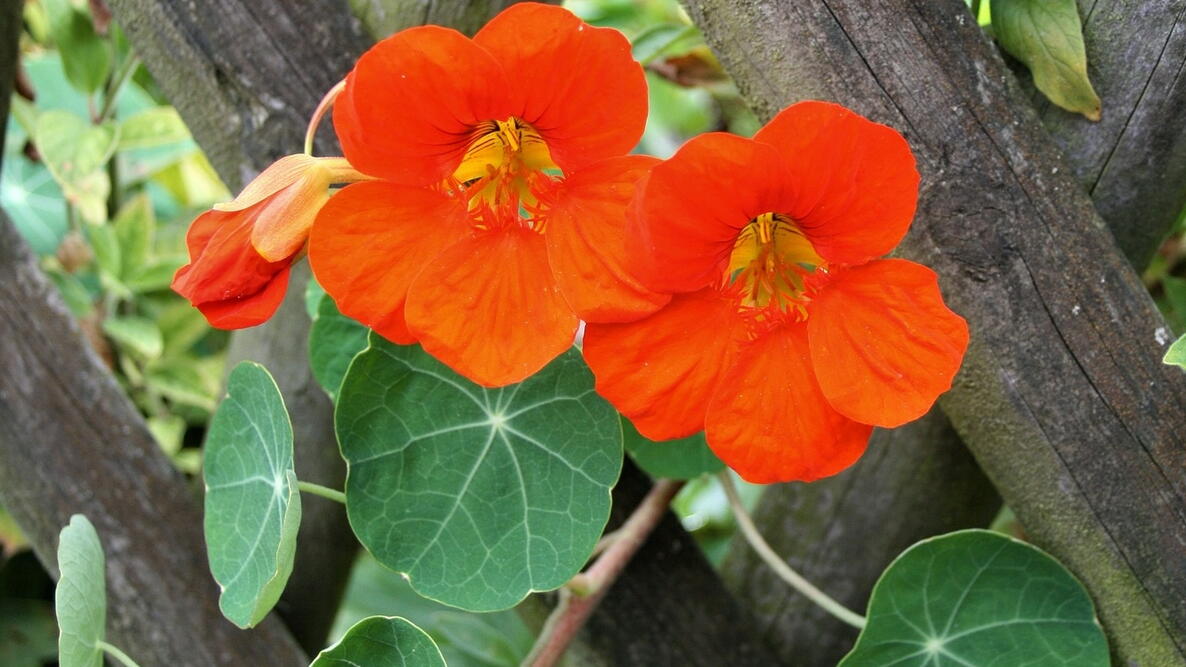
Caption
Bright orange nasturtium flowers with distinctive round leaves. Credit: Pixabay

Planting
When to Plant Nasturtiums
While nasturtium seeds can be sown outdoors anytime after the last spring frost has passed, I usually wait a week or two. The warmer soil helps speed germination, and seeds sprout best when soil temperatures reach 55° to 65°F.
In many areas, you can continue planting nasturtiums throughout the season for a long display of blooms.
You can also start seeds indoors 2 to 4 weeks before your last frost date, but nasturtiums have fragile root systems and don’t transplant well. I usually recommend direct sowing whenever possible.
Where to Plant
Nasturtiums grow well in containers, raised beds, or in-ground gardens, as long as they receive plenty of sun and well-draining soil. Choose a location with well-draining soil and at least 6 hours of direct sunlight daily for the best flowering.
They’re also commonly planted alongside vegetables, including brassicas, cucumbers, melons, and squash, where they serve as companion plants. Their bright flowers also attract pollinators, including bees, butterflies, and hummingbirds.
Poor soil is actually preferable. Nasturtiums are light feeders, and rich soil often produces lush foliage at the expense of flowers.
How to Plant Nasturtiums
- Prepare the planting area by removing weeds and loosening the soil. If desired, mix a small amount of compost into the top few inches of soil. For containers, use a quality potting mix with good drainage.
- Sow the seeds. Plant seeds 1/2 inch deep and space them 10 to 12 inches apart. Because nasturtium seeds have a hard outer coating, soaking them in water for 8 to 24 hours before planting can speed germination.
- Water thoroughly after planting and keep the soil lightly moist until seedlings emerge.

- Transplant if needed. If you start seeds indoors, harden them off and transplant outside once the risk of frost has past. Just bury the seedlings at the same depth at which they were growing in their nursery pots.
- Add support. If growing trailing or climbing varieties. Install install trellises early, so roots aren’t disturbed later.

Pests and Problems
While nasturtiums are relatively tough plants that can handle a range of conditions, they’re not completely immune to problems. Most issues are related to light, heat, or pests rather than serious disease.
Common Problems
- Reduced flowering. If nasturtiums aren’t blooming well, they’re often getting too little sun or too much nitrogen. These plants prefer full light and lean soil. Rich soil produces lots of leaves but fewer flowers.
- Wilting in heat. During hot weather, nasturtiums may droop, especially if the soil dries out. In my experience, they usually bounce back quickly after deep watering or when temperatures cool slightly.
- Leggy or weak growth. Low light can cause stretched, spindly stems. Move plants to a sunnier spot if possible.
- Pest buildup. Because nasturtiums are often used in companion planting near broccoli, cabbage, radishes, and other brassicas, they can attract aphids. I rarely intervene unless infestations become heavy—a strong spray of water is usually enough.
Common Pests
Nasturtiums are often used as trap crops in companion planting, especially near broccoli, cabbage, and other brassicas. Because of this, they commonly attract aphids, and occasionally caterpillars, flea beetles, slugs, snails, or whiteflies.

In most home gardens, pest damage is minor and largely cosmetic. Aphids can be rinsed off with a strong spray of water, and larger insects can be hand-picked.
Personally, I usually leave my nasturtiums alone. I find pest issues to be relatively insignificant, and I don’t want to deter pollinators from visiting my plants.
Plant Diseases
Nasturtiums may occasionally develop mosaic viruses, leaf spot, or blight, though serious disease is uncommon in home gardens.
To reduce risk:
- Start with fresh seed from reliable suppliers.
- Avoid reusing old potting mix.
- Rotate planting areas each season.
- Remove plant debris in fall.
Good airflow and well-draining soil go a long way toward preventing problems.
Types
Whether you grow trailing or climbing varieties (Tropaeolum majus) and compact bush types (T. minus), nasturtiums adapt easily to different spaces. I love growing mounding types in pots where their tidy shape shines, while trailing varieties sprawl as cheerful groundcovers near melons, cucumbers, pumpkins, and borage.
Flowers ranging from soft yellows and peaches to deep reds and oranges. Leaf color can vary too, with some varieties offering attractive variegation.
- ‘Alaska Mix’ features variegated foliage and mixed flower colors, making it a standout in containers.
- ‘Variegatus’ is a trailing type with red or orange blooms, well suited for spilling over edges or climbing supports.
- ‘Peach Melba’ offers creamy yellow flowers with bright orange-red centers for a softer color palette.



We do not currently sell nasturtium seeds, but we do have a number of other (non-edible) flower seeds available in our online store.
- « Previous
- 1
- 2
- …
- 10
- Next »

Comments