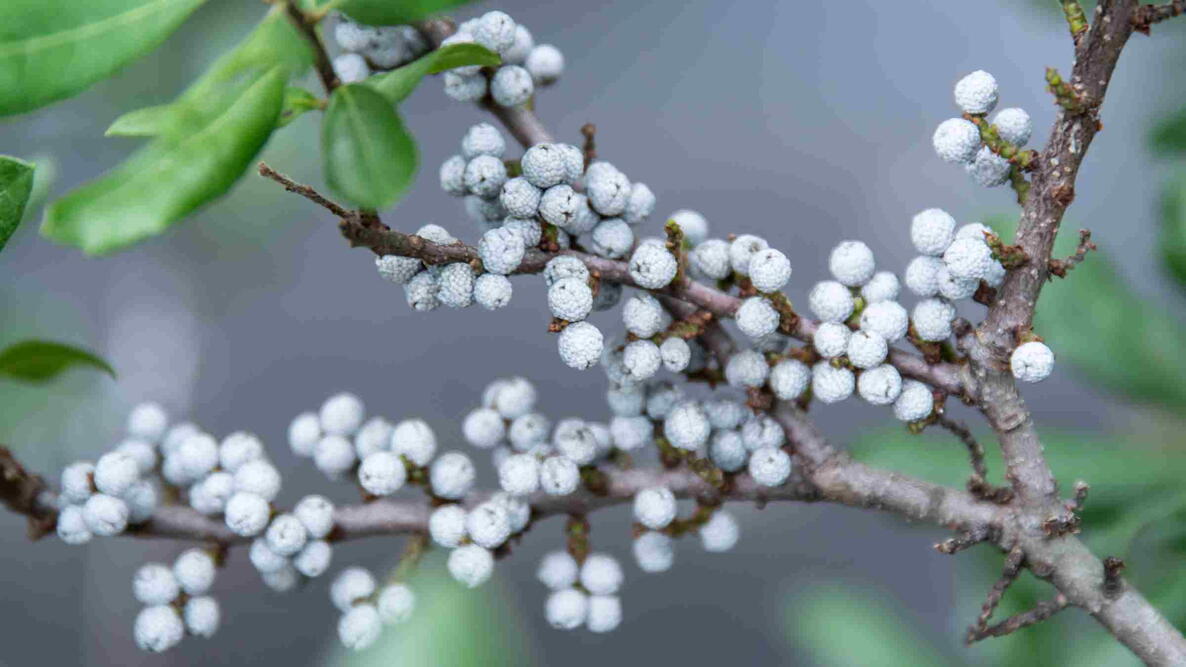
Caption
Northern bayberry (Morella pensylvanica) produces distinctive gray, wax-coated berries that add winter interest and have long been used for traditional candles.
Fragrant foliage, winter berries, and low-maintenance native beauty

Northern bayberry (Morella pensylvanica, formerly Myrica pensylvanica) is a hardy native shrub prized for its fragrant leaves and gray, wax-coated berries. Cold-tolerant and adaptable, it grows across much of eastern North America and thrives in sandy soils, coastal sites, and inland landscapes alike.
In this guide, we’ll walk you through the basics of planting and growing northern bayberry, explain what to know about selecting male and female plants for berry production, and introduce you to related bayberry varieties you may want to try. We’ll also cover what makes bayberry different from other similarly named shrubs and how to ensure you get berries on your plants.
About Bayberry Plants
Despite the name, bayberry shrubs are not closely related to bay laurel, but they produce equally fragrant leaves that release their scent when crushed. There are around 30 to 50 species of bayberry plants globally, but in North America, northern bayberry is one of the most common native varieties, and the species most gardeners mean when they say “bayberry.”
Hardy and resilient, northern bayberry plants grow wild from Canada south into the Mid-Atlantic and parts of the Midwest. Along the coast, these shrubs often stay smaller and form dense colonies that help stabilize sandy soil. Inland, bayberry plants typically reach about 6 to 10 feet in height — just the right size for a specimen shrub, informal hedge, or low-maintenance foundation planting.

Not only do bayberry plants tolerate salt, drought, high winds, heat, and occasional flooding, but they’re also naturally deer-resistant, useful for erosion control, and largely take care of themselves once established. In mild climates, their glossy green leaves may remain semi-evergreen. In colder regions, the shrubs drop their foliage but retain clusters of gray to white, wax-coated berries that attract birds like robins, bluebirds, woodpeckers, and warblers.
Due to their high salt tolerance, bayberries are excellent choices for coastal gardens, sandy sites, and landscapes exposed to winter road salt. They grow well near water features and blend easily into cottage, woodland, and native plant gardens. Plant them near a walkway if you can—their fragrant leaves smell best when crushed.
I grow bayberry as a foundational shrub in my own native plant garden and love pairing it with plants that share similar care needs—like native roses, St. John’s wort, sweet ferns, cranberries, and meadowsweet. I planted mine near a garden walkway so I can brush against the foliage and enjoy the fragrance, which is strongest when the leaves are crushed. Thanks to its high salt tolerance, bayberry is also an excellent choice for coastal gardens, grows well near water features, and blends beautifully into cottage or woodland landscapes.
Read Next
Types
There are dozens of bayberry varieties to choose from, but northern and southern bayberries are the most common. Some plants are more tolerant of heat, cold, and damp than others, but here are a few popular varieties you may want to try!
- Southern Bayberry (Morella cerifera): Also known as the wax myrtle, southern bayberry thrives in heat and is hardy from zones 7 through 11. These plants also produce waxy berries; however, they are flammable and should not be grown near homes or other structures.
- Sweetgale (Myrica gale): Sometimes dubbed “bog myrtle,” this native bayberry grows in zones 2 through 6 and is highly tolerant of damp conditions. It produces cone-like structures rather than berries, though.
- Swamp Bayberry (Myrica caroliniensis): Native to coastal areas from zones 7 to 9, swamp bayberry produces berries and grows up to 8 feet high; however, it’s not as fragrant as other varieties.
Gardening Products
Propagation
Bayberries can be propagated either by division or cuttings, depending on your patience and gardening style.

- Cuttings: Take 4 to 6-inch-long cuttings of semi-hardwood stems from the current season’s growth in midsummer. Remove the lower leaves on the cuttings, scar the base of the cuttings with a knife, and dip the cuttings in rooting hormone. Plant the cuttings in pots filled with a 1:1 ratio of coconut coir and perlite, cover them with plastic, keep them in a warm and well-lit spot, water enough to keep the soil consistently moist, and transplant the cuttings into your garden when they form roots.
- Division: Locate rooted suckers or shoots around the base of female bayberry plants and use a sharp, sterilized knife to separate the rooted divisions from the parent plant. Remove all but the uppermost leaves from the divisions, replant them ASAP, and water regularly to help them settle.
Bayberries generally don’t need pruning beyond removing diseased, dead, and damaged branches from time to time. If desired, you can prune these plants into a tree-like form or just to improve their structure, but this is best done when the plants are dormant from late winter to early spring.
Wit and Wisdom
- Bayberry candles were first used by American colonists and are known for burning clean and smoke-free. A long-standing tradition claims that burning a bayberry candle on New Year’s Day brings good luck for the year ahead.

- It takes about 15 pounds of bayberries to produce just 1 pound of wax. Many people mix bayberry wax with beeswax at a 1:1 ratio to extend their supply.
- Bayberries are sometimes called “candleberry,” a nod to their long association with wax-making.
- Historically, bayberry shrubs were valued not only for their fragrance but also for their ability to stabilize sandy soils and enrich poor ground as a nitrogen-fixing plant.
- Crush a leaf between your fingers, and you’ll understand why bayberry remains a favorite in native plant gardens — its clean, resinous scent lingers long after you walk past.

More Like This



Comments