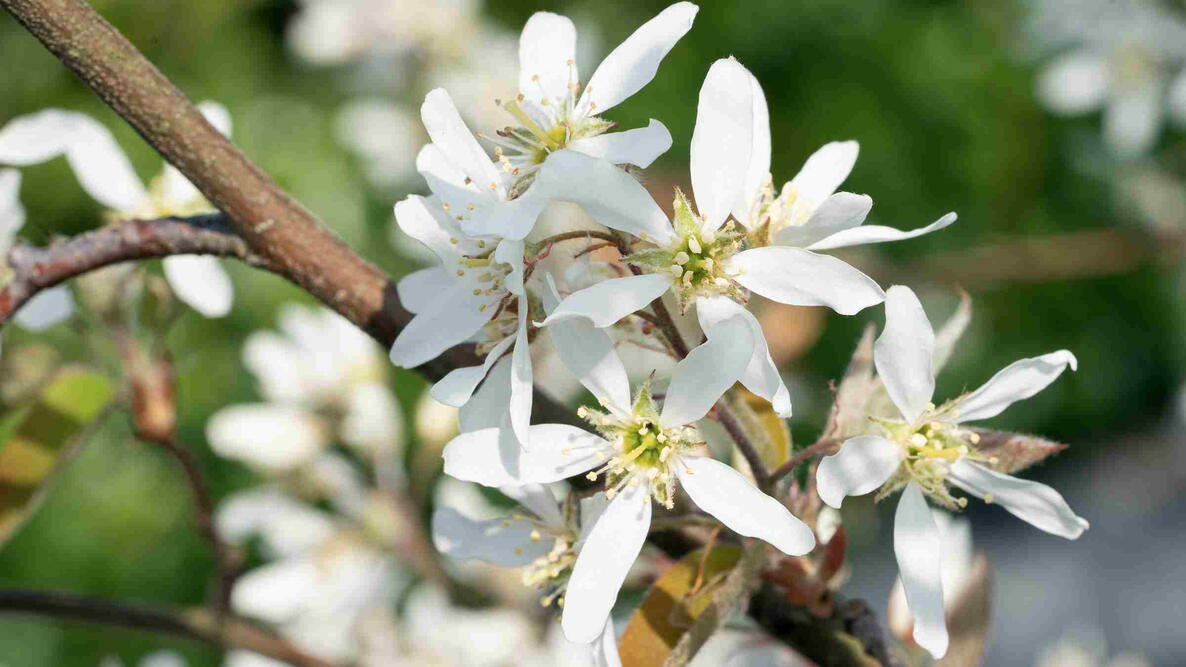
Caption
Alder-leaved serviceberry in spring bloom, a native shrub with edible summer berries.

Serviceberries announce spring with airy white blossoms, then follow with sweet summer berries and brilliant fall color. These native shrubs and small trees offer beauty in every season. They also support pollinators and feed birds—without demanding much in return. Here’s how to plant, grow, and care for serviceberries in your own landscape.
About Serviceberry Plants
Found throughout North America, serviceberries (Amelanchier spp.) are deciduous flowering trees and shrubs grown for their early spring blooms, edible summer berries, and vibrant fall foliage. This native plant flowers earlier than most plants and provides critical nectar for spring pollinators when other food sources are scarce. They’re also simply beautiful—and their sweet, blueberry-like fruit can be used in cobblers, pies, jams, and other treats—much like blueberries.
Many plants are swathed in folklore, but serviceberry lore is a little macabre. These plants are said to have earned their name because their early spring flowers appeared just as the ground thawed—when funeral services could finally be held after long winters. You may also see them labeled as shadbush or shadblow, since they bloom around the same time shad fish start to run and spawn in spring.
There are about 25 recognized species of serviceberries, most native to North America, with a few found in Europe and Asia. Grown as large shrubs or small trees, serviceberries provide four seasons of interest—from starry white spring flowers and dark summer berries to fiery autumn foliage and smooth, silver-gray bark in winter.
Most serviceberry trees and shrubs grow between 6 and 25 feet tall, depending on species. They’re typically hardy in USDA Zones 2–9. Growth is moderate to fast (about 1 to 2 feet per year), and well-maintained plants can live 30 to 60 years.

Beyond their ornamental value, serviceberries are important wildlife plants and rank above the best shrubs and trees for birds. They feed pollinators, serve as host plants for certain moths and butterflies, and provide berries relished by songbirds.
A fine choice for borders, specimen plantings, naturalized areas, and wildlife gardens, serviceberries tolerate a range of soils and light levels. They belong to the Rosaceae family and are related to apples and pears—so it’s no surprise their flowers and fruit are both attractive and abundant.
Growing
In the wild, serviceberries often grow as understory trees in dappled light. They tolerate a range of soil types but require good drainage—poorly draining soil can quickly lead to decline. Do your best to mimic their natural growing environment and blend compost into your soil if your garden is dense with clay.
Depending on your gardening style, serviceberries can be left as natural multi-stemmed shrubs or pruned to a single leader for a more tree-like form. Either way, make sure these plants have plenty of space, as overcrowding can increase the risk of fungal problems.

I like pairing serviceberries with other acid-loving, shade-tolerant plants that like acidic soil, such as rhododendrons, azaleas, and blueberries. Coral bells and foamflowers also thrive beneath their light canopy, creating layered plantings that feel intentional and lush.
Some species tolerate wetter soils better than others, so research the best serviceberry species for your conditions. For container growing, choose a dwarf variety and use a 5- to 10-gallon pot with drainage holes.
Watering
Established serviceberries are relatively drought-tolerant and only need watering during extended periods of heat or dry weather. During the first year, however, new plantings should be watered about once or twice per week. Watering serviceberries at the base and keeping the leaves dry are among the best ways to avoid fungal diseases.
Serviceberries grown in containers dry out much faster than garden plants, so they should be watered when the top 1 to 2 inches of soil feels dry.
Fertilizing
Adding compost around the base of serviceberries in spring or fall is all these plants need to grow and flower well. That said, you can also feed these plants when their buds begin to break in spring with a general, all-purpose organic fertilizer if your soil is very poor.
Seasonal Care
Serviceberries in the garden don’t need winterizing, but plants grown in pots do. You can either move potted plants into an unheated garage for the winter and water them sparingly, or you can sink the plant pots into the soil of your garden and dig them back up in spring. This should keep the pots from breaking and also provide insulation to the plant’s roots!
During the growing season, you can expect serviceberries to produce fragrant clusters of white flowers between March and June, but their blooms only last about a week. After flowering, these plants yield edible berries that can be harvested and used fresh, dried, or cooked.
When well-maintained, serviceberries grow quickly and benefit from regular pruning; however, they can be left as-is if you’re growing serviceberries for garden privacy.
To minimize sap loss, prune serviceberries when they’re dormant from late fall to early spring and only prune dead, diseased, and damaged branches during the first 3 years of your plant’s life. As the plants mature, you can prune them more aggressively to manage their size, increase fruit set, and open up the plant’s canopy. It’s also safe to trim serviceberry suckers at any time of the year, but take care not to over-prune these plants, as it can remove their flower buds and reduce blooming and fruiting.
Types
When you go to a local nursery, you should be able to find serviceberries native to your area. But also consider any special garden uses, such as varieties better suited to container growing.
‘Canadian Serviceberry’ (Amelanchier canadensis)
Also called shadblow serviceberry, this Eastern North American native grows 15 to 20 feet tall and produces abundant white spring flowers.
‘Saskatoon Serviceberry’ (A. alnifolia)
Native to western regions, this species grows up to 15 feet tall and is prized for its especially flavorful berries. It is also sometimes called the alder-leaved serviceberry due to the shape of its leaves.
‘Allegheny Serviceberry’ (A. laevis)
One of the taller species, reaching up to 40 feet in ideal conditions. Hardy in Zones 4 to 8.
Dwarf Serviceberries: Cultivars like ‘Regent’ stay relatively small and are the best choice if you want to keep serviceberries in containers.
Propagation

There are two main ways to propagate serviceberries: through suckers or softwood cuttings. Growing these plants from seed is not recommended.
- Propagating serviceberries from suckers: Use a shovel or garden shears to remove rooted suckers from serviceberry plants in spring before the plants’ buds break. Remove the top of the sucker so the remaining stem is about 2 to 4 inches long, then transplant the sucker into garden soil or a pot and water regularly to help it establish.
- Propagating serviceberries from cuttings: Use sharp, sterilized pruners to take 4-inch-long softwood stem cuttings from healthy serviceberry plants in late spring. The cuttings should be flexible and produce new growth during the most recent growing season. Remove the lower leaves on the cutting, but keep the top leaves in place. Dip the cut stem base in rooting hormone, plant it in a 4-inch pot filled with potting mix, keep the cutting in bright, indirect light, water regularly, and allow it to root and grow for a few months in its pot before transplanting it into your garden.

More Like This


Comments